“Ancient Hebrew Language”: A textbook has been published in Ukrainian in Ukraine – a cultural signal amid the rise of global anti-Semitism

In Ukraine, a textbook “Ancient Hebrew Language” (“Ancient Hebrew Language”) has appeared—an edition dedicated to the language of the Tanakh and designed for serious, systematic study of the ancient Hebrew text. For the Jewish audience in Israel, this is important news not only from the academic sphere. It is about a book that shows: the language of the Hebrew original remains a subject of respectful and deep study beyond Israel, specifically in the Ukrainian language – the national language of another country. The author of the textbook is Dmitry Tsolin, Doctor of Philological Sciences, a specialist in biblical studies, ancient Hebrew and Aramaic languages, a researcher of the Semitic language tradition.

“Ancient Hebrew Language” is a textbook that combines the features of a grammar and syntax reference for the ancient Hebrew language of the Tanakh with practical tasks. In addition to theoretical material, the book contains exercises for mastering grammatical material, an ancient Hebrew-Ukrainian glossary for convenient word search, as well as information on the history of the language and a list of foreign borrowings. Moreover, one of the most complex aspects of reading the biblical ancient Hebrew text—the system of accent marks—is considered. The textbook will interest both students studying ancient Hebrew and teachers,” – this is how the presentation of the textbook describes it.

The textbook was published in early April 2026, and on March 31, 2026, its presentation took place.

The textbook is already available on the website https://siyach.com.ua/product/davnoyevrejska-mova-pidruchnyk/

In Ukraine, a textbook
In Ukraine, a textbook “Ancient Hebrew Language” was published in Ukrainian – a cultural signal against the backdrop of rising global anti-Semitism

This is especially noticeable now, when in many societies the conversation about Jews is increasingly simplified to political clichés, aggression, or superficial stereotypes. Against this backdrop, the release of a full-fledged textbook on the ancient Hebrew language in Ukrainian does not appear as a formality, but as a cultural gesture of a completely different level.

What is this book and why does it deserve attention

“Ancient Hebrew Language” is a textbook that combines the properties of a grammar and syntax reference for the ancient Hebrew language of the Tanakh with practical tasks. The book contains theoretical material, exercises for consolidating grammar, an ancient Hebrew-Ukrainian glossary for convenient word search, information on the history of the language, a list of foreign borrowings, and an analysis of one of the most complex topics—the system of accent marks in the biblical text.

In Ukraine, a textbook
In Ukraine, a textbook “Ancient Hebrew Language” was published in Ukrainian – a cultural signal against the backdrop of rising global anti-Semitism

So, we are not looking at an overview brochure or a symbolic project for the sake of appearances. This is a working tool for students, teachers, and anyone who wants to read the text not through retelling, but closer to its original linguistic form.

For the Israeli reader, the approach itself is important here. When it comes to the Tanakh, the question of language is not a trifle or a technical detail. Much in the Jewish textual tradition is based on the root of the word, on the internal connection of concepts, on the nuance of form, on what cannot be fully transferred to another language without loss. Therefore, any serious course on ancient Hebrew is always a conversation not only about grammar but also about access to the source itself.

Dmitry Tsolin

The author of the textbook is Dmitry Tsolin – https://www.facebook.com/dmytro.tsolin/, Doctor of Philological Sciences, a researcher in the field of Semitic philology, biblical studies, ancient Hebrew and Aramaic languages.

His academic biography shows that we are dealing with a specialist with serious international and university training: in 1995 he graduated from the Faculty of Philology of Kherson State Pedagogical University, in 2002 he received an MA in Religion from Andrews University in the USA, in 2009 he defended his candidate’s dissertation at the Faculty of Oriental Studies of St. Petersburg State University, in 2012–2013 he completed a post-doctoral fellowship at the Hebrew University of Jerusalem, and in 2016 he defended his doctoral dissertation at the Institute of Philology of Taras Shevchenko National University of Kyiv.

Equally important is his teaching experience. From 2005 to 2007, Dmitry Tsolin taught at the Department of Judaic Studies at the International Solomon University in Kyiv, then from 2007 to 2017 he worked at the National University “Ostroh Academy”, and from 2013 to 2017 he was a visiting lecturer in the master’s program in Judaic Studies at the National University “Kyiv-Mohyla Academy”. Such a path is especially significant for the Israeli reader: we are not dealing with a general profile philologist, but with a person who has been professionally working in the field of Jewish text, language, and tradition of its study for many years.

His range of interests speaks for itself. Among them are Semitic philology, the Aramaic language, biblical studies, Targums, that is, Aramaic translations of the Bible from the I–VII centuries, discourse linguistics, and translation theory. In other words, the author is engaged not only in grammar as a set of rules but also in how the ancient text lives in translation, interpretation, and historical context.

His language competencies also deserve special attention. Dmitry Tsolin is fluent in modern Hebrew, professionally works with ancient Hebrew and Western Aramaic dialects, reads classical Syriac and ancient Greek Koine. For a book about the language of the Tanakh, this is fundamentally important because such a textbook requires an author who understands not only the form of the word but also the entire cultural, historical, and textual layer around it.

That is why the textbook “Ancient Hebrew Language” does not appear as an accidental project, but as the result of many years of academic and teaching work by a specialist deeply immersed in the Jewish language and textual tradition.

Why this is important for Jews in Israel

Israel lives in a unique reality where Hebrew is simultaneously the state language, everyday speech, the language of the army, media, family, debate, prayer, and cultural memory. But precisely because of this, in Israel, they especially understand the difference between modern Hebrew and the ancient Hebrew language of the Tanakh.

When a serious textbook on the ancient Hebrew language appears in another country and specifically in the national language of that country, it means that the Jewish textual tradition is perceived there as something worthy of independent study, not as secondary material for quotes, retellings, and ideological interpretations.

Against the backdrop of rising anti-Semitism in the world, this has additional meaning. Where some reduce the conversation about Jews to hatred, conspiracy theories, or political irritation, others invest efforts in studying the language of the Tanakh, in reading the original source, in trying to understand Jewish civilization through its own textual foundation. NAnews — Israel News | Nikk.Agency believes that such signs are especially important today: they show that respect for Jewish heritage can be expressed not in declarations, but in serious work with language and culture.

Why it is crucial that the book was published specifically in Ukrainian

There is a separate and very strong semantic layer here. English, German, or French academic works on biblical Hebrew have long existed and do not surprise anyone. But when such a textbook is published specifically in Ukrainian, it means that the ancient Hebrew language enters the intellectual space of Ukraine not through a foreign intermediary language, but directly through its own national cultural framework.

This is an important sign of maturity.

In essence, it is about recognizing that the language of the Tanakh is part of the world’s cultural foundation, which is worth studying at the modern Ukrainian academic level. For the Jewish audience in Israel, this sounds understandable and respectful: not as an attempt at appropriation, but as recognition of the value of the source.

In which countries this is also possible—and what it says about Ukraine

Such a textbook could organically appear in countries with a strong tradition of Hebraic studies, Judaic studies, and textological research. For example, in Germany, Poland, France, the United Kingdom, the USA. There exist university schools, research centers, and a stable academic culture of studying the ancient Hebrew language and Jewish sources.

But the Ukrainian case stands out for another reason.

Such an edition appears not in a calm and prosperous reality, but in a country that lives under the pressure of war, exhaustion, and constant instability. And yet it is there that a fundamental textbook on the language of the Tanakh is published in Ukrainian. This is no longer just scientific news. It is an indicator that even in difficult times there is room for serious humanitarian work, for respect for the text, and for intellectual interest in the Jewish tradition.

For Jews in Israel, there is an understandable and important signal in this. The language of the Tanakh continues to arouse interest not only as part of the past but as part of the living civilizational core, to which they turn again and again. And when such interest takes the form of a full-fledged textbook, it should be perceived not as a minor academic episode, but as a marker of the times.

Because in an era of noise, ideology, and growing hostility, the very attempt to calmly, consistently, and professionally study the ancient Hebrew language already says a lot.


“Not About the War”: The book of Jewish defender of Ukraine Maksym Shvartsman was presented in Chernivtsi on the 3rd anniversary of his death at the front - July 21, 2026 - Новости Израиля

Did Azerbaijan stop Israel’s vote on recognizing the Armenian genocide? - July 20, 2026 - Новости Израиля

June 2026 was the hardest for Ukrainian civilians since April 2022 — UN data - July 20, 2026 - Новости Израиля

Moscow under a dome that doesn’t exist: the raid on June 18 showed that Russian air defense can shoot, but cannot protect – video

The morning of June 18, 2026 was not just another episode of the war for Moscow, which Russia had been trying to keep away from its own capital for years. It was the morning when the myth of the ‘three rings of air defense’, the impregnable Moscow, and the technological superiority of the Russian army once again collided with reality — with fire, smoke, closed airports, damaged oil infrastructure, and videos showing Russian air defense looking more like an expensive firework than a defense system.

According to Reuters, on June 18, Ukrainian drones struck the Moscow Oil Refinery in the Kapotnya area — it was the second attack on the facility in a few days. The strike caused explosions, a fire, traffic stoppages near the refinery, and significant disruptions at Moscow airports. It was separately reported that the attack was part of Ukraine’s campaign against Russian oil infrastructure, which directly fuels the Kremlin’s war machine.

And this is where the most unpleasant part for Moscow begins.

The main humiliation was not the fact of the raid itself. The war had long returned to Russia, but the Kremlin does not want to call it a war. The main humiliation was the footage of the Russian air defense in action.

Air defense that shoots but does not save

In the videos that spread on social media, the operation of the Pantsir complex is particularly striking. The system, which Russian propaganda had been selling for years as an almost perfect means of combating drones, aircraft, and missiles, in reality, shows a completely different picture.

One of the episodes looks almost like a laboratory experiment. A low-flying, relatively slow target. Minimal distance. Conditions under which the promotional brochure should have come to life and shown ‘confident target defeat’. But instead — two consecutive launches and two misses.

For a system called a precision weapon, this is not just a failure. It’s a diagnosis.

Precision weapons are not what looks beautiful in a parade. And not what shoots spectacularly at night on camera. It is a weapon that, in most cases, hits the target on the first launch. And if a complex near the capital of a state engaged in a major war cannot confidently shoot down a slow-moving drone almost at point-blank range, the question arises not just for one crew. The question is for the entire Russian air defense architecture.

Even more important is this: even where the missile hits or detonates near the drone, the result is not what Russian generals have been talking about for years. The drone does not always disintegrate in the air into safe fragments. It can be damaged, knocked off course, sent into an uncontrolled descent — and then the warhead explodes upon hitting the ground.

In other words, air defense does not eliminate the threat. It sometimes just changes the address of arrival.

From the factory to the market

This is why the story of the drone crash near the Sadovod market looks so symbolic. Russian air defense, designed to cover the capital, in this logic turns into a mechanism for the random redistribution of danger: it was flying towards an industrial or military target, after ‘air defense work’ it fell near civilian infrastructure.

This is especially important against the backdrop of constant Russian propaganda, which for years tried to explain the destruction in Ukraine with the phrase: ‘it’s your air defense’s fault’. After each strike on Kyiv, Kharkiv, Odesa, or Dnipro, Russian commentators tried to divert responsibility from the aggressor and shift it to Ukrainian defense.

But Moscow videos return this argument back to those who invented it.

If an air defense missile damages a drone but does not destroy its warhead, if the target falls in another area and explodes upon contact with the ground, it does not negate the main thing: the root cause is aggression. The root cause is the launch of the war. The root cause is Russian strikes on Ukraine, after which Ukraine gained full moral and military right to hit the infrastructure serving the Russian war machine.

The three rings of air defense turned out to be three rings of self-deception

The Russian authorities love rings. The Garden Ring. The Third Transport Ring. The MKAD. And, of course, the legendary ‘air defense rings’ around Moscow.

On paper, it looks impressive. On television — even better. Schemes, arrows, dome, radars, complexes, reports. Everything as the Russian state machine loves: it doesn’t have to work; it has to look good.

Is the air defense standing? It is.

Is it shooting? It is.

Are reports coming in? They are.

Are targets hit? Well, in the report, of course, they are.

And then on the morning of June 18, the Moscow Oil Refinery is burning, smoke rises over Kapotnya, airports restrict operations, and the residents of the capital film on their phones how expensive Russian missiles fly ‘into the milk’. The Guardian called this raid the largest attack by Ukraine on Moscow since the start of the full-scale invasion and noted that among the targets was the Moscow Oil Refinery, an important fuel supplier for the capital.

That’s the whole difference between ‘being’ and ‘seeming’.

For decades, Russia built not security, but a decoration of security. Not an effective army, but a television army. Not reliable air defense, but parade air defense. Not a state capable of taking responsibility for the consequences of its decisions, but a huge bureaucratic machine where everyone is afraid to tell the boss that the system doesn’t work.

Pantsir as a symbol of the Russian war

The problem with the Pantsir did not start on the morning of June 18. Even before 2022, Russian complexes regularly became the subject of humiliating videos, especially after Israeli strikes on Russian systems in Syria. There, too, there was a lot of talk about ‘reliable protection’, but in reality, Russian equipment often didn’t keep up, missed, or became a target.

Now this same logic has come to Moscow.

In Syria, it could be explained by a ‘complex situation’. In Ukraine — by ‘NATO interference’. In Moscow, it’s harder to explain. Because it’s the capital. Because it’s the object supposedly best covered. Because Russian propaganda itself had been convincing citizens for years that an impenetrable dome stood over Moscow.

But it turned out — not a dome, but an expensive prop.

Oil, gasoline, and fear: Ukraine hits not the picture, but the system

The strike on the Moscow Oil Refinery is important not only as a psychological signal. It is a blow to the energy and logistical base of the Russian war. Reuters writes that attacks on refineries are already affecting the fuel situation, and the Russian antitrust regulator demanded explanations after one of Moscow’s fuel retailers raised the price of AI-95 gasoline by 19% in a week.

It’s not just smoke over Kapotnya. It’s smoke over the entire Putin war economy.

Russia is used to attacking Ukrainian power plants, ports, warehouses, cities, train stations, hospitals, and cathedrals, and then pretending that ‘it’s different’. But when Ukraine hits Russian oil infrastructure, which feeds the army, supplies logistics, and finances aggression, Moscow suddenly remembers the word ‘terror’.

No, it’s not terror. It’s the war that Russia itself started and carried far beyond Donbas, Crimea, and the Ukrainian border.

Now this war is returning to those who for years watched it on TV as a show.

Why Moscow is nervous

For the Kremlin, not only physical damage is dangerous. It’s dangerous that the image is collapsing.

Moscow was supposed to be the showcase of the empire. A place where you can live as if Bakhmut, Mariupol, Kharkiv, Sumy, Kyiv, and Kherson are somewhere far away, in another reality. A place where the war exists in the form of news, parades, Z-stickers, and talks about ‘our boys’.

But drones do to the Russian capital what the Kremlin fears most: they connect the TV with reality.

When airports close, when the refinery burns, when debris falls near the market, when air defense missiles miss in front of thousands of people, it becomes harder to sell the fairy tale of control. Harder to say that ‘everything is going according to plan’. Harder to convince the population that the war is somewhere out there, and Moscow is outside of history.

Moscow is no longer outside of history.

It is inside the war that the capital itself politically served, financed, justified, and celebrated.

z-public demands not protection, but censorship

The reaction of the Russian z-community is also indicative. Instead of the question ‘why doesn’t the air defense work?’ — the usual question ‘why do people film the arrivals?’. Instead of investigating failures — demands to imprison for videos. Instead of acknowledging a systemic problem — the suggestion that oil workers buy their own air defense.

This is pure Russian logic: if reality does not match the report, you need to punish not the general and not the manufacturer, but the one who filmed reality on the phone.

But the videos have already done their job. They showed that the Russian system fears not only Ukrainian drones. It fears its own citizens with cameras. Because the camera destroys the main Russian military resource — the myth.

The main outcome of the raid

On June 18, 2026, Moscow received not just a strike on the refinery. It received a demonstration.

A demonstration that Russian air defense is not impenetrable.

A demonstration that the ‘Pantsir’ can be dangerous not only for drones but also for those it is supposedly meant to protect.

A demonstration that Ukraine is capable of reaching targets deep within Russia.

A demonstration that the war is ceasing to be an abstract picture for Muscovites.

And most importantly — a demonstration that an empire that has been hitting other people’s cities for years cannot live indefinitely under a glass dome.

Moscow built a dome.

It turned out to be a decoration.

Russia built an image of strength.

It turned out to be a system that shoots into the sky, misses, reports success — and waits for the people to believe again.


“Not About the War”: The book of Jewish defender of Ukraine Maksym Shvartsman was presented in Chernivtsi on the 3rd anniversary of his death at the front - July 21, 2026 - Новости Израиля

Did Azerbaijan stop Israel’s vote on recognizing the Armenian genocide? - July 20, 2026 - Новости Израиля

June 2026 was the hardest for Ukrainian civilians since April 2022 — UN data - July 20, 2026 - Новости Израиля

Alexander Filin died in Southern Lebanon: the journey from Ukraine to Haifa of a lone soldier who once saved a comrade’s life

In the stream of heavy news, where Israel almost daily counts the wounded, the dead, shelling, and new front-line reports, it’s easy to lose sight of one human story.

But it is precisely such stories that are the true cost of war.

Alexander Filin, a senior sergeant in the IDF reserves, 29 years old, from Haifa, died in southern Lebanon during combat operations. He was a staff fighter of the 36th Division. According to the IDF and Israeli media reports, the tragedy occurred when a powerful explosive device planted by Hezbollah terrorists detonated while the unit was operating in the Litani River area.

From Ukraine to Haifa: the story of Alexander Filin

Alexander came to Israel from Ukraine alone, through the NA’ALE program, as a teenager. For the Israeli audience, this is an important detail: behind the dry term ‘repatriate’ often lies a not-so-simple biography — a new language, a new country, the army, loneliness, and the need to prove that you are not here by chance.

He was a lone soldier.

Later, he served as a sniper in the Nahal infantry brigade. According to the Times of Israel, Filin repatriated alone at the age of 12 and then followed a path familiar to many young repatriates: studies, army, service, and the attempt to integrate into Israeli life not as a guest, but as someone who takes responsibility for the country.

Presidential Medal of Distinction and a thwarted terrorist attack

In 2018, Alexander Filin received the Israeli President’s Medal of Distinction. This happened after an incident at a checkpoint in the Nablus area, where he stopped a terrorist with a knife and saved his comrade.

Later, he recalled that moment without a heroic pose, almost routinely: the terrorist approached him at a distance of about two meters and attempted to stab him. Filin pushed him away with his foot, tried to ready his weapon, initially failed due to stress, struck the attacker again, chambered a round, and fired.

It was that very second in which not only the life of one soldier was decided, but also the life of the one standing next to him.

For readers of NANews — Israel News | Nikk.Agency, this story is especially close because it connects several Israeli realities at once: repatriation from Ukraine, service in the IDF, the northern front, Haifa, the memory of personal choice, and a war that has long ceased to be something distant.

What happened in southern Lebanon

On the morning of June 18, 2026, it was allowed to be published that senior sergeant in the reserves Alexander Filin, 29 years old, from Haifa, died in southern Lebanon. In the same incident, seven soldiers were injured: some moderately, some lightly. Among the injured, according to media reports, was the deputy commander of the 36th Division, Colonel Natai Okeshi.

According to preliminary data, a powerful explosive device was detonated against the vehicle of the forward command post.

All the injured were evacuated to hospitals, and their families were notified. The IDF began investigating the circumstances of the incident and struck Hezbollah targets in the area.

The northern front after the ceasefire

This death once again shows that southern Lebanon remains a dangerous zone even after the announced political agreements and ceasefire declarations. On the ground, for IDF fighters, this is not abstract diplomacy, but routes, ambushes, explosive devices, drones, and risk in every sortie.

According to Israeli media, Alexander Filin became one of the victims of ongoing incidents in southern Lebanon after the ceasefire. In recent days, there have also been reports of other attacks and explosions near Israeli forces in the northern direction.

Family, friends, and memory

Alexander left behind a wife and a young daughter. His wife is also a graduate of the NA’ALE program. According to family acquaintances, at the time of Alexander’s death, she was not in Israel after another personal loss and is now returning with her daughter.

War often sounds like statistics.

But behind every line about the deceased is an apartment to which a person will no longer return, a child who will grow up with stories about their father, and a wife for whom one day erased her entire previous life.

Family friends organized a fundraiser for initial support. The link to the fundraiser on bit, provided by the organizers, is active until June 23:

https://www.bitpay.co.il/app/share-info?i=182482743191_19nsI7TM

Why this story is important for Israel

The story of Alexander Filin is not just a military report from Lebanon.

It is the story of a young man from Ukraine who came to Israel alone, became a lone soldier, served, saved a comrade, received the President’s Medal of Distinction, built a family in Haifa — and died on the northern front at 29.

In such stories, there are no loud slogans. There is only a very simple and very heavy truth: Israel is held not by abstract words about security, but by specific people who had names, families, childhoods, languages, fears, plans, and life after the army.

Alexander Filin had all of this.

Now only memory remains.


“Not About the War”: The book of Jewish defender of Ukraine Maksym Shvartsman was presented in Chernivtsi on the 3rd anniversary of his death at the front - July 21, 2026 - Новости Израиля

Did Azerbaijan stop Israel’s vote on recognizing the Armenian genocide? - July 20, 2026 - Новости Израиля

June 2026 was the hardest for Ukrainian civilians since April 2022 — UN data - July 20, 2026 - Новости Израиля

Jews from Ukraine: David Horowitz. From a young idealist from Drohobych to the first president of the central bank of Israel –

David Horowitz is a name that represents an incredible journey from the small town of Drohobych on the territory of modern Ukraine to the leadership of the financial system of the state of Israel.

His life’s journey, full of challenges and achievements, continues to inspire generations.

David Horowitz was born on February 15, 1899 in the city of Drohobych, which at that time was part of Austria-Hungary, and later became part of Western Ukraine.

The region, known for its ethnic and cultural diversity, played an important role in shaping the young Horowitz’s worldview.

Drohobych of the late 19th and early 20th centuries was a city with an active Jewish community, which made up about 40% of the population. The Jews of Drohobych were engaged in trade, crafts and art; there were synagogues, schools and cultural centers in the city. It was here that David Horowitz absorbed a love for Jewish traditions and developed an interest in the ideas of Zionism.

Impact of the events of the First World War

David’s childhood was spent in conditions of instability. The outbreak of World War I forced the Horowitz family to leave Drohobych and move to Vienna. This forced move became the first big test for young David, who early learned to be independent. In Vienna, he began working selling newspapers to help his family, which strengthened his character.

After the end of the war, the family returned to Lviv, where David continued his studies at the gymnasium. It was here that he began to actively participate in the Zionist movement, which was especially popular among the Jewish youth of Galicia.


“Hashomer ha-tzair”: the beginning of the path to Eretz Israel

Zionist ideas swept Eastern Galicia at the beginning of the 20th century, and David Horowitz became one of the leading representatives of the movement. In 1918, he and like-minded people founded the youth movement Hashomer Hatzair (Young Guardian). The first congress of the movement took place in Tarnov, and the second in Lvov, which indicates the important role of Galicia as a center of Jewish youth activity.

Young Zionists like David saw their mission as reviving Jewish life in Palestine. They sought to create a new society based on equality, work and national identity. In 1920, David Horowitz, along with a group of 131 participants, immigrated to Eretz Israel. These young people, leaving the comfortable conditions of city life in Galicia, became pioneers in the construction of the Jewish state.

Beitaniya Ilit: the beginning of the Zionist kibbutz movement

Beitaniya Illit, or Upper Beitaniya, was one of the first communes in Eretz Israel, created by members of the Hashomer Hatzair movement in 1920. This unique experiment was located on the mountain slopes near Lake Kinneret, where young Zionists from Galicia began to build their new future. The 131-member group, having left a comfortable life in Europe, chose hard work and spartan conditions to realize their dream of reviving Jewish society.

Upper Beytaniya (Beytaniya-Ilit) was a unique project in which most of the participants were indeed Jews from Ukrainian Galicia. These young idealists formed the core of the group that gathered to create the first kibbutz of the Hashomer Hatzair movement. All of them were activists inspired by Zionist ideals and came to Eretz Israel in 1920.

Who were the participants from Ukraine?

Among the leaders and participants who came from Galicia (the territory of modern Ukraine), the following names can be distinguished:

  1. Dov Opper from Zolochev – one of the prominent leaders of the group.
  2. Arie Alweil from Bibrka – an active organizer of the movement.
  3. Meir Wald from near Przemysl – a leader who inspired the participants.
  4. Benjamin Freivogel from Stanislaviv (now Ivano-Frankivsk) – one of the leading ideologists.
  5. Milek Goldstein from Podvolochisk, near Ternopil – an active participant in the commune.
  6. David Horowitz from Drohobych – future economist and president of the Bank of Israel, who in his youth was an important figure in the project.
  7. Aba Shneller from Turki, Lviv region – participant in the first “Galician landing”.

These people were driven by the idea of ​​​​creating a New Man – a free Jew, capable of working on his historical land. Many of them left a significant mark on the history of Israel, becoming political, social and military leaders.


Ukrainian connection

Most of the kibbutz members come from small towns and villages in Galicia, such as Zolochev, Bibrka, Drohobych and Stanislavov. At the beginning of the twentieth century, these cities were centers of Jewish culture, where young people actively participated in the Zionist movement. It was Ukrainian Galicia that became the starting point for the formation of the first Zionist communes, which made this region key in the history of Zionism and the kibbutz movement.


Financial Architect of Israel

Despite having no formal education in economics, David Horowitz became a self-taught man whose knowledge and abilities shaped the future of Israel’s financial system.

Key achievements:

  1. Management of the Economic Department of the Jewish Agency (1935): Horowitz played an important role in developing the Yishuv’s economic policies.
  2. First Director General of the Ministry of Finance (1948): He led the process of building the financial infrastructure of the newly formed state.
  3. Creation of the Bank of Israel (1954): Horowitz became the first president of a state-owned bank, which he headed for 17 years.

Historical heritage

One of the most important works of David Horowitz was the book “In the Service of a Young State.” In it, he described his relationship with the British Mandate authorities and the challenges facing the Yishuv. This work remains an important source for the study of Israeli history.

The influence of Galicia on the worldview of David Horowitz

Galicia, with its unique mixture of cultures and ethnic diversity, shaped Horowitz’s broad worldview. Here he acquired skills in interacting with various communities, which later helped him in building economic and political ties in Israel.

Galicia was also a region where the Jewish community actively developed, despite difficulties. David Horowitz imbibed the entrepreneurial spirit and desire for self-fulfillment that later helped him become an outstanding economist.

Connection with Ukraine: Galicia and the future of Israel

Drohobych and Lvov became for David Horowitz the launching pad for his life’s journey. These cities, like the entire region of Galicia, occupied an important place in the history of the Jews of Eastern Europe. This is where many of the leaders of the Zionist movement came from, including David Horowitz, who became a key figure in the creation of Israel’s financial system.

Horowitz’s story is a striking example of how the Jewish community of Ukraine made significant contributions to the construction of the Jewish state. Within the category “Cycle Jews from Ukraine”website NAnews – Israel News continues to talk about outstanding personalities whose roots are connected with Ukraine.

You can read more in the section “Jews from Ukraine” on our website NAnews.

Read on WhatsApp channel NAnews ↓ — Israel News

Read on Telegram – channel NAnews ↓ — Israel News


“Not About the War”: The book of Jewish defender of Ukraine Maksym Shvartsman was presented in Chernivtsi on the 3rd anniversary of his death at the front - July 21, 2026 - Новости Израиля

Did Azerbaijan stop Israel’s vote on recognizing the Armenian genocide? - July 20, 2026 - Новости Израиля

June 2026 was the hardest for Ukrainian civilians since April 2022 — UN data - July 20, 2026 - Новости Израиля
“Ukrainian Love” in Be’er Sheva: Ukrainian songs will be performed by the Israel Symphony Orchestra – June 25, 2026

On June 25, 2026, a concert “Ukrainian Love” will take place in Beer Sheva: Ukrainian folk songs in symphonic sound will be performed by the Israel Symphony Orchestra of Beer Sheva.

“Ukrainian Love” in Beer Sheva: Ukrainian songs will be performed in a symphonic arrangement

On June 25, 2026, a concert “Ukrainian Love” will take place in Beer Sheva — an evening of Ukrainian music performed by soloists and the orchestra of the Israel Symphony Orchestra of Beer Sheva. The concert will be held at the Beer Sheva Performing Arts Center, starting at 19:30. In the official calendar of the Israel Symphony Orchestra, the event is listed as Ukrainian Love, venue — 41 Reger St., Performing Arts Center Beer Sheva.

Tickets: https://isb7.smarticket.co.il/הקול_על_הבמה_מס__4_-_אהבה_אוקראינית

«Ukrainian Love» in Beer Sheva: Ukrainian songs will be performed by the Israel Symphony Orchestra - June 25, 2026
“Ukrainian Love” in Beer Sheva: Ukrainian songs will be performed by the Israel Symphony Orchestra – June 25, 2026

The name of the concert in Hebrew is אהבה אוקראינית, which means “Ukrainian Love”. This is a program where Ukrainian folk songs take the big Israeli stage in orchestral sound — with soloists, a conductor, and a professional chamber symphony orchestra.

The organizers describe the concert as follows

The organizers describe the concert as follows:

“From the very heart of Ukraine — an evening of music that resonates with the soul of the people. Love and separation, bright sadness and hope, tenderness and humor — all the richness of the Ukrainian song tradition will come alive in the performance of soloists and the orchestra of the Israel Symphony Orchestra of Beer Sheva under the direction of Maestro Konstantin Orbelian”.

In the description of the concert, the Ukrainian folk song is presented as a living history that is carefully passed down from generation to generation. These melodies resonate with the beauty of Ukrainian land, the warmth of the home hearth, the strength of the human spirit, and faith in the future. Simple and sincere songs have long become part of the world’s cultural heritage and continue to resonate with listeners far beyond Ukraine.

On this evening, beloved Ukrainian songs will be performed in a symphonic arrangement. This format combines folk tradition and the beauty of orchestral music: familiar melodies gain new stage life while retaining their warmth, memory, and human intonation.

What is the Israel Symphony Orchestra of Beer Sheva

The Israel Symphony Orchestra of Beer Sheva is a professional chamber symphony orchestra from Beer Sheva. The word “symphony orchestra” usually means an orchestra of a smaller composition than a large philharmonic, but with full professional sound.

For the concert “Ukrainian Love”, this is important: Ukrainian songs will not sound like a chamber home program or a folklore evening in the narrow sense, but as a full-fledged stage event — with an orchestra, vocal soloists, and a conductor.

In the 2025/26 season, Maestro Konstantin Orbelian became the musical director of the Israel Symphony Orchestra of Beer Sheva. The announcement of his appointment noted that he replaces Maestro Rani Calderon after the end of the season in August 2025.

Who is performing

The concert “Ukrainian Love” features a conductor, two vocal soloists, and the orchestra of the Israel Symphony Orchestra of Beer Sheva.

Konstantin Orbelian — conductor

Konstantin Orbelian is a conductor and pianist of international standing. In the publication about his appointment as the musical director of the Israel Symphony Orchestra of Beer Sheva, he is presented as a four-time Grammy-nominated conductor, one of the prominent musicians on the international stage. It also states that Orbelian is the general and artistic director of the New York City Opera, as well as the principal conductor of the Kaunas City Symphony Orchestra in Lithuania.

His creative biography includes work with major artists of the world stage, including Renée Fleming, Dmitri Hvorostovsky, Elīna Garanča, Jonas Kaufmann, and other performers. It is also reported that his discography includes more than 80 CDs on the DELOS label, and he was previously the musical director of the Moscow Chamber Orchestra and the head of the Yerevan Opera and Ballet Theatre.

For the concert of Ukrainian music, his participation sets a high professional level: he is not just a guest conductor, but the new musical director of the orchestra, opening a new stage for the Symphony Orchestra.

Veronika Brook — soprano

Veronika Brook is a soprano, an opera singer associated with the Israeli and Ukrainian music scene. According to the Israel Opera, she was born in Estonia, lived and studied in Ukraine, and then repatriated to Israel. She graduated from the Luhansk National Academy of Culture and Arts and was a member of the troupe of the Dnipropetrovsk State Academic Opera and Ballet Theatre in Ukraine.

Her opera repertoire includes Gilda in “Rigoletto”, Violetta in “La Traviata”, Queen of the Night in “The Magic Flute”, Olympia in “The Tales of Hoffmann”, and other roles. The Israel Opera also notes that Veronika Brook was a participant in the Meitar Opera Studio program and performs in concerts of the Israel Opera and with Israeli orchestras.

In the context of the concert “Ukrainian Love”, her participation is especially natural: she is a singer whose biography combines the Ukrainian music school, the Israeli stage, and the opera tradition.

Konstantin Rittel-Kobyliansky — baritone

Konstantin Rittel-Kobyliansky is a Ukrainian baritone born in Kyiv. According to his artistic profile CODA, he graduated from the Odessa Music Academy in 2000 and completed additional solo training at the Freiburg Music Academy with honors in 2003.

His career includes performances on various European and international stages. The profile lists cities and venues, including Strasbourg, Paris, Amsterdam, Rotterdam, Marseille, Moscow, Kyiv, St. Petersburg, Chicago, Santa Barbara, San Francisco, Jerusalem, Tel Aviv, Lviv National Opera, and others.

Rittel-Kobyliansky is also known as a concert performer: in addition to opera roles and classical music, his repertoire includes well-known European and American songs. For the evening of Ukrainian music, his participation adds a deep male vocal timbre and a connection to the Ukrainian opera school.

Israel Symphony Orchestra of Beer Sheva — orchestra

The Israel Symphony Orchestra of Beer Sheva will perform Ukrainian songs in orchestral sound. For the listener, this means that familiar motifs will be presented not only as a song tradition but also as a concert program with symphonic dramaturgy: with introductions, orchestral colors, vocal parts, and a large stage breath.

It is the orchestra that makes this evening not just a vocal concert, but a full-fledged cultural event of Beer Sheva and the south of Israel.

Why this concert is important

“Ukrainian Love” is not just a musical program. For many residents of Israel, the Ukrainian song is associated with family memory, childhood, native cities, the language of home, the voices of parents and grandparents, with that cultural layer that people bring with them and preserve in a new country.

For the Israeli stage, such a concert is an opportunity to hear Ukraine not through news, not through political headlines, and not through the pain of war, but through music: through love, separation, humor, tenderness, and hope. This is how the Ukrainian song tradition becomes understandable and close even to those who do not know the language.

In Beer Sheva, a city with a large repatriate history and a special cultural life in the south of Israel, such an evening can become a meeting of different generations and different audiences. Some will come for the Ukrainian song, others for the classical sound of the Symphony Orchestra, and others for the names of the performers. But at the center, there will still be music.

For whom this evening is

The concert “Ukrainian Love” may be of interest to those who love Ukrainian music, opera singing, and symphonic sound. This event is also suitable for families of Ukrainian origin, listeners from Beer Sheva and the south of Israel, lovers of classical concerts, and those who want to discover Ukrainian culture through the stage, voice, and orchestra.

This is not a narrow ethnic program and not just an evening of nostalgia. It is a concert about how a folk song becomes part of the big stage — preserving simplicity, sincerity, and emotional strength.

Concert information

Concert: “Ukrainian Love”
Original title: Ukrainian Love / אהבה אוקראינית
Date: June 25, 2026, Thursday
Time: 19:30
Venue: Beer Sheva Performing Arts Center, Hall 1
Address: 41 Reger St., Performing Arts Center Beer Sheva
Orchestra: Israel Symphony Orchestra of Beer Sheva
Conductor: Konstantin Orbelian
Soloists: Veronika Brook, soprano; Konstantin Rittel-Kobyliansky, baritone

“The Ukrainian folk song is a living history, carefully passed down from generation to
generation.

Its melodies resonate with the beauty of the native land, the warmth of the home hearth, the strength
of the human spirit, and faith in the future. Simple and sincere, these songs have long become part of
the world’s cultural heritage and continue to resonate in the hearts of listeners around the
world.

On this evening, beloved Ukrainian songs will be performed on stage in a symphonic arrangement,
combining folk tradition and the beauty of orchestral music.”

Tickets: https://isb7.smarticket.co.il/הקול_על_הבמה_מס__4_-_אהבה_אוקראינית

“Ukrainian Love” is an evening where the Ukrainian song will be heard on the Israeli stage in a language that is understood without translation: through melody, voice, memory, tenderness, and hope.


“Not About the War”: The book of Jewish defender of Ukraine Maksym Shvartsman was presented in Chernivtsi on the 3rd anniversary of his death at the front - July 21, 2026 - Новости Израиля

Did Azerbaijan stop Israel’s vote on recognizing the Armenian genocide? - July 20, 2026 - Новости Израиля

June 2026 was the hardest for Ukrainian civilians since April 2022 — UN data - July 20, 2026 - Новости Израиля
Ukrainian cafe “Familia” in Israel in Rishon de Zion: how a married couple created a cafe that won the hearts of local residents

Journalists mynet talked about the unusual cafe “Familia”, which recently opened in Rishon LeZion (Zadal 5 Rishon Le Zion, Israel – on the map near the City Park “גן המושבה, ראשון לציון”). The owners of the establishment, repatriates from Ukraine Artem and Alena Bibenko, arrived in Israel only four years ago, but have already managed to make a contribution to the local gastronomic culture. Not knowing Hebrew, but putting their hearts into their work, they managed to attract the attention of both local residents and the press.

History of the cafe

“Familia”, a name reflecting a warm family atmosphere, was chosen for a reason. The couple worked in large cafes in Israel, where they worked with workers from Mexico and Brazil. It was their colleagues who gave them the nickname “family,” which inspired the couple to choose the name for their establishment.

Quote from mynet website:

“If you live in Rishon Lezion, you have probably heard talk about a new establishment that has become famous in the city. Meet the Familia cafe.


What attracts visitors to Familia?

The cafe is famous for its excellent Italian coffee and a variety of fresh dishes. The menu includes:

  • Sandwiches prepared on site by Alena
  • Desserts including signature lemon tart and cheesecake
  • Salads and new dishes will be added soon

Every day the cafe receives many visitors, most of whom are local residents who highly appreciate the warm atmosphere and high quality of service.

Difficulties and successes

Since the couple does not speak Hebrew, communication with clients is sometimes difficult. However, this did not become an obstacle to the popularity of the cafe.

  • Language: The owners rely on the help of their 16-year-old daughter Veronica, who helped with translations during the launch phase. Communication is in English and basic Hebrew.
  • Clients: People from the former USSR live next to the cafe, which helps communication and gives the place a special flavor.

Quote from mynet:

“Many townspeople come and praise us, we are very pleased,” Alena shares her impressions.

Personal history of Bibenko

The couple had long dreamed of moving to Israel. When their dream came true, they firmly decided to create a cafe similar to the one that Artem owned in Ukraine.

Were you surprised by the rave reviews from city residents?

“Many local residents come and share warm words, and this is very nice,” admit the cafe owners.

How do you cope with not knowing Hebrew?

“We sometimes translate orders for each other or speak English. We already have some “kitchen Hebrew”, so we can explain our dishes. There are also a lot of repatriates here, since there is a city park nearby.”

The owners of the cafe say that they moved to Israel before the war, and the owner’s mother remained in Ukraine, for whom they are worried. She also plans to move to Israel in the near future due to the harsh winter in Ukraine.

“We dreamed of living in Israel for years, and when we moved, our expectations were completely met,” says the cafe owner.

Cafe options Description
Name Familia
Address Zadal 5 Rishon Le Zion, Israel
Founders Artem and Alena Bibenko
Specialties Italian coffee, lemon tart, cheesecake
Additional 16-year-old daughter Veronica to help

Conclusion

The story of Café Familia is an example of how diligence and warmth can overcome cultural and language barriers.

Facebook –

Instagram –

Leave a comment in Telegram – NAnews channel↓


“Not About the War”: The book of Jewish defender of Ukraine Maksym Shvartsman was presented in Chernivtsi on the 3rd anniversary of his death at the front - July 21, 2026 - Новости Израиля

Did Azerbaijan stop Israel’s vote on recognizing the Armenian genocide? - July 20, 2026 - Новости Израиля

June 2026 was the hardest for Ukrainian civilians since April 2022 — UN data - July 20, 2026 - Новости Израиля
War as Sacrifice: Why Russia is Burning Its Own Army – Igal Levin

On June 16, 2026, Israeli military analyst Yigal Levin wrote about the war of Russia against Ukraine as a phenomenon that is difficult to explain with the usual logic of military calculation. His text is not just an emotional reaction to the latest losses or the usual criticism of the Kremlin. At the center of his thoughts is another question: why does a state with a huge army, General Staff, resources, and imperial ambitions spend years throwing its forces head-on at fortified Ukrainian lines, achieving minimal results at the cost of colossal destruction of people and equipment.

Levin calls this war one of the strangest he has had to study or see.

And this strangeness is not in the fact that Russia is waging an aggressive and criminal war against Ukraine. That is already obvious.

The strangeness lies elsewhere: Russia is waging it as if it is turning its own army into expendable material.

According to the General Staff of the Armed Forces of Ukraine, as reported by ‘Ukrainian Pravda’, by June 16, 2026, the total combat losses of Russian forces since the start of the full-scale invasion were estimated at approximately 1,385,420 personnel. It is important to clarify: this category includes not only the dead but total losses — killed, wounded, missing, and incapacitated. Therefore, Levin’s thesis about the possible approach of the dead to half a million should be perceived as an analytical assessment, not as an officially confirmed figure.

Why Levin considers this war strange

The main question Levin poses is harsh: why, after the failure of the quick dash to Kyiv, did the Russian leadership not change the very logic of the war? In the spring of 2022, the Kremlin tried to take Ukraine with a cavalry charge — quickly, roughly, counting on a political collapse. This calculation failed.

After such a defeat, a normal military system should have sought other solutions. It could have changed direction, changed pace, worked through logistics, sought a political exit, increased pressure on weak spots, rebuilt the army for the new reality. But Russia, according to Levin, did something else: year after year, it began throwing people head-on at the most protected Ukrainian positions.

Wars can be bloody. Losses sometimes become part of the strategy if the army gains a decisive result for them. But here, as Levin emphasizes, the cost and result do not match. Russia pays with people, equipment, economy, the future of its regions, and the quality of its army, but does not achieve a military victory that could justify such a cost.

That is why his text contains a heavy formula: it resembles not a war in the usual sense, but a sacrifice. The army does not serve the goal; the army itself becomes what is burned for the continuation of the process.

Cost without victory

Over the years of war, Russia has lost not only people. It has lost a huge number of tanks, armored vehicles, artillery, vehicles, air defense systems, aviation, fleet, and guided missiles. As of June 15, 2026, according to the General Staff of Ukraine, Russian losses were estimated at 12,025 tanks, 24,763 armored vehicles, 44,082 artillery systems, and more than 351,000 operational-tactical level drones. These figures are also a Ukrainian assessment and require careful reading, but even in this form, they show the scale of the depletion of the Russian military machine.

Levin looks at this not from the perspective of pity for Russian soldiers. His question is much colder and therefore stronger: why does the Kremlin need an army if it has been destroying it for years? If Russia has ambitions, if it wants to threaten Europe, pressure Ukraine, bargain with the USA, and remain an imperial center, it needs a combat-ready army. But the current model of war does the opposite — it turns the army into a stream of meat for frontal assaults.

This is what makes the Russian strategy strange. It is not just cruel. It is self-destructive.

Ukraine also made mistakes, but changed its approach

Levin does not idealize Ukraine. He openly acknowledges that in 2023, the Ukrainian army also advanced on well-fortified Russian positions and gained a tough experience. But the difference, in his view, is in the reaction to the mistake.

Ukraine, having been burned, began to seek other military solutions. It developed robotics, drones, new forms of strikes, logistics operations, changes in directions, and unconventional ways of pressure. The Kharkiv operation became an example of maneuver. The liberation of Kherson — an example of pressure on supply and isolation of the grouping through strikes on bridges. Later, the Ukrainian army increasingly moved the war into the technological plane.

In June 2026, The Guardian wrote about long-range Ukrainian strikes on Russian military and industrial facilities, including a plant in Cheboksary more than 900 kilometers from the front line, as well as the development of Ukrainian drone forces. This is precisely the type of war where the stake is not only on infantry in frontal attack, but on logistics, technology, range, and vulnerable nodes of the enemy.

Russia, according to Levin, repeatedly returns to the same model: press with mass, lose thousands, advance slowly, then repeat this on the next section. Tactics may change, equipment may be updated, drones may become more important, but the basic logic remains the same — people go into the meat grinder.

Operational art against inertia

In a military sense, it is not just about who attacks and who defends. It is about the ability of the army to choose the place, time, direction, and method of action. Operational art is not ‘going forward at any cost’. It is the ability to find a weak spot, create an advantage, break the enemy’s logistics, force him to react, rather than endlessly battering against a prepared wall.

Levin precisely says: with a front of enormous length, Russia repeatedly chooses the heaviest and most protected directions. This does not look like a search for victory. It looks like a system that is used to spending people because it cannot or does not want to count their cost.

In this sense, Ukraine, despite all its problems, has shown the ability to learn. Russia has shown the ability to endure its own destruction.

Why the Russian army agrees to this

The strongest part of Levin’s thought is the question not only to the Kremlin. Yes, Putin and the top leadership bear political responsibility for the war. Yes, the General Staff plans operations. But the war lasts not one month and not one year. Within this system, there are thousands of senior officers, tens of thousands of junior and middle commanders, a huge apparatus of management, supply, communication, intelligence, and control.

Why do they continue to participate in a strategy that grinds their own army?

The answer can only be complex. The Russian army is built on fear, hierarchy, and subordination. The officer corps is not an independent political force. Junior commanders often do not make decisions but execute orders. Propaganda turns the war into a religious-imperial ritual. Repressions and show punishments make any resistance dangerous.

But even considering this, the question remains. After all, it is not about philanthropy. Levin speaks of banal utilitarianism: if you need an army, you cannot endlessly destroy it against the enemy’s fortifications. If you need an economy, you cannot extract people and resources from it for years. If you need equipment, you cannot throw it into attacks where the result does not match the losses.

Prigozhin as a symptom, not an exception

In Levin’s text, the figure of Yevgeny Prigozhin and the Wagner PMC appears separately. He calls it almost the only noticeable case when part of the Russian military machine tried to get out of the meat grinder and rebel against the logic in which people are thrown to destruction.

How it ended is known. Prigozhin’s rebellion was stopped, he later died, and the system received a signal: arguing with the hierarchy is more dangerous than participating in a self-destructive war. For Russian commanders, this became not a lesson in military art, but a lesson in fear.

Therefore, the rest continue to remain silent. Some believe. Others are afraid. Others earn. Some hope to survive. Others no longer see a way out. But the result is one: the Russian army remains inside a war that eats it itself.

Why the word ‘sacrifice’ is so accurate here

The formula ‘sacrifice’ sounds harsh, but it is precisely what explains why Levin’s text is so gripping. In a normal war, the army is a tool. The state sets a goal, calculates the cost, seeks a way to win or exit the conflict with an advantage. In the Russian war against Ukraine, the army increasingly looks not like a tool, but like fuel.

People are sent not where a decisive result can be achieved, but where they are ground down. Losses do not stop the system but become part of its rhythm. Each new assault seems to prove not Russia’s strength, but its willingness to destroy its own population to maintain the myth of an offensive.

This is what makes the Kremlin’s war not only criminal but historically strange. Russia wants to appear as a great power but behaves like a state that destroys its own main resource. It wants to scare the world with its army but turns this army into expendable material. It talks about the future but pays for the war with people who could be that future.

For the Israeli audience, there is a separate important lesson in this. War tests not only the strength of weapons but the quality of the state. The army, society, officers, elites, economy, and political leadership either create a survival system or turn into a mechanism of self-destruction. Ukraine, paying a terrible price, seeks new solutions because it defends its existence. Russia, having started aggression, sinks deeper into the logic where the war itself becomes the goal.

Therefore, Levin’s question remains the main one: if Russia has been burning its own army against Ukrainian defense for years, then this no longer resembles a rational strategy for victory.

It resembles a ritual of an empire that cannot stop.


“Not About the War”: The book of Jewish defender of Ukraine Maksym Shvartsman was presented in Chernivtsi on the 3rd anniversary of his death at the front - July 21, 2026 - Новости Израиля

Did Azerbaijan stop Israel’s vote on recognizing the Armenian genocide? - July 20, 2026 - Новости Израиля

June 2026 was the hardest for Ukrainian civilians since April 2022 — UN data - July 20, 2026 - Новости Израиля

Until December 31, 2026 – collective protection of Ukrainians (refugees) in Israel is extended – or until the end of the war in Ukraine and the possibility to return there

Israel extended the updated policy for the stay of Ukrainian citizens until December 31, 2026 — or until the end of the war in Ukraine and the possibility of returning there, if this happens earlier.

This refers to the decision of the Ministry of Interior of Israel and the Population and Immigration Authority, which directly concerns Ukrainians who have been in the country since the start of the full-scale war or entered Israel after its start. The official page was published on March 9, 2026, and updated on June 17, 2026.

For thousands of Ukrainian citizens in Israel, this is not just a technical extension. It answers the main practical question: can one stay in the country further, what happens with the B/2 visa, can one work, and who is responsible for checking the conditions.

until December 31, 2026 - collective protection of Ukrainians (refugees) in Israel extended - or until the end of the war in Ukraine and the possibility of returning there
until December 31, 2026 – collective protection of Ukrainians (refugees) in Israel extended – or until the end of the war in Ukraine and the possibility of returning there

What exactly did Israel decide

According to the updated policy, Israel extends the stay permits of type B/2, i.e., tourist visas, for Ukrainian citizens who were legally in Israel on the day the war started or entered the country after its start.

It is important to understand: this is not a new immigration status and not an automatic recognition as a refugee. Israel continues to use a temporary mechanism that allows Ukrainian citizens to stay in the country while the war continues and returning to Ukraine remains problematic.

The state’s formula sounds cautious: the policy is in effect until December 31, 2026 or until the end of the war in Ukraine and the possibility of returning, depending on which comes first. After this period, the authorities promise to review the situation again based on current data.

For Ukrainians in Israel, this means that the current uncertainty does not completely disappear, but the horizon of stay becomes clearer: it is no longer about a short extension for a few weeks or months, but about a policy until the end of 2026.

Work: what is allowed and what is important not to confuse

A separate part of the decision concerns the employment of Ukrainian citizens in Israel.

The Population and Immigration Authority reports that no enforcement measures will be taken against the employment of Ukrainian citizens if two conditions are met: more than 90 days have passed since the person entered Israel, and they have a Ukrainian passport.

This is one of the most important points because many read it as “Ukrainians were given a work visa.” But legally, it is not the same.

It is more accurate to formulate it this way: Israel does not issue an automatic work visa to all Ukrainian citizens, but states that if the specified conditions are met, it will not apply enforcement measures against their employment. This is a regime of non-enforcement, not a classic work status.

The responsibility for checking the conditions is placed on the employer. It is the employer who must ensure that the worker indeed has a Ukrainian passport and has been in Israel for more than 90 days.

For businesses, this is also an important signal. Employers in Israel need not just “take their word for it,” but check documents and the length of stay. Otherwise, risks may arise if it turns out that the policy conditions are not met.

What this means for Ukrainians in Israel

For Ukrainian citizens who have been in Israel for a long time, the decision means continued temporary stability. People can stay in the country under the extended B/2 regime without fearing the automatic end of the policy in the near future.

But there are several important limitations.

Firstly, the B/2 status remains tourist. It does not grant the same rights as the status of a permanent resident, citizen, repatriate, or person with a full work visa.

Secondly, health and education issues are not resolved through the Population and Immigration Authority. The message itself states that for rights in these areas, one should contact the Ministry of Health or the Ministry of Education.

Thirdly, there is a standard but important legal disclaimer on the page: if the information on the page contradicts current legislation, the norms of the law take precedence. This means that in complex individual cases — for example, in case of entry refusal, document problems, expired passport, family circumstances, or labor disputes — a person may need separate legal consultation.

For readers of NAnews — News of Israel, the main conclusion is simple: Israel has not closed the temporary mechanism for Ukrainian citizens but extended it until the end of 2026. But this extension does not turn the tourist status into a full work or humanitarian status.

Why the date December 31, 2026, is important

In previous updates, the policy was extended for shorter periods. Therefore, the date 31.12.2026 looks like an attempt to give Ukrainians, employers, schools, families, and municipal services a longer planning horizon.

For the Israeli audience, this is also important news. Many Ukrainians do not live in an abstract “system” but alongside Israelis: they work in families, help the elderly, rent housing, teach children, visit hospitals, open accounts, and look for legal ways to continue a normal life.

The updated policy does not close all questions but reduces one of the main risks — the sudden termination of the temporary stay regime.

History of the issue

After the start of Russia’s full-scale war against Ukraine in February 2022, Israel faced a new situation: Ukrainian citizens began arriving in the country, some of whom had the right to repatriation, and some did not.

Initially, there were disputes around the entry of Ukrainians into Israel. In 2022, Israeli authorities tried to limit the number of arriving Ukrainian citizens who did not have the right to repatriation, but the Supreme Court of Justice of Israel overturned the quota on the entry of Ukrainians. This decision became one of the key turning points in Israeli policy on the Ukrainian issue.

After this, Israel effectively moved to a model of temporary extensions. Most Ukrainian citizens who did not qualify under the Law of Return remained in the country not as repatriates and not as recognized refugees, but under the tourist status B/2, which was periodically extended.

In May 2022, the authorities also began to apply an approach where enforcement measures were not taken against the employment of some Ukrainian citizens. Subsequently, this policy was changed, clarified, extended, and accompanied by additional conditions, including the requirement of a Ukrainian passport and a stay in Israel for more than 90 days. Legal reviews of that period separately emphasized that it was about non-enforcement measures against employers, not the issuance of a regular work visa.

By the end of 2024, human rights organizations noted that most Ukrainians in Israel were still on a tourist visa B/2, and the policy of non-enforcement measures was extended as a temporary solution that did not create a full sustainable status.

Now, after the update on June 17, 2026, Israel has set a new policy expiration date — until December 31, 2026. This is not a final solution to the Ukrainian issue in Israel, but an important continuation of the line that has been forming since 2022: temporary stay, extension of B/2 visas, limited ability to work under conditions, and regular policy review depending on the war in Ukraine.

For Ukrainians in Israel, this means the main thing: the state recognizes that the war continues, returning remains not possible for everyone, and therefore, the temporary regime should continue to operate.


“Not About the War”: The book of Jewish defender of Ukraine Maksym Shvartsman was presented in Chernivtsi on the 3rd anniversary of his death at the front - July 21, 2026 - Новости Израиля

Did Azerbaijan stop Israel’s vote on recognizing the Armenian genocide? - July 20, 2026 - Новости Израиля

June 2026 was the hardest for Ukrainian civilians since April 2022 — UN data - July 20, 2026 - Новости Израиля

Jewish Chaplain of FEHU with the Airborne Forces of the Armed Forces of Ukraine: humanitarian aid, prayer, and support for those who defend Ukraine

On June 16, 2026, the Federation of Jewish Communities of Ukraine reported on the visit of the chaplain of the FEGU and the 7th Rapid Response Corps of the Air Assault Forces of the Armed Forces of Ukraine, Yakov Sinyakov, to the Air Assault Forces Training Center.

This is not a formal trip “for the record.” In such places, future defenders of Ukraine are being prepared, and alongside them, not only instructors, equipment, and discipline are important, but also a person who can listen, support, pray together, and remind them: even in war, a soldier is not alone.

Visit to the Air Assault Forces Training Center of the Armed Forces of Ukraine

The chaplain of the Federation of Jewish Communities of Ukraine, Yakov Sinyakov, visited the Air Assault Forces Training Center, where servicemen preparing for service in the units of the Armed Forces of Ukraine are trained.

During the visit, humanitarian aid was delivered to the soldiers. For the Israeli audience, it is important to understand the context here: Ukraine has been living under conditions of full-scale Russian aggression for more than four years, and supporting the army is not only about weapons, equipment, or medicine. It is also about the connection between the front and society, between communities and those who take personal risks every day.

Not only help, but also presence nearby

The meeting took place in a warm, human atmosphere. The servicemen were able to participate in joint prayers, talk personally, share thoughts, anxieties, and things that are not always easy to express in formation or during training.

Such conversations often become more important than loud statements. One person asks a question. Another is silent but listens. A third just wants to feel that their concerns are understood and do not appear as weakness. For an army fighting against the Russian invasion, the psychological resilience of the soldiers is part of the overall defense of the country.

Why a military chaplain is important during war

The service of a chaplain in the army is not a replacement for a commander, doctor, or psychologist. It is a separate form of support that combines spiritual support, personal trust, and the ability to be there in moments of internal tension.

The chaplain helps strengthen the morale of the soldiers, maintain internal balance, and restore a sense of meaning to a person where every day is associated with risk, fatigue, and uncertainty.

For Jewish communities of Ukraine, this is of particular importance. The Federation of Jewish Communities of Ukraine continues to participate in the humanitarian and spiritual support of people directly affected by the war: servicemen, families, displaced persons, the elderly, and children. In this context, NANews — Israel News | Nikk.Agency views such events not as a local news story, but as part of a large connection between Ukraine, Jewish communities, and Israelis, for whom the topic of security, the army, and the memory of the cost of defending the country is well understood.

Human support where they prepare for the front

The Air Assault Forces Training Center is a place where soldiers undergo physical, tactical, and moral testing even before going on combat missions. Here, it is important not only to learn to act in a unit but also to withstand internal pressure.

Therefore, the visit of Chaplain Yakov Sinyakov became part of the work that often remains behind the scenes of the news. Without loud slogans, without a political stage, without unnecessary pathos — just help, prayer, conversation, and presence with those preparing to defend Ukraine.

The connection between Ukraine, Jewish communities, and Israel

For the Israeli audience, this story sounds especially close. Israelis know that the army is held together not only by orders and training. It is held together by trust, mutual support, a sense of the rear, and the understanding that society does not turn away from those who stand in defense of the country.

In Ukraine today, this feeling is created by different people and organizations. Among them are military chaplains, volunteers, communities, families, medics, and those who deliver humanitarian aid on the ground.

The visit of the FEGU chaplain to the 7th Corps Air Assault Forces Training Center of the Armed Forces of Ukraine is a small-scale episode of a large war, but it is from such episodes that resilience is built. When a soldier has not only weapons but also words of support, prayer, and live human participation, they gain more strength to endure the trials.


“Not About the War”: The book of Jewish defender of Ukraine Maksym Shvartsman was presented in Chernivtsi on the 3rd anniversary of his death at the front - July 21, 2026 - Новости Израиля

Did Azerbaijan stop Israel’s vote on recognizing the Armenian genocide? - July 20, 2026 - Новости Израиля

June 2026 was the hardest for Ukrainian civilians since April 2022 — UN data - July 20, 2026 - Новости Израиля

Moshe Sharett (1894-1965) – Israeli politician, born in Kherson (Ukraine), Prime Minister of Israel. He played a key role in the formation of the State of Israel and was one of the authors of the Declaration of Independence of Israel

Many prominent political leaders Israel, including 2 presidents and 3 prime ministers, come from UkraineOne of such famous natives is Moshe Sharett.

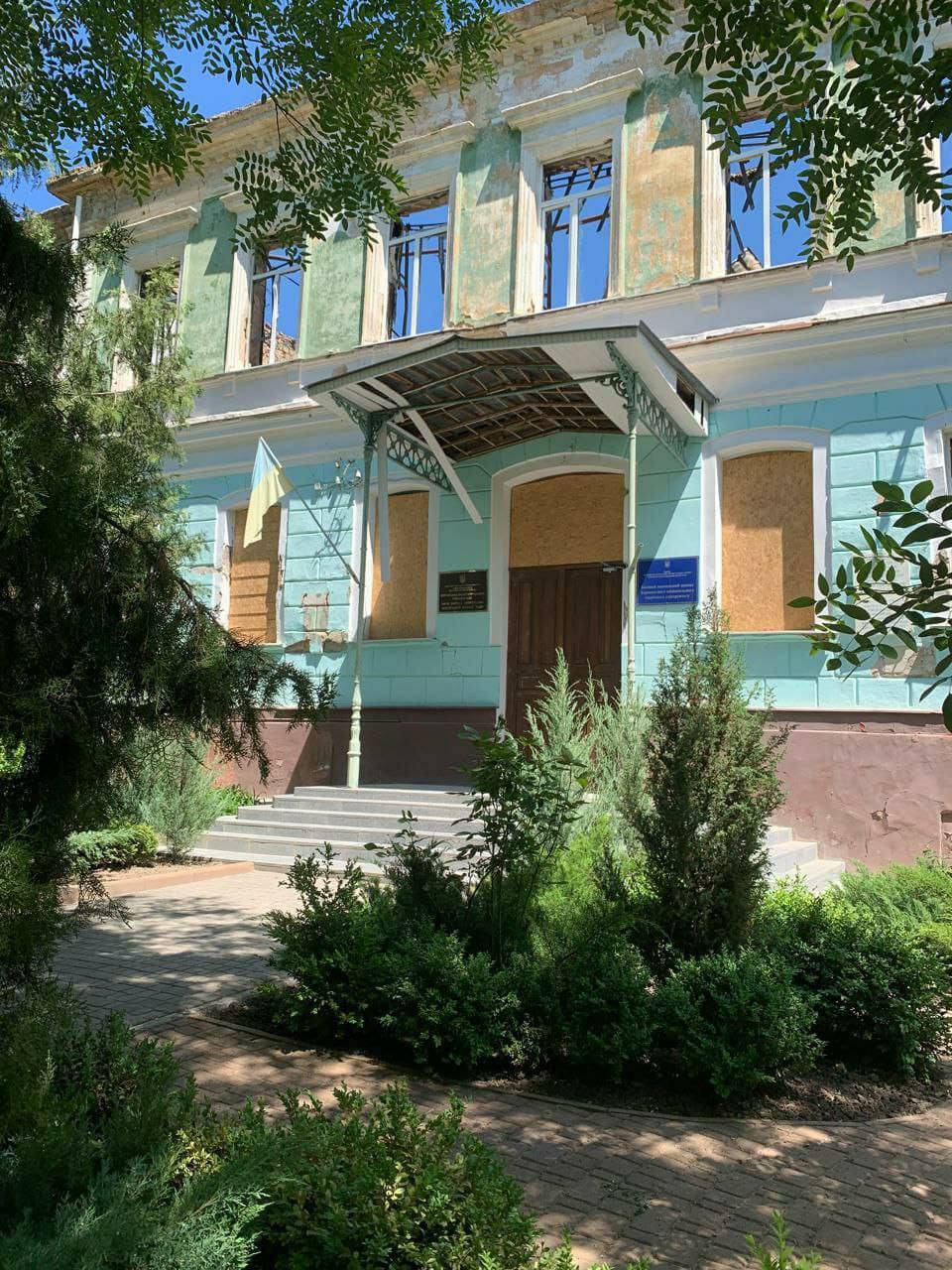
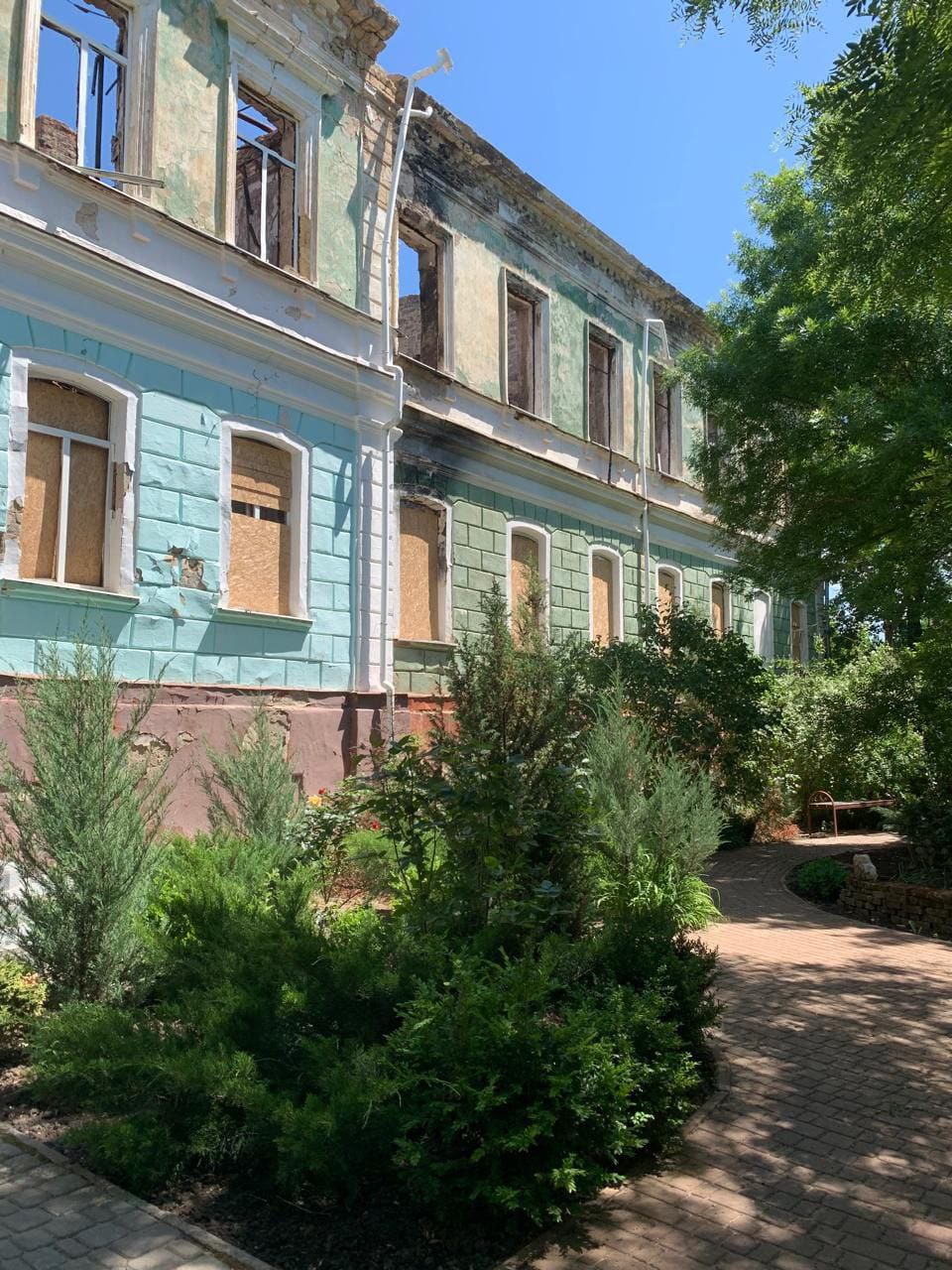
In 2018, a memorial plaque to the first head of the Ministry of Foreign Affairs of Israel and the second prime minister of the country, Moshe Sharet, appeared at the oldest gymnasium in Kherson – gymnasium No. 20, formerly the first Kherson men’s gymnasium, where he studied.

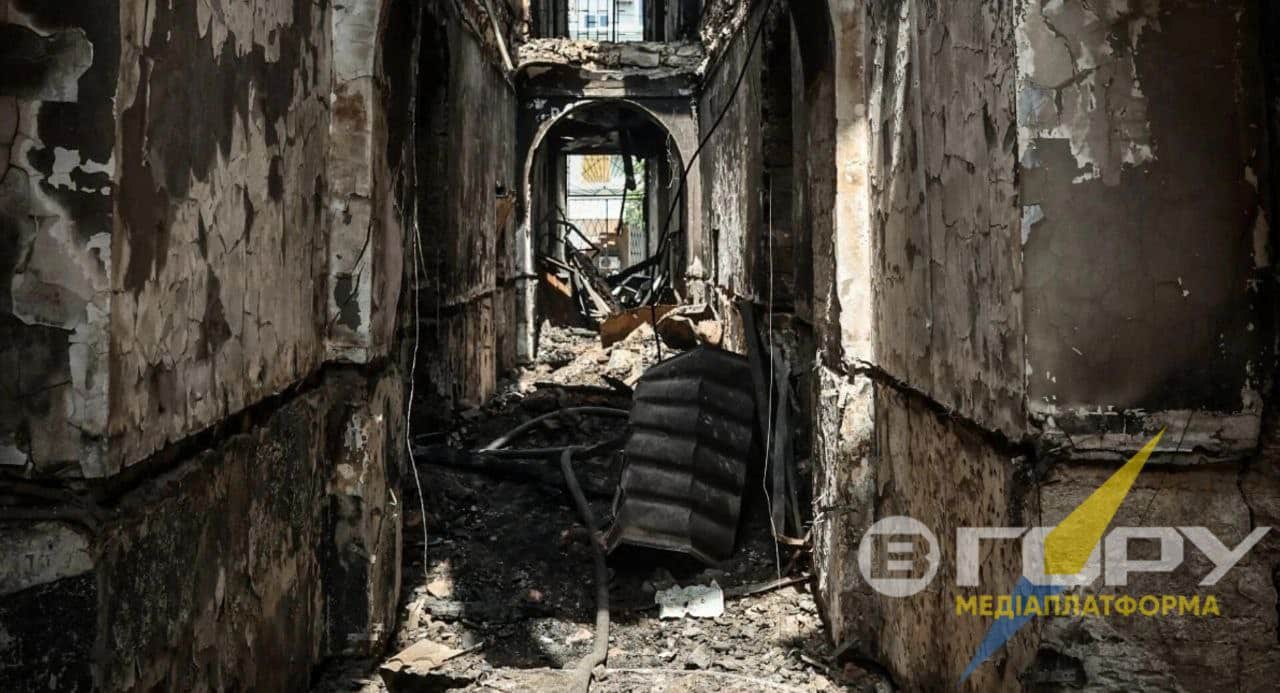
During the Russian invasion of Ukraine, it was fired upon by Russian troops several times. On May 11, 2023, the shelling of the high school burned down.

After the publication of the material, reader M., who managed to leave Kherson, which was occupied by Rashists, to Israel, said that he studied at this school and was present at the opening of the memorial plaque to Moshe Sharet on the facade of the school.

“After leaving Kherson, the Russian Nazis destroyed the school, which survived the occupation in the First and Second World Wars. Currently, there is no school, only ruins, no boards,” he wrote and sent a photo.

According to him, “On the left, next to the flag of Ukraine, you can see an unpainted place where Sharet’s board was. Now the board is being preserved in the Jewish community of Kherson.”


He was born in 1894 in the city of Kherson and was named Moisei Yakovlevich Chertok at birth. His father had left the Russian Empire, fleeing a wave of pogroms, and settled in Palestine: first in Jaffa, then in Jerusalem.

A few years later he returned and settled in Odessa, where he soon married Fanya Lev. The couple subsequently moved to Kherson, where they had three daughters and two sons, including Moshe.

From childhood he grew up inquisitive and active, distinguished by his interest in learning. Moshe attended cheder, and then graduated from the boys’ gymnasium in Kherson.

His love for linguistics bore fruit: the guy spoke eight languages, including Hebrew. His knowledge gave him a lot to translate, which he practiced, in particular translating into Hebrew.

In 1906, the Chertok family was forced to leave their home again: as a result of the growing threat of pogroms in the then Russian Empire, they decided to leave for the Ottoman Empire, and later for Palestine. By that time, Moshe was 12 years old, and he was forced to actively help his parents with their daily life and the formation of the family. In 1908, they settled in Jaffa, one of the areas from which Tel Aviv was once built.

After successfully completing the Jewish gymnasium, Moshe entered the University of Istanbul, where he began to actively study law. At the outbreak of World War I, he fought as a volunteer in the Ottoman Empire. In 1919, Moshe began working in the secretariat of the Zionist Commission. In the early 1920s, he studied at the London School of Economics. His role in the formation of the state of Israel is special.

His path began with the position of deputy editor-in-chief of the daily newspaper of the General Federation of Workers, Histradut, and experience as editor of the English weekly Davar.

Moshe Chertok was one of the authors of the Declaration of Independence of Israel, signed on May 14, 1948. It was then that he became the first Minister of Foreign Affairs in the country’s history and changed his last name to Sharett, which means “an employee fulfills a duty.” As a minister, Moshe Sharett headed the Israeli delegation at the ceasefire negotiations during the War of Independence and managed to establish diplomatic relations with dozens of countries around the world.

After leaving government service, he ran the Am Oved publishing house and Beit Berl College.

In addition, he was the head of the World Zionist Organization, to which he was elected in 1960. Despite his struggle with a serious illness, Sharett led an active public life and until his death spoke to the public, talking about his views on the construction of the state of Israel.

Moshe Sharett died on July 7, 1965, at the age of 70. He was buried in the Trumpeldor Jewish cemetery next to his wife Tzipora. Today in Ukraine, in Moshe Sharett’s native Kherson, a memorial plaque in his honor was installed on the oldest gymnasium in the city.

Leave a comment↓

Read us in channels Israel News Nikk.Agency News from Israel V – TelegramFacebook,Google News


“Not About the War”: The book of Jewish defender of Ukraine Maksym Shvartsman was presented in Chernivtsi on the 3rd anniversary of his death at the front - July 21, 2026 - Новости Израиля

Did Azerbaijan stop Israel’s vote on recognizing the Armenian genocide? - July 20, 2026 - Новости Израиля

June 2026 was the hardest for Ukrainian civilians since April 2022 — UN data - July 20, 2026 - Новости Израиля

Erection as a warning sign: what men’s health can tell about the heart, blood vessels, and diabetes

Many men perceive erection problems as a personal, awkward, and ‘not for discussion’ topic. But modern medicine increasingly views it differently: sometimes the body uses sexual function to warn in advance about disorders that have not yet manifested as pain, shortness of breath, sugar spikes, or pressure.

It’s not about panic or trying to diagnose based on one symptom. It’s about attentiveness. If erection difficulties recur, especially after 40, it may not only be an intimate failure but an early marker of problems with blood vessels, metabolism, the nervous system, or chronic stress.

For the Israeli audience, this topic is particularly practical: in Israel, men often live under constant stress, overload, anxious news, service, business, family, and caring for parents. All this does not negate medical causes but can exacerbate them and hinder timely medical consultation.

Why erection depends not only on desire

Erection is not just a matter of mood or sexual arousal. It is a complex work of the brain, nerves, blood vessels, hormones, and blood flow.

Inside the sexual organ are structures that fill with blood during arousal. The vessels must dilate, blood must flow actively enough, and venous outflow must be temporarily restricted. If this system malfunctions, it becomes difficult for a man to achieve or maintain an erection.

That’s why doctors increasingly call erectile dysfunction not only an intimate problem but also an important indicator of the overall state of the body. Sexologist Emanuele Jannini from the University of Rome Tor Vergata compares it to a ‘canary in a coal mine’—an early warning of hidden danger. This approach is important: if the symptom is noticed in time, some diseases can be detected before they affect the heart, brain, or blood vessels.

When stress is to blame, and when it’s the vessels

Stress can indeed interfere with sexual function. In anxiety, the body releases adrenaline and cortisol, vessels constrict, blood flow worsens, and testosterone levels may decrease. Plus, constant internal tension simply does not allow a person to switch to intimacy.

But attributing everything solely to psychology is dangerous.

One of the common physical causes is atherosclerosis—a condition where vessels gradually lose elasticity and narrow. The vessels of the sexual organ are very thin, so they may suffer earlier than the vessels of the heart or brain. This is the main medical significance: erection problems sometimes appear years before a heart attack, stroke, or pronounced cardiovascular disease.

According to a large analysis, men with erectile dysfunction are more likely to face coronary heart disease and stroke. Reproductive biologist Michael Carroll from the University of Manchester directly states: a good erection can be an important indicator of vascular health. The source material also indicates a connection with risks of dementia, diabetes, and other systemic disorders.

Heart, brain, diabetes: why the symptom cannot be ignored

If vessels poorly conduct blood in one area, it is rarely a completely isolated problem. The body works as a single system. Therefore, erectile dysfunction may be related to what is happening in the heart, brain, kidneys, eyes, and peripheral nerves.

Special attention is needed for men at risk of type 2 diabetes. Elevated sugar levels damage vessel walls and nerve fibers. Initially, this may be almost imperceptible: slightly worse blood flow, weaker nerve signal, more fatigue, less sexual desire. But over time, such changes become more serious.

Why diabetes is especially dangerous for men’s health

In diabetes, small vessels and nerves suffer, and they are critically important for normal erection. Researcher Bogdan Vlaho from the Sant Pau Institute in Barcelona notes that men with type 2 diabetes are about three times more likely to face erectile dysfunction than men without diabetes.

This is not the only risk. Patients with diabetes and erectile dysfunction are more often diagnosed with peripheral neuropathy—damage to the nerves of the hands and feet. The risk of diabetic retinopathy, wound healing problems, and severe complications, which in advanced cases can lead to amputation, also increases.

For Israel, this is not an abstract topic. Men in Tel Aviv, Bat Yam, Haifa, Ashdod, Netanya, Jerusalem, or Be’er Sheva often postpone preventive checks because ‘there’s no time,’ ‘it will pass on its own,’ or ‘it’s uncomfortable to talk about.’ But an early conversation with a family doctor, urologist, cardiologist, or endocrinologist can change the situation.

In such topics, НАновости — Новости Израиля | Nikk.Agency considers it important to speak without shame and without sensationalism: men’s health is not only an intimate sphere but a part of the overall medical safety of the family. If a man remains silent, he risks missing not only a sexual problem but also a disease that is already developing inside the body.

Why men remain silent

The main reason is shame. Many are willing to endure, seek random advice on the internet, buy medications without proper diagnosis, but are not ready to tell the doctor a simple phrase: ‘I have erection problems.’

This is a mistake.

A visit to the doctor does not mean that a person will immediately be given a severe diagnosis. But it allows checking blood pressure, sugar levels, cholesterol, weight, vessel condition, medications taken, hormone levels, and psychological factors. Sometimes the problem is solved by changing lifestyle, adjusting treatment, or therapy for a chronic disease that the man did not even know about.

Treatment exists, but first, a cause is needed

The most well-known drug for erectile dysfunction is sildenafil, better known as ‘Viagra.’ It improves blood flow by dilating vessels. Interestingly, it was originally developed not as a means for sexual function but in the context of cardiovascular diseases and pressure.

But the pill should not replace diagnosis.

If the problem is related to hypertension, diabetes, atherosclerosis, obesity, smoking, alcohol, depression, anxiety, pornography addiction, or side effects of medications, treatment should consider the cause. Otherwise, a person will fight the symptom without noticing the source.

What can be done right now

The first step is not heroism, but a normal medical conversation. If erection difficulties recur, it is worth consulting a doctor and honestly describing the situation: when it started, how often it recurs, whether there are morning erections, whether desire has changed, whether there is stress, medications, smoking, alcohol, diabetes, pressure, or excess weight.

The second step is a basic health check. Usually, this may involve blood pressure, blood tests, sugar levels, lipid profile, hormones, and assessment of cardiovascular risks. The specific list is determined by the doctor.

The third step is lifestyle. Weight reduction, movement, sleep normalization, sugar control, quitting smoking, and moderation with alcohol sometimes have a very noticeable effect. Not in one day, but such things improve the condition of vessels, and therefore—sexual function.

Not only medicine but also evolution

In humans, erection fully depends on blood flow. This distinguishes us from many other primates, which have a special bone in the penis—the baculum. It helps maintain an erection regardless of the quality of blood supply.

Men do not have such a bone. Therefore, human sexual function is more strongly linked to overall health. From a medical point of view, this makes erection a kind of biomarker: if the body is weakened, vessels are damaged, nerves suffer, or metabolism is disrupted, the intimate sphere may react first.

And there is no reason for shame in this.

Erection problems are not a sentence, not the ‘end of male power,’ and not a topic to hide for years. It is a signal. Sometimes temporary and related to stress. Sometimes—an important medical warning sign. The main thing is not to remain silent, not to engage in blind self-treatment, and not to wait until the body starts speaking not with a hint, but with a disease.


“Not About the War”: The book of Jewish defender of Ukraine Maksym Shvartsman was presented in Chernivtsi on the 3rd anniversary of his death at the front - July 21, 2026 - Новости Израиля

Did Azerbaijan stop Israel’s vote on recognizing the Armenian genocide? - July 20, 2026 - Новости Израиля

June 2026 was the hardest for Ukrainian civilians since April 2022 — UN data - July 20, 2026 - Новости Израиля

Jews from Ukraine: Vladimir Zeev Jabotinsky (continued)

As promised, we continue our discussion of a Jew from Ukraine – Ze’ev Jabotinsky. #jewsukraine

📝 The biography of Vladimir Zeev is really full of interesting facts, so today we are publishing the second of two posts about him. — First see – Jews from Ukraine: Vladimir Zeev Jabotinsky.

👦🏻 Childhood and youth: Vladimir Jabotinsky was born into a Jewish family in Odessa. Thanks to his literary abilities and knowledge of languages, already at the age of 18 he became a foreign correspondent for the newspapers “Odessky Listok” and “Odesskiye Novosti”, working first in Bern (Switzerland 🇨🇭) and then in Rome (Italy 🇮🇹).

📚 Literary heritage: In addition to his political activities, Jabotinsky was a famous writer, translator and publicist. He created novels, autobiographical works, translated the poetry of Edgar Allan Poe into Hebrew, edited the weekly magazine “Svitanok”, and also wrote an autobiographical novel “Five”, describing the life of a Jewish family in Odessa.

💡 Interesting fact: Jabotinsky refuted Russian fakes about Ukrainian anti-Semitism a hundred years ago. For example, about Simon Petliura he said:
“I grew up with them, together with them I fought against anti-Semites and Russifiers – Jewish and Ukrainian. Neither I nor other thinking Zionists can be convinced that such people can be considered anti-Semitic.”

📌 Memory: 55 streets in Israel are named after Vladimir Ze’ev Jabotinsky. Residents and visitors of the central part of the country are well aware of one of them – Jabotinsky Street, which is an important transport route connecting Tel Aviv, Ramat Gan, Bnei Brak and Petah Tikva.

🇮🇱 In Israel there is also the Jabotinsky Institute, the Jabotinsky Prize for achievements in literature, as well as Jabotinsky Day, celebrated annually on Tammuz 29 according to the Jewish calendar.

🇺🇦 Since 2022, Zhabotinsky Street has appeared in Kyiv, not far from the Nivki metro station. A mural dedicated to Jabotinsky was also created in Odessa.

Photo materials:

  1. Portrait of Jabotinsky
  2. Jabotinsky Street in Israel
  3. Mural in Odessa
  4. Street in Kyiv


This article was prepared specifically for the site NAnewswhere you will find even more interesting stories about prominent Jews of Ukraine, such as Vladimir Jabotinsky.

Veda section @davidkrutonog — Jew from Ukraine and founder of a marketing agency tlv.agency

Leave a comment in Telegram channel NAnews ↓ — Israel News


“Not About the War”: The book of Jewish defender of Ukraine Maksym Shvartsman was presented in Chernivtsi on the 3rd anniversary of his death at the front - July 21, 2026 - Новости Израиля

Did Azerbaijan stop Israel’s vote on recognizing the Armenian genocide? - July 20, 2026 - Новости Израиля

June 2026 was the hardest for Ukrainian civilians since April 2022 — UN data - July 20, 2026 - Новости Израиля

Russia is not only the deepest barbarism, but also an absolute relentlessness to kill, maim, destroy what has been created by civilization

This is not a “military mistake,” but a barbaric urge to destroy what civilization has created.

Russia’s strike on June 15, 2026, on Ukraine was organized in such a way that it could not be called just a military chronicle. Under fire were not only residential areas, not only energy infrastructure, not only streets where people slept at night. The Kyiv-Pechersk Lavra, Assumption Cathedral, museums, Dovzhenko film studio, organ hall, artistic and educational institutions were hit — what civilization has collected, built, and preserved for centuries.

This no longer looks like an accident.
And it should not be described in the language of cautious diplomatic formulas.

Russia is not only profound barbarism. It is an absolute urge to kill, maim, burn, break, erase, and destroy everything that cannot be subordinated to its imperial madness.

The night when Russia struck not only Ukraine but also its memory

Russia is not only profound barbarism but also an absolute urge to kill, maim, destroy what civilization has created

On the night of June 15, 2026, Russian troops launched a massive missile and drone attack on Ukraine. According to Ukrainian data, Kyiv, Kyiv region, Dnipro, Kharkiv, Sumy, and other territories were hit. In Kyiv, there were reports of casualties, dozens of fires, destruction in almost all districts of the capital, and power outages for a large number of subscribers.

But this attack became particularly indicative because of the list of affected objects.

The Kyiv-Pechersk Lavra was on fire.
The Assumption Cathedral was damaged.
Cultural centers, museums, educational institutions, artistic and musical spaces were damaged.

When missiles and drones hit cities, Russia always tries to hide behind familiar words: “military targets,” “response,” “object defeat,” “precision weapons.” But after strikes on the Lavra, museums, organ hall, and film studio, these words sound not like an explanation but like mockery.

According to reports from Kyiv, a fire broke out on the territory of the Kyiv-Pechersk Lavra after the Russian attack. Separate Ukrainian sources wrote about a fire in the area of the Assumption Cathedral, as well as damage related to a Russian drone hitting the cathedral’s roof.

Kyiv-Pechersk Lavra is not just an architectural complex. It is one of the main spiritual and historical centers of Ukraine, a place where faith, literacy, culture, memory, and the state history of Kyiv have been united for centuries.

And it is precisely there that the Russian strike lands.

This is especially cynical also because Russia has been trying for years to speak on behalf of “tradition,” “spirituality,” and the “Orthodox world.” But the true price of these words is visible not in television sermons but in the burning roof of the cathedral, in the damaged frescoes, in the burned museum collections, and in the night strikes on sleeping cities.

Lavra, museums, organ hall, film studio: the list speaks for itself

The Ukrainian National Commission for UNESCO Affairs condemned the Russian strikes on a number of cultural objects in Ukraine. Among the affected were the National Cultural-Artistic and Museum Complex “Mystetskyi Arsenal”, National Palace of Arts “Ukraine”, Kyiv National University of Theater, Film, and Television named after Ivan Karpenko-Kary, House of Organ and Chamber Music in Dnipro, Kharkiv Art Museum, and National Film Studio named after Alexander Dovzhenko.

This is not random geography.
This is not a single episode.
This is not “shrapnel fell nearby.”

This is a list of places where Ukrainian culture, Ukrainian memory, Ukrainian art, Ukrainian film school, Ukrainian music, Ukrainian museum history are preserved.

Particular outrage was caused by the strike on the National Film Studio named after Alexander Dovzhenko. According to the Ukrainian side, the oldest costume collection in Ukraine was destroyed there.

And here we must pause.

A costume collection is not just fabric in a warehouse. It is the memory of cinema, theater, eras, people, images, historical reconstructions, scenes, films, and generations of artists. It is something that cannot simply be “purchased anew.” The destruction of such things is a blow not only to a building. It is a blow to the archive of living culture.

Similarly, the Kharkiv Art Museum is not an abstract institution from a directory. Kharkiv has long lived under constant Russian fire but continues to remain a city of science, art, universities, museums, Ukrainian and Russian-speaking urban culture. Russia, which allegedly came to “protect Russian speakers,” has been killing and maiming precisely the Russian-speaking cities of Ukraine for years.

Kharkiv, Dnipro, Kyiv, Odesa, Zaporizhzhia, Sumy — all these cities have become proof of the main thing: the Russian war does not protect anyone. It destroys everyone who did not agree to become part of the imperial cemetery.

“Military response” to frescoes, icons, and museum collections

The Russian side usually speaks of “designated targets” and “response” after such attacks. After the strike on Kyiv, the Russian Ministry of Defense also presented the attack as a response to Ukraine’s actions, without explaining why in the logic of this “response” shrines, cultural complexes, civilian buildings, and historical objects are burning.

This is the essence of Russian cynicism.

First strike.
Then lie.
Then devalue.
Then declare that “it was intended that way.”

But if a state strikes the Lavra, the film studio, the organ hall, the museum, the university of arts, it is already writing its own historical verdict. There is no need to look for complex explanations where we have a simple and terrible picture: Russia is waging war not only against the Ukrainian army. It is waging war against Ukrainian existence as such.

Against the home.
Against the language.
Against the faith.
Against the memory.
Against the art.
Against the city.
Against the very idea that Ukraine has the right to be separate, free, European, and alive.

Russia destroys what it cannot appropriate

The Russian imperial logic has an old disease: if something cannot be stolen, it must be destroyed.

So it was with the Ukrainian language.
So it was with Ukrainian history.
So it was with archives, schools, churches, theaters, cities, and monuments.
So it is happening today with museums, film studios, and shrines.

For centuries, Russia has tried to appropriate Kievan Rus, the Ukrainian spiritual tradition, Ukrainian culture, Ukrainian artists, writers, composers, directors. But modern Ukraine is reclaiming its own voice. And this is what drives Moscow into a frenzy.

In this sense, the Kyiv-Pechersk Lavra is not only a religious symbol. It is a symbol of Ukraine’s historical right to its own memory. Therefore, the strike on the Lavra is perceived so painfully: it hits not only the building but the very fabric of Ukrainian history.

When Russia strikes the Lavra, it also strikes at its own lie about a “unified spiritual history.” Because you cannot simultaneously call yourself a defender of Orthodoxy and launch drones at one of the key Christian shrines of Eastern Europe.

You cannot talk about “culture” and destroy museum complexes.

You cannot talk about “protecting people” and kill civilians.

You cannot talk about “Russian speakers” and for years erase Russian-speaking Kharkiv from the face of the earth.

And you cannot talk about “fighting Nazism” when your army behaves like an army of historical darkness — with missiles, drones, lies, and hatred for the living.

Why this is important for Israel

For the Israeli audience, this story should not remain a “distant Ukrainian news.”

Israel is a country where memory is not an ornament. Here they know what a museum means. Here they understand why archives are needed. Here they know why it is impossible to remain silent when evidence, names, buildings, books, photographs, religious places, and cultural symbols are destroyed.

A people who build their security not only on the army but also on memory cannot indifferently watch the destruction of Ukrainian memory.

NAnews — Israel News | Nikk.Agency sees the attack on June 15 not just as another summary of the Russian-Ukrainian war. It is a warning to the entire civilized world: a state that is allowed to destroy foreign cities with impunity will tomorrow destroy foreign temples, museums, schools, and borders.

For Israel, there is another painful layer here.

Russia has long tried to play the role of a “responsible participant” in the Middle East, to talk to everyone, to enter international structures, to influence humanitarian and cultural platforms. But how can a state that strikes cultural heritage sites participate in bodies created to protect culture?

How can a country that destroys museums sit next to those who are supposed to protect museums?

How can a state that launches drones at shrines talk about protecting religious values?

After such attacks, the question is no longer in formulations. The question is in the honesty of the international system.

UNESCO and international organizations cannot get away with words

The Ukrainian National Commission for UNESCO Affairs, after the Russian strikes, called on the international community to strengthen political, economic, and legal pressure on the aggressor state. There was also a call not to allow Russia to participate in key UNESCO bodies.

This demand sounds logical and timely.

If UNESCO exists to protect cultural heritage, then Russian participation in the key mechanisms of such an organization after strikes on Ukrainian cultural objects looks not just like a moral mistake. It is a discredit to the very idea of international cultural protection.

The Ukrainian side also demands a strong reaction, documentation of damages, and the use of the tools of the UNESCO Executive Board, the Committee for the Protection of Cultural Property in the Event of Armed Conflict, and the World Heritage Committee.

But the reaction should not be only bureaucratic.

Because it is not about a damaged wall in a report. It is about a war in which culture has become a target.

If a Russian drone hits the Lavra, it is not an “incident.”
If the Dovzhenko film studio burns, it is not “collateral damage.”
If the organ hall in Dnipro suffers, it is not a “targeting error.”
If the art museum in Kharkiv is damaged, it is not a “sad accident.”

This is the picture of the same war.

A war against Ukrainians.
A war against Ukrainian culture.
A war against Ukrainian statehood.
A war against memory as such.

How Russia will be remembered after this war

There are wars after which a state tries to justify itself.

There are wars after which a state hides documents.

There are wars after which propaganda tells for decades that “everything was not like that.”

But there are things that do not erase. A burning Lavra does not erase. Killed civilians do not erase. Destroyed museums do not erase. The burned costume collection of the Dovzhenko film studio does not erase. Kharkiv under attack does not erase. Dnipro under attack does not erase. The Kyiv night of June 15, 2026, does not erase.

Russia will talk about “geopolitics.”
Ukraine will show photos of destruction.

Russia will talk about “traditional values.”
The world will see damaged shrines.

Russia will explain that it “does not fight with culture.”
But culture will lie in ruins after Russian strikes.

This is how a state enters historical memory — not by the statements of its ministers, not by the speeches of its propagandists, not by Kremlin formulations, but by what it actually did.

And Russia did the following: killed Ukrainians, destroyed Ukrainian cities, maimed children, destroyed homes, struck Russian-speaking regions of Ukraine, destroyed Orthodox shrines, museums, theatrical and artistic institutions.

Russia wanted to enter history as an empire.
It enters history as an arsonist.

“Demons and Antichrists” — why these words today sound not like a metaphor

After the strikes on the Lavra, words were heard again in Ukrainian society that might seem too harsh in an ordinary political article: demons, Antichrists, barbarians.

But after a night when a shrine burns, when museums, film studios, organ halls, and civilian homes are under attack, these words cease to be just emotion.

They become an attempt to describe what is happening in human language.

Because not all evil is conveniently described diplomatically.
Not every crime fits into the dry formula of “violation of international law.”
Sometimes we are faced with barbarism — not as an image, but as a method.

Russia today is a state that cannot stop. It kills because it can. It destroys because it cannot create. It erases because it cannot recognize another’s right to exist.

And in this sense, the attack on June 15 is not a separate flash. It is a continuation of the entire logic of the Russian war.

If a Ukrainian city cannot be taken — it must be destroyed.
If Ukrainian culture cannot be appropriated — it must be burned.
If a Ukrainian shrine cannot be controlled — it can be struck.
If Ukrainian memory resists — it must be declared a “target.”

This is not how civilization acts.
This is how an empire acts, which has already lost morally but continues to kill physically.

Why silence is dangerous

After each Russian crime, the world goes through the same test.

First, there is shock.
Then statements.
Then formulas of concern.
Then a new attack.

This is the circle that needs to be broken.

Because Russia carefully reads the reaction. If after strikes on cultural objects it is again allowed to sit in international humanitarian and cultural bodies, it will be a signal not of restraint but of permission.

If after strikes on the Lavra everything is limited to words, there will be a new list tomorrow.

A new museum.
A new temple.
A new university.
A new film studio.
A new city.

Therefore, Ukraine’s demand to UNESCO and the international community is not an emotional request. It is a test of whether the international system for the protection of cultural heritage exists at all, not only on paper.

NAnews — Israel News | Nikk.Agency believes that it is important for Israeli society to see in the Ukrainian tragedy not a foreign pain, but a familiar historical mechanism: when an enemy begins with the destruction of language and memory, it very quickly moves on to the destruction of people.

And vice versa — when people are destroyed, they always come for their memory.

The last conclusion following June 15

Russia is not just attacking Ukraine. Russia is trying to prove that force can be higher than culture, a missile higher than a temple, a drone higher than a museum, a lie higher than memory, and imperial rage higher than human life.

But that is precisely why it will lose in history.

Because civilization is not the absence of destruction. Civilization is the ability to remember, to call evil evil, to restore what was destroyed, and not to allow murderers to rewrite the meaning of their crimes.

After these strikes, Ukraine will restore cathedrals, museums, homes, archives, collections, cities, and life.

And Russia will be remembered for what it burned.

For the Lavra.
For Dovzhenko.
For the Kharkiv Art Museum.
For the organ hall in Dnipro.
For the night strikes on Kyiv.
For the killed civilians.
For the children it left without parents.
For the cities it tried to erase.

How you wage your war is how you will be remembered.

Russia will be remembered as the killer of Ukrainians, the mass murderer of Russian-speaking residents of Ukraine, and the destroyer of Christian shrines.

And no propaganda will be able to wash away this trace.


“Not About the War”: The book of Jewish defender of Ukraine Maksym Shvartsman was presented in Chernivtsi on the 3rd anniversary of his death at the front - July 21, 2026 - Новости Израиля

Did Azerbaijan stop Israel’s vote on recognizing the Armenian genocide? - July 20, 2026 - Новости Израиля

June 2026 was the hardest for Ukrainian civilians since April 2022 — UN data - July 20, 2026 - Новости Израиля

Gamla: a Jewish city in the Golan that challenged Rome

There are places where history does not seem like the past. It lies underfoot—in basalt stones, in fragments of walls, in steps leading to houses that are no longer there. Gamla on the Golan Heights is one such place. – here on the map – https://maps.app.goo.gl/xNpm8tj3uifABc6Y8

Today there is silence, wind, gorges, eagles, and a sharp mountain relief. But almost two thousand years ago, a vibrant Jewish city stood on this rocky ridge: with streets, houses, oil presses, a synagogue, trade, disputes, fear, and hope.

In 67 CE, three years before the destruction of the Second Temple in Jerusalem, Gamla fought against Rome. And after its fall, it was never rebuilt.

That is why its stones still speak so loudly.

The city on the camel’s back

The name Gamla is associated with the Hebrew word “gamal”—camel. If you look at the ridge from a certain point, it indeed resembles a huge animal lying on the mountain: a protruding “hump,” an elongated slope line, a steep descent down.

This is not just a beautiful metaphor. The relief of Gamla explains almost everything: why a city arose here, why it was difficult to capture, why the Romans paid a high price for the assault.

On two sides, the city was surrounded by deep gorges. It could only be approached through a narrow isthmus. Even today, the path to the ruins requires effort. Now imagine Roman legionnaires in heavy armor, under fire, among steep stone streets and houses standing one above the other.

Gamla is not mentioned in the Bible, but it was described in detail by Josephus Flavius—a Jewish historian and participant in the events of the Jewish War. He wrote about a city built on a steep mountain ledge, with an elevation in the middle and cliffs on the sides.

For a long time, the exact location of Gamla remained a subject of debate. Until 1967, the Golan Heights were under Syrian control, and Israeli archaeologists could not freely explore the area. After the Six-Day War, the situation changed.

In 1968, Gal Yitzhaki noticed a ridge that remarkably matched Flavius’s description. Later systematic excavations, primarily associated with the name Shmaryahu Gutman, confirmed: the lost city was found.

And it was not a legend.

It was a real Jewish city from the Second Temple period.

Not a fortress of fanatics, but a living city

Gamla is easy to imagine only as a fortress—a place of the last battle, tragedy, and death. But that would be too narrow.

Before the war, life was bustling here. In the western part of the city, archaeologists found houses made of worked basalt, streets, stairs, vessels, decorations, oil lamps, remnants of decorative plaster, and traces of a quite affluent lifestyle.

Gamla was not a poor military outpost on the edge of the world. It was a city connected with trade routes between Galilee, the Golan, Damascus, and lands east of the Jordan.

Olive oil held a special place in the economy. Oil presses were discovered within the city. For the ancient world, oil was not just a product: it was used in food, lighting, crafts, rituals, and trade.

So, before us is not a stone myth, but a city with an economy, market, public life, and internal structure.

This is what makes Gamla so important for understanding the Jewish history of Israel. It shows not only death but also life before the catastrophe.

NAnews — Israel News | Nikk.Agency draws attention to such places not as tourist spots, but as living memories of the country. Gamla is the Golan, Jerusalem, the Jewish War, early synagogue tradition, and the question of the price of freedom, all gathered in one rocky ridge.

The synagogue that changed the perception of the Second Temple period

One of the most important finds of Gamla is the ancient synagogue. It existed even before the destruction of the Second Temple when Jerusalem remained the center of sacrifices, pilgrimage, and religious life of the Jewish people.

This is fundamentally important.

For a long time, there was debate in science about how developed synagogues were before 70 CE. The find in Gamla became one of the strong archaeological confirmations that the synagogue already played a significant role in the life of Jewish communities.

Here they could read the Torah, discuss public affairs, teach children, gather for prayer and interpretation of Scripture.

The synagogue building in Gamla was a large public space. Inside were stone benches along the walls, columns, and nearby—a mikveh. In the synagogue area, traces of the siege were also found: arrowheads, stones, traces of destruction.

This gives the place a special power. The synagogue was not only the center of city life but also found itself inside its last battle.

When Rome came to the Golan

In 67 CE, Vespasian approached Gamla—a Roman general who was soon to become emperor. The Jewish War was already underway, Galilee and the north of the country were engulfed in rebellion.

Gamla was hastily preparing for a siege. The fortress wall looked unusual: in some places, residents literally turned parts of their own homes into a defensive line, filling rooms with stones. This was not the calm architecture of peacetime, but a feverish preparation for a blow.

The first assault turned into a heavy defeat for the Romans. The legionnaires broke into the city but found themselves trapped by its relief. Narrow streets, steep slopes, houses standing one above the other played against the attackers.

According to Josephus Flavius, under the weight of the Romans, the roofs of houses began to collapse. Warriors fell, perished under the debris, lost formation. For the Roman army, this was a humiliating episode.

But Rome was not accustomed to retreat.

After preparation, a second assault followed. Gamla fell.

Stones, arrows, and traces of the last battle

The archaeology of Gamla is particularly strong in that it confirms the drama not with general words, but with objects.

About 1600 iron arrowheads, numerous ballistic stones, iron nails, weapon parts, traces of destruction of walls and buildings were found on the site. This is a rare case where a battlefield can literally be read by the distribution of finds.

Here, there is no need to invent a tragedy. It lies on the ground.

Every stone, every arrow, every fragment of a wall reminds: in Gamla, there was not a symbolic conflict and not a beautiful legend, but a real war. The Roman military machine came to a small city on the Golan, and the city resisted to the end.

Why Gamla is called the “Masada of the North”

Gamla is often called the “Masada of the North,” but this comparison requires caution.

Masada fell later—after the destruction of Jerusalem. Its history is associated with another scene of last resistance. Gamla, however, perished in 67 CE, during the Roman advance on the north, when the fate of Jerusalem was not yet finally decided.

According to Josephus Flavius, thousands of people died at the fall of Gamla—residents of the city and refugees from the surroundings. Some were killed in the streets, some retreated to the summit and rocks, some perished in the gorges.

Therefore, Gamla is not a copy of Masada. It is a separate tragedy.

And, perhaps, even more archaeologically tangible. Because after the fall, the city was not rebuilt. It was not resettled, not overlaid with later layers.

Gamla remained in the ground as the war left it.

Coins of Gamla and the connection with Jerusalem

A special place among the finds is occupied by coins minted in besieged Gamla.

They bore the name of the city and a slogan related to the liberation of holy Jerusalem. This is a crucial detail. The inhabitants of Gamla did not perceive themselves as a distant periphery. They saw their struggle as part of the overall war for Judea and Jerusalem.

The small city on the Golan Heights minted a political statement in metal.

For modern Israel, this detail sounds especially strong. The connection between the local community, the land, Jerusalem, and the common fate of the people was not an abstract idea. It existed in coins, in prayers, in walls, in the decision to resist.

NAnews — Israel News | Nikk.Agency writes about this precisely because such stories help to understand Israel not only through today’s news but also through a long line of memory. Gamla shows: the struggle for existence, for land, for Jerusalem, and for the right to live as one’s people did not begin yesterday.

The city that has not yet said its last word

The main mystery of Gamla is that most of the city is still unrevealed.

Only part of the territory has been excavated. Under the basalt debris, there may remain houses, streets, workshops, vessels, inscriptions, coins, and objects that will still change our understanding of the life of the Jews of the Golan in the Second Temple era.

This is an extremely rare case for Israeli archaeology: the city perished, was not rebuilt, and preserved the tragic layer of the end of the 1st century CE.

Gamla is not just ruins for a tour.

It is a place where you can see how a Jewish city lived before the catastrophe, how it prepared for war, how it prayed, traded, defended itself, and perished. Here, the synagogue, oil presses, residential houses, walls, and traces of Roman projectiles stand side by side.

This is the strength of Gamla.

It does not ask you to believe in a legend. It shows the stones.

The city on the camel’s back was destroyed by Rome, but it did not disappear from history. Almost two thousand years later, it still speaks to Israel—quietly, harshly, and very directly.

Gamla reminds: a people who can read their stones better understand their present.


“Not About the War”: The book of Jewish defender of Ukraine Maksym Shvartsman was presented in Chernivtsi on the 3rd anniversary of his death at the front - July 21, 2026 - Новости Израиля

Did Azerbaijan stop Israel’s vote on recognizing the Armenian genocide? - July 20, 2026 - Новости Израиля

June 2026 was the hardest for Ukrainian civilians since April 2022 — UN data - July 20, 2026 - Новости Израиля

Jews and Ukrainian Sovereignty: The Reaction of Jewish Communities and Israel to the Declaration of State Sovereignty of Ukraine on July 16, 1990 – As It Happened

On July 16, 1990, the Supreme Soviet of the Ukrainian SSR of the 12th convocation adopted the Declaration of State Sovereignty of Ukraine — a crucial document that proclaimed the supremacy and independence of the Ukrainian republic within its territory.

The declaration did not immediately announce secession from the USSR but established the priority of Ukrainian laws, the right to its own armed forces, bank, currency, and a neutral, non-nuclear status. This was the first step toward Ukraine’s independence, which sparked broad public and international response.

This study is dedicated to the reaction to the declaration by the Jewish community of Ukraine, Jewish diasporas abroad (USA, Canada, and others), and the State of Israel.

We explore whether there were official or informal responses from Jewish organizations, consider the participation of Jewish deputies in drafting the document, evaluate the hopes and concerns of Ukraine’s Jewish population, and examine whether Jewish issues were addressed in the discussions and the text of the declaration.

Reaction of the Jewish Community in Ukraine

Inside Ukraine, the adoption of the sovereignty declaration was met with interest and support from emerging Jewish organizations and activists. The late 1980s and early 1990s were marked by a national and cultural revival of Jewish life in Ukraine amid the weakening of Soviet censorship. By the end of 1990, 13 Jewish newspapers and magazines were being published in eight cities, along with cultural societies and Yiddish and Hebrew language circles.

Jewish community leaders saw democratization and Ukraine’s sovereignty as an opportunity to strengthen Jewish culture and civil rights. For example, the Jewish Cultural Society in Kyiv and similar organizations in other cities were actively involved in civic life and partnered with Ukrainian democratic movements.

A pivotal development was the creation of the Rukh Council of Nationalities within the People’s Movement of Ukraine (a mass democratic movement for reforms and sovereignty). One of the founders and leaders of this initiative was Kyiv Jewish activist Alexander Burakovsky, who became the council’s chairman (or co-chair).

The council leadership also included dissident and human rights defender Iosif Zisels, who later recalled:

“I was very active in Rukh — I created the Council of Nationalities within it.”

The council served as a bridge between the Ukrainian national-democratic movement and national minorities, including Jews. From the beginning, Rukh declared its commitment to multiethnic unity and opposition to antisemitism. At Rukh’s founding congress (September 1989), a resolution was adopted urging citizens to oppose all forms of ethnic hatred and antisemitism:

“We must stand in defense of the honor of the Jewish people, their culture, education, and religion.”

During the summer of 1990, as the Ukrainian Supreme Soviet debated the sovereignty declaration, Jewish representatives were not absent from the process. While no specific “Jewish amendments” were introduced, principles of equality and minority protection, championed in part by Jewish activists, were reflected in the document.

Following the declaration’s adoption, many Jewish community leaders in Ukraine publicly welcomed the move. For instance, the editor of the Lviv Jewish newspaper Shofar, Alexander Lizen, said that for him, as a Jew, participating in Ukraine’s national revival was

“a golden opportunity… to help Rukh awaken the nation — not just for Jews, but also for Russians, Ukrainians, Poles, Hungarians, for everyone.”

He and several other activists — such as Borys Dobrivker in Odesaconsciously chose to stay in Ukraine rather than emigrate, because they believed in Ukraine’s democratic future and improvements in the status of Jews.

Jewish organizations began cooperating with Ukrainian ones

The Kyiv Jewish Cultural Society, for example, supported the initiatives of Rukh: in 1990, it called on Jews to join Rukh or at least take part in its activities. That same year, the organization contributed financially to the construction of a memorial in Kyiv to the victims of the 1932–33 Holodomor, thus showing solidarity with Ukrainian suffering.

In Lviv, the first joint Ukrainian-Israeli society “Ukraine–Israel” was established, initiating the installation of a monument to 136,000 Jews — victims of the Lviv ghetto.

These examples demonstrate that the reaction of the Jewish community of Ukraine to the declaration of sovereignty was mostly positive and proactive. Ukrainian Jews saw in the new political course a chance to revive their community and improve relations with the titular nation based on mutual respect.

As Alexander Burakovsky noted at the time, Ukraine is now the only republic where Jews can live in peace,” emphasizing the positive changes.

Overall, the Jewish community of Ukraine greeted the declaration of sovereignty with enthusiasm and relief.

This was supported by public gestures from Ukrainian leaders. Just a year after the declaration, in the fall of 1991, the speaker of the parliament, Leonid Kravchuk, at a rally commemorating the 50th anniversary of the Babi Yar tragedy, apologized on behalf of Ukraine to the Jewish people for instances of Ukrainian collaboration with the Nazis.

Such steps, unimaginable during Soviet times, were crucial in building trust. Prominent former dissidents — Vyacheslav Chornovil, Yevhen Sverstyuk, Ivan Dziuba, among others — openly wrote and spoke about the need for normalization of Ukrainian-Jewish relations, urging all political forces to adopt the view: “Ukraine must have normal relations with Israel and the entire Jewish world.”

These statements were widely published in the Ukrainian press and perceived by the Jewish community as a guarantee of their safety in the new Ukraine.

Reaction of the Jewish Diaspora and the State of Israel

In the Jewish diaspora outside the USSR, events in Ukraine were closely followed, although a unified position was not immediately developed.

In 1990, the main focus of foreign Jewish organizations was still on the general situation in the USSR—emigration of Soviet Jews, the fight against antisemitism, and reestablishing ties with Jewish communities across the Soviet republics.

Nevertheless, Ukraine’s declaration of sovereignty was noticed and appreciated. The Ukrainian republican government declared its commitment to minority rights, which received positive feedback on the international stage.

Thus, the U.S. Congressional Commission on Security and Cooperation in Europe (CSCE) reported in early 1992:

“Ukraine’s treatment of minorities is encouraging; unlike many former Soviet republics, Ukraine has largely avoided ethnic conflict. Interethnic peace has been maintained.”

The same report noted significant progress in Ukraine’s compliance with OSCE human rights obligations.

Notably, among the independent human rights observers in Ukraine in the early ’90s were members of the Jewish diaspora. The Union of Councils for Soviet Jews (UCSJ) established the Ukrainian-American Bureau for Human Rights and Rule of Law, which monitored the situation in the newly independent Ukraine. These organizations reported in their bulletins that Ukraine’s official policy toward Jews had significantly improved—state antisemitism had disappeared, Jewish life was being revived, and the government pledged to support minority cultural rights.

Western media published reports on the status of Jews in Ukraine during its path to independence

For example, the Los Angeles Times in spring 1991 ran a feature titled “Changing Lifestyles: Some Jews Forgo Israel’s Promise and Elect to Stay in Ukraine.”

The article noted that the democratic Rukh movement had gained the trust of part of the Jewish population, and that many Soviet Jews “chose to stay and lead the revival of Jewish culture in Ukraine—for the first time in decades”, rather than emigrate. The article included emigration statistics: in 1990 alone, 58,528 Jews emigrated from Ukraine to Israel (according to ADL), but tens of thousands remained.

It also emphasized that Rukh condemned antisemitism and some Jewish organizations in Ukraine urged Jews to join Rukh, hoping to secure their rights through active participation in independence. This kind of reporting fostered a cautiously optimistic perception of Ukrainian sovereignty among the Jewish diaspora, especially in the U.S.—concerned about nationalism, but recognizing Ukraine’s commitment to tolerance.

In Israel, there were no major official statements in 1990 regarding Ukraine’s declaration of sovereignty—at the time, Israel did not maintain diplomatic relations with individual Soviet republics. Still, Israeli circles monitored the developments closely.

Between 1990 and 1991, hundreds of thousands of Soviet Jews immigrated to Israel, a significant portion of them from Ukraine.

Israel had a vested interest in ensuring that the collapse of the USSR and the emergence of new states did not lead to instability for Jews. In this context, Ukraine appeared relatively stable. There were no major ethnic clashes, and overt antisemitism was marginal.

The Israeli press noted that, unlike some nationalist uprisings, Ukraine’s independence movement was moderate, civic in nature, and proclaimed protection of all communities. Israeli diplomats began informal contact with Ukrainian elites even before the USSR’s collapse.

According to accounts from that time, in 1991, Israeli embassy staff in Moscow regularly visited Kyiv and held informal discussions with Ukrainian MPs and journalists. They reported to Jerusalem that antisemitism was not being encouraged at the official level and that minorities seemed to feel safe.

Israel, however, took a cautious approach to recognizing the independence of Soviet republics—choosing to wait for the U.S. and international consensus first.

Once Ukraine held its referendum and declared full independence in December 1991, Israel was one of the first to establish diplomatic ties (on December 26, 1991).

Israeli leaders welcomed independent Ukraine, recognizing its importance as the homeland of a large aliyah population and a strategic partner in Eastern Europe. Israeli-Ukrainian relations quickly developed on the basis of mutual respect.

Notably, even before independence, Ukraine supported restoring Soviet-Israeli diplomatic ties and moved to deepen its own connection with Israel. (For example, the Ukraine-Israel Friendship Society was founded in Lviv in 1990.) All this shows that both the State of Israel and the global Jewish diaspora viewed Ukraine’s sovereignty declaration not with negativity—but with cautious hope.

Directly or indirectly, Jews abroad supported Ukraine’s aspiration for freedom, expecting the new republic to become a democratic and safe home for Jews.

Participation of Jewish Deputies in the Verkhovna Rada of the Ukrainian SSR

The Verkhovna Rada of the Ukrainian SSR of the 12th convocation (elected in spring 1990) included many representatives of national minorities—Russians, Poles, Jews, Tatars, Armenians, and others. It is difficult to determine the exact number of Jewish deputies, as nationality was often not specified in official biographies.

Nevertheless, available sources confirm that Jews were indeed present in the Ukrainian SSR’s parliament and played an active role.

In Kyiv in 1990, there was an attempt to form an informal “Jewish Council of Ukraine”—an association of deputies and public figures of Jewish origin. According to archival data, it was intended to include about 20 People’s Deputies of Ukraine.

This suggests that at least about two dozen members of the Verkhovna Rada were of Jewish origin. A significant number of them were elected from major industrial cities and academic centers (Kyiv, Kharkiv, Odesa, Dnipropetrovsk, etc.)—areas with traditionally large Jewish populations.

Some of the Jewish deputies belonged to the democratic opposition, while others were part of the communist majority. However, they ultimately stood united on the issue of sovereignty. On July 16, 1990, 355 deputies voted in favor of the Declaration of Sovereignty, with only 4 against—clearly, the Jewish deputies were among those who supported it.

Regarding the drafting of the declaration, the main author on behalf of the opposition was the lawyer Serhiy Holovaty (ethnically Ukrainian), while the leadership’s version came from the working group of the Presidium of the Supreme Council.

There were no direct representatives of the Jewish community in this group. Nevertheless, ideas important to the Jewish population were reflected in the final text, largely thanks to the cooperative atmosphere fostered in part by Jewish activists within the Rukh movement.

During parliamentary debates, the opposition’s “People’s Council” (125 democratic deputies) insisted on including principles of human rights and ethnic equality in the declaration. These provisions were also supported by many communist deputies, who believed it was necessary to assure all ethnic groups in Ukraine of their protected rights. As participants later recalled, the session was held under public pressure—people were protesting outside the parliament demanding sovereignty. Under these circumstances, the deputies almost unanimously approved language affirming civil equality.

In the preamble of the Declaration, it was stated that all power in the republic belongs to the people of Ukraine, and in the section on citizenship, it was declared: “All citizens are equal before the law, regardless of origin, social and property status, racial and national identity, gender, education, political beliefs, religious convictions…”.

It was further emphasized that citizens of all ethnicities together form the people of Ukraine. These principles directly aligned with the interests of the Jewish community: equality regardless of nationality or faith meant that the new Ukraine rejected any form of discrimination against Jews. It is no surprise that Jewish deputies supported these principles.

Thus, Jews in the Verkhovna Rada of the Ukrainian SSR were not excluded from the process of adopting this historic document. On the contrary, they voted in favor of the declaration and thus contributed to the establishment of Ukrainian sovereignty. Their political affiliations varied—some were communist reformers, others were in the democratic opposition. But the general consensus was that a sovereign Ukraine should become a state of equal opportunity for all nationalities—a view supported and promoted by Jewish parliamentarians.

Hopes and Concerns of Ukrainian Jews Regarding Sovereignty

For Ukraine’s Jewish population, the declaration of sovereignty was a moment that sparked mixed emotions—hope for positive change, but also uncertainty and concern about the future.

On the one hand, the declaration promised a solid legal foundation for protecting the rights of Jews as a national minority. For the first time in decades, principles of equality and freedom of conscience were proclaimed at such a high level. Ukrainian Jews, having just emerged from the era of state-sponsored antisemitism (such as the “Doctors’ Plot” and anti-Zionist propaganda of the 1970s–80s), saw it as a breath of fresh air.

These hopes were based on the belief that “Ukraine would no longer pursue discriminatory policies.” And indeed, soon after independence, the Ukrainian government passed concrete legislation building on the 1990 declaration: in November 1991—the Declaration of the Rights of Nationalities of Ukraine, and in June 1992—the Law on National Minorities, which provided broad guarantees for language, cultural, and religious rights. These steps demonstrated the seriousness of intentions outlined in 1990.

Jewish leaders noted that state antisemitism was fading into the past and that the highest officials were showing respect for Jewish heritage and memory (for example, by participating in Babyn Yar commemorations and initiating dialogue with Israel). This inspired optimism, especially among younger Jewish activists who saw Ukraine as their future home.

As mentioned earlier, part of the Jewish intelligentsia chose not to emigrate but instead to help build a new life within Ukraine. Many shared the hope that independent Ukraine could become a democratic home for people of all ethnicities. Indeed, in the early 1990s there was a true revival of Jewish life: Jewish schools, libraries, and theaters were opening; films and books on Jewish themes were being produced; and ties with global Jewry were strengthening. These changes were seen as fulfillment of the hopes sparked in 1990.

On the other hand, a large part of the Jewish population also had concerns rooted in historical experience and the uncertainty of 1990. First, the collapsing Soviet market pointed to looming economic and social crises.

Many Jews feared that such instability could provoke nationalist backlash or lead to Jews being scapegoated. As noted by Kyiv activist Burakovsky, the mass emigration of Jews at that time was driven not only by new opportunities but also by “political uncertainty, economic hardship, and environmental problems (like Chernobyl)”. In other words, many were leaving “just in case,” unsure whether Ukraine would remain stable.

Second, there was lingering distrust toward ordinary citizens (the mob mentality).

According to some Jews who stayed, “we trust Rukh, but we’re unsure about the general public,” whose reactions could be unpredictable. This fear came from memories of early 20th-century pogroms and WWII atrocities perpetrated by mobs with official indifference.

While the new Ukrainian leadership expressed support for Jews, the question remained—what did the people think? To prevent possible incidents, the democratic government took steps: it blocked the Russian ultranationalist group Pamyat from operating in Ukrainian cities; police guarded synagogues in response to anonymous threats, and more.

Fortunately, no significant antisemitic violence occurred in Ukraine during 1990–1991. Nevertheless, the sense of unease among parts of the Jewish population lingered, as evidenced by high emigration rates.

By the end of 1991—after the independence referendum—many of the Jewish community’s fears began to fade.

Ukraine was proving itself to be a relatively peaceful and tolerant state. In international reports from 1992, Ukraine was cited as a “model of interethnic harmony,” especially considering its large Russian and minority populations.

The Jewish community saw that their worst fears—such as a return to state-sponsored antisemitism—had not materialized. By the mid-1990s, it was clear that antisemitism in independent Ukraine was declining, both institutionally and socially.

According to the Euro-Asian Jewish Congress, incidents of antisemitic discrimination by state agencies had ceased in the early 1990s; antisemitism became marginal, limited to fringe publications and individual extremists. This progress was rooted in the decisions of 1990–1991 that laid the foundation for equality. Thus, the hopes of Ukraine’s Jews linked to the declaration of sovereignty were largely fulfilled, while earlier fears gradually subsided.

Conclusion

The adoption of the Declaration of State Sovereignty of Ukraine on July 16, 1990, was a turning point not only for the Ukrainian people but also for all national communities of the republic, including Jews. The analysis leads to the following conclusions:

  • The official and unofficial response of Jewish organizations in Ukraine was generally positive. Jewish activists actively engaged in the processes of perestroika and sovereignty, seeing in them an opportunity to secure their rights. As early as 1990, Jewish communities (in Kyiv, Lviv, Odesa, and others) cooperated with the Rukh movement, jointly opposing antisemitism and defending democratic ideals. No major Jewish organization in Ukraine opposed the declaration; on the contrary, many publicly supported it. They viewed the declaration as a guarantee of equality. Abroad, major Jewish institutions (such as the World Jewish Congress and the American Jewish Committee) did not issue special statements on Ukraine in 1990, as their focus was broader—the entire USSR. However, indirectly, the reaction was positive: international Jewish human rights groups noted the absence of pogroms or persecution during the rise of the Ukrainian national movement. In 1990, the State of Israel maintained official neutrality, awaiting Ukraine’s formal independence. Yet immediately after the December 1, 1991 referendum, Israel was among the first to recognize the new Ukraine. This signaled trust: Israelis saw Ukraine as a friendly state where Jews were not persecuted.
  • Jewish deputies participated in drafting and adopting the declaration, though there were no clearly identified Jewish authors. Jewish presence in the 12th convocation of the Ukrainian Supreme Soviet was significant—dozens of MPs were of Jewish origin. They represented various political factions but unanimously supported sovereignty. It can be said that the Jewish community’s contribution to the declaration’s ideology was evident in the proclamation of Ukraine as a multiethnic democratic state. Jewish deputies, alongside other minority representatives, acted as a kind of parliamentary conscience, reminding the majority of the value of tolerance.
  • Ukraine’s Jewish population in 1990 viewed the event with both hope and concern, though optimism predominated. Many Ukrainian Jews saw the declaration as a long-awaited step toward freedom, promising cultural and religious revival. Jewish leaders spoke of a new era of cooperation between Ukrainians and Jews. At the same time, there were fears: historical trauma, economic instability, and rising extremism raised concerns that things could go wrong. These fears were compounded by ongoing emigration—over 58,000 Jews left for Israel in 1990 alone. Still, some 400,000 Jews remained in Ukraine, and by the end of 1991 it became clear that their situation was improving—the state committed to protecting minorities, there were no ethnic clashes, and antisemitism was openly condemned by major forces. Statements by Jewish activists from that time reflect a dominant tone of cautious optimism. The prevailing sentiment was: “Yes, there are risks, but we cannot miss this chance to live with dignity in our homeland.” History proved that this optimism was largely justified—Jews in independent Ukraine gained opportunities for development that were unthinkable in the Soviet Union.
  • The “Jewish issue” was present in the declaration and its discussions indirectly, through general references to equality and freedoms. The Jewish people or antisemitism were not specifically mentioned—which made sense, given the declaration’s universal nature. Still, the spirit of the document—nation-building without discrimination and with guarantees for all cultures—implied that Jewish interests were considered. The declaration paved the way for further legislation on minority rights and freedom of religion. In parliamentary debates, democratic leaders repeatedly emphasized that independent Ukraine must exemplify interethnic harmony—especially in contrast to conflicts elsewhere in the USSR. This consensus helped avoid the notion of “special status” for the titular nation. Ukraine was proclaimed the common homeland of all its citizens—something vitally important for the Jewish population.

In conclusion, it is clear that Ukraine’s Jewish community welcomed the proclamation of sovereignty with support and active participation, seeing it as a path to democratic change and enhanced security.

Jewish diasporas abroad and the State of Israel, though not issuing immediate official responses, generally viewed Ukraine’s emergence as a sovereign state positively—especially admiring its leaders’ commitment to tolerance.

The event of July 16, 1990, was a turning point in the Jewish history of Ukraine: it marked the beginning of a new chapter in Ukrainian-Jewish relations, grounded in partnership and mutual respect—as confirmed both by the documents of the time and the subsequent development of independent Ukraine.


“Not About the War”: The book of Jewish defender of Ukraine Maksym Shvartsman was presented in Chernivtsi on the 3rd anniversary of his death at the front - July 21, 2026 - Новости Израиля

Did Azerbaijan stop Israel’s vote on recognizing the Armenian genocide? - July 20, 2026 - Новости Израиля

June 2026 was the hardest for Ukrainian civilians since April 2022 — UN data - July 20, 2026 - Новости Израиля

How “Russia Day” lost significance in Israel – from Netanyahu to Mai Golan: Moscow “filled the hall,” but Israel sent only the “third row” of power

Once upon a time in Israel, Netanyahu attended the “Russia Day”. Then President Rivlin. Then the Foreign Minister. And now — a minister of the third political tier. This is not a break in relations. But it is no longer the same closeness. In diplomacy, such details are clear: the level of presence is falling, and with it, Russia’s ability to portray its former influence in Israel is also falling.

On June 11, at the Dan Tel Aviv Hotel, the Russian embassy in Israel held a state reception on the occasion of Russia Day, which is celebrated in the Russian Federation on June 12. The official message from the Russian embassy is published here: israel.mid.ru

At first glance, everything looked like a regular diplomatic protocol: hall, guests, speeches, veterans, embassy representatives, officials, religious figures, cultural program. The Russian side specifically emphasized that more than 300 guests attended the event.

But in diplomacy, the main thing is often hidden not in the number of people in the hall, but in the rank of those whom the state sends to the front row.

This is where the main political story begins.

The main honorary guest of the reception, as “officially determined” by the Russian embassy in Israel, “became” Mai Golan — Minister of Social Equality and Advancement of Women in Israel. She is an acting minister, a member of the government, and a representative of the ruling Likud party. She is not a private individual and not just a deputy who happened to be at the event.

But Mai Golan is not the Prime Minister, not the President, not the Foreign Minister, not the Defense Minister, not the Finance Minister, and not a representative of the security or foreign policy core of Netanyahu’s cabinet.

In terms of real political weight, this is a minister of the 3rd political tier.

This is what makes the reception interesting not as a social event, but as an indicator of the change in Russia’s status in the Israeli protocol.

A full hall without Israel’s top officials

The Russian embassy tried to show “scale”.

Quote:

“More than 300 guests attended the event. Among them were former Prime Minister of Israel E. Olmert, Senior Deputy Director General of the Israeli Ministry of Foreign Affairs Y. Livne, Deputy Director General of the Israeli Ministry of Foreign Affairs Y. Fuchs, head of the Nativ organization A. Shoham, head of the Main Directorate of the Israeli Police O. Abukasis, representatives of Israeli ministries and departments, the Coordinating Council of Russian-speaking compatriots’ organizations in Israel, the Israeli Association of Graduates of Soviet and Russian Universities, business and academic circles, veteran and compatriot movements, political and public figures, journalists”.

The list is long. But it does not cancel the main thing: the current political power of Israel at the level of the main honorary guest was represented by Mai Golan.

Ehud Olmert is a prominent figure, but he is a former Prime Minister. His presence can add weight to the event in a social or media picture, but he does not represent the current government of Israel.

Foreign Ministry officials are also an important channel. Their presence shows that diplomatic ties are not closed. However, this is not the Foreign Minister, not the Minister of Strategic Affairs, and not a politician making key decisions on the Israel-Russia line.

Therefore, the main conclusion is simple: Russia received the official Israeli protocol, but did not receive the political elite of Israel.

When Moscow wants to show the strength of influence, it needs not only flags, speeches, and a full hall. It needs top officials. This time there were no top officials.

From Netanyahu to Mai Golan: how the level of Israeli representation fell

To understand the significance of the 2026 reception, it is important to look not only at the fact of Mai Golan’s participation.

In diplomacy, a separate event often becomes understandable only in comparison with previous years. And this is where the main thing is visible: the level of Israeli representation at events for Russia Day has gradually decreased.

In 2018, Russian diplomacy in Israel could show a completely different picture. Then Prime Minister Benjamin Netanyahu attended the event. This was the maximum political level: not a minister, not an official, not a department representative, but the head of the Israeli government. For Moscow, such participation was a strong symbol — next to the Russian national holiday stood the first person of the Israeli executive branch. In protocol terms, there is almost nothing higher than this level for the government.

In 2019, the level also remained high. The event was attended by the President of Israel Reuven Rivlin, as well as government representatives. The President in Israel does not manage the cabinet like the Prime Minister, but his participation has enormous state and symbolic weight. This is not departmental presence, but state representation at the level of a national symbol. For Russia, it was still a picture of high closeness: Russia Day in Israel remained an event where figures of the first state tier come.

In 2020, the main honorary guest was the Foreign Minister of Israel Gabi Ashkenazi. This is no longer the Prime Minister or the President, but still a very high diplomatic level. The Foreign Minister is the person directly responsible for foreign policy, international contacts, and the official tone of relations with other states. For Russia, the participation of the Israeli Foreign Minister meant that Russia Day retained a serious protocol status.

In 2021, the main honorary guest was Gila Gamliel, then Minister of Environmental Protection. This is already a noticeable decrease compared to the Prime Minister, President, and Foreign Minister. Gamliel was an acting minister and a representative of Likud, so her participation remained an official state gesture. But the Ministry of Environmental Protection does not belong to the foreign policy, defense, or economic core of power. Compared to 2020, this was a transition from the head of Israeli diplomacy to a minister of a sectoral, internal direction.

In 2022, the situation was transitional. This was already the year of Russia’s full-scale invasion of Ukraine, and the diplomatic background changed sharply. In open sources among the honorary guests was Ze’ev Elkin — then Minister of Construction, Jerusalem Affairs, and Heritage. Elkin is a politician of heavier weight than an ordinary technical minister: he knows the Russian direction well, was born in Kharkiv, and for many years dealt with issues of foreign policy, Jerusalem, and relations with the post-Soviet space. But still, this is not the level of the Prime Minister, President, or Foreign Minister. That is, Israel maintained an official channel, but did not elevate Russia Day to the highest state level.

In 2023, the Israeli government was represented at the reception by Gila Gamliel, now as Minister of Intelligence. Formally, the title of the position sounds more significant than ecology, but in the Israeli system, it is still not the same as the Minister of Defense, Foreign Minister, Finance Minister, or Prime Minister. It was a government representative, but not a figure setting Israel’s strategic course in relations with Russia, the USA, Europe, or Ukraine. Israel was present, but the level remained below the pre-war peak. Israeli media also wrote that the government of Israel was represented by Gamliel.

In 2024, at the reception in the Sergei Courtyard, a congratulatory speech from the Israeli government was delivered by the Minister of Agriculture Avi Dichter. His personal political weight is higher than it might seem from the name of the ministry: Dichter is a former head of the Shin Bet, former Minister of Internal Security, an experienced politician from Likud. But at that moment he represented the agricultural department, not the Foreign Ministry, defense, or the Prime Minister’s office. Therefore, 2024 can be considered intermediate: Moscow received a notable politician, but did not receive a figure from the foreign policy or security core of the current cabinet. Sources associated with the Sergei Courtyard and the Russian Orthodox Church indicated that the congratulatory speech from the Israeli government was delivered by Avi Dichter.

In 2025, the main honorary guest was Mai Golan — Minister of Social Equality and Advancement of Women. This is already a more obvious transition to the third political tier. Golan is an acting minister and a representative of the ruling Likud party, so her participation cannot be called private or accidental. But her ministry is not related to defense, foreign policy, finance, strategic planning, or regional security. For Moscow, this was an official Israeli gesture, but already without the previous political height.

In 2026, the picture repeated: the main honorary guest was again Mai Golan. The Russian embassy itself recorded this in an official message about the reception at the Dan Tel Aviv Hotel. More than 300 guests attended the event, including former Prime Minister Ehud Olmert, senior officials of the Israeli Foreign Ministry, representatives of the police, Nativ, public, business, academic, and Russian-speaking organizations. But the current government of Israel was represented as the main honorary guest by Mai Golan. The Russian Foreign Ministry also published a message where she is named the main honorary guest of the reception.

This builds a clear ladder of the level’s decline. First — Prime Minister Netanyahu. Then — President Rivlin. Then — Foreign Minister Ashkenazi. Then — sectoral ministers and individual politicians: Gamliel, Elkin, Dichter. Finally — Mai Golan, a minister of the third political tier.

If earlier Russia could demonstrate the Prime Minister, President, or Foreign Minister at its national day in Israel, now the main honorary guest becomes a minister not associated with foreign policy and security. This is not a complete boycott, not a break, and not the closure of a diplomatic channel. But it is a clear signal: the previous level is no longer there.

That is why the reception at the Dan Tel Aviv Hotel in 2026 can be read in two ways. On the one hand, Moscow received the official presence of an Israeli minister. On the other hand, it did not receive Netanyahu, nor the President, nor the Foreign Minister, nor the Defense Minister, nor anyone from the political core of power.

In diplomacy, such a distinction matters. A full hall, a long list of guests, and festive speeches do not replace the rank of the main state representative. Russia tried to show the scale of the event, but it itself recorded in its message: the main honorary guest was Mai Golan.

This is the main indicator of the level’s decline. Israel left the protocol but removed the political height. Moscow received presence but did not receive the previous status.

For NAnews — Israel News Nikk.Agency in this story, the fact of the reception itself is not important. Embassies regularly hold national days, it is part of diplomatic routine. The rank is important. States often speak not with statements, but with whom they send to the hall.

And if earlier next to the Russian embassy one could show the Prime Minister, President, or Foreign Minister, now the main honorary guest becomes a minister not responsible for foreign policy, security, or strategic decisions.

What Russia said: holiday, Holocaust, and justification of war

Not only the composition of guests deserves special attention, but also the content of the speech by Russian Ambassador Anatoly Viktorov.

According to the embassy’s message, he spoke about the “millennial historical path” of the Russian state, “unbending will”, “patriotism”, “unity”, “diversity”, and “traditional spiritual and moral values”. He reminded of the first human flight into space, Russia’s contribution to the Victory over Nazism, the cessation of the horrors of the Holocaust, and Moscow’s role in shaping the modern system of international relations.

This is a classic set of Russian state rhetoric: history, Victory, space, traditional values, a special mission, and a claim to moral right to teach the world.

But then the main thing was said.

The ambassador, according to the message, stated that “all the goals of the special military operation will be achieved”. That is, at a state reception in Tel Aviv, there was no distancing from the war, but a confirmation of the course to continue Russian aggression against Ukraine.

For the Israeli audience, this is a particularly sensitive moment.

Russia is again speaking to Israel through the memory of the Holocaust, the Red Army, and the fight against Nazism. But in the same political framework, it justifies the war against Ukraine — a country where Jewish communities live, where there is a deep Jewish history, where under Russian strikes were cities, civilian buildings, cultural objects, universities, museums, and families with Ukrainian and Jewish roots.

Moscow uses the memory of World War II as a diplomatic shield. But this shield no longer hides the reality of today’s war.

Anti-Ukrainian block in Viktorov’s speech

In the embassy’s message, there is another important fragment. Viktorov emphasized that “the common duty of Russia and Israel” is to counter attempts to “rewrite history”, “diminish or distort the role of Red Army soldiers”, and also, as stated in the Russian text, “elevate Nazi collaborators-Ukrainian nationalists to the rank of national heroes”.

This is not a neutral historical phrase. This is a direct part of the Kremlin’s anti-Ukrainian propaganda line.

At an event where the main honorary guest was a minister of the Israeli government, the Russian ambassador essentially repeated Moscow’s key theses about the war against Ukraine: Russia is the “heir of Victory”, Ukraine is allegedly a space of “nationalists”, the war is allegedly forced and historically justified.

And here the question arises not to the Russian embassy. Nothing else can be expected from it.

The question is to Israel: what signal does the participation of an acting minister of the government send at an event where, alongside the memory of the Holocaust, the justification of the Russian war against Ukraine is heard?

Mai Golan: not the first row, but still a state sign

It is important not to simplify. Mai Golan is not the head of Israel’s foreign policy. She does not negotiate on Ukraine, does not determine Israel’s position on Russia, does not manage the army, does not answer for strategic dialogue with the USA or Europe.

That is why her presence shows the decline in the level of representation.

But on the other hand, she remains a minister. She sits in the government of Israel. She represents the ruling Likud party. Therefore, her participation cannot be reduced to the formula “just someone came”.

The correct assessment here is dual:

for Russia, this is no longer the previous high status; for Israel, it is still an official political gesture.

Moscow can record for itself: a minister of the Israeli government came.
But critics can respond: not a first-tier figure came, but a minister of the third political level.

And both parts are true.

That is why the article should not be about “Israel supported Russia”. That would be too crude and inaccurate. More precisely: Israel maintained the protocol channel but noticeably lowered the political rank of participation.

NAnews — Israel News Nikk.Agency considers this story precisely as an indicator of diplomatic balance: Israel does not want to completely close the door to Moscow, but also does not give it the previous picture of closeness with the top of the state.

Iran, the “Palestinian question” and Russia’s attempt to return to the regional game

In Viktorov’s speech, there was not only the Ukrainian block. The Russian ambassador also spoke about Moscow’s readiness to “facilitate the search for political-diplomatic solutions to the crisis” around Iran. He reminded of the “updated Russian concept of collective security in the Persian Gulf zone”.

The topic of the “Palestinian-Israeli problem” was separately mentioned — in the Russian formulation, based on the international legal framework, taking into account “Israeli security concerns” and “Palestinian aspirations”.

This is also not an accidental part of the speech. Russia is trying to present itself not as an isolated aggressor country, but as a player allegedly capable of participating in the resolution of regional crises — from Iran to the Middle East.

But in Israel, such a role of Moscow is perceived more and more complicatedly.

Russia maintains contacts with Iran. Russia is waging war against Ukraine. Russia uses anti-Western rhetoric. Russia tries to talk about Israel’s security while simultaneously building its own line with those forces that are a direct threat to Israel.

Therefore, words about “collective security” sound beautiful, but politically do not remove the main contradiction: Moscow wants to be a mediator while remaining a party to an aggressive war and a partner of the anti-Western camp.

Why a full hall does not equal influence

The Russian embassy separately emphasizes that ambassadors, diplomats, and representatives of military attachés from more than 30 “friendly states”, UN staff, representatives of Israeli city halls, honorary consuls, church figures, and Russian-speaking organizations attended the reception.

For a diplomatic report, this looks solid.

But massiveness does not always mean political success.

A full hall can show the activity of the embassy, the presence of old ties, work with compatriots, contacts with part of business, veteran, and religious circles. However, the main question remains the same: who came from the current top of Israel?

Not the Prime Minister.
Not the President.
Not the Foreign Minister.
Not the Defense Minister.
Not the Finance Minister.
Not the head of the strategic block.

The main honorary guest was Mai Golan.

This is not a protocol failure, but it is a clear lowering of the level compared to the years when Russian diplomacy could show the top officials of Israel next to it.

And in this sense, the Russian report itself provides material for the opposite conclusion. The embassy wanted to show scale. But if you read the text carefully, it shows a limitation: there is a hall, there is symbolism, there are speeches, but the previous political weight is no longer there.

What this means for Israel

For Israel, the situation is more complicated than a simple choice between “to go” and “not to go”.

Israel lives in a region where the Russian factor has long been associated with Syria, Iran, military coordination, the security of Jewish communities, repatriation, diplomatic channels, and the internal Russian-speaking audience. Therefore, Jerusalem often acts more cautiously than Kyiv or some European capitals would like to see.

But caution does not cancel the moral and political context.

When the Russian ambassador in Tel Aviv says that the goals of the so-called “special military operation” will be achieved, this is not just an internal Russian formula. This is a statement about the continuation of the war against Ukraine, made on Israeli soil, at an official state reception, in the presence of representatives of the Israeli system.

When alongside this the Holocaust, the Red Army, and the fight against Nazism are mentioned, a particularly sharp contrast arises. The memory of the catastrophe of European Jewry should not become a cover for modern aggression.

Israel has the right to pragmatic diplomacy. But Israeli society has the right to ask where the line between protocol and political signal lies.

Main conclusion: Moscow received the protocol, but did not receive the previous status

The reception for Russia Day in Tel Aviv took place. Russian diplomacy gathered guests, delivered speeches, showed veterans, church ties, Russian-speaking organizations, diplomats, and a cultural program with the support of the Moscow government.

But the main political signal was not in the number of guests and not in the festive rhetoric.

The main signal is in the level of Israeli representation.

Russia did not receive the Prime Minister of Israel at this reception.
Did not receive the President.
Did not receive the Foreign Minister.
Did not receive the Defense Minister.
Did not receive a figure determining Israel’s strategy.

It received Mai Golan — an acting minister, but a minister of the third political tier.

For Moscow, this allows saying: Israel was represented.
For an attentive observer, it says something else: Israel was represented, but no longer at the previous level.

This is not a break in relations. Not a diplomatic boycott. Not a demonstrative closing of the door.

But it is also not the closeness that Russia could show before.

In diplomacy, such details are clear: the level of presence is falling, and with it, Moscow’s ability to portray its former influence in Israel is falling.

Russia received a full hall. But did not receive the first row of power.


“Not About the War”: The book of Jewish defender of Ukraine Maksym Shvartsman was presented in Chernivtsi on the 3rd anniversary of his death at the front - July 21, 2026 - Новости Израиля

Did Azerbaijan stop Israel’s vote on recognizing the Armenian genocide? - July 20, 2026 - Новости Израиля

June 2026 was the hardest for Ukrainian civilians since April 2022 — UN data - July 20, 2026 - Новости Израиля

Jews from Ukraine: “Beitaniya Illit” is the first Zionist youth commune in Israel “Shomer Ha-Tzair”, founded by immigrants from Galicia (Ukraine) –

Jews from Ukraine, including from Galicia, played a significant role in the formation of modern Israel.

One of the iconic stories was the founding in 1920 of the first Zionist commune, Beitaniya Illit, associated with the Shomer HaTzair youth movement. This was not just an experiment, but a whole philosophy that formed the basis of many future kibbutzim.

Young Jews from Galicia, inspired by the ideas of returning to the Land of Israel, came here to build a new life. They were united by belonging to the Shomer HaTzair movement, based on the principles of collectivism, equality and labor.

The commune collapsed after 8 months of difficult trials, but gave birth to dozens of kibbutzim and leaders of Israel.

Commune Beitaniya Illit was located in the Lower Galilee, not far from the Kinneret, at the intersection of roads to Kibbutz Alumot.

In 1964, a memorial dedicated to the Shomer HaTzair movement and the 73 kibbutzim founded by members of this movement was opened here. that’s where it is on the map.

The tent-like monument was designed by architect Yechiel Arad. From the top of the memorial there is a panoramic view of the Jordan Valley, Kinneret, Golan Heights and Hermon.

It was here, in 1921, that an experiment that became a legend in the history of Zionism was completed.

He told me about him in detail Shimon Briman for the website (Ukrainian) “Ukrainian-Jewish Zustricha”.


How it all began: the idealism of young Galicians

In the spring of 1921, the experiment, which went down in history as the “Galician project,” was completed.

In the summer of 1920, the “Galician landing” of 131 people arrived in Galilee. These were young men and women, many of whom left Lvov and other cities of Western Ukraine. Their main goal was to create a new type of Jewish society.


Problems and challenges of the commune

The youth faced many difficulties. Life in Betaniya was full of challenges:

  • Harsh living conditions: tents and temporary shelters did not protect from strong winds and winter cold.
  • Lack of food: food was meager, and physical labor was exhausting.
  • Conflicts in the group: participants discussed each other’s personal qualities, which often led to quarrels and tension.

Constant lack of resources, disease and internal conflicts eventually led to the collapse of the commune in the spring of 1921. However, its members became the founders of many kibbutzim in Israel.


Leaders of the “Galician wave” and their contribution

Name City of origin Contribution to Israel
Dov Opper Zolochev Organizer of “Shomer Ha-Tza’ir”, died in 1920.
Arie Alweil Bibrka Artist, founder of the heroic style in art.
Meir Wald (Yaari) Przemysl Leader of the Shomer HaTzair movement, member of the Knesset.
Benjamin Freivogel Stanislavov (Ivano-Frankivsk) Founder of Kibbutz Beit Alfa, trade union leader.
David Horowitz Drohobych First director of the Ministry of Finance, head of the Bank of Israel.
Aba Khushi Turk Mayor of Haifa, leader of the Land of Israel Workers’ Party.
Shmuel Golan Pidvolochisk Founder of the Israeli school of psychoanalysis.

How it all ended

Beitaniya, the first commune of the world’s first Zionist youth movement, Shomer HaTza’ir, disintegrated after eight months of difficult trials, but gave birth to dozens of kibbutzim and leaders in Israel. Almost all the leaders and participants in this experiment were Jews from the cities and towns of Galicia.

It was from this region of modern Ukraine that at the end of July 1920, an organized “landing party” arrived in the Land of Israel – 131 people, familiar from the meeting in the Shomer Ha-Tzair groups, all 18-20 years old. Most are boys, the rest are girls.

They left their parents and abundance to return from the diaspora to their land. They left the comfort of the city for hard work. They were inspired by the idea of ​​​​creating a New Man – a free Jew in their ancient homeland.

After the collapse of Beitaniya Illit, its members descended into the valleys of Galilee and became the founders of many kibbutzim. Despite the difficulties, the experiment was not in vain – it laid the foundation for future Zionist settlements.

The kibbutzim created by these idealists became not only economic, but also cultural centers of young Israel. Their ideas of collectivism and work inspired new generations of Zionists.


Historical heritage

Betaniya-Illit remains a symbol of courage, self-sacrifice and faith in ideals. Today, when we talk about the relationship between Ukraine and Israel, it is important to remember how Jews from Galicia contributed to the building of the modern Jewish state.

Our website NANews – Israel News emphasizes that the story of Betaniya is an example of how courage and the desire for freedom can change the future of an entire people.

More in the section “Jews from Ukraine”.

Read on WhatsApp – channel NAnews ↓ — Israel News

Read on Telegram – channel NAnews ↓ — Israel News


“Not About the War”: The book of Jewish defender of Ukraine Maksym Shvartsman was presented in Chernivtsi on the 3rd anniversary of his death at the front - July 21, 2026 - Новости Израиля

Did Azerbaijan stop Israel’s vote on recognizing the Armenian genocide? - July 20, 2026 - Новости Израиля

June 2026 was the hardest for Ukrainian civilians since April 2022 — UN data - July 20, 2026 - Новости Израиля

“Call sign ‘Jew’. An Israeli citizen has been fighting for Ukraine’s Independence since 2014” / 24th Separate Assault Battalion ‘Aidar’

Staff Sergeant Grigory Pivovarov, call sign “Jew”, is a citizen of Israel who came to Ukraine during the Maidan and has been fighting against Russian aggression since 2014. His interview with the 24th Separate Assault Regiment “Aidar” is not only a personal story of a fighter but also an important conversation about the IDF, Ukraine, citizenship, anti-Semitism, Russian propaganda, and the price of a true choice.

An Israeli who chose Ukraine not with words, but with service

On April 30, 2026, the 24th Separate Assault Regiment of the Armed Forces of Ukraine “Aidar” published a video interview with Grigory Pivovarov — a staff sergeant, fighter with the call sign “Jew” and a citizen of Israel who has been fighting for Ukraine since 2014.

The video is titled: “Jew. About Israel, the IDF, Maidan, citizenship, and the war since 2014“.

Link to the video: https://www.youtube.com/watch?v=cr_hX2mA-f8

This is not just a story of a foreigner who found himself in the Ukrainian war. It is the story of a person who went through the Maidan, the volunteer movement, the front, injuries, command positions, and still speaks of Ukraine as his home.

At the beginning of the interview, Grigory Pivovarov introduces himself directly: his name is Grigory, call sign — “Jew”, he is a fighter of the “Aidar” regiment, and he is a foreigner, a citizen of Israel, who has been fighting for Ukraine’s independence since 2014.

Call sign
Call sign “Jew”. Citizen of Israel has been fighting for Ukraine’s Independence since 2014 / 24th Separate Assault Regiment “Aidar” – News of Israel

For the Israeli audience, this story is especially important. It intersects several lines at once: the experience of the IDF, Jewish identity, the Ukrainian war for freedom, Russian aggression, and the personal choice of a person who could live in another country but decided to stay with those he calls brothers.

From Maidan to “Aidar”: how Grigory Pivovarov’s journey began

According to Pivovarov, his arrival in Ukraine during the Maidan was largely accidental.

Before that, he lived in Barcelona, engaged in club projects and tourism. He was invited to Ukraine by a medic friend who needed strong people for evacuating the wounded. Grigory recalls that his friend explained simply: he was a former Israeli soldier, not afraid of blood, and could help where people capable of acting under pressure were needed.

He arrived in Kyiv in February 2014. He didn’t make it to Mariinsky on February 18, but found himself on the barricades on Khreshchatyk when the APC was burning. After a concussion, he was evacuated along with other participants in the events.

Then came the victory of the Maidan, the student movement, alarming news from Crimea, and the gradual realization that everything was not ending with a change of power. Ukraine was entering a war, although at that time many still did not call it a war in the full sense.

In May 2014, Pivovarov joined “Aidar”. In the interview, he specifies the date: on May 19, 2014, he arrived at the unit. Later there were transitions, legal complexities due to his status as a foreigner, service in other structures, and a return to “Aidar”, where in February 2016 he officially became a serviceman of the Armed Forces of Ukraine.

Why exactly “Aidar”

One of the strong moments of the interview is the answer to the question of why he has remained in “Aidar” for so many years.

Pivovarov says that this unit reminds him of the unit where he served in the IDF: people from different walks of life come there, and they are made into strong fighters. According to him, “Aidar” does not chase PR but simply does its job.

This phrase clearly shows the nerve of the entire conversation. For him, the army is not a decoration, not a slogan, and not a place for beautiful photos. It is an environment where it is tested who is next to you, who endures, who returns after injury, and who does not abandon their own.

What is the 24th Separate Assault Regiment “Aidar” and why is this name so important

The 24th Separate Assault Regiment “Aidar” is the 24th Separate Assault Regiment “Aidar”, a combat unit of the Ukrainian Ground Forces.

The “Aidar” itself grew out of a volunteer battalion that appeared in 2014 after the Maidan and the beginning of Russian aggression against Ukraine.

The name is associated with the Aidar River in the Luhansk region. In Ukrainian military memory, this name has become one of the symbols of the first months of resistance when volunteer formations often covered those sections of the front where the state system was still being rebuilt under the reality of a large war.

The official website of the regiment emphasizes that “Aidar” began its journey in 2014 and has always been a combat unit. Among the values of the regiment are indicated ideology, brotherhood, continuity, internal culture of the fighter, personal responsibility, and result.

This is important for understanding the video itself. Pivovarov’s interview is not a separate biography against the backdrop of war. It is the story of a person who found himself inside a unit with a very strong volunteer tradition.

The official site of “Aidar” also describes the procedure for joining the regiment: application, recruiter call, selection interview, medical examination, document check, contract signing, and start of service. Among the requirements are age, readiness to serve in the army vertical, physical fitness, absence of convictions, and readiness to work in a team.

NANews — News of Israel | Nikk.Agency draws attention to this connection: the story of Grigory Pivovarov shows how the Ukrainian war became a matter not only for the citizens of Ukraine but also for people who consciously chose the side of freedom — not by passport, but by conviction.

How Russia views “Aidar”

In Russia, “Aidar” is viewed extremely hostilely — both at the level of propaganda and at the level of official legal position.

In the Russian version, “Aidar” is called a “national battalion”, “extremists”, and a “terrorist organization”. In December 2023, the FSB included the Ukrainian “Aidar” in the Russian list of terrorist organizations. Before that, the unit had already been recognized in the Russian Federation as extremist and banned.

For Russian propaganda, “Aidar” is one of the symbols of Ukrainian resistance that needs to be demonized. Like “Azov” or “Right Sector”, it is usually shown not as a unit of the Armed Forces of Ukraine, but as “punishers”, “Nazis”, and “militants”. This is how Moscow tries to present the war against Ukraine not as RF aggression, but as a struggle against supposedly “extremists”.

This status is also used by Russian courts. Ukrainian military personnel can be prosecuted simply for serving in “Aidar”. For example, there is a known case of military medic Victoria Tkachenko, whom a Russian court sentenced precisely for serving in a unit recognized by the Russian Federation as “terrorist”.

On the front, “Aidar” is perceived by Russian military and pro-Russian militants as a dangerous and hated enemy. This coincides with what Grigory Pivovarov says in the interview: according to him, for the enemy, “Aidar” is a very scary name, and freed “Aidar” fighters can be “counted on the fingers”.

In short: in Russia, “Aidar” is officially banned, demonized in propaganda, and among Russian military personnel, it is perceived as one of the most hated Ukrainian combat symbols since 2014.

IDF, Israel, and the Ukrainian front

In the interview, there is a separate layer important for readers in Israel. Pivovarov is a citizen of Israel, a former Israeli soldier, a person who knows from the inside what military culture is, responsibility to the unit, and the experience of war with an enemy that uses Soviet and Russian weapons.

He says that his father lives in Israel, is a family doctor, and a captain of medicine in the reserve. He also talks about his younger brother, who served in the IDF, was a paramedic-shooter, and then became the head of the medical service.

In one of the most indicative fragments, Pivovarov connects the Israeli and Ukrainian experience through a common source of threat.

He reminds that the Soviet Union sponsored Israel’s enemies, and modern Russia supports Hamas, Hezbollah, and other forces fighting against Israel. According to him, ATGMs, mortars, rockets, “Grads”, and “Katyushas” have a clear origin in this military chain.

For the Israeli reader, this is not abstract geopolitics. It is an attempt to explain: Ukraine and Israel face different fronts of one big problem — aggressive regimes and their allies who use terror, missile strikes, propaganda, and war against the civilian population.

“My home is Ukraine”

One of the strongest answers in the video is to the question: where is his home.

Pivovarov answers: “My home is Ukraine.”

He further explains why Russian manipulation of the anti-Semitism theme became one of the reasons for his internal resistance. He says he was outraged by stories that Ukrainians are anti-Semites and points to historical facts that Russian propaganda either distorts or completely ignores.

He mentions Ukrainians among the Righteous Among the Nations, talks about the Jewish pages of Ukrainian history, about the connections between the Ukrainian national movement and Zionists, and also recalls Vladimir Jabotinsky and Symon Petliura. In his logic, this is not an academic lecture, but a personal response to Russia’s attempt to steal Ukraine’s historical subjectivity and present Ukrainians as enemies of Jews.

Yes, the Ukrainian-Jewish history is complex. It had tragedies, pain, pogroms, the Holocaust, collaborationism, Soviet lies, and real conflicts of memory.

But that is why such testimonies are important. Pivovarov does not offer a primitive picture. He talks about how Russian propaganda uses anti-Semitism as a tool to poison attitudes towards Ukraine and hide its own aggression.

Injuries, command, and citizenship that is still not there

In the interview, Grigory Pivovarov talks about returning after injuries because he could not leave his brothers. The first injury — because his own pulled him out. The second — because he needed to return. The third — because, in his words, he was ashamed to leave the unit after being appointed platoon commander. He doesn’t even consider another injury serious, although it was recorded.

His path within the army is also indicative: a simple infantryman, grenade launcher, squad leader, chief sergeant of the platoon, platoon commander, acting company commander, and then work in the regiment’s recruitment.

This is the biography of a person who did not come for symbolic participation. He really lived this war.

And against this background, the topic of citizenship sounds especially acute. Pivovarov says that there are awards, ranks, injuries, service since 2014, but there is still no Ukrainian citizenship. He lists his distinctions and does not hide his disappointment: the state he defends has not yet become his state legally.

This is one of the main meanings of the video. Ukraine knows how to accept blood, service, and loyalty. But the bureaucratic system does not always know how to quickly and honestly recognize those who have already proven their belonging to the country by deed.

Appeal to Ukrainians

The final part of the interview is an appeal to Ukrainians who are unsure whether to serve and where exactly to go.

Pivovarov speaks harshly but without theatrics: the enemy does not sleep. He recalls the Donetsk and Luhansk regions, Mariupol, Bakhmut, Kurakhovo, Vuhledar — places he saw alive and then saw destroyed. His argument is simple: if people do not want to see this near their homes, the state needs to be defended now.

He urges not to wait until the TCC takes a person, but to choose a unit in advance, contact familiar military personnel, look for those with whom you want to serve, and make a conscious decision.

Separately, he invites to “Aidar”, emphasizing that the unit has retained the spirit of the first volunteer battalion of the Armed Forces of Ukraine, and its commanders have gone through real battles, injuries, and the front path.

Why this video is important for Ukraine, Israel, and the Jewish audience

The story of Grigory Pivovarov breaks several propaganda schemes at once.

For years, Russia has been trying to present Ukraine as a country alien to Jews. But before the viewer is a citizen of Israel with the call sign “Jew”, who came to Ukraine, saw the Maidan, went to war, has been serving in a Ukrainian unit since 2014, and says that his home is Ukraine.

Russia tries to portray the Ukrainian army as an artificial construct. But before the viewer is a person who compares the spirit of “Aidar” with what he knows from the IDF: responsibility, camaraderie, different people in one line, commanders with combat experience, and readiness to return to their own.

Russia tries to use the theme of anti-Semitism as a weapon against Ukraine. But before the viewer is a Jew and Israeli who speaks directly about the manipulation of this theme and about how Ukrainian history is much deeper and more complex than Russian clichés.

For Israel, this video is also not secondary. It reminds that Russia’s war against Ukraine and the war of Iran’s terrorist allies against Israel are in the same moral field: it is about the right of a people to live freely, protect their home, and not be destroyed by someone else’s imperial or terrorist will.

Open ending

The video of the 24th Separate Assault Regiment “Aidar” is a presentation not only of one fighter. It is a presentation of choice.

Grigory Pivovarov could have stayed in Israel, Europe, or any other point in his biography. But he found himself in Ukraine, stayed after the Maidan, went through the war since 2014, and continues to speak of this country as home, even without a Ukrainian passport.

Perhaps this is the main question for the state and society: who really becomes Ukrainian — the one who received the document, or the one who has been defending the country for years at the cost of their own health, blood, and life?

The video leaves this question open. But Grigory Pivovarov’s answer has already sounded on the front.


“Not About the War”: The book of Jewish defender of Ukraine Maksym Shvartsman was presented in Chernivtsi on the 3rd anniversary of his death at the front - July 21, 2026 - Новости Израиля

Did Azerbaijan stop Israel’s vote on recognizing the Armenian genocide? - July 20, 2026 - Новости Израиля

June 2026 was the hardest for Ukrainian civilians since April 2022 — UN data - July 20, 2026 - Новости Израиля

“Biolabs in Ukraine” have resurfaced in the USA: how a Russian fake reached American intelligence

The scandal surrounding ‘biolabs in Ukraine’ has returned to American politics. This time, the reason was materials disseminated by the Director of National Intelligence of the United States, Tulsi Gabbard. They claim that Washington allegedly secretly funded more than 120 biological laboratories in 30 countries around the world, including Ukraine.

But the story quickly went off script.

Journalists and researchers noticed: part of the published data resembles not a new product of American intelligence, but materials previously used by Russian special services and propagandists. Moreover, the documents contained a map of Ukraine with gross errors — ones that are hard to imagine in a serious intelligence report.

For Israel, this is not an unfamiliar topic. A country that faces daily information attacks from Iran, Hamas, Hezbollah, and their allies understands well: lies rarely come in the form of crude propaganda. More often, they appear as a ‘document’, ‘leak’, ‘map’, ‘expert report’, or ‘alternative version of events’.

How an old Russian myth got new packaging in the USA

Tulsi Gabbard stated that the American authorities allegedly hid information about foreign biological laboratories from citizens. A separate emphasis was placed on Ukraine: the materials spoke of the risks of one of the laboratories being captured or damaged by the Russian side, as well as the storage of dangerous samples.

At first glance, this may sound like a typical biosecurity topic. In any country, there are laboratories where viruses, bacteria, food poisoning, epidemiological threats, and dangerous pathogens are studied. After the collapse of the USSR, such programs in Eastern Europe were indeed of particular importance: it was necessary to control the Soviet legacy, modernize infrastructure, and reduce the risk of leaks of dangerous materials.

But Russian propaganda has been telling a completely different story for years. Not about sanitary safety. Not about epidemiological surveillance. Not about protecting the population.

But about ‘Pentagon secret laboratories’, ‘biological weapons’, ‘genetic viruses’, ‘combat mosquitoes’, infected birds, and bats.

It sounds absurd, but these are exactly the plots that the Kremlin actively promoted before the full-scale invasion and after February 24, 2022. Russian terrorists destroyed Ukrainian cities, and Russian TV channels explained to viewers that Moscow was allegedly ‘defending’ itself from secret threats.

Now a similar narrative has reappeared in the American agenda. And this is no longer just another social media dispute. If materials with signs of Russian origin have indeed made it into documents disseminated on behalf of American intelligence, it becomes a problem for the USA, Ukraine, Israel, and all allies who depend on the accuracy of information.

The map that revealed the problem

A separate scandal was caused by the map of Ukraine attached to the materials.

On it, Kyiv is displayed incorrectly. One of the names looks like the erroneous ‘Cherniv’ or ‘Cherniv’. Crimea, temporarily occupied by Russia, was included in the list of objects. And ‘Zakarpattia’ was indicated as if it were a separate city, although it is a region of Ukraine.

Such errors do not resemble technical trifles. This is a red flag.

When a document claims to be at the level of intelligence material, geography must be accurate. City names — verified. The map — professional. If it contains errors at the level of random generation or poor retelling of someone else’s material, the main question arises: who prepared this and who checked it?

There is a suggestion that the map could have been created using artificial intelligence or assembled from dubious sources. But even if it’s ‘only’ negligence, the result is dangerous. Because Russian propaganda gets what it needs: not proof, but a reason to claim that ‘even in the USA, they recognized Ukrainian biolabs’.

What really stands behind the laboratories in Ukraine

In Ukraine, there are indeed biological, medical, sanitary, and veterinary laboratories. Just like in Israel. Just like in the USA. Just like in any country that wants to control epidemics, diagnose diseases, check food safety, and respond to outbreaks of infections.

These are not secret military bases.

They do not belong to the Pentagon. They do not engage in the creation of biological weapons. They do not develop ‘ethnic viruses’ and do not train birds for attacks on Russia.

Their work is related to what in a normal state is called biosecurity. After the Soviet period, Ukraine, like other countries in the region, needed to modernize the laboratory system. International cooperation in this area was supposed to reduce threats, not create new ones.

But the Kremlin needed a different picture. Russian disinformation takes a real fact — the existence of laboratories — and turns it into a fantasy about a secret military network. This is how propaganda works: it does not invent everything from scratch, but steals a piece of reality and attaches convenient lies to it.

For readers in Israel, this is a particularly familiar mechanism. After Hamas attacks, rocket strikes, Iranian threats, and campaigns against the IDF, the world sees again and again how the aggressor tries to turn the picture upside down: the terrorist becomes ‘resistance’, the victim — ‘provocateur’, and self-defense — ‘crime’.

In the middle of this story, it is important to say directly: NAnovosti — Israel News | Nikk.Agency considers the scandal around ‘biolabs in Ukraine’ not as a separate American intrigue, but as an example of how Russian lies can change packaging, pass through Western political channels, and return already as an ‘official topic’.

Why this is important for Israel

Israelis know the price of fakes. Especially after October 7, when the information war became almost as constant as air raid sirens and front-line reports.

Against Israel, not only rockets, tunnels, and drones work. Photos without context, old videos with new captions, fake testimonies, distorted maps, manipulations around the humanitarian theme, and accusations that are first launched on social networks and then repeated by politicians and international activists.

Something similar is happening with Ukraine.

Russia destroys cities, kills civilians, deports children, strikes at energy and civilian infrastructure. And at the same time produces justifications: ‘biolabs’, ‘NATO threat’, ‘Nazis’, ‘protection of Russian speakers’. The goal is one — to make the world argue not about Russian aggression, but about the fictional reasons for this aggression.

For Israelis with Ukrainian roots, this connection is especially obvious. Ukraine defends itself against the Russian army. Israel defends itself against the terrorist and Iranian axis. In both cases, the enemy tries not only to attack physically but also to steal the victim’s right to be called a victim.

Why the scandal around Gabbard’s materials is dangerous for the West

The conversation about biosecurity itself is not a problem. States have the right to check programs, funding, laboratories, control of dangerous materials, and transparency of international cooperation. In a democratic system, such issues should be discussed.

The problem begins where verification turns into a channel for foreign disinformation.

If data resembling Russian preparations are published under the guise of intelligence materials, it hits several directions at once. On trust in American institutions. On Ukraine, which is again forced to fend off an old fake. On US allies, who need to understand that Washington distinguishes real threats from propaganda constructs.

And on Israel too.

Because today the Russian narrative may be directed against Ukraine, and tomorrow a similar mechanism will be used against Israel. First, a ‘map’ appears. Then a ‘document’. Then an ‘expert’. Then a politician says: ‘We need to figure it out’. And now the terrorist or dictatorial version of events begins to look to part of the audience like an acceptable point of view.

This is the danger of modern information warfare. It does not always require people to fully believe the lie. Sometimes it is enough for them to stop believing the facts.

Main conclusion

The fake about ‘biolabs in Ukraine’ was and remains one of the longest-running series of Russian propaganda. Its task is not to prove the existence of biological weapons, but to blur Russia’s responsibility for the war.

There are laboratories in Ukraine. They deal with medical, sanitary, veterinary, and biological safety. Such systems are needed by every state that wants to protect people from epidemics, infections, and dangerous outbreaks.

But when the aggressor turns normal healthcare infrastructure into a ‘secret weapon’, he attacks not only Ukraine. He attacks the very possibility of talking about facts.

The scandal around Gabbard’s materials showed that Russian propaganda does not disappear after exposure. It waits for a convenient moment, changes language, changes design, gets a new logo — and returns. Sometimes through social networks. Sometimes through politicians. Sometimes through documents that should protect the truth, not serve someone else’s lies.

For Ukraine, Israel, and allies, this is a lesson. The war of the 21st century is not only on land and in the air. It goes on in maps, headlines, presentations, reports, and ‘leaks’. And if a false map is not dismantled in time, a real missile may follow.


“Not About the War”: The book of Jewish defender of Ukraine Maksym Shvartsman was presented in Chernivtsi on the 3rd anniversary of his death at the front - July 21, 2026 - Новости Израиля

Did Azerbaijan stop Israel’s vote on recognizing the Armenian genocide? - July 20, 2026 - Новости Израиля

June 2026 was the hardest for Ukrainian civilians since April 2022 — UN data - July 20, 2026 - Новости Израиля