Trump promises a finale with Iran: deadline, Pakistan, and a deal that is not yet in place

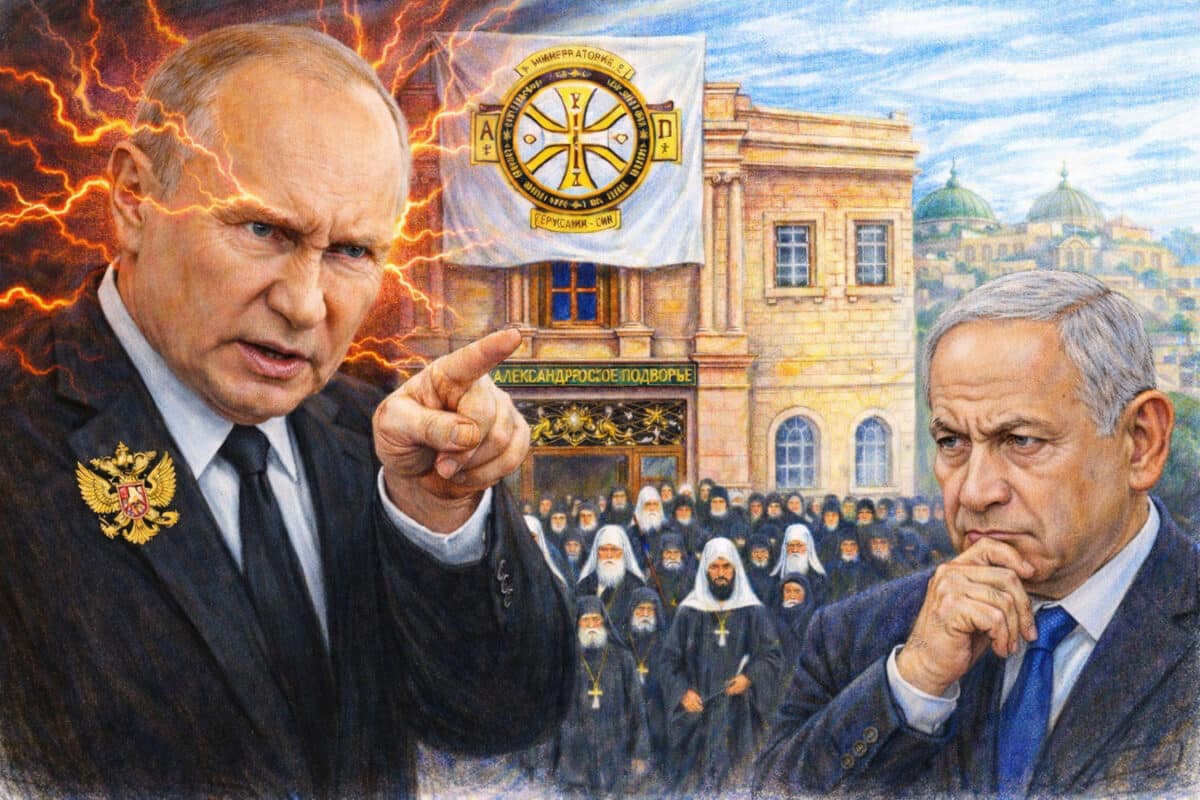
US President Donald Trump is once again talking about the imminent end of the conflict with Iran. According to him, the agreement is almost ready, negotiations are ongoing, and Washington hopes to reach an agreement that should extend the ceasefire and restore movement through the Strait of Hormuz.

But in this story, there is a major gap between the political picture and reality. There is a deadline. There are mediators. There are statements about an ‘almost ready deal.’ The only thing missing is Tehran’s confirmed consent to the terms that the White House wants.

What exactly is Trump promising

At the end of May and the beginning of June 2026, Trump said several times that the US is close to an agreement with Iran. This is not about a simple declaration, but an attempt to secure an extension of the ceasefire regime, open the Strait of Hormuz, and postpone the most complex issues—primarily the Iranian nuclear program—to the next stage of negotiations.

According to Western media, Pakistan plays a significant role in the negotiations. It is through the Pakistani channel that Washington and Tehran have tried to advance contact, although there is still no direct full-fledged dialogue between the US and Iran. This is an important detail: the parties, which are allegedly one step away from an agreement, continue to act through intermediaries.

For Israel, this is not an external diplomatic chronicle. Iran remains a hostile center of power that supports Hezbollah and other anti-Western, anti-Israeli structures. Therefore, any US deal with Tehran will be assessed in Jerusalem not by beautiful words about peace, but by one question: does it reduce the real threat or just give the regime more time?

Why Switzerland sounds nice but doesn’t solve the problem

In the White House’s political presentation, everything looks almost complete: the deadline, the final document, a possible ceremony, the diplomatic scene. Switzerland also appears in the information field as a convenient place for the public formalization of agreements.

But the main thing is still missing—open and verifiable consent from Iran to the key conditions. Reuters reported on June 5 that Tehran continues to link a broader peace package with the issue of Lebanon and demands Israel’s withdrawal from southern Lebanon; Iranian Foreign Minister Abbas Araghchi has effectively made this part of the political framework.

This is where Trump’s optimism clashes with Middle Eastern reality. Iran is bargaining not only over the Strait of Hormuz or sanctions. It is trying to tie Lebanon, Hezbollah, Israel, and the regional balance of power to the overall deal.

Why the war seems to be ending but isn’t

Formally, it is about the US-Iran conflict, which has been living in a strange mode for several months: there are statements about a ceasefire, but strikes, blockades, threats, and military readiness remain. The Guardian wrote that the ceasefire has been in effect since April 8, 2026, but the situation remains unstable, and the parties continue to perceive the truce as a pause, not a completed peace.

For Trump, it is politically important to show quick results. Ahead is the summer of 2026, the anniversary events for the 250th anniversary of the US, an internal campaign, economic pressure, and criticism due to rising fuel prices. Reuters noted that Trump enters the summer season amid a rare series of political resistances and symbolic defeats.

Hence the feeling that the White House is rushing to a beautiful finale. But the Middle East does not easily conform to the calendar of celebrations. If Tehran is not ready to concede in essence, the ceremony may turn into a television frame without real content.

Congress has already begun to limit Trump

Inside the US, things are not calm for Trump either. On June 3, 2026, the House of Representatives passed a resolution on military powers, which should limit the president’s ability to continue actions against Iran without Congress’s approval. The vote passed with a minimal margin—215 to 208; four Republicans joined the Democrats.

The decision is still more political than a final legal one. The question now depends on the Senate and a possible presidential veto. But the signal is clear: even part of the Republicans do not want to give the White House an unlimited mandate for new escalation.

Trump reacted sharply. According to American media, he called the vote ‘meaningless’ and attacked the Republicans who supported the limitation of military powers, calling them lovers of loud headlines.

What this means for Israel

For the Israeli audience, the main question is simple: will the deal with Iran stop the threat or freeze it again until the next round?

Iran does not appear to be a party ready to abandon regional pressure. On the contrary, Tehran’s latest statements show that it continues to support Hezbollah and is trying to integrate the Lebanese front into negotiations with the US. For Israel, this means that even an agreement between Washington and Tehran will not necessarily bring calm to the northern border.

That is why NANews — News of Israel | Nikk.Agency views this story not as an American domestic political game, but as part of a broader picture of Israel’s security. If the US agrees to a temporary solution, Israel will have to closely watch what exactly Iran receives: a respite, money, relief from pressure, or real restrictions.

There is a deadline. Agreement is not yet visible

The picture at the beginning of June looks extremely contradictory. Trump talks about an imminent agreement. Pakistan remains a channel of contact. In Washington, there is debate about the president’s right to continue military actions. In Tehran, they are linking the deal with Lebanon and Israel.

This is not the end of the war, but a struggle over how to name the pause.

If Iran makes a symbolic step, the White House will be able to declare a diplomatic victory. If Tehran continues to stall and expand the list of demands, the US will once again face a choice: extend negotiations or return to a forceful scenario.

For Israel, the danger is that both options carry risks. Military escalation could hit the region immediately. But a weak deal with Iran could be no less dangerous—just with a delayed effect.


Ukraine is looking for workers, Israel shows a model: migrants cover only 0.1% of market needs - June 5, 2026 - Новости Израиля

Trump promises a finale with Iran: deadline, Pakistan, and a deal that is not yet in place - June 5, 2026 - Новости Израиля

The Kishinev pogrom: In 1903, the central authorities in Russia wanted Jewish blood to be shed, and that is exactly what happened. - June 5, 2026 - Новости Израиля

Ukraine is looking for workers, Israel shows a model: migrants cover only 0.1% of market needs

Ukraine is facing a labor shortage that can no longer be addressed with piecemeal solutions. According to data provided to the Interfax-Ukraine agency by a government source, in 2025, the country issued 9,582 work permits for foreigners and stateless persons, with 3,310 permits being revoked.

By the end of the year, there were actually 6,272 labor migrants in Ukraine.

Against the backdrop of a labor market need for approximately 4.5 million workers, this figure looks almost symbolic. Foreign workers cover only about 0.14% of the Ukrainian economy’s needs. In other words, labor migration is not yet a real answer to the staffing failure that has intensified after Russia’s full-scale invasion.

Why foreign workers have little impact on Ukraine’s labor market

Before 2022, Ukrainian employers annually received about 21,000 permits for the employment of foreigners. After the start of the full-scale war, the figure sharply decreased and has not returned to pre-war levels.

According to the State Employment Service of Ukraine, 4,720 such permits were issued in 2024, and 7,483 in 2025. This is more than the previous year, but still more than twice less than before the big war.

The difference in statistics between agencies is explained by different accounting methods. The State Migration Service reports that as of December 31, 2025, there were 47,684 foreigners and stateless persons on temporary registration in Ukraine. In 2025, 8,440 temporary residence permits were issued for the first time.

But even these figures do not change the overall picture. There are foreigners in Ukraine, there are separate permits, there are work projects, but there is still no systematic flow of labor migrants.

The main barrier is not only the war

The issue is not limited to security. For a foreign worker, Ukraine today is a complex bureaucratic and legal trajectory: employer, permit, visa, checks, residence permit, security issues, and further control.

Therefore, only part of the potential workers reach the Ukrainian market. Even if businesses are ready to hire people, the process remains long and unstable.

For the economy, this is a problem. The labor shortage affects production, construction, logistics, services, the agricultural sector, and infrastructure recovery. The longer the war and the more Ukrainians are abroad, the more acute the question becomes: who will work inside the country?

Why Canada, Australia, and Israel are mentioned in this discussion

A source from the agency suggests that Ukraine update its migration policy and look at the experience of countries that know how to attract people to meet economic needs. Examples include Canada, Australia, and Israel.

For the Israeli audience, this is a particularly understandable topic. Israel has built its economy, demography, and labor market over decades through a combination of repatriation, labor migration, targeted attraction of specialists, and strict state control. This model is not perfect and is not mechanically copied, but it shows the main thing: migration policy should not be spontaneous but managed.

NANews — Israel News | Nikk.Agency considers the Ukrainian staffing crisis in this context: it is important for Ukraine not just to ‘let in more foreigners,’ but to understand which sectors need people, what rules employers should receive, and how the state will control the legality of employment.

The Israeli lesson for Ukraine

Israel’s experience is important not because it can be transferred to Ukraine one-to-one. Israel is in a different demographic, military, and economic situation. But there is a common principle: the labor market does not recover on its own if the state does not create clear rules.

Ukraine will have to find a balance between two tasks. The first is to preserve its own labor potential so that Ukrainians return from the EU and do not leave further. The second is to attract foreign workers precisely where business and the country’s recovery will stall without them.

It is especially important not to turn the topic of migration into political speculation. When the state prescribes rules for employers in advance, control by the State Labor Service, migration procedures, and company responsibility, society is less afraid of chaos.

What will happen if the policy is not changed

Today, labor migrants cover only a small fraction of the needs of the Ukrainian market. Even if you take broader statistics of temporarily residing foreigners, it is still not comparable to the deficit of millions of workers.

Ukrainian business needs people. The state needs taxpayers. Regions need specialists for recovery. And the longer the staffing issue is postponed, the higher the risk that some projects simply will not be able to develop due to a lack of workforce.

But the main priority should still remain within Ukraine. The return of Ukrainians from Europe, retaining youth, supporting veterans, retraining, normal working conditions, and salaries are the foundation. Without this, any migration policy will only be a temporary support.

And only after this can Ukraine build a clear system for attracting foreigners to specific projects. Not massively, not chaotically, not through gray schemes, but according to rules that take into account security, the economy, and the interests of society.

For now, the numbers speak plainly: with a need for 4.5 million workers, a few thousand work permits are not a solution but a statistical error. Ukraine has already entered a period where the labor market becomes part of national security.


Ukraine is looking for workers, Israel shows a model: migrants cover only 0.1% of market needs - June 5, 2026 - Новости Израиля

Trump promises a finale with Iran: deadline, Pakistan, and a deal that is not yet in place - June 5, 2026 - Новости Израиля

The Kishinev pogrom: In 1903, the central authorities in Russia wanted Jewish blood to be shed, and that is exactly what happened. - June 5, 2026 - Новости Израиля

The Kishinev pogrom: In 1903, the central authorities in Russia wanted Jewish blood to be shed, and that is exactly what happened.

The three-day pogrom of Kishinev’s Jews exactly 120 years ago (April 6 (19)–7 (20), 1903) left an indelible impression not only on the local Jewish population but also on the entire Jewish world.

To this day, the memory of the pogrom does not fade, according to Moldovan Ambassador to Israel Alex Roitman, for whom the day of remembrance is an opportunity for his country to build and develop friendly relations with the Jewish state.

“The imperial Russian authorities, including the anti-Semitic Minister of Internal Affairs Vyacheslav Konstantinovich von Plehve, wanted to see a pogrom in the city, without their sanction, the Jews of Kishinev would not have experienced such a devastating tragedy”.

Russia is still trying to destabilize Moldova to hinder its choice to become part of the free world and its desire to join the European Union“, Roitman decisively states.

“They are waging war against us and spreading propaganda aimed at sowing hatred and discord between ethnic groups, and this is reminiscent of the anti-Semitic propaganda of 120 years ago“.

This is reported by Israel Hayom.

Incitement in the press

There were two main factors that caused the unrest — the poisonous incitement of anti-Semites and the silence of the Russian authorities and their representatives in the city“, Roitman explains, donning the historian’s cap.

The newspapers of those days were filled with propaganda and disinformation about Jews, and this influenced the course of events. The worst offender was the Russian-language anti-Semitic newspaper “Bessarabets”, edited by Pavel Krushevan, a particularly fervent anti-Semite. The pages of “Bessarabets” were filled with fabricated stories about “Jewish crimes” and calls to “avenge them”.

Roitman notes that overall, relations between Jews and non-Jews in Moldova, then known as the Bessarabian province within the Russian Empire, were good.

Jews made up almost 50 percent of the population in major cities, and in Jewish settlements, people from other ethnic groups even understood Yiddish. But the poisonous combination of anti-Semitic propaganda, some of which came from the church, and the authorities’ desire to direct popular anger over their poor living conditions against the Jews led to disaster.

There was an order from above not to prevent the unrest“, says Roitman. His conclusion is based on research and archival documents and testimonies about the events during and after the pogrom.

The Russian army and police did nothing to stop the unrest, intervening only after three days of killings and brutality. There were even reports that a bishop saw the rioters and blessed them.

Hands untied to harm Jews

“The memoirs of Prince Urosov, appointed after the pogrom as governor of Bessarabia, undoubtedly show that his predecessors and subordinates sat idly by and did nothing to stop the violence, and that the anti-Semitic mob received a clear signal from them that for three days they had free rein to attack Jews.

The imperial authorities, including the anti-Semitic Minister of Internal Affairs Vyacheslav Konstantinovich von Plehve, wanted to see a pogrom in the city, without their sanction, the Jews of Kishinev would not have experienced such a devastating tragedy.

“I researched another wave of anti-Jewish riots that swept through the Pale of Settlement in 1882-1884. At that time, too, the atmosphere could have led to pogroms, but the army and police did not allow the anti-Semitic hatred that was boiling in the area. In contrast, in 1903, the central authorities in Russia wanted Jewish blood to be shed, and that is exactly what happened“.

Respect for Moldova’s Jewish heritage

This year, Moldova will commemorate the 120th anniversary of the tragic events in Kishinev with a ceremony attended by state leaders.

Moldovan authorities honor the memory of the Jews killed during the pogroms of 1903, just as they honor the memory of the tens of thousands of Moldovan Jews who perished during the Holocaust. Anti-Semitism in Moldova has almost completely disappeared, and it has been replaced by a respectful attitude towards Jews and the state of Israel. If anything spoils this idyll, the Moldovan ambassador hints, it is incitement from Russia.

Russia is now trying to destabilize Moldova to hinder its choice to become part of the free world and its desire to join the European Union“, Roitman decisively states.

“They are waging war against us and spreading propaganda aimed at sowing hatred and discord between ethnic groups, and this is reminiscent of the anti-Semitic propaganda of 120 years ago“.

“In Moldova, we remember and recognize the legacy of the large Jewish communities that once existed here,” said Ambassador Roitman.

“Now this legacy is also expressed in the strong ties between Moldova and Israel, and this legacy is a bridge that connects us and contributes to further strengthening ties. Moldova was one of the first countries to adopt the International Holocaust Remembrance Alliance (IHRA) definition of anti-Semitism. It supports Israel in international organizations and works to strengthen friendship with the Jewish people”.

Blood libel leading to the Kishinev pogrom

As has happened many times in Jewish history, it was a blood libel that served as a convenient trigger for incitement to violence. After the death of two local children, a boy and a girl, false rumors spread that they were “killed by Jews to use their blood for making matzah for Passover”.

Of course, these accusations were unfounded (the boy was killed by members of his own family, and the girl committed suicide), but facts never stopped anti-Semites from fanning the flames of hatred. After the Passover prayers, an angry mob turned against their Jewish neighbors.

The Kishinev pogrom was not the first pogrom in the Russian Empire, but it became infamous for the brutality of the pogromists, who nailed victims’ heads, gouged out their eyes, threw babies out of windows, castrated men, and raped women and girls.

When the unrest ended, a grim tally was taken: 49 Jews were killed, about six hundred were injured (92 seriously), and the attackers caused terrible destruction to Jewish homes and businesses in the city.

Read other Israel and world news on the channels
Nikk.Agency in Telegram and Facebook

Kishinev pogrom: In 1903, the central authorities in Russia wanted Jewish blood to be shed, and that is exactly what happened.


Ukraine is looking for workers, Israel shows a model: migrants cover only 0.1% of market needs - June 5, 2026 - Новости Израиля

Trump promises a finale with Iran: deadline, Pakistan, and a deal that is not yet in place - June 5, 2026 - Новости Израиля

The Kishinev pogrom: In 1903, the central authorities in Russia wanted Jewish blood to be shed, and that is exactly what happened. - June 5, 2026 - Новости Израиля

Mark Holenkov from Maccabi Haifa called up to Ukraine U-18 national team for tournament in Croatia

Mark Holenkov from Maccabi Haifa was included in the Ukraine U-18 youth national team’s squad for an international friendly tournament in Croatia. For the Israeli audience, this is not just a line in the lineup: the Ukrainian team is once again reaching the European youth level with a player representing an Israeli club.

The head coach of the Ukraine U-18 team, Dmytro Mykhaylenko, announced a list of 24 players for the tournament, which takes place in Croatia from June 3 to 9, 2026. The squad includes three goalkeepers, one of whom is Mark Holenkov, representing Maccabi Haifa, Israel. This was reported by the Ukrainian Football Association on June 3, 2026.

Ukraine U-18 in Croatia: dates, opponents, and schedule

The Ukraine U-18 team is holding a June friendly tournament in Croatia as part of the preparation for a new generation of players. Such tournaments rarely become big news outside the football community, but it is here that coaches test the nearest reserve, look at players from Ukrainian and foreign academies, and assemble the team before more serious international challenges.

Ukraine is set to play three matches: against Finland on June 3 at 18:30, against Norway on June 6 at 13:00, and against Turkey on June 9 at 13:00. This schedule is confirmed in publications about Mykhaylenko’s team lineup.

For the youth team, this is an important segment. Matches against Scandinavian teams and Turkey offer different levels of resistance: Finland and Norway are traditionally strong in organization and physicality, while Turkey is known for speed, combativeness, and individual actions.

Why Holenkov’s call-up is important for Israel

Mark Holenkov is listed in the squad as a goalkeeper for Maccabi Haifa. For Israeli football, this is a noticeable detail: the club from Haifa gains direct presence in the Ukrainian youth national team, and the story itself becomes another example of the connection between Ukrainian and Israeli football.

In Israel, such episodes are read more broadly than an ordinary sports news. Haifa, the Ukrainian national team, youth football, an international tournament in Croatia—all of this forms a living map of contacts between the two countries.

Against the backdrop of Russia’s war against Ukraine, sports remain one of the channels where Ukrainian presence in Europe continues to be visible. And if a player from an Israeli club appears in the national team, it enhances the attention of the Israeli audience.

Who Dmytro Mykhaylenko called up

Dmytro Mykhaylenko included 24 players in the squad. The goalkeeper line-up looks like this: Rostyslav Baglay from Shakhtar Donetsk, Mark Holenkov from Maccabi Haifa, and Yehor Klymenko from Rukh Lviv.

In defense, there are Nikita Melnyk from Napoli, Zakhar Onyshchuk from Bologna, Yehor Kostiuk and Nikita Kalyuzhny from Shakhtar, Yehor Sherstiuk from Metalist Kharkiv, Dmytro Maksymenko from Rebel Kyiv, and Arsen Zalipka from Rukh.

The midfield is assembled from players of Ukrainian and foreign clubs. The list includes Oleksandr Balakai and Artem Zubrii from Shakhtar, Illia Kutia from Hajduk Split, Vitalii Hliut from Chicago Fire, Dmytro Sukhonos from Kolos, Mykola Petrovskiy from Stuttgart, Illia Hryshchenko from Metalist, Mukhammad Dzhurabaev from Rukh, Vasyl Hustei from Puskas Academy, and Ivan Bahrii from Metalist 1925.

In attack, Mykhaylenko relies on Dmytro Zudin from Hajduk Split, Illia Menshikov from Austria Vienna, Matvii Bodnar from Kryvbas, and Oleksandr Dedov from Karpaty Lviv.

The lineup shows the geography of Ukrainian football

In this squad, it is clearly visible how the map of Ukrainian youth football has changed. The team includes players from Ukrainian clubs, but there is also a noticeable group of footballers from Italy, Germany, Austria, the USA, Hungary, Croatia, and Israel.

This is no longer a local story of one football school. Ukrainian youths are developing in different systems, playing in different championships, and returning to the national team with different experiences.

For the coaching staff, this is both an advantage and a challenge. The team receives players with international practice, but they need to be quickly assembled into a single game model. In a short tournament in Croatia, there is little time for adaptation, so discipline, interaction, and reliability in each line are important.

It is here that the role of goalkeepers is especially sensitive. At the youth level, a goalkeeper’s mistake often changes not only the score but also the psychology of the entire team. Therefore, the inclusion of Mark Holenkov from Maccabi Haifa in the trio of goalkeepers is not a formality but a real opportunity to make a statement in the Ukrainian national team system.

Ukraine, Israel, and football: where is the meaning for the reader

NANews — Israel News | Nikk.Agency views this story not only as sports news. For Israelis of Ukrainian origin, for the Ukrainian community in Israel, and for everyone following the connections between the two countries, the call-up of a player from Maccabi Haifa to the Ukraine U-18 team is a small but indicative fact.

In such cases, football works as a language of connection. It does not replace politics, diplomacy, or military support, but it shows that contacts between Ukraine and Israel exist on different levels: through families, clubs, academies, coaches, youth national teams, and personal player careers.

Mark Holenkov is not yet a hero of a major tournament or a star of the senior national team. But the call-up itself is already important: the Ukrainian U-18 is going to Croatia with a representative of an Israeli club.

For Haifa, this is an occasion to pay attention to a young footballer. For Ukraine, it is another signal that its football reserve is being formed not only within the country. For Israel, it is a reminder that the Ukrainian sports map has long not ended at Ukrainian borders.

What’s next

The tournament in Croatia will take place from June 3 to 9. Ukraine will play against Finland, Norway, and Turkey. For Dmytro Mykhaylenko’s team, this is a test of the lineup, and for individual players, a chance to strengthen their position in the Ukrainian youth national teams.

If Holenkov gets playing time, the match will become an important episode not only for him but also for Maccabi Haifa. In such a case, the Israeli club will be represented on the field as part of the Ukrainian U-18 national team.

In big football, such stories often start quietly: with a short line in the squad, with a friendly tournament, with a few matches in June. But it is from such details that careers, routes, and connections between countries are later formed.


Ukraine is looking for workers, Israel shows a model: migrants cover only 0.1% of market needs - June 5, 2026 - Новости Израиля

Trump promises a finale with Iran: deadline, Pakistan, and a deal that is not yet in place - June 5, 2026 - Новости Израиля

The Kishinev pogrom: In 1903, the central authorities in Russia wanted Jewish blood to be shed, and that is exactly what happened. - June 5, 2026 - Новости Израиля

The name of the Hero of Ukraine with a Jewish soul has become a wine in Israel

Young Israelis still feel the pain of losing a Ukrainian comrade with whom they created a Zionist project — an organic farm at the foot of Mount Carmel. In memory of their friend, who heroically died repelling Russian aggression against Ukraine, they named a new wine made from the vineyards he planted.

On March 12, 2022, Ukrainian President Volodymyr Zelensky awarded Kostyantyn Mrochko the title of Hero of Ukraine — the country’s highest military honor for courage and heroism.

His body was not buried as it burned along with the tank.

“In Israel, Kostya was spiritually reborn and restored. He was not Jewish, but we held a memorial ceremony for him in March 2023. We remember his quick reactions, his work ethic, courage, all his human qualities.”

Kostya, known as Kostyantyn Mrochko, was a tank operator, builder, and craftsman with golden hands. He was a nature and agriculture enthusiast, as well as a joker and inventor with a kind heart. After participating in tank battles in Donbas, he moved to Israel, where he worked in construction and joined the “Lev Adam” organic farm. Kostya was a respected and beloved comrade, leaving a deep impression on everyone who knew him. He was interested in Jewish customs, and his friends remember his courage, quick reactions, and work ethic.

When Kostya’s visa to stay in Israel expired, he returned to Ukraine in August 2021.

“It was clear to him that he would stay to defend Ukraine. And it was clear to us that even if he had stayed in Israel, he would have flown to fight for his country in 2022,” says Elia Aaron.

Israeli friends continue to communicate with his family — Kostya left behind a mother and a teenage son, Vasyl, from a previous marriage in Ukraine. Elia shared plans to build a small pool in memory of Kostya Mrochko.

This is reported by Ukrainian-Jewish Encounter.

Yoav Sason, the creator of the “Lev Adam” farm, talks about Kostya, who was a special person. Kostya quickly learned Hebrew and had extensive experience in agriculture. He was a patriot of Ukraine and planned to return there after his time in Israel. He had a military spirit that inspired him to return to Ukraine for its defense. Yoav recalls how Kostya gently held his newborn daughter and how he loved children.

Israeli friends from the “Lev Adam” farm harvested red and white grapes in the summer and fall of 2022 — just months after Kostya Mrochko’s death defending Kyiv from Putin’s aggression in March 2022.

These friends decided to combine red and white wine — just as Kostya symbolically combined Ukraine and Israel, Ukrainian and Jewish.

Thus, the new rosé wine “Kostya” of the 2022 harvest was born. Friends from “Lev Adam” made a limited edition — only 650 bottles, each with its own number. Each bottle features a story about Kostya, his wonderful human qualities, and his heroism.

The name of the Hero of Ukraine with a Jewish soul became wine in Israel

The Last Battle

Kostyantyn Mrochko was born on April 9, 1984, and lived in the village of Blahodatne, Volodymyr district, Volyn region of Ukraine. He served in the tank troops and later enrolled in distance learning at the Kyiv University of Food Technologies. In 2014, he went to defend the country in eastern Ukraine and participated in various military operations. His feat in Debaltseve became known and recognized as significant in Ukraine’s history. In February 2022, after Russia’s invasion of Ukraine, he once again stood to defend his country. During a battle on March 8, 2022, he died when his tank was hit by a missile.

But Kostya did not disappear without a trace.

The rosé wine “Kostya” is dedicated to the memory of our dear friend Kostya Mrochko. He was the backbone of our organic farm “Lev Adam,” a strong man with a big heart and unmatched skill. Unfortunately, Kostya will never have the privilege to enjoy it. The memory of his strong hands and gentle heart lives in this wine, in its unique refreshing taste,” reads the label of the Israeli wine.

In the fall, new bottles will be filled with the young rosé wine “Kostya” of the 2023 harvest.

Hero of Ukraine Kostyantyn Mrochko remains not only in the memory of Ukrainian and Jewish friends but has become wine in Israel.

Read other News of Israel and the world on the channels “NiKK”


Ukraine is looking for workers, Israel shows a model: migrants cover only 0.1% of market needs - June 5, 2026 - Новости Израиля

Trump promises a finale with Iran: deadline, Pakistan, and a deal that is not yet in place - June 5, 2026 - Новости Израиля

The Kishinev pogrom: In 1903, the central authorities in Russia wanted Jewish blood to be shed, and that is exactly what happened. - June 5, 2026 - Новости Израиля

A Ukrainian refugee was brutally beaten in Nof HaGalil: the attackers thought he would be afraid of the police

In Israel, an investigation is underway into the brutal attack on 40-year-old Ukrainian Oleksandr Koval, a refugee from Kharkiv, who came to the country after the start of the Russian war against Ukraine, received temporary protected status, and worked as a cleaner at a confectionery factory in Nof HaGalil.

As it became known on June 4, 2026, the prosecutor’s office filed charges against three suspects — residents of Haifa, Kiryat Yam, and Kiryat Bialik aged 30, 31, and 34. They are accused of robbery with aggravating circumstances. According to the police, the criminals deliberately chose Oleksandr as a target because they knew he was a refugee from Ukraine, lived modestly, saved money for his family, and, as they hoped, might not dare to contact Israeli law enforcement.

Attack on a Ukrainian in Nof HaGalil: what is known

Oleksandr Koval came to Israel from Kharkiv — a city that has been regularly subjected to missile strikes, shelling, and destruction since the first days of the full-scale Russian aggression. In Israel, he got a job in Nof HaGalil, near Nazareth, and every month he set aside part of his earnings to send money to his relatives who remained in Ukraine.

According to the investigation, this was one of the reasons for the attack. One of the suspects previously worked with Oleksandr at the same factory and knew that he might have cash.

According to the victim, an acquaintance offered him a job in the Krayot area and said he would come to his home. But instead of one person, three came.

Oleksandr opened the door — and immediately received a strong blow to the head. Then the attackers beat him, put handcuffs on him, tied him up, strangled him, and continued to beat him until he lost consciousness. He regained consciousness only the next day — covered in blood, shackled, and with injuries all over his body.

“They stole everything I was saving for my family”

According to Oleksandr, the criminals took about 3,000 shekels — money he was saving for his family in Ukraine. In addition to cash, documents and several mobile phones were stolen. In the apartment, the police later found traces of blood, signs of a struggle, handcuffs, and adhesive tape.

This was not a spontaneous fight or a domestic conflict.

According to the investigation, the suspects had been on duty near the victim’s house for several hours. When the light came on in the apartment window, they realized that Oleksandr was home. In the correspondence found by the investigators, there were messages like: “He’s home, the light is on” and “Don’t leave, I’m at the door.” These details show that the attack was planned in advance.

After Oleksandr regained consciousness, he managed to get out of the apartment and reach the police station. In the hospital, he was diagnosed with several broken ribs and multiple injuries.

Why this case became more than just a regular crime chronicle

In this story, not only the brutality of the attack is terrifying. The calculation is terrifying.

According to the police, the suspects assumed that a Ukrainian refugee might be more vulnerable than an ordinary citizen: he is not fully confident in his rights, fears bureaucracy, does not want extra attention, thinks about his family in Ukraine, and is simply trying to survive in a new country.

It is this logic that makes the case especially painful for Russian-speaking Israel.

Thousands of people live in the country who came from Ukraine after February 24, 2022. Some lost their homes in Kharkiv, Mariupol, Dnipro, Mykolaiv, or Zaporizhzhia. Some left parents, children, spouses in Ukraine. Many work in hard and low-paid jobs because they need to pay for housing in Israel and at the same time help those who remained under the blows of the Russian army.

Oleksandr was just such a person. He did not seek conflict, was not part of the criminal environment, did not keep large sums. He simply worked and sent money to his family.

Police position: “In my long service, I don’t remember such brutality”

The head of the Nof HaGalil police department, Kobi Biton, stated that Oleksandr came to the station on May 11. According to the officer, the man was covered in bruises and showed signs of severe violence. Biton emphasized that in his long service, he does not remember such brutality during a robbery, especially considering the small amount of money stolen.

The police quickly identified the suspects. All three were detained, and then charges were brought against them.

For Israeli society, this is an important moment. The state must show that a person who came from a war zone is not easy prey. His status, language, weak knowledge of the system, or fear of bureaucracy should not become an invitation for criminals.

Ukrainian refugees in Israel: safety begins with trust in the law

This story should be heard not only as a crime news from Nof HaGalil. It concerns a broader question: how protected do people who fled the Russian war and are trying to rebuild their lives feel in Israel.

Israel knows well what war trauma is. Here they understand the price of anxiety, losing a home, moving, fear for loved ones, and the need to start from scratch. Therefore, the attack on a Ukrainian refugee should not remain at the level of a short police report.

For Nikk.Agency — Israel News | Nikk.Agency, this case is important as an example that vulnerable people need not pity, but effective protection: police, court, public attention, understandable information in Russian and Ukrainian, as well as a clear signal to criminals — refugee status does not make a person defenseless.

Nof HaGalil, Krayot, Haifa: geography of the case and human meaning

The place of this story is also important. Nof HaGalil is a city in northern Israel, near Nazareth, where many Russian-speaking Israelis and new immigrants live. Krayot and Haifa are large northern regions where Ukrainian refugees and immigrants from the former USSR often seek work, housing, and temporary support.

Therefore, Oleksandr Koval’s case quickly became not only a matter of one attack.

It speaks of trust between a person and the state. If a refugee, after torture, beatings, and robbery, finds the strength to reach the police, the system must work quickly and harshly. In this case, it worked: the suspects were found, detained, and the materials reached the court.

But another question remains — how many people in a similar situation may remain silent because they are afraid, do not know the language, or think that no one will help them.

What is important for Ukrainians in Israel to remember

After such a case, it is important for Ukrainians, temporary residents, new immigrants, and everyone who found themselves in Israel because of the war to remember the main thing: you can and should contact the police. If there is a threat, attack, extortion, violence, theft of documents, or pressure from acquaintances, this is not a “personal problem,” but a reason for immediate contact with law enforcement.

Criminals often choose those who seem lonely to them.

But loneliness disappears where a person receives support: from the police, from the community, from neighbors, from journalists, from social services, and from those who are ready not to pass by. Oleksandr Koval’s story is precisely about this. The attackers counted on fear. Instead, the case went to court.

And this is the right signal.

In a country that itself lives under threats and wars, it is not permissible to turn a refugee into prey. Especially a person who fled from Russian aggression, worked in Israel, and tried to help his family remaining in Ukraine.


Ukraine is looking for workers, Israel shows a model: migrants cover only 0.1% of market needs - June 5, 2026 - Новости Израиля

Trump promises a finale with Iran: deadline, Pakistan, and a deal that is not yet in place - June 5, 2026 - Новости Израиля

The Kishinev pogrom: In 1903, the central authorities in Russia wanted Jewish blood to be shed, and that is exactly what happened. - June 5, 2026 - Новости Израиля

Russia has already killed at least 707 Ukrainian children: June 4 – Day of Remembrance for Children Who Died as a Result of Armed Aggression by the Russian Federation

On June 4, Ukraine once again speaks a number that is impossible to look away from: since the beginning of the full-scale invasion, Russia has killed at least 707 Ukrainian children. This is not dry war statistics, not a line in a report, and not just another item in the news feed.

These are children who were deprived of their morning, home, drawings, school, parents, games in the yard, and the very right to grow up.

According to the state platform Children of War as of June 4, 2026, since February 24, 2022, 707 children have died in Ukraine, 2,548 have been injured, 2,317 are considered missing, and 20,570 children have been deported or forcibly displaced. 2,212 children have been returned home, but thousands remain in the Russian system of pressure, isolation, and ‘re-education.’

June 4: the day when Ukraine names the children

In Ukraine, June 4 is observed as the Day of Remembrance for Children Who Died as a Result of Armed Aggression by the Russian Federation. This date was established by the Verkhovna Rada on June 1, 2021 — even before the full-scale invasion, when the country was already living with the pain of the war that began in 2014. At that time, the resolution mentioned at least 240 children killed since the beginning of Russian aggression.

Russia has already killed at least 707 Ukrainian children: June 4 - Day of Remembrance for Children Who Died as a Result of Armed Aggression by the Russian Federation - Israel News
Russia has already killed at least 707 Ukrainian children: June 4 – Day of Remembrance for Children Who Died as a Result of Armed Aggression by the Russian Federation – Israel News

After February 24, 2022, this date became even heavier. The scale of the crimes has grown so much that behind each new report stands not only the tragedy of a specific family but also a question to the whole world: how much more evidence is needed for children’s deaths to stop being perceived as ‘collateral damage’ of war?

President of Ukraine Volodymyr Zelensky on June 4, 2026, reported that Russia has killed at least 707 Ukrainian children, and emphasized: each such death is a child whose future was taken away. United24 also reminded the stories of the deceased children so that the numbers do not turn into impersonal noise.

Why this topic is important for the Israeli audience

For Israel, the topic of killed and kidnapped children is not distant. Israeli society knows all too well what terror against civilians is, what families waiting for the kidnapped are like, and what life looks like after a strike on a home, street, school, or bus stop.

That is why the conversation about Ukrainian children is not only a Ukrainian agenda. It is a topic for everyone who understands the cost of war against peaceful people.

In the midst of this pain, it is especially important that NAnews — Israel News | Nikk.Agency continues to speak about Ukraine not in the language of indifferent statistics, but in the language of human memory. Because behind the formula ‘707 dead children’ are names, photographs, toys, unfinished drawings, and families that will never be the same.

Stories that cannot be reduced to numbers

United24 reminded several stories of Ukrainian children who died from Russian strikes. Among them is eight-year-old Bohdan from Cherkasy. He was simply playing on the playground when a Russian drone struck nearby.

This is what Russia’s war against Ukraine looks like in its most honest form: not ‘geopolitics,’ not ‘conflict of interests,’ not a ‘complex situation,’ but a drone that arrives where a child should have been laughing, running, and returning home to family.

Four-year-old Khrystynka died at night in her own home. Her father built this house for the family with his own hands, as a place of safety, warmth, and normal life. But the Russian strike came when everyone was asleep.

12-year-old Lyubava and her 17-year-old sister Vera died at home after a Russian missile strike. Their bodies were pulled from the rubble by rescuers. The girls loved art, drawing, beauty — all that is usually associated with the future, development, dreams. Their father, a defender of Ukraine, also died in the war.

There is also the story of three little children — Ivan, Vladislav, and Miroslava, who died along with their veteran father. The family moved from the border area, trying to get away from Russian attacks. It was their first night in a new place.

It became the last.

Why the real number might be higher

Official data almost always lags behind the reality of war. Some territories remain occupied, some crime scenes are inaccessible to Ukrainian investigators, some families are separated, and the fate of many children is still unknown.

That is why the number 707 is not the final line. It is the confirmed minimum.

The state platform Children of War separately notes that the exact number of affected children cannot be established due to active hostilities and the temporary occupation of part of Ukraine’s territory.

For the reader in Israel, this is an important detail. In wars of this scale, the truth often comes later: after the liberation of cities, after exhumations, after the return of documents, after the testimonies of those who survived.

Deportation of children: another side of the same crime

Russia kills Ukrainian children not only with missiles and drones. Thousands of children have been taken to Russia or occupied territories, separated from their families, passed through filtration procedures, placed in foreign environments, and subjected to pressure aimed at erasing Ukrainian identity.

According to Children of War, 20,570 Ukrainian children are considered deported or forcibly displaced, and 2,212 have already been returned.

This is not just a humanitarian issue. It is a legal, political, and moral topic directly related to the question of Russia’s responsibility. The International Criminal Court has previously issued arrest warrants for Putin and Russian official Maria Lvova-Belova in the case of the illegal deportation of Ukrainian children.

What happens to kidnapped children

The Russian system tries to break the child’s connection with Ukraine. This can happen through changing documents, imposing Russian citizenship, transferring to foster families, education under Russian programs, propaganda, and closing access to real information about relatives.

Returning such children is a complex and dangerous process. It involves routes through third countries, negotiations, document verification, psychological assistance, and a long path to recovery after the ordeal.

Ukraine and international partners continue to work on returning children, but each such operation is a separate story of risk. And every child who returns home returns not just from another country. They return from a system built on coercion.

Memory as a form of resistance

The Day of Remembrance for Children Who Died Due to Russian Aggression is needed not only for mourning. It is needed so that the world does not get used to the words ‘children died.’

Getting used to it is a dangerous thing. First, a person stops reading the news to the end. Then the numbers seem repetitive. Then the tragedy turns into a background. This is exactly what aggressors count on: for fatigue to become an ally of impunity.

But Ukraine has no right to forget. Israel, which understands the price of memory well, also has no reason to turn away from such stories.

Russia’s war against Ukraine has long gone beyond the military map. It has become a test of whether the world can protect children not only with declarations but with actions: sanctions, courts, investigations, support for Ukraine, the return of the kidnapped, and the preservation of the names of the deceased.

707 children — this is not just a number on June 4, 2026.

It is an indictment against Russia.

And it is a reminder: the future begins with the world refusing to be silent when children’s lives are taken away.


Ukraine is looking for workers, Israel shows a model: migrants cover only 0.1% of market needs - June 5, 2026 - Новости Израиля

Trump promises a finale with Iran: deadline, Pakistan, and a deal that is not yet in place - June 5, 2026 - Новости Израиля

The Kishinev pogrom: In 1903, the central authorities in Russia wanted Jewish blood to be shed, and that is exactly what happened. - June 5, 2026 - Новости Израиля

The name of the Righteous Among the Nations Genrikh Ostashevsky is being immortalized in Odessa

At 11:00 on July 9, on Pushkinska Street in Odesa, a memorial plaque to Henrikh Romanovych Ostashevskyi will be unveiled – an actor, People’s Artist of the Ukrainian SSR, and Righteous Among the Nations. The event is organized by the Odesa Regional Association of Jews, the V. Vasylko Theatre, and the Odesa Holocaust Museum as a symbol of the unbreakable friendship between Israel and Ukraine.

Odesa’s Memorial to the Righteous: How Henrikh Ostashevskyi Saved Jewish Families and Earned Eternal Remembrance

Date and Time: July 9, 2025, 11:00

Location: opposite the Odesa Academic Ukrainian Theatre named after V. Vasylko (Italian Street, Odesa) (Pushkinska Street in Odesa no longer exists. As part of decommunization and derussification, it was renamed Italian Street in July 2024).

Organizers

  • Odesa Regional Association of Jews — former ghetto and concentration camp prisoners
  • Theatre named after V. Vasylko
  • Odesa Holocaust Museum

Biography of Henrikh Romanovych Ostashevskyi

Henrikh Romanovych Ostashevskyi (June 1, 1921, Odesa — February 3, 2004, Odesa) was a Ukrainian theatre and film actor, People’s Artist of the Ukrainian SSR.

From his life path:

  • Studied at the Odesa Theatre School (1938–1941).
  • After Odesa was liberated from Romanian occupation in 1944, he became an actor at the Odesa Young Spectator’s Theatre and worked there for 14 years.
  • Since 1958, he performed at the Odesa Ukrainian Music and Drama Theatre named after the October Revolution.

Awards:

  • Order of the Badge of Honor
  • Title of People’s Artist of the Ukrainian SSR (1976)

Recognition and Commemoration

  • For rescuing the Jewish population during World War II, he was recognized as a Righteous Among the Nations.
  • His name is inscribed on the Wall of Honor in the Garden of the Righteous Among the Nations at the Yad Vashem memorial complex (Jerusalem, Israel).
  • In 2001, the Alley of the Righteous Among the Nations was opened in Prokhorivsky Square in Odesa, where a birch tree was planted in his honor.
  • His name is featured in the exhibition of the Odesa Holocaust Museum.
Timeline of Key Events
Year Event
1938 Entered the Odesa Theatre School
1944 Started serving at the Odesa Young Spectator’s Theatre
1958 Moved to the Theatre named after the October Revolution
1976 Awarded the title of People’s Artist of the Ukrainian SSR
2001 Birch tree planted in the Alley of the Righteous
Filmography (15 Works)

“My Daughter” (1957), “A Tale of First Love” (1957), “The Blue Arrow” (1958), “Storm over the Fields” (1958), “If Stones Could Speak…” (1958), “The Return” (1960), “Human Blood Is Not Water” (1960), “Dmytro Horytsvit” (1961), “Keys to Heaven” (1964), “People Do Not Know Everything” (1964), “They Knew Them Only by Sight” (1966), “Rainbow Formula” (1966), “Dr. Absta’s Experiment” (1968), “Between the Tall Grains” (1970), “Fiery Roads” (1977–1984)

Organization and Preparation for the Ceremony

  1. Historical Segment:
    • Outdoor photo gallery of rescued families
    • Exhibition of archival documents and photographs at the Odesa Holocaust Museum
  2. Artistic Accompaniment:
    • Musical-poetic prologue by the Theatre named after V. Vasylko
    • Reading of letters and recollections from contemporaries
  3. Official Part:
    • Speeches by the mayor, the rabbi, and organizers on the significance of July 9, 1944
    • Flower laying at the memorial and the birch tree
  4. Final Screening:
    • Excerpt from the documentary film about Ostashevskyi
    • Chamber concert by young Odesa musicians

Righteous Among the Nations from Ukraine

To date, 2,707 citizens of Ukraine have been awarded the title of Righteous Among the Nations for their selfless rescue of Jews during the Holocaust — providing shelter, food assistance, and organizing safe passage under mortal threat.

The Importance of Preserving Memory

The installation of the memorial plaque to Henrikh Ostashevskyi is a token of eternal gratitude for humanity and heroism. The editorial board of NAnews – News of Israel calls to preserve the memory of the Righteous as a guarantee of peaceful relations between peoples.

#NAseo


Ukraine is looking for workers, Israel shows a model: migrants cover only 0.1% of market needs - June 5, 2026 - Новости Израиля

Trump promises a finale with Iran: deadline, Pakistan, and a deal that is not yet in place - June 5, 2026 - Новости Израиля

The Kishinev pogrom: In 1903, the central authorities in Russia wanted Jewish blood to be shed, and that is exactly what happened. - June 5, 2026 - Новости Израиля

Israel is leaving not only because of the war: new data breaks the convenient version of ‘repatriates from Ukraine’

On June 2, 2026, the topic of emigration from Israel once again went beyond dry statistics. New data, published on June 3 by Vesti/Ynet, shows: it is not only “fresh” immigrants who arrived after the start of the big war in Ukraine leaving the country, but primarily Israelis themselves — young, educated, working, and already integrated into the life of the country.

This picture sharply contrasts with the explanation given by Benjamin Netanyahu in January at a Knesset session. At that time, the Prime Minister, speaking about yerida, claimed that it was supposedly mainly about citizens from Ukraine, who recently arrived in Israel due to the war. However, a study prepared by Dr. Ila Eliyahu for discussion in the Knesset Committee on Aliyah and Integration shows a more alarming reality: the negative migration balance affects not the periphery of society, but its central layers.

Not Ukrainians as a “convenient explanation,” but an Israeli crisis of trust

According to data provided by Ynet, since 2022, about half of those who left Israel are people aged 20 to 44. This is not pension migration, not a story about random tourists, and not only a problem of new immigrants who found it difficult to adapt.

This is the age of work, army, family, startups, medicine, science, universities, and the future tax core of the country.

That is why the attempt to reduce the departure to “Ukrainians who did not settle” seems too simplistic. In 2022, 20,124 new immigrants who had lived in the country for less than two years left Israel. But those who did not fall under this definition were almost twice as many — 39,241 people. In 2023, the picture repeated: 27,973 “fresh” immigrants versus 54,791 people from other categories.

Why this is important for the Israeli audience

For Israel, this is not just statistics from Ben Gurion Airport.

When a person who recently arrived through aliyah leaves, it may be a problem of absorption, language, housing, work, or expectations. But when native Israelis, graduates of local universities, specialists, and families who have already put down roots here leave en masse, the question becomes much deeper.

Here it is no longer about who “could not withstand Israel.”

It is about the fact that some Israelis have stopped seeing a reliable personal horizon in the country.

Young and educated: the most painful part of the statistics

One of the harshest conclusions of the report concerns education. Among those leaving Israel, the share of people with academic degrees is noticeably higher than their share in the country’s population. According to data for 2022, 33.2% of those who left had a first academic degree, while their share in the population was 21.5%. A second degree was held by 23.5% of those who left — almost twice as much as in the overall population structure.

Even more alarming are the figures for holders of a third academic degree. Among those leaving, they were 3.7%, while in the population — only 0.8%.

This is no longer everyday emigration, but a brain drain.

According to the publication, about 25% of people who defended a doctoral degree in mathematics in Israel today live abroad for at least three years. In computer sciences, this figure is 22%, in genetics — 19%, in physics — 17%.

For a country that builds its strength on the army, technology, universities, medicine, and innovation, this sounds like a warning.

NANews — News of Israel | Nikk.Agency draws attention to this part of the story: the problem is not only in the number of those who left, but in who exactly is leaving. If the country is losing future scientists, engineers, doctors, entrepreneurs, and teachers, the consequences will not be immediate, but will hit Israel in years — in the economy, security, universities, high-tech, and the quality of state systems.

Gilad Kariv: the state cannot pretend that nothing is happening

Knesset member Gilad Kariv, who heads the Knesset Committee on Aliyah and Integration, stated that alarming data continues to arrive, but, according to him, there is no single body in the government that coordinates work on the emigration problem, nor a strategic plan to change the trend.

Kariv also directly challenged Netanyahu’s version that the main flow of those leaving are new immigrants from Ukraine. According to him, the statistics do not confirm such proportions.

In 2023, the number of those who left among native Israelis or immigrants who had lived in the country for at least five years reached 51,000 people. This is 53% more than in 2021. And in 2024, according to published data, 53% of those who left the country were sabras — native Israelis, while 48% were born abroad.

The numbers leave no convenient political exit.

One can argue about the reasons, one can assess the responsibility of the government, wars, cost of living, judicial reform, social division, and the sense of personal security differently. But it is already difficult to claim that this is a “foreign” problem brought to Israel by the last wave of aliyah.

Yerida after 2022: from personal decisions to a strategic threat

Until 2021, about 40,500 people left Israel on average per year. In 2022, 59,400 left. In 2023, there was a sharp jump — 82,800 people. In 2024, the figure decreased to 69,500, but still remained significantly above the pre-COVID level.

The number of returning Israelis also decreased. If the average annual figure for the period from 2009 to 2024 was 24,450 people, then in 2024 it fell to 18,800. According to the CBS, the migration balance of Israelis in 2022–2024 was negative: the gap was about 140,000 people in favor of those who left.

A personal story from Tel Aviv and Prague

The Ynet publication includes the story of 45-year-old Dudu Zakai, who moved to Prague. He said he had been working there for many years and had long thought about moving, but the final decision in the family matured after a rocket strike on their neighborhood in Tel Aviv in June last year.

This is an important detail.

For Israelis, war has long ceased to be something abstract. Rockets, alarms, mobilization, hostages, north, south, economic uncertainty, political fatigue — all this adds up to a personal sense of the future. For some, it holds. For others, it breaks.

That is why the conversation about emigration cannot be reduced to accusations of weakness or disloyalty.

People leave not only because it is easier abroad. Often they leave because it has become too difficult at home to plan life five, ten, or twenty years ahead.

Israel, Ukraine, and new aliyah: where the honest line lies

For immigrants from Ukraine, this topic is especially sensitive. After Russia’s invasion in 2022, many came to Israel not out of tourist interest and not for comfort, but because the war destroyed their previous lives. Some managed to integrate, some faced language, bureaucracy, expensive rent, difficulties in diploma recognition, and heavy psychological burdens.

But the new data is important precisely because it removes the role of a convenient explanation from Ukrainian immigrants.

The problem is broader.

NANews — News of Israel | Nikk.Agency views this story as a signal for the entire Israeli society: if the country wants to retain people, it is not enough to talk about Zionism, aliyah, and historical ties with the Jewish people. It is necessary for the citizen to see security, respect for institutions, a clear economy, honest absorption, functioning state services, and a future for children.

What lies behind the numbers

Yerida has always been a painful word in the Israeli language. It carries not only geography but also a moral burden: as if a person not only left but “descended.” However, modern emigration is more complex.

One person leaves for a postdoc.

Another — for work in high-tech.

A third — because of housing prices.

A fourth — because they no longer believe that the state can maintain a balance between security, democracy, economy, and normal life.

A fifth simply wants their children to sleep without sirens.

When such decisions number in the tens of thousands per year, it is no longer a sum of private stories. It is a national symptom.

The main question now is not who is to blame for the specific figure for 2024. The main question is whether the state is ready to recognize that it is not only the “unsettled” who are leaving, but people without whom it will be harder for Israel to remain a strong, smart, and resilient country.

The ending here is still open.

If the Knesset limits itself to another discussion without a plan, the statistics will remain statistics — until the next jump. But if Israel sees in these data not a political threat, but a warning about the future, the conversation about yerida may become the beginning of serious work: with security, absorption, economy, education, science, and trust between citizens and the state.


Ukraine is looking for workers, Israel shows a model: migrants cover only 0.1% of market needs - June 5, 2026 - Новости Израиля

Trump promises a finale with Iran: deadline, Pakistan, and a deal that is not yet in place - June 5, 2026 - Новости Израиля

The Kishinev pogrom: In 1903, the central authorities in Russia wanted Jewish blood to be shed, and that is exactly what happened. - June 5, 2026 - Новости Израиля

Israeli route through Ukraine: Tomer Yosefi left ‘Polesie’ and returned to ‘Beitar’ Jerusalem

Israeli midfielder Tomer Yosefi has officially completed the Ukrainian stage of his career and has become a player for Beitar Jerusalem. On June 2, 2026, the Jerusalem club announced the signing of the 27-year-old footballer for the next three seasons — until the summer of 2029.

For the Ukrainian club Polissya, this is not just another summer departure of a foreign player. Yosefi was a notable figure in the team from Zhytomyr, and his return to Israel coincided with an important moment for both sides: Beitar is preparing for European competition qualification, and Polissya is also entering the European stage after the 2025/26 season.

Yosefi returns to Israel: what is known about the transfer

Beitar Jerusalem announced the signing of Yosefi on June 2, 2026. The club’s publication stated that the midfielder will play in the yellow-black uniform for the next three seasons and will also become one of the team’s newcomers ahead of the 2026/27 campaign.

The transfer took place after the player’s departure from Polissya. According to Sport Arena and Football24, Yosefi joined Beitar as a free agent.

This is an important detail.

For Beitar, such a transfer looks economically prudent: the club gets an Israeli player with experience in the Ukrainian Premier League and international adaptation without a full transfer fee. For Yosefi himself, this is a return home, but not a step back. After his experience in Ukraine, he joins a team that will play in the Conference League qualification.

Who is Tomer Yosefi

Tomer Yosefi is an attacking midfielder born in Israel. Before the Ukrainian period, he played for Hapoel Be’er Sheva and Hapoel Haifa, and then moved to Zhytomyr’s Polissya. On Beitar’s website, his experience, intensity, attacking qualities, and ability to add depth to the squad were specifically highlighted.

In Jerusalem, he will not be waiting for a leisurely stroll, but the pressure of a big club.

Beitar is not just a league table. It’s Teddy Stadium, a demanding audience, emotional football, and constant attention from Israeli sports media. For a player who has already gone through the Ukrainian championship, this can be a good test of maturity.

What Yosefi gave to Polissya and why his departure is noticeable

Yosefi joined Polissya at the beginning of 2025 after leaving Hapoel Be’er Sheva. Ukrainian sources indicate that he played 26 matches for the Zhytomyr club in all competitions, scored 3 goals, and provided 2 assists.

In the 2025/26 season, his contribution was more compact but still noticeable: 15 matches, 2 goals, and 2 assists.

The numbers don’t look fantastic if you only look at the statistics.

But football is not always read by goals and assists. For Polissya, Yosefi was a player who added a different rhythm to the team: the Israeli school of movement between the lines, the ability to play in the attacking zone, the experience of the Israeli championship, and the habit of taking the ball in difficult episodes.

The Ukrainian club on the European stage

In recent years, Polissya has been building an ambitious project where not only local results are important, but also the club’s recognition outside of Ukraine. The invitation of the Israeli midfielder fit precisely into this logic: the team from Zhytomyr was trying to assemble a squad capable of competing above the usual level.

Now the club will have to fill this part of the squad without Yosefi.

And this is happening against the backdrop of preparation for the 2026/27 Conference League qualification. According to Ukrainian sports media, Polissya will also represent Ukraine in the main stage of the tournament.

NANews — Israel News | Nikk.Agency considers this transfer broader than a usual transfer line: the Israeli footballer leaves the Ukrainian club at a time when both Ukraine and Israel remain in the European football field not only through sports but also through political, social, and human context.

Why the transfer to Beitar is important for Israeli football

Beitar finished the 2025/26 season in second place in the Israeli championship and earned the right to play in the Conference League qualification.

This makes Yosefi’s transfer not just a return from a foreign assignment.

The Jerusalem club needs a squad that can withstand several levels of pressure: the Israeli championship, internal pressure, fan expectations, and European matches. In such a situation, a player with experience in another championship can be especially useful — not as a star for the poster, but as a footballer who has already stepped out of his usual environment and knows how to adapt.

Jerusalem, Zhytomyr, and the football connection between Israel and Ukraine

For the Israeli audience, there is a separate layer here.

Yosefi went to play in Ukraine after the start of Russia’s full-scale war against Ukraine. It was an unusual route for an Israeli footballer: not to Belgium, Cyprus, Greece, or MLS, but to a country living under constant threat of attacks, alarms, and disrupted sports logistics.

And yet the Ukrainian championship continues to operate.

Clubs play, develop, sell and sign players, enter European competitions, and foreign players gain experience there. This is an important signal: Ukrainian football has not disappeared from the European map despite the war and pressure from Russia.

For Israel, which itself lives under conditions of war, threats, and constant security as part of everyday life, the Ukrainian sports context is especially acutely understood. Football in such conditions becomes not only a game but also proof of normal life where the enemy tries to destroy this normalcy.

NANews — Israel News | Nikk.Agency sees in Yosefi’s story precisely such an intersecting plot: the Israeli player gained Ukrainian experience, returned to Jerusalem, and can now enter Europe with Beitar. It’s a small sports story, but behind it lies a large geography — Israel, Ukraine, Jerusalem, Zhytomyr, and a common European football route.

What’s next

For Yosefi, the next season will be a test of his new status.

In Polissya, he was a foreign player from Israel who had to prove he could be useful in the Ukrainian Premier League. In Beitar, he returns not as a young player with potential, but as a footballer from whom a specific contribution will be expected immediately.

Beitar has European qualification ahead, and there the depth of the squad can be decisive. One match, one mistake, one quick goal — in the Conference League, such details change the season.

Polissya has its own task: to maintain the pace of development after the departure of foreign players and not lose quality before European matches. It is important for the Ukrainian club to show that it is capable not only of inviting interesting players but also of calmly enduring their departure.

For fans in Israel, this transfer looks especially lively. There is a familiar name, a big club from Jerusalem, a Ukrainian trace, and a European perspective. This means Yosefi’s story did not end with the news of signing a contract — it just moved from the Ukrainian field to the Israeli stage.


Ukraine is looking for workers, Israel shows a model: migrants cover only 0.1% of market needs - June 5, 2026 - Новости Израиля

Trump promises a finale with Iran: deadline, Pakistan, and a deal that is not yet in place - June 5, 2026 - Новости Израиля

The Kishinev pogrom: In 1903, the central authorities in Russia wanted Jewish blood to be shed, and that is exactly what happened. - June 5, 2026 - Новости Израиля

The real face of Russia is the deliberate and ruthless terror against the peaceful population of Ukraine: June 2 – at least 17 civilians killed, over 100 people injured.

On the night of June 2, 2026, Russia launched a massive combined missile and drone strike on Ukraine. Kyiv, Kyiv region, Dnipro and Dnipropetrovsk region, Kharkiv and Kharkiv region, Zaporizhzhia, Sumy, Chernihiv region, Poltava region, Khmelnytsky region, Odesa region, Mykolaiv region, as well as energy and critical infrastructure facilities in several regions of the country were under attack.

According to updated data, the number of victims of the Russian army’s strikes on Ukrainian cities continues to grow: at the time of writing, it is known of at least 17 dead, over 100 people were injured. In Kyiv, the number of dead increased to 5 people. In Dnipro, a search and rescue operation continues at the site of a destroyed four-story apartment building.

Ukrainian President Volodymyr Zelensky reported that the fate of six people in Dnipro is still unknown. Part of the house, he said, was almost demolished. Nine people died, including a child.

While Kremlin officials try to manipulate the topic of ‘peace talks’ on the international stage, the actions of the Russian army demonstrate the real face of Russia — it is a deliberate and ruthless terror against the peaceful population of Ukraine.

Night of June 2: 729 air targets and a strike on civilian Ukraine

According to the Ukrainian Air Force, Russia used 729 air attack means: 73 missiles of various types and 656 drones. Among them were Iskander-M ballistic missiles, Kh-101 and Kalibr cruise missiles, Zircon anti-ship missiles, Shahed strike drones, Gerbera, Italmas, Banderol loitering munitions, and Parody decoy drones.

Ukrainian air defense destroyed or suppressed 642 air targets: 40 missiles and 602 drones. In particular, Iskander-M, Kh-101, Kalibr missiles, and hundreds of drones of various types were shot down.

But some missiles and drones reached their targets. Hits were recorded at dozens of locations, as well as debris falling on civilian objects.

The main meaning of this attack was obvious by the morning: Russia was again hitting not only military infrastructure. Residential buildings, hospitals, clinics, maternity wards, enterprises, energy facilities, cars, warehouses, educational buildings, administrative objects, gas stations, fire stations, and ordinary city neighborhoods were hit.

This is not a ‘targeting error’ or a side effect of war. This is a terrorist tactic of a state that tries to break people with fear, night explosions, destroyed homes, and a constant sense of danger.

Kyiv: five dead, children among the injured, damage in eight districts

The main strike hit Kyiv. Rescuers worked almost all night in all districts of the capital — at dozens of locations. The consequences of the attack were recorded in Podilskyi, Shevchenkivskyi, Obolonskyi, Sviatoshynskyi, Solomianskyi, Holosiivskyi, Pecherskyi, and Darnytskyi districts.

In Kyiv, 5 people died. More than 60 residents were injured. Among the victims were children aged 3, 11, and 17.

In the Podilskyi district, after a repeated missile strike on a residential high-rise, the building’s structures partially collapsed. According to preliminary information, people could remain under the rubble. Fires also broke out in the non-residential development area, and cars and warehouse premises were damaged.

In the Holosiivskyi district, the clinic was seriously damaged: the second and third floors of the building were destroyed. A business center was also damaged, cars caught fire, and new fire outbreaks appeared.

In the Shevchenkivskyi district, debris damaged a 24-story residential building, where a fire started on the fourth and fifth floors. Non-residential buildings also burned, and one of the nine-story buildings sustained facade and roof damage.

In the Solomianskyi district, debris hit the upper floors of a 15-story residential building. In addition, a high-rise caught fire at the level of the seventh-eighth floors, as well as several private houses.

In the Sviatoshynskyi district, fires broke out in a five-story residential building and in the non-residential development area. In the Obolonskyi district, debris fell near two kindergartens and caused a fire on the territory of an unfinished building. In the Darnytskyi district, after the fall of UAV debris, a gas station caught fire.

Municipal facilities, an academy, utility structures, a car dealership, and the territory of the Ministry of Internal Affairs service center 8041 were also affected. People with appointments had to receive services at other service centers in Kyiv.

Kyiv region: houses, warehouses, terminal, cars, and fires

The Kyiv region was also under attack. Due to hits and debris falls, fires broke out in the residential sector and on civilian infrastructure facilities.

In the Bucha district, rescuers extinguished a fire in a townhouse with an area of about 100 square meters. Cars were damaged on the territory of a logistics facility.

In Sofiivska Borshchahivka, a two-story warehouse building caught fire. The fire covered an area of about 500 square meters, but the fire was extinguished. Debris also damaged private residential houses.

In Kryukivshchyna, a fire broke out in a three-story building that was not in use. In the Fastiv district, private residential houses burned after the attack. In the Vyshhorod district, the fall of drone debris caused grass to catch fire in an open area.

In Kyiv region, damage to a postal terminal and cars was also reported. This shows that the Russian strike covered not only the capital but also the civilian infrastructure around it.

Dnipro, Dnipropetrovsk region, Kharkiv, and Zaporizhzhia: destroyed houses, a dead child, and strikes on enterprises

In Dnipro, the Russian attack led to the partial destruction of apartment buildings. An enterprise, a fire station, garages were damaged, and cars were destroyed.

According to Ukrainian authorities, nine people died in the city, including a child. Dozens more residents were injured. Zelensky separately reported that the fate of six people remains unknown, and the search and rescue operation will continue as long as necessary.

At the site of the destroyed four-story apartment building, rescuers continue to clear the rubble. Part of the building was effectively demolished by the strike.

Among the dead was a State Emergency Service rescuer, Major Anton Yarmolenko, deputy head of the fire and rescue unit. He was on his way to a call at the moment of the Russian strike.

This detail is especially important. Russia kills not only residents but also those who are supposed to save people after shelling.

Dnipropetrovsk region: Kamianske, Nikopol region, Synelnykove region, and Kryvyi Rih

In Kamianske, an administrative building and apartment buildings were damaged. Three people were injured, including a rescuer. The injured were hospitalized, and their condition was assessed as moderate.

In the Nikopol region, the district center, as well as the Chervonohryhorivska, Pokrovska, and Marhanetska communities were under attack. Private and apartment buildings were damaged.

In the Synelnykove region, Russian troops attacked the Vasylkivska community. As a result of the strike, a non-operational building caught fire.

In Kryvyi Rih, the strike hit the Apostolivska community, where a fire broke out. This shows that Russian terror is not limited to regional centers: smaller towns, communities, and residential areas remain under attack.

Kharkiv and Kharkiv region: drones, missiles, energy, and residential neighborhoods

Kharkiv experienced a combined attack by drones and missiles. The city was hit by strike drones and missiles. Hits were recorded in the Osnovianskyi, Slobidskyi, Nemyshlianskyi, and Kyivskyi districts.

In the Osnovianskyi district, private residential houses, administrative buildings, the territory of a preschool institution, and civilian infrastructure facilities were damaged. In the Slobidskyi district, an apartment building, cars, and a street lighting network were affected.

In the Nemyshlianskyi district, the strike damaged an office building, where a fire broke out. In the Kyivskyi district, hits were recorded on the territory of industrial enterprises.

The Kharkiv region was also hit. People were injured, including a child. The Barvinkivska, Donetska, Merefianska, and Vysokhanivska communities were under attack. Residential houses, utility buildings, garages, cars, and other civilian objects burned.

Separately, Zelensky reported strikes on energy facilities in the Kharkiv region and critical infrastructure in Kharkiv. This is an important element of Russian tactics: hitting not only people directly but also the systems that support the city’s life.

Zaporizhzhia: dozens of strikes and damaged high-rises

Zaporizhzhia also underwent a massive attack at night using various types of weapons. Dozens of strikes were recorded, including on one of the city’s industrial facilities.

In the Shevchenkivskyi district, four apartment buildings were damaged. Windows were broken in the apartments, and balconies were damaged.

Specialized services worked on-site, inspecting the territory, documenting the consequences of the shelling, and helping temporarily cover broken windows with OSB boards.

For Zaporizhzhia, this is not a single episode but a continuation of life under constant threat: explosions, damaged houses, emergency work, night alarms, and anticipation of the next strike.

Sumy, Chernihiv region, Poltava region, Khmelnytsky region, Odesa, and Mykolaiv region: geography of Russian terror

Sumy experienced night strikes on the residential sector and infrastructure facilities. Drone hits were recorded on a private house and an apartment building in the Zarichnyi district.

An elderly woman had an acute stress reaction, and she received medical assistance. In the morning, Russian troops also shelled Sumy with artillery. Roofs, windows, and balcony structures of two high-rise buildings were damaged.

Two women and a man who were nearby at the time of the shelling were injured. All were hospitalized, and their condition was assessed as moderate.

NANews — Israel News | Nikk.Agency draws attention to this geography of strikes specifically for the Israeli audience: it is not about one point on the map but a systematic attack on the country’s civilian space. Israelis are well acquainted with the logic of missile pressure, where the enemy tries to hit not only infrastructure but also the sense of security in society.

Chernihiv region: injured teenager, houses, lyceum, and warehouses

In the Chernihiv region, a 15-year-old teenager was injured as a result of a Russian attack. Residential houses, a lyceum, and warehouse premises burned in the region.

In the Horodnia community, a Russian drone hit a residential house, causing a fire. In Chernihiv, a fire also broke out due to the fall of an enemy drone on a residential house.

In the Koriukivka and Novhorod-Siverskyi districts, after Russian strikes, lyceum premises and warehouse buildings caught fire. The fires were extinguished, but the picture again shows: not abstract objects are under attack, but places associated with people’s daily lives.

Poltava region: private enterprise, houses, and an injured person

The Poltava region experienced a combined strike. Drone and missile hits were recorded in the Lubny district.

Premises of a private enterprise were affected. At another location, a missile fell near private houses, damaging residential buildings and utility structures.

One person was injured. His condition was assessed as satisfactory, and he received the necessary medical assistance.

Khmelnytsky region: shot down drones, fire, and damaged enterprises

The Khmelnytsky region was also in the attack zone. A fire broke out at one of the facilities in the Khmelnytsky district.

Air defense forces shot down or suppressed nine drones in the region. As a result of the attack, premises on the territory of enterprises were damaged.

Units of the State Emergency Service were involved in eliminating the consequences of the shelling and extinguishing fires. Information about the dead or injured in the region was not received at the time of the reports.

Odesa region: strike on a hospital and maternity ward

In the Odesa region, Russian strikes hit a hospital and a maternity ward. At the time of the attack, mothers with newborns were there.

According to preliminary data, people were not injured. But the very fact of a strike on such infrastructure shows the level of moral decline of the Russian military machine.

A hospital and a maternity ward are not military targets. These are places where life should be saved, not where infants should be hidden from explosions.

Mykolaiv region: Shahed, critical infrastructure, and a damaged house

The Mykolaiv region was attacked by Shahed-type drones by Russia. Critical infrastructure was under attack.

As a result of air defense work and debris falls in the Mykolaiv district, windows and the roof of a private house were damaged. There were no casualties.

Even where casualties are avoided, the attack leaves behind destruction, stress, and another confirmation: the Russian army deliberately pressures civilian life.

Power outages and strikes on energy

Due to strikes on energy infrastructure, some consumers in Kyiv and several regions temporarily lost power. Outages were recorded in the capital, as well as in the Kyiv, Dnipropetrovsk, Donetsk, Zaporizhzhia, Sumy, Kharkiv, and Cherkasy regions.

In Kyiv, a production site and infrastructure facilities of one of the energy enterprises were damaged. Two energy sector workers were injured and hospitalized.

Energy workers worked in an enhanced mode to restore power supply as quickly as possible. Separately, strikes on oil and gas industry facilities were reported. Rescue and operational services worked on-site.

Why this is important for Israel and international security

For the Israeli audience, this attack does not look like distant news ‘somewhere in Europe.’ Israel knows well what air raids, missile strikes, night shelling, air defense work, overloaded hospitals, and the psychological fatigue of the civilian population are.

The difference in scale and geography does not negate the general logic: when a state deliberately hits cities, it tests not only military defense but also the resilience of society.

That is why Zelensky’s words after this night sounded not only as an appeal to Ukrainians. He stated that if Ukraine is not protected from ballistic and other missile strikes, such attacks will continue. According to him, Europe needs its own anti-ballistic defense, and US assistance in supplying missiles for Patriot systems remains critically important.

For Israel, this is understandable language. Without layered air defense, constant replenishment of interceptor missiles, modernization of detection systems, and international support, even a strong defense system quickly comes under pressure if the enemy launches hundreds of targets simultaneously.

The Ukrainian night of June 2 is not only a Ukrainian tragedy. It is a signal for the entire democratic world: missiles, drones, and strikes on cities become a tool of pressure on civilian societies if the aggressor does not receive a tough response.

Not negotiations, but coercion through terror

On the international stage, the Kremlin continues to talk about ‘peace negotiations,’ conditions, and diplomacy. But the night of June 2 showed the real content of this rhetoric.

Russia acts as a terrorist state. It uses missiles, drones, night strikes, and the destruction of civilian infrastructure as a tool of pressure on Ukraine and its partners.

This attack became yet another proof: Russia does not show readiness to end the war. It shows readiness to kill, destroy, and force Ukraine to concessions through terror against the peaceful population.

The main conclusion: Ukraine needs strong defense, not the illusion of peace

After such strikes, it is especially clear that Ukraine’s security cannot rely solely on statements, diplomatic formats, and calls for a ceasefire.

Missiles for Patriot are needed. Additional air defense systems are needed. Defense production, engineers, mathematicians, specialists in drones, electronic warfare, energy protection, and city restoration after strikes are needed.

Ukraine needs an army that can not only hold the front but also protect the sky over Kyiv, Dnipro, Kharkiv, Odesa, Sumy, Zaporizhzhia, Chernihiv, Poltava, Khmelnytskyi, Mykolaiv, and other cities.

And internal resilience is needed — civic cohesion, without which even the strongest defense cannot withstand a long war. Zelensky separately thanked Ukrainians for not ignoring air raid signals. This is a simple phrase, but behind it lies life: shelter, discipline, attention to warnings, and mutual assistance truly save people.

The night of June 2 was another reminder: Russia will not stop from requests. It stops only where it meets strength, defense, technological superiority, and societal unity.

The path to ending this war lies not through beautiful formulas about ‘peace at any cost,’ but through Ukraine’s ability to survive, protect cities, strengthen the army, and deprive the aggressor of the opportunity to strike people with impunity.


Ukraine is looking for workers, Israel shows a model: migrants cover only 0.1% of market needs - June 5, 2026 - Новости Израиля

Trump promises a finale with Iran: deadline, Pakistan, and a deal that is not yet in place - June 5, 2026 - Новости Израиля

The Kishinev pogrom: In 1903, the central authorities in Russia wanted Jewish blood to be shed, and that is exactly what happened. - June 5, 2026 - Новости Израиля

Ukrainian ‘Delta’ changes the Pentagon: The US is restructuring drone warfare based on Kyiv’s experience

The US Army has begun a large-scale technological reform after Ukrainian combat experience revealed a weak spot in Western armies: even the most expensive weapons lose some effectiveness if drones, sensors, air defense systems, and command platforms cannot quickly exchange data.

The reason for the new American program was the success of the Ukrainian battle management system ‘Delta’. It was this system that helped Ukraine integrate drones, sensors, strike means, and command decisions into a single digital environment amid full-scale Russian aggression.

Now this experience is being studied not as a ‘Ukrainian improvisation’, but as a model of future warfare. For the US, it’s a matter of speed, battlefield survival, and the ability to respond to threats that are particularly well understood in Israel: drones, missiles, Iranian technologies, rear attacks, and the need to make decisions in minutes, not hours.

Why Ukrainian experience became a signal for the US

According to the Financial Times, the US Army launched the Project Jailbreak initiative to overcome an old problem: different weapon and management systems were often created as closed products, poorly compatible with each other.

In practice, this meant that a soldier or operator became a living ‘integration point’. They had to manually transfer data, switch between screens, link information from different sources, and make decisions under conditions of fatigue, cold, stress, and constant threat.

US Army Chief Technology Officer Alex Miller described this problem very simply: the existing approach does not work if a serviceman is wet, hungry, tired, and has been on task for 20 hours.

From separate systems to a unified battlefield

Before the reform, American developments often resembled a set of strong but poorly connected tools. A drone sees one thing, a radar detects another, an air defense system lives in its own logic, and the command post receives fragments of the picture with a delay.

Captain Mika Moul compared the previous situation to trying to conduct an orchestra via Microsoft Teams, where each musician has different notes. This phrase well explains the main challenge of modern warfare: the problem is not only in the availability of weapons, but in how quickly it turns into a unified combat network.

Ukraine, faced with the massive use of Russian missiles, Shahed, reconnaissance and strike drones, was forced to accelerate such integration not in the laboratory, but right on the front line.

Project Jailbreak: how the Pentagon is trying to ‘unlock’ its systems

A key moment for the American leadership was the visit of US Army Minister Dan Driscoll to Germany. There he saw how Ukrainian military use ‘Delta’ to integrate drones, sensors, and weapons into a working battle management system.

After this, according to Driscoll, it became clear: much of what he had seen before was not sufficiently integrated, not simple enough, and not convenient enough for servicemen.

Project Jailbreak gathered the largest defense companies and technological structures around one task. Participants included Lockheed Martin, Boeing, Northrop Grumman, Anduril, Palantir, and other players in the American defense market.

Their goal was not abstract. It was necessary to make air defense systems, counter-drone means, drones, radars, cameras, command platforms, and weapons ‘speak the same language’.

For the Israeli audience, this story is important not only as news from the US. The Middle East has long lived in a reality where the speed of data transfer between a sensor and a weapon can determine the outcome of an attack. Therefore, Nikk.Agency — Israel News | Nikk.Agency considers Ukraine’s experience as part of a broader picture: drone warfare, the Iranian threat, sky defense, and digital battle management become a common theme for Ukraine, Israel, the US, and their partners.

What is already being deployed in the troops

The first results of Project Jailbreak have already begun to be delivered to American units, including forces in the Middle East. This is particularly indicative: a region where Israel regularly faces threats from Iran and its proxies becomes one of the directions where updated approaches can be tested the fastest.

The American army announced its intention to deploy a full package of fixes within the next 30 days. This is not about a cosmetic update of interfaces, but an attempt to change the very architecture of interaction between systems.

If earlier new weapons could be procured as separate ‘boxes’, now the priority is compatibility. Any new system must integrate into the overall digital network, not create another closed data island.

What this changes for Ukraine, Israel, and future wars

The Ukrainian ‘Delta’ became an example for the US of how an army under constant pressure can adapt faster than large bureaucratic structures. This does not negate the technological superiority of the American military-industrial complex, but shows: in modern warfare, the winner is not only the one with more expensive systems, but the one who quickly connects intelligence, analysis, and strike.

For Ukraine, this is an important political and military signal. Its experience is no longer just being studied — it is being used as a basis for restructuring approaches in one of the most powerful armies in the world.

For Israel, the conclusion is no less direct. The massive use of UAVs, the cheapening of strike systems, the growing role of Iran in spreading drone technologies, and the constant threat of multi-level attacks require not only strong air defense but also a flexible management network. Separate batteries, radars, and operators must work as a single organism.

The main lesson of the Ukrainian front

The war against Russia has shown that digital integration becomes as important a resource as ammunition, armored vehicles, or aviation. When data from a drone quickly reaches a commander, when a target is confirmed without unnecessary delays, when the system itself helps shorten the path from detection to decision, the army gains an advantage that cannot be measured only by the amount of equipment.

Project Jailbreak is an acknowledgment that old standards no longer withstand the pace of new warfare.

Ukraine paid a huge price for this experience. But it is its frontline solutions that are now changing the mindset of allies and forcing the world’s largest armies to restructure their systems to a reality where a drone, sensor, operator, and weapon must act not separately, but as a single network.


Ukraine is looking for workers, Israel shows a model: migrants cover only 0.1% of market needs - June 5, 2026 - Новости Израиля

Trump promises a finale with Iran: deadline, Pakistan, and a deal that is not yet in place - June 5, 2026 - Новости Израиля

The Kishinev pogrom: In 1903, the central authorities in Russia wanted Jewish blood to be shed, and that is exactly what happened. - June 5, 2026 - Новости Израиля

The Place Where Hasidism Was Born: Secrets of the Village of Tovste, Ternopil Region of Ukraine

In 1734, the founder of Hasidism settled in Tovstom Israel ben EliezerIt is believed that It was here that he received his second name, Baal Shem Tov (abbreviated as Besht) and became known as a tzaddik and healer.

In his new article “Ukraine Incognita” revealed little-known facts about the Jewish history of the village of Tovste (Ukrainian: Товсто), which is in the Ternopil region. For those interested — here it is on the map.

This village is not as well known to travelers as Zalishchyky, Gorodenka or Chortkiv, but, according to researchers, it is no less interesting and definitely deserves attention.

In Hasidism this is called the “Besht’s revelation.”that is, the moment when he revealed to people his true face as a great tzaddik.

Hasidic traditions describe it this way:

“Then he (Israel ben Eliezer) settled in the holy community of Tlusta, where he was also a melamed (teacher in a cheder – religious school), and could not gather a minyan in his home, but received people and prayed with them.

He wore a “tuzlik” (Ukrainian) (a woolen bag for salt), and his toes stuck out of the holes in his shoes, because he was very poor. He used to immerse himself in the mikvah even in the month of Tevet (December-January according to the Gregorian calendar), and sweat would come out in drops the size of peas. Then people began to come to him, but he did not want to receive them.

One day, a madman or madwoman was brought to him, and he refused to let them in. At night, he was told that he had turned 36. In the morning, he began to count and discovered that this was indeed true. He accepted the madman, cured him, and left his occupation as a melamed, taking my father-in-law, of blessed memory, as a sofer. People from different places began to come to him.”

The term “baal-shem” was used by the people to refer to a person who knows the hidden name of God, has the power and means (“kelim”) with which he can address the Almighty. In another meaning, among Kabbalists, “baal-shem” is someone who uses the formulas of magic (practical Kabbalah) and natural remedies for healing. Baal Shem began as a professional healer, combining the knowledge of a doctor, psychologist and folk healer. He treated infertility, mental illness, exorcised demons and devils, and made amulets and potions.

Besht lived in Tlust (as Tovsta was called until 1944) almost until his move to Medzhybizh.

Hasidic traditions should be treated with great caution, as they contain many frankly fabulous and logical inconsistencies. But the fact remains that Hasidism, as a new religious movement, originated in Tovstom.

By 1930, the local Jewish community numbered 2,600 people, more than two-thirds of the entire population of the village. But by 1939, it had significantly decreased to 1,196 people.

The German occupation put an end to the history of the Jewish community of Tlusty. The Nazis created a ghetto in the village, where, in addition to locals, they drove Jews from neighboring Zalishchyky, Horodenka, Yagilnitsa, Chortkiv and others.

On May 27 and June 6, 1943, the entire population of the ghetto was exterminated in two mass executions. Taking into account the executions of previous years, almost 5,000 people were tortured in the village in total.

Traces of this tragedy can be seen in the old Jewish cemetery. In addition to the mass graves of the tortured, there are bullet holes on the matzevah gravestones.

Leave a comment↓

Read us in channels Israel News Nikk.Agency News from Israel V – TelegramFacebook,Google News


Ukraine is looking for workers, Israel shows a model: migrants cover only 0.1% of market needs - June 5, 2026 - Новости Израиля

Trump promises a finale with Iran: deadline, Pakistan, and a deal that is not yet in place - June 5, 2026 - Новости Израиля

The Kishinev pogrom: In 1903, the central authorities in Russia wanted Jewish blood to be shed, and that is exactly what happened. - June 5, 2026 - Новости Израиля

Ukraine, Gaza, and Iran: Why Trump’s Quick Plans Hit a Hard Reality

Three Crises, One Political Deadlock

US President Donald Trump once again faced that part of world politics that cannot be pushed through with a single statement, loud promise, or public ultimatum. Ukraine, the Gaza Strip, and Iran have become three areas where the expectation of a quick result has collided with protracted negotiations, tough interests of the parties, and a reality where every concession has a price.

According to The New York Times, the Trump administration was counting on faster progress on several international initiatives. However, by mid-2026, it became clear: neither Russia’s war against Ukraine, nor the situation in Gaza, nor the conflict around Iran are moving according to the scenario of quick political victories.

For the Israeli audience, this topic is especially important. It is not only about Washington and its diplomatic reputation. American policy directly affects Israel’s security, pressure on Iran, the future of Gaza, the stability of Ukraine, and the entire balance of power in the Middle East.

Why promises turned out to be easier than negotiations

Trump came to power with a well-known political formula: complex conflicts can be quickly stopped if you act tough, confidently, and directly. In the public sphere, it sounded impressive. But international crises rarely end because one side wants a beautiful date or a loud result.

Iran is in no hurry to close questions on nuclear and missile programs. Russia shows no readiness for an honest peace with Ukraine. In Gaza, even after the truce and the release of hostages, issues of governance, security, reconstruction, and further Israeli military presence remain unresolved.

This is where the main problem arises: diplomacy requires not only announcing a plan but also daily pressure, control, working with details, and sometimes the willingness to admit that the other side is simply stalling.

Iran and the Strait of Hormuz: negotiations without a final point

According to the publication, after the announced ceasefire on April 7, the US hoped to quickly reach agreements with Iran, including on sensitive security issues and the Strait of Hormuz. But negotiations on Tehran’s nuclear and missile programs continue, and there is no final decision.

For Israel, this is not an external topic, but a matter of its own security. Any weakening of pressure on Iran is perceived in Jerusalem through the prism of threats from the Iranian axis, missile programs, proxy groups, and regional instability.

Tehran, according to experts, may deliberately delay the negotiation process. The logic is simple: if Washington does not want to return to large-scale military actions, and the American public does not support a new war, then time becomes a tool of pressure.

Such tactics are well known in the Middle East. The side that is not in a hurry often gains additional leverage. The side that promised a quick result gradually finds itself in an uncomfortable position.

Ukraine: the promise of ‘within 24 hours’ shattered by a war of attrition

Another painful example is Russia’s war against Ukraine. Trump previously stated that he could end this conflict within 24 hours of taking office. But 16 months after the inauguration, a peace agreement has not been reached.

This is an important detail. The war that the Kremlin is waging against Ukraine has long ceased to be a conflict that can be closed with one meeting or one deal. There is a front, occupation, war crimes, security guarantees, the fate of territories, sanctions pressure, Europe’s position, and Kyiv’s fear of an imposed peace.

US Secretary of State Marco Rubio, as noted in the material, has already spoken about fatigue from endless negotiations. At the same time, the Russian side, according to the publication’s interlocutors, advocates the creation of a permanent diplomatic mechanism with working groups and regular meetings.

In practice, this may mean not moving towards peace, but an attempt to delay the process, fix diplomatic activity, and at the same time maintain pressure on Ukraine.

In this context, NAnews — News from Israel | Nikk.Agency considers the Ukrainian direction not as a distant European topic, but as part of the overall picture: if the aggressor gets the opportunity to buy time, this is seen in Moscow, Tehran, and the Middle East.

What Thomas Graham says

Former American diplomat Thomas Graham believes that a full-fledged negotiation process is necessary to end the war. According to him, the conflict is ‘ripe for resolution,’ moods in Moscow have changed, the front line has stabilized, and economic problems in Russia are accumulating.

But even such an assessment does not mean automatic peace. The negotiation process is not just a table, flags, and statements for the press. It is hard work with conditions, guarantees, control of implementation, and understanding that every pause can be used against Ukraine.

For Israel, this experience is also important. Any country living next to a constant threat understands: a bad agreement is sometimes more dangerous than the absence of an agreement if it gives the enemy time to regroup.

Gaza: the truce did not become a political solution

A separate direction is the Gaza Strip. Despite the release of hostages and the truce between Israel and Hamas, the further implementation of the plan proposed by Trump has effectively stalled.

According to journalists, the new Palestinian administration has not yet begun full-fledged work in the sector. The region’s reconstruction program remains on paper, and Israel continues military operations. This shows that even an important humanitarian and military result does not automatically turn into a sustainable political architecture.

For Israeli society, this sounds extremely practical. You can achieve a truce, you can return some hostages, you can reduce the intensity of hostilities. But if issues of Gaza’s governance, demilitarization, border control, the role of Hamas, and international guarantees are not resolved, the conflict remains open.

The main lesson for Washington and Israel

Richard Fontaine, CEO of the Center for a New American Security, noted that foreign policy rarely yields quick results. According to him, what matters is not the loud announcement, but the consistent implementation and management of the process.

This is perhaps the main conclusion of the entire situation. Peace plans, roadmaps, and political statements work only when there is a daily system of pressure, diplomacy, and control behind them.

The Trump administration is now facing difficulties on three key fronts. Ukraine has not achieved peace. Gaza has not received a sustainable new governance model. Iran has not given a final answer on issues directly affecting regional security.

For Israel, the conclusion is even harsher: you cannot build security solely on the expectation of quick American decisions. Washington remains the main ally, but the Middle East, Ukraine, and Iran show the same thing — opponents of democratic peace know how to wait, delay, and use negotiations as a weapon.


Ukraine is looking for workers, Israel shows a model: migrants cover only 0.1% of market needs - June 5, 2026 - Новости Израиля

Trump promises a finale with Iran: deadline, Pakistan, and a deal that is not yet in place - June 5, 2026 - Новости Израиля

The Kishinev pogrom: In 1903, the central authorities in Russia wanted Jewish blood to be shed, and that is exactly what happened. - June 5, 2026 - Новости Израиля

Ukrainian Metropolitan Andrey Sheptytsky: an unrecognized hero who saved hundreds of Jews during the Holocaust

“We want to pay tribute to the man who saved hundreds of Jews,” — said the Chief Rabbi of Ukraine Moshe Reuven Azman.

Andrey Sheptytsky in 2008, the Jewish community of Ukraine recognized him as a Righteous One.

November 1 marked 80 years since the death of the Ukrainian Metropolitan Andrey Sheptytskywho was one of the most significant religious figures in Ukraine at the end of the 19th – first half of the 20th century. Sheptytsky was not only a spiritual leader, but also proved himself to be a real hero, saving Jews from Nazi persecution. However, despite his actions, he was never given the title “Righteous Among the Nations” in Israel.

Hero in the Shadows: Saving Jews during the War

With the outbreak of World War II, Metropolitan Andrei Sheptytsky and his closest associates launched a secret mission of mercy, hiding dozens of Jews in monasteries and other religious institutions. One of the most famous cases is the Metropolitan’s sermon on November 21, 1942, when he called on his followers to resist violence and renounce the killing of innocents. This was a bold statement under the conditions of Nazi terror, and many priests of the time took it as a guide to action.

With Sheptytsky’s consent, a significant number of Jews hid in Greek Catholic monasteries and even in the metropolitan residence. He ordered the hiding of more than 300 Jewish children (in particular, the son of Lvov rabbi Izakael Levin Kurt, who later named his sons Andrey and Klimenty) and valuable Jewish documents.

In rescuing the Jews, he was helped, among others, by Joseph’s sister Veter (in 1946 she was imprisoned by the communist regime for a total of 30 years) and his brother Kliment (37 Jews; another 16 Jews were in a shoe factory that belonged to the Students; arrested by the Soviet regime of 1947).

It should be noted that the Metropolitan hid this saving action of his from most of the clergy because circumstances required it. Rabbi David Kagane writes with undisguised sympathy about the noble behavior of Andrei Sheptytsky during the war in his “Diary of the Lviv Ghetto.”

Quote:

“Thou shalt not kill” is one of the most important commandments to which the Metropolitan called his followers in this dark time.

The feat of Klimenty Sheptytsky

Andrei Sheptytsky’s brother, Klimenty, made a huge contribution to the salvation of Jews, for which he was posthumously awarded the title “Righteous Among the Nations” in 1996. In a factory owned by the Studites, Andrei’s brother set up a secret hideout for more than 30 Jews, risking his own life. His selfless actions remain one of the shining examples of human kindness and courage.

Parameter Description
Shelter location Factory of students
Number of Jews saved More than 30
Year of awarding the title 1996
Rank Righteous Among the Nations

Yad Vashem and the non-recognition of Andrei Sheptytsky

In Israel, at the request of David Kagane, the issue of awarding Andrei Sheptytsky the title “Righteous Among the Nations” was considered. However, in a vote in 1981, of the 13 commission members, 5 supported the awarding of the title, 6 opposed it, and 2 abstained, including Kagane himself. The reasons for the refusal were “support for the SS division “Galicia””, accusations of “ideological closeness to Nazism” and the opinion that “the metropolitan could have done more to save the Jews.”

Contrary to the often widespread assertion, Metropolitan Andrei did not express any official support for the creation of the Galicia division. It should be noted that the Metropolitan agreed to send priest-chaplains there for the spiritual service of the soldiers.

The decision caused mixed reactions.

Attempts to recognize Sheptytsky as a Righteous Among the Nations continued after that, but without success, including in 2007. In response, in 2008, the Jewish community of Ukraine recognized him as a Righteous One..

Chief Rabbi of Ukraine Moshe Reuven Azman emphasized the importance of memory about such people.

We want to pay tribute to the man who saved hundreds of Jews“- said the Chief Rabbi of Ukraine Moshe Reuven Azman on this occasion. “We must fight not only anti-Semitism and xenophobia, but also remember our heroes and remind the younger generation about them“.

In honor of Sheptytsky, the “Tree of Life” was planted near the Brodsky synagogue in Kyiv.

In 2012, the lower house of the Canadian Parliament unanimously recognized the Metropolitan’s contribution to human rights, noting that he saved more than 160 Jews. In 2013, the Anti-Defamation League posthumously honored Sheptytsky for his “courage and heroism” in saving Jews with the Jan Karski Award, which was accepted by his relative, Professor Jerzy Weiman.

Conclusion

Andrey Sheptytsky remained for many people a symbol of courage and mercy, capable of heroic deeds to save lives. His story is a reminder of the strength of spirit and the importance of showing humanity even in the most difficult conditions. It is difficult to say why he was never recognized as a Righteous Among the Nations, but his contribution to saving hundreds of lives will remain unforgettable.

“The memory of heroes like Andrei Sheptytsky should be passed on from generation to generation,” note the authors of NAnovosti.

The Metropolitan’s Influence on Modern Society

The actions of Andrei Sheptytsky remain relevant today. His actions inspire new generations not only in Ukraine, but also beyond its borders. It is important to remember historical figures who embody humanistic values ​​and strive to preserve their legacies in modern times.

Count Andrey Sheptytsky ChSVV (baptized Roman Maria Alexander; July 29, 1865 – November 1, 1944) – head of the Ukrainian Greek Catholic Church, Metropolitan of Galicia, Archbishop of Lviv (1901-1944). Bishop Stanislavovsky (1899-1900). Doctor of Law (1888) and Theology (1894); Maecenas. One of the outstanding leaders of the Ukrainian church and national movement of the first half of the 20th century, a representative of the Sheptytsky count family.

During the First World War he was arrested by Russian troops (1914) and taken to Russia. After returning to Lviv, he became a co-founder of ZUNR (1918). In 1919 he was interned by the Polish authorities.

The process of beatification began in 1955. Metropolitan Andrei’s brother, Count Lev Sheptytsky, and his wife were killed by the Bolsheviks after the annexation of Western Ukraine, and their son Andrzej was later killed at Katyn. Vladyka died on November 1, 1944 from cerebral edema caused by a complication of influenza. He was buried in the Cathedral of St. George in Lviv; his funeral became a mass demonstration.

Leave a comment in Telegram – NAnews channel↓


Ukraine is looking for workers, Israel shows a model: migrants cover only 0.1% of market needs - June 5, 2026 - Новости Израиля

Trump promises a finale with Iran: deadline, Pakistan, and a deal that is not yet in place - June 5, 2026 - Новости Израиля

The Kishinev pogrom: In 1903, the central authorities in Russia wanted Jewish blood to be shed, and that is exactly what happened. - June 5, 2026 - Новости Израиля

Jewish defender of Ukraine Zvi Hirsch from Odessa died in battle for Ukraine – he dreamed of a restaurant, but chose the front

NAnews presents a news overview of the story of Tzvi Hirsh (Grigory), a 32-year-old soldier of the 34th Separate Coastal Defense Brigade of the Armed Forces of Ukraine, who died defending Ukraine on the Kherson front line.

His death is not just a tragedy — it is a symbol of unity between the Jewish and Ukrainian peoples in the struggle against Putin’s aggression.

A man of light, strength, and contradictions

Tzvi Hirsh was born in Odesa, studied at the Jewish school “Or Avner – Chabad”, and was raised in an atmosphere of tradition and communal life. He began working at the age of 15 and never tolerated laziness in himself or others. His dream was to open a restaurant and earn a Michelin star, but life led him to the battlefield.

“He rarely spoke about emotions, but proved his love through actions — care, presence, loyalty,” his friends recall.

Family and children

Grigory left this world too soon. But he left behind the memory of a strong, radiant person whose will to live never faded. He became the father of two children — Lev (5 years old) and Alisa (4 years old) — parts of himself that nothing can destroy.

He dreamed of being their support, of building a future with them. Instead, he became a hero, sacrificing his life for their safety.

A hero without pathos

According to the Chief Rabbi of Odesa and Southern Ukraine, Avraham Wolff, Hirsh was an integral part of the community:

“Tzvi Hirsh gave his life with true self-sacrifice — as a Ukrainian soldier and a proud Jew. He was with us from childhood and has now departed as a hero.”

The sorrowful news was shared on June 6, 2025, by chaplain Yakov Sinyakov, who also arranged for the body to be returned to Odesa without autopsy, in accordance with Jewish law. The funeral will take place following Halacha.

Rabbi Avraham Wolff and the local Jewish community are organizing the funeral.

The Federation of Jewish Communities of Ukraine offers its sincere condolences to the family, friends, and comrades. We share this unspeakable grief.

How Israel and Ukraine are connected through lives

The story of Tzvi Hirsh is one of many confirming the deep connection between Israel and Ukraine. On the website NAnews – Israel News, we regularly publish materials about Jews defending Ukraine and Israeli aid to the country.

We report not just on facts, but on people who embody resilience, faith, and love. Tzvi Hirsh is a symbol of such people.

Community response

The Federation of Jewish Communities of Ukraine was the first to announce the tragedy and express deep condolences:

“Blessed is the True Judge. Baruch Dayan HaEmet.”

The Jewish community of Odesa is preparing the funeral, and words of support are coming from all over the world — especially from Israel, home to thousands of people with Ukrainian roots.

NAnews — what brings us together

The editorial team of NAnews – Israel News expresses its condolences to Grisha’s family, his children, friends, and fellow soldiers.

His story is a reminder: war is not abstract politics — it is real human lives. And in these lives, we find shared pain and a shared future — for Jews, Ukrainians, and all who refuse to accept darkness.


Ukraine is looking for workers, Israel shows a model: migrants cover only 0.1% of market needs - June 5, 2026 - Новости Израиля

Trump promises a finale with Iran: deadline, Pakistan, and a deal that is not yet in place - June 5, 2026 - Новости Израиля

The Kishinev pogrom: In 1903, the central authorities in Russia wanted Jewish blood to be shed, and that is exactly what happened. - June 5, 2026 - Новости Израиля

Odessa has become a point of Jewish diplomacy: ambassadors of Israel and Germany, a lord from Britain, and a conversation about the future of the community

On May 31, 2026, the Federation of Jewish Communities of Ukraine reported a series of visits to the Jewish community of Odessa. Over the course of one week, the city hosted several high-ranking international guests — representatives from Israel, Germany, and the United Kingdom.

For Odessa, this is not just a protocol story. Against the backdrop of war, security threats, and growing concerns about anti-Semitism, such meetings show that the Jewish community of Ukraine remains a visible part of the international agenda.

Israeli Ambassador Michael Brodsky visited the Chabad Or Avner Lyceum

On May 31, 2026, the Extraordinary and Plenipotentiary Ambassador of Israel to Ukraine, Michael Brodsky, visited the Jewish community of Odessa. His visit was related to the ceremonial events marking the end of the school year at the Chabad Or Avner Lyceum.

Brodsky addressed the students, teachers, and graduates. He wished the youth success, courage, and great achievements in the new stage of life.

Why this visit is important for Israel and Ukraine

For the Israeli audience, there is an important context here. Odessa is one of the symbolic centers of Jewish history in Eastern Europe. The city is associated with Jewish culture, religious life, the Zionist movement, literature, and the destinies of thousands of families whose descendants now live in Israel.

Therefore, the visit of the Israeli ambassador to a Ukrainian Jewish school is not just a diplomatic gesture. It is a signal of support to the community that continues to educate children, celebrate holidays, preserve tradition, and build the future even in wartime conditions.

After the celebrations, Michael Brodsky met with the rabbi of Odessa and Southern Ukraine, Avraham Wolff. The parties discussed the current challenges facing Jewish communities in Ukraine, as well as further cooperation between the Israeli Embassy and the Jewish community of Odessa.

German Ambassador Heiko Toms met with children from ‘Mishpacha Ukraine’

The day before, the community was visited by the German Ambassador to Ukraine, Heiko Toms. In Odessa, he met with the city’s rabbi, representatives of the Jewish community, and the children of the ‘Mishpacha Ukraine’ orphanage.

The diplomat’s conversation with the children was particularly emotional. They thanked the German people for the support, safety, and care they received during their stay in Germany at the beginning of the full-scale war.

For children who have experienced evacuation, anxiety, and separation from their usual lives, such words have personal meaning. This is not abstract diplomacy, but the experience of concrete assistance.

Heiko Toms, in turn, emphasized the importance of supporting Ukrainian children. He confirmed his readiness to assist in ensuring that they can live under a peaceful sky and have a happy future.

In the middle of this story, it is especially noticeable how the themes of Ukraine, Israel, the Jewish community, and European responsibility converge at one point. Such stories are what Nikk.Agency — Israel News | Nikk.Agency considers not as separate diplomatic visits, but as part of a broader picture: who supports Ukrainian Jews today, how international solidarity works, and why Odessa remains important for Israel.

Lord Henry Byron Davies discussed anti-Semitism and community security in Odessa

Another distinguished guest of the Jewish community was a member of the House of Lords of the UK Parliament, Lord Henry Byron Davies, Baron Davies of Gower. He arrived in Odessa during the Black Sea Security Forum.

In the Chabad synagogue, there was a warm meeting between Lord Davies and Rabbi Avraham Wolff. The conversation focused on modern forms of anti-Semitism, challenges for Jewish communities in different countries, and the Ukrainian experience of maintaining unity in wartime conditions.

Odessa’s experience as an example of resilience

Jewish communities in Ukraine have found themselves in a reality where religious, social, and humanitarian work intersects with security issues. Synagogues, schools, children’s institutions, and community centers are forced to live not only by the calendar of holidays and educational programs but also by the logic of wartime.

In this sense, Odessa has become one of the important examples. The city continues to be a southern center of Jewish life in Ukraine, despite missile threats, anxieties, and the constant pressure of war.

For Israel, this experience is also important. Israeli society understands well what it means to maintain education, religious life, and community support under threat. Therefore, the Ukrainian story here is perceived not as a distant foreign news item, but as a close and understandable narrative.

What a week of international visits shows

The visits of representatives from Israel, Germany, and the United Kingdom to the Jewish community of Odessa show several things at once.

Firstly, Ukrainian Jewish communities remain part of the international dialogue. They are heard not only in Kyiv or Odessa but also in Jerusalem, Berlin, and London.

Secondly, issues of security, education, and combating anti-Semitism are once again coming to the forefront. This is especially important against the backdrop of Russia’s war against Ukraine and growing tensions in the world.

And finally, Odessa itself continues to play the role of a city where Jewish history is not limited to the past. There are schools, children, rabbis, community projects, international contacts, and people who try to maintain normal life where war tests society’s resilience every day.


Ukraine is looking for workers, Israel shows a model: migrants cover only 0.1% of market needs - June 5, 2026 - Новости Израиля

Trump promises a finale with Iran: deadline, Pakistan, and a deal that is not yet in place - June 5, 2026 - Новости Израиля

The Kishinev pogrom: In 1903, the central authorities in Russia wanted Jewish blood to be shed, and that is exactly what happened. - June 5, 2026 - Новости Израиля

Jews from Ukraine: Ukraine as the homeland of Hasidism – 37 main dynasties and their Ukrainian roots

The phrase “Ukraine is the homeland of Hasidism” sounds emotional, but it has a serious historical basis. Modern encyclopedic and academic sources indicate that Hasidism originated in the 18th century on the lands of present-day Western and Central Ukraine — primarily in Podolia and Volhynia, around the circle of Baal Shem Tov and his disciples. It is important to clarify: the formula of “37 main dynasties, of which 15 originate from the territory of present-day Ukraine” is more of a popularization scheme than a strict universally accepted academic standard. But the general conclusion does not change: the Ukrainian space was one of the main centers of the emergence and early development of the Hasidic world.

In Hasidism, they usually talk about courts or dynasties — lines of rebbes, which were most often named after their cities of origin. Over two and a half centuries, there have been many such lines: modern lists include dozens and hundreds of names, not a single canonical register. Therefore, when it comes to “37 main,” it is more correct to understand this as a conditional list of the most notable historical houses, rather than a definitive list that everyone equally recognizes.

Евреи из Украины: Украина как родина хасидизма - 37 главных династий и их украинские корни

Jews from Ukraine: Ukraine as the homeland of Hasidism – 37 main dynasties and their Ukrainian roots

The Ukrainian cradle of Hasidism and why there is a debate around the number “37”

The founder of Hasidism, Israel ben Eliezer, better known as Baal Shem Tov (circa 1700–1760), was associated with Podolia and Medzhybizh. After his death, the movement was systematized by Dov-Ber, the Maggid of Mezeritch (died in 1772), and his disciples spread the new religious impulse across Ukraine, Belarus, and Poland. It was from here that large family dynasties later grew — the Chernobyl, Ruzhin, Kosov-Vizhnitz, Breslov, and others.

Therefore, the thesis that Ukraine is one of the main historical homelands of Hasidism is quite justified.

The fact is that the list of exactly 37 “main” dynasties is not a universally accepted scientific standard: old Jewish encyclopedias highlighted several key lines like Lubavitch, Chernobyl, Ruzhin-Sadigura, Lublin, and Kotzk, while modern reference books show a much more complex picture with many branches and offshoots.

Nevertheless, if we take a working list of the 37 most notable lines, the Ukrainian presence is indeed enormous. This circle usually includes dynasties that originated in Belz, Boyan, Breslov, Vizhnitz, Zvyagel, Makhnovka, Mukachevo, Nadvorna, Rakhmastrivka, Savran, Sadigura, Skvira, Skole, Chernobyl, as well as historical centers of Berdichev and Medzhybizh. Many of them, after the Holocaust and subsequent migrations, moved their living centers to Israel and the USA — primarily to Jerusalem, Bnei Brak, Brooklyn, Monsey, Kiryas Joel, and New Square.

CHABAD: a separate line with a very strong Ukrainian connection

CHABAD-Lubavitch is usually not considered a Ukrainian dynasty in the narrow geographical sense, because its historical centers are primarily associated with Lyady and Lubavitch. The founder of the movement was Rabbi Shneur Zalman of Liadi (1745–1812), who created a special intellectual branch of Hasidism at the end of the 18th century; the name CHABAD itself comes from the words Chochma, Bina, Da’at.

But without CHABAD, the history of Ukrainian Hasidism would be incomplete. Shneur Zalman was a disciple of the Maggid of Mezeritch, which means the spiritual roots of the movement are directly connected with the Ukrainian environment, where early Hasidism received powerful development. Moreover, the founder of CHABAD himself is buried in Hadiach, in the Poltava region of Ukraine, and this place remains a point of pilgrimage.

here’s something interesting about this – “A “Cohen Bridge” was built in Ukraine for $1,000,000: in Hadiach, the CHABAD shrine was made accessible to the descendants of ancient priests — what it is and for what purpose”

In the 20th century, CHABAD turned into a global movement with its main living center in New York and a wide network of communities in Israel, the USA, Europe, and the countries of the former USSR. Therefore, in an article about the Hasidic dynasties of Ukraine, it is logical to highlight CHABAD separately: not as a Ukrainian dynasty by place of origin, but as a world movement closely connected with Ukraine spiritually and historically.

Ukrainian dynasties: from Podolia and Volhynia to Bnei Brak and New York

The earliest center of memory remains Medzhybizh — the city of Baal Shem Tov. Medzhybizh did not become a separate largest modern mass dynasty, but symbolically it is one of the main points of the entire Hasidic history. Berdichev is associated with the name of Levi Yitzchak of Berdichev (1740–1810), one of the most famous early righteous men of Hasidism. This is also more of a historical center and spiritual name than the largest modern court.

The Breslov dynasty, or Breslov, is associated with Rabbi Nachman of Breslov (1772–1810), the great-grandson of Baal Shem Tov. Its peculiarity is that after the death of Rabbi Nachman, no new continuous line of rebbes arose in the classical sense, but the movement did not disappear: on the contrary, it lives through his books, the teaching of personal prayer, and the famous pilgrimage to Uman. In the 21st century, Breslov is a global network of communities, especially noticeable in Israel and among pilgrims who annually come to Ukraine.

The Chernobyl dynasty is one of the most important overall. It was founded by Menachem Nachum Twersky of Chernobyl (circa 1730–1797), a disciple of both Baal Shem Tov and the Maggid of Mezeritch. It was from the Chernobyl house that a whole cluster of separate lines emerged: Skver, Rakhmastrivka, Tolna, Trisk, as well as genealogically related branches of Makhnovka. This is one of the main examples of how one Ukrainian dynasty turned into a whole family of world courts.

From the Chernobyl circle grew the Skver dynasty — today it is especially known for its closed community in New Square, New York. Rakhmastrivka originates from Rakhmastrivka and now has centers in Jerusalem and Brooklyn. Tolna comes from Talne, and Trisk — from Turisk in Volhynia. Makhnovka, originating from Makhnovka, today has its headquarters in Bnei Brak and remains a lively, notable line with thousands of families.

No less influential was the house of Ruzhin. It was founded by Rabbi Israel Friedman of Ruzhin (1796–1850), and it was this line that gave part of the Hasidic world the very “royal” style of the court. From the Ruzhin house came Boyan, Sadigura, Chortkov, Husiatyn, and other branches. The Boyan dynasty, formed in the 19th century, is today firmly associated with Jerusalem. The Sadigura line, originating from Bukovina, was the most important force in the region before the Holocaust, and today its continuation is also primarily associated with Israel.

The Vizhnitz dynasty originated in Bukovina. It is associated with Menachem Mendel Hager (1830–1884), and the line itself grew out of an earlier Kosov tradition. Today, Vizhnitz is one of the largest and most influential courts in Israel, with a strong presence in Bnei Brak, Jerusalem, and American communities. Next to it stands Nadvorna, founded by Mordechai Leifer (1835–1894) in Nadvorna; now it is not just one center, but a whole network of branches, especially noticeable in Bnei Brak and Jerusalem. Zvil, originating from Zvyagel, is not large in numbers, but remains a very respected name in Jerusalem.

The Ukrainian space is also associated with Belz, Mukachevo, Savran, and Skole. The Belz dynasty was founded by Shalom Rokeach (1779–1855) at the beginning of the 19th century, and today it is one of the largest Hasidic courts in the world, restored after the Holocaust in Israel. Munkacs / Mukachevo is associated with strict Carpathian traditionalism. Savran is an old Podolian line, and Skole today more often appears in international lists under the form Skole/Skolye, which is important for historical accuracy.

In the middle of this whole story, it is especially noticeable that NANews — Israel News | Nikk.Agency approaches the topic not as a museum exotic, but as a living bridge between Ukraine and Israel. Because for the Israeli audience, this is not an abstract history of Eastern Europe: a significant part of today’s centers of Ukrainian-origin dynasties is located precisely in Jerusalem and Bnei Brak, and the pilgrimage to Uman, the memory of Chernobyl, Belz, Sadigura, and Vizhnitz have long become part of the modern Jewish religious world.

All 37 notable dynasties: names, dates, origins, and where their centers are now

If you compile a working list of the 37 most famous lines, it is more convenient to divide it into several large groups.

The first is the earliest system-forming centers: the circle of Baal Shem Tov in Medzhybizh, the school of the Maggid of Mezeritch, early Karlin-Stolin with Aaron of Karlin (1736–1772), Lubavitch/Chabad, founded by Shneur Zalman of Liadi (1745–1812), as well as Polish intellectual lines Lublin, Pshiskha, and Kotzk. They are not always the most numerous today, but without them, it is impossible to understand how Hasidism turned from a spiritual movement into a system of hereditary courts. Chabad today is a global network with a center in New York; Karlin-Stolin maintains strong positions in Israel and the USA; Kotzk and Lublin live more as lines of influence in other dynasties.

The second large group is the Ukrainian-Bukovinian-Volhynian belt, which makes Ukraine so important in Hasidic history. This includes Berdichev, Medzhybizh, Breslov, Chernobyl, Skver, Rakhmastrivka, Tolna, Trisk, Ruzhin, Boyan, Sadigura, Vizhnitz, Kosov, Nadvorna, Makhnovka, Zvil, Belz, Mukachevo, Savran, Skole, and related lines. It is here that you can see how from the towns and villages of present-day Ukraine grew courts that today live in Jerusalem, Bnei Brak, Brooklyn, Monsey, London, and Antwerp.

The third group is Polish, Galician, Hungarian, and post-war world dynasties. Here, at the forefront are Ger, founded by Yitzchak Meir Alter (1798–1866), Alexander, Bobov, Sanz, Klausenburg, Sighet, Satmar, Pupa, Tosh, Modzitz, Radzyn-Izbica, Biala, Amshinov, as well as Jerusalem anti-Zionist circles like Shomer Emunim, Toldos Aharon, and Toldos Avrohom Yitzchok. There is already less Ukrainian origin here, but these lines determine the modern numbers and political-religious weight of the Hasidic world. Satmar, for example, formed as a separate force under Joel Teitelbaum (1887–1979), was restored in New York after the war and is today considered one of the largest Hasidic groups in the world. Ger is now one of the largest courts in Israel. Bobov and Klausenburg are especially noticeable in the USA and Israel.

A brief guide to the dynasties and their current status

  • Chabad-Lubavitch — late 18th century, Shneur Zalman of Liadi, today a world center in New York.
  • Breslov — turn of the 18th–19th centuries, Rabbi Nachman of Breslov, the strongest center of memory — Uman, and living communities are especially noticeable in Israel.
  • Belz — early 19th century, Shalom Rokeach, today the largest center in Jerusalem.
  • Chernobyl — 18th century, Menachem Nachum Twersky, continues through many branches.
  • Skver — Ukrainian origin, modern center in New Square, New York.
  • Rakhmastrivka — Ukrainian branch, centers in Jerusalem and Brooklyn.
  • Tolna and Trisk — old Volhynian lines, preserved as smaller but living branches.
  • Ruzhin — mid-19th century, Israel Friedman, gave rise to the entire “house of Ruzhin”.
  • Boyan — one of the Ruzhin branches, historically Bukovina, today center in Jerusalem.
  • Sadigura — also a Ruzhin line, today primarily associated with Israel.
  • Vizhnitz — 19th century, Hagers, one of the largest Israeli courts in Bnei Brak.
  • Nadvorna — 19th century, Leifers, today a network of branches in Israel.
  • Makhnovka — Ukrainian line, modern center in Bnei Brak.
  • Zvil — historical Ukrainian court, especially respected in Jerusalem.
  • Mukachevo — Carpathian line, played a significant role in Hungarian-Carpathian Hasidism.
  • Savran — old Podolian line, today small but historically significant.
  • Kosov — ancestor for Vizhnitz, Ukrainian by origin line.
  • Ger — Polish dynasty, today one of the most influential courts in Israel.
  • Alexander — very large Polish dynasty before the Holocaust, then restored.
  • Bobov — Galician line, strong in Brooklyn.
  • Sanz — 19th century, Chaim Halberstam, gave many offshoots.
  • Klausenburg — post-war restoration, noticeable in Netanya and the USA.
  • Sighet — important Hungarian-Romanian line, ancestor for Satmar.
  • Satmar — largest anti-Zionist dynasty with centers in New York and Israel.
  • Pupa, Tosh, Modzitz, Radzyn-Izbica, Biala, Amshinov — smaller but stable lines with centers mainly in Israel and North America.
  • Shomer Emunim, Toldos Aharon, Toldos Avrohom Yitzchok — already largely Jerusalem dynastic circles, defining the appearance of the radically conservative part of the Haredim.

Why this history is important for Israel right now

For the Israeli reader, the history of the Hasidic dynasties of Ukraine is not just a story about the past.

It is an explanation of why Ukrainian cities and towns occupy such a place in the religious memory of Israel, why Uman gathers pilgrims annually, why the names Belz, Vizhnitz, Boyan, or Satmar are heard in the Knesset, in the religious press, in debates about the state, and in the everyday life of ultra-Orthodox neighborhoods.

Historical Ukraine did not give Hasidism a periphery, but one of its central foundations.

And if you remove the controversial number “37” as too rigid a formula, the picture becomes even stronger. Ukraine was not just one of the sites, but a space where Hasidism took shape as a mass movement, and then gave rise to entire families of dynasties, whose living centers are now located in Israel and the USA. From Medzhybizh and Breslov to Bnei Brak and Brooklyn — this is one long historical line that remains part of the Jewish world today.

The history of Ukraine and the Jews: why the conversation about Hasidism cannot be separated from the history of the country itself

The history of the Jews on the lands of present-day Ukraine began long before the appearance of Hasidism.

Encyclopedic sources indicate that Jewish settlements existed here even in ancient times — in Crimea and in the Greek colonies of the northern Black Sea coast. Later, Jewish life developed in the cities and towns of different historical eras — from Kievan Rus and the Lithuanian-Polish period to the Russian Empire and Austria-Hungary.

Jewish life became especially noticeable in the early modern period, when on Ukrainian lands the very world of shtetls, markets, fairs, crafts, and religious scholarship was forming, which would later be called shtetl. It was in this environment that the human and cultural landscape was formed, from which both the Hasidic courts and the powerful tradition of Eastern European Jewry in general emerged.

The shtetl was one of the key forms of Jewish life in Eastern Europe, and the Ukrainian waves of pogroms in the 20th century and then the Holocaust became a catastrophe for this world.

At the same time, the history of the relationship between the Jews and the Ukrainian lands was never simple or linear.

There were periods of growth, trade, religious flourishing, and cultural coexistence, but there were also severe catastrophes. One of the early tragedies was the Khmelnytsky Uprising of 1648–1649, during which many Jewish communities in Ukraine were destroyed or devastated; this is recorded in reference articles on Podolia and in historical descriptions of individual cities.

And yet, after these upheavals, Jewish life on Ukrainian lands did not disappear, but began to grow again.

By the 18th century, there was already a dense network of communities here, and it was against this background that Hasidism arose. Hasidism became exceptionally popular precisely in Ukraine and in the first decades covered most of the traditional Jewish population of this region. In other words, Ukraine was not the periphery of this process, but one of its central stages.

In the 19th century, the significance of Ukrainian lands for the Jewish world was colossal. By the end of the 19th century, more than a quarter of the entire Jewish population of the world lived on ethnic Ukrainian territory. This means that the conversation about the history of Jews in Ukraine is not a narrow regional topic, but part of world Jewish history.

That is why names like Berdichev, Uman, Belz, Chernobyl, Breslov, Vizhnitz, or Sadigura still resonate far beyond Ukraine itself.

But the 20th century brought a new blow.

Waves of violence, civil war, pogroms of 1905 and especially 1918–1921 hit the Jewish communities of Ukraine hard. Then the Nazi occupation turned a significant part of this history into a history of destruction.

After the Holocaust and the Soviet period, Jewish life on Ukrainian lands could no longer return to its former scale. Many centers were destroyed, many families emigrated, religious life was under pressure for decades. But the memory did not disappear.

After the collapse of the USSR, in independent Ukraine, the revival of community, cultural, and religious life began; by the end of the 1990s, hundreds of Jewish organizations and community structures were operating in the country.

That is why the history of Jews in Ukraine is not only a history of tragedies. It is a history of deep rootedness, religious creativity, trade, the Yiddish language, shtetl civilization, pilgrimage, Hasidic dynasties, and then the severe ruptures caused by the violence of the 20th century.

For the Israeli audience, this is especially important: many lines that today live in Jerusalem, Bnei Brak, Safed, Brooklyn, or Monsey trace their origins to the cities and towns of present-day Ukraine. In this sense, the connection between Ukraine and the Jewish world is not a museum topic, but a living part of modern Jewish memory.

Which cities in Ukraine today remain the main points of Hasidic life

If we talk not about old names on the map, but about real modern presence, then in Ukraine today we can highlight several main points of Hasidic life, memory, and pilgrimage.

In the first place, undoubtedly, is Uman. It is here that the grave of Rabbi Nachman of Breslov is located, and the city remains the main center of Breslov pilgrimage. In 2025, Ukraine officially recognized the grave of Rabbi Nachman in Uman as a national heritage site, and the city continues to receive tens of thousands of pilgrims, primarily on Rosh Hashanah.

A separate place is occupied by Hadiach in the Poltava region. For CHABAD, this is one of the most important points on the map of Ukraine, because it is there that Rabbi Shneur Zalman of Liadi, the founder of CHABAD-Lubavitch, is buried. Hadiach remains a place of pilgrimage and a symbolic connection of CHABAD with Ukrainian land.

If we talk about active community life, then important cities remain Kyiv, Dnipro, Odessa, Chernivtsi, and Kharkiv, where Jewish religious centers and structures continue to operate, including those associated with Hasidic and Chabad traditions. The European Jewish Congress directly notes the continued existence of Jewish communities in Ukraine, despite the war and migration.

At the same time, it is necessary to understand the difference between a historical center of a dynasty and a modern Hasidic court. Cities like Belz, Breslov, Chernobyl, Vizhnitz, Nadvorna, Skvira, Rakhmastrivka, Zvyagel, Mukachevo, and Skole remain extremely important as places of origin of dynasties and historical memory, but the main active dynastic headquarters of these lines today are mostly located in Israel and the USA. Therefore, the modern map of Hasidic Ukraine is primarily Uman, Hadiach, and major cities with living communities, rather than the return of old courts in their full classical form.

Read more in our regular section “Jews from Ukraine“.


Ukraine is looking for workers, Israel shows a model: migrants cover only 0.1% of market needs - June 5, 2026 - Новости Израиля

Trump promises a finale with Iran: deadline, Pakistan, and a deal that is not yet in place - June 5, 2026 - Новости Израиля

The Kishinev pogrom: In 1903, the central authorities in Russia wanted Jewish blood to be shed, and that is exactly what happened. - June 5, 2026 - Новости Израиля

Ukraine strikes at the oil heart of Russia: May attacks change the map of war and fuel

Ukraine in May 2026 sharply intensified strikes on Russian oil infrastructure. According to Bloomberg, cited by Ukrainian and international publications, eight out of the ten largest oil refining facilities in Russia were attacked in a month, and the total number of strikes on oil facilities became a record since the beginning of the full-scale war.

This no longer looks like a series of separate episodes. It is about a consistent strategy aimed at reducing Russia’s ability to refine oil, produce fuel, support military logistics, and earn from energy exports.

What happened in May: dates, targets, and geography of strikes

In May, Ukrainian strikes targeted a number of Russian refineries and related facilities. Reuters specifically mentioned Yaroslavl, Tuapse, Perm, Nizhny Novgorod, Ryazan, Syzran, Novokuibyshevsk, Kirishi, Ufa, Astrakhan, the Moscow refinery, as well as oil terminals and storage infrastructure among the affected directions.

On May 7, according to Reuters, the Perm refinery stopped processing after a drone attack. This plant processed about 12.6 million tons of oil in 2024, or approximately 250 thousand barrels per day.

On May 15, Ukrainian drones struck a refinery in Ryazan. Ryazan is located about 200 km southeast of Moscow, which again showed that the risk zone for Russia has long gone beyond the frontline regions.

By the end of the month, the strikes continued. On the night of May 31, Ukrainian drones, according to Reuters, hit the Saratov refinery, the Lazarevo pumping station in the Kirov region, and a fuel facility in Matveyev Kurgan in the Rostov region. Russian authorities acknowledged fires and damage, although they traditionally did not disclose the full extent of the damage.

Why repeated strikes have become an important part of the strategy

The key point of May is not only the number of attacks but also their repeatability. According to Bloomberg, Ukraine intensified strikes on the same targets to complicate quick repairs and prevent Russian oil refining from quickly returning to previous volumes.

According to this logic, the attack ceases to be a one-time demonstration of capabilities. It turns into pressure on the production cycle: damage, repair, new strike, new stoppage, increased costs, disruption of supply schedules.

For the Israeli audience, there is a clear analogy here. In modern wars, infrastructure has become no less important a target than military bases. Fuel is the movement of equipment, supply of the front, operation of aviation, transportation of ammunition, and the ability of the state to withstand a prolonged campaign.

Oil refining falls: why this is painful for Moscow

Reuters reported on May 20 that the combined capacity of Russian refineries that fully or partially stopped operations after the strikes exceeded 83 million tons per year. These enterprises provide a significant share of Russian gasoline and diesel, so the consequences are felt not only on paper but also in logistics, exports, and the domestic fuel market.

According to Reuters calculations, from January to May, Ukrainian attacks disabled about 700 thousand barrels per day of primary processing capacities at 16 refineries. This is twice as many affected plants as in the same period of 2025.

Separately, Reuters wrote that in May, diesel production in Russia decreased by another 10% after a similar decline in April. For a country trying to wage a large war, this is no longer just industrial statistics but an indicator of pressure on the resource base.

Strike not only on refineries but also on logistics

Ukraine strikes not only at processing facilities. Oil storage facilities, terminals, pipeline infrastructure, and objects related to fuel transportation are also hit.

This is especially important in the context of Crimea and the occupied territories. When not just one plant is destroyed, but an entire chain—production, storage, transportation, delivery—Russia faces problems not only with repairs but also with fuel distribution.

That is why reports of disruptions and restrictions on gasoline sales in Crimea amid strikes on Russian infrastructure do not look like a random episode but part of a broader picture. Reuters also noted on May 31 that Russian authorities in Crimea announced restrictions on gasoline sales amid ongoing attacks on fuel infrastructure.

In the middle of this topic, it is important to see not only the military but also the regional meaning. NAnews — Israel News | Nikk.Agency considers such events as part of a large link Ukraine — Middle East — energy — security: the less stability Russia has in the fuel system, the harder it is for it to finance and continue the war, which directly affects countries monitoring the balance of power in Europe and around Israel.

Why May became a turning point for Russian oil infrastructure

The May attacks show a change in the Ukrainian approach. Strikes are not only on primary processing facilities, which can sometimes be restored relatively quickly, but also on more complex secondary facilities, storage, and logistics nodes. This increases the cost of repairs and extends recovery times.

Bloomberg, according to Ukrainian retellings of the publication, assessed May’s processing in Russia as falling by about 13% year-on-year, to one of the lowest levels in many years. Ukrainian publications, citing Bloomberg, wrote that the figure could become the lowest since October 2009.

What this means for Ukraine and its allies

For Kyiv, such a strategy has several goals.

The first is to weaken the Russian military machine without direct confrontation with each unit on the front. If the army loses fuel stability, it is harder to move equipment, supply occupation groups, and maintain the pace of operations.

The second is to hit Russia’s income and industrial confidence. Oil and oil products remain one of the foundations of the Russian economy, which means that attacks on processing and exports hit the financial base of the war.

The third is to show that the Russian hinterland is no longer safe. Perm, Yaroslavl, Ryazan, Saratov, Kirishi, Kirov region—this is no longer the front line. This is Russia’s internal industrial map, which now also lives under the pressure of Ukrainian long-range capabilities.

Israeli perspective: why this story matters beyond Ukraine

For Israel, this topic is important not only as news about the war in Europe. Russia remains a player in the Middle East, has ties with Iran, and continues to use energy resources as a political tool.

When Ukraine consistently reduces Russian capabilities in oil refining, it strikes not only at gasoline or diesel. It reduces the space for Russian power—military, economic, and diplomatic.

Therefore, May 2026 can be considered the month when the Ukrainian strategy of long-range strikes on the Russian oil system became noticeably larger in scale. The statistics, geography, and repeatability of the attacks show: this is no longer a series of random hits, but systematic pressure on infrastructure, without which the war for Russia becomes more expensive, more difficult, and less sustainable.


Ukraine is looking for workers, Israel shows a model: migrants cover only 0.1% of market needs - June 5, 2026 - Новости Израиля

Trump promises a finale with Iran: deadline, Pakistan, and a deal that is not yet in place - June 5, 2026 - Новости Израиля

The Kishinev pogrom: In 1903, the central authorities in Russia wanted Jewish blood to be shed, and that is exactly what happened. - June 5, 2026 - Новости Израиля