“Israeli Friends of Ukraine” in Ilya Axelrod’s project “Bridges of Hope”: how volunteers connected the country after October 7. Chronicle of the human spirit

The documentary series Ilya Axelrod “Bridges of Hope”, created for Channel 9, was initially constructed as a journey through the nervous system of the country. Nine episodes. Nine attempts to understand what holds together a society that has experienced the greatest blow in its history.

Not staff maps.
Not briefings.

People who suddenly began to do more than expected of them.

Here is the entire series – “Bridges of Hope” 9 episodes:

“The large-scale documentary project of Channel 9 «Bridges of Hope». This is not a chronicle of military actions. It is a chronicle of the human spirit. Since October 7, 2023, the life of Israel has changed forever. In this 9-episode series, we will embark on a journey across the country — from the shelled North to the wounded South. We will show the stories of doctors, volunteers, soldiers, and civilians who, in the moment of greatest tragedy, found the strength not just to survive, but to become a support for each other.”

By the finale, in the 9-1 episode titled “This is Why Israel Always Wins” | Bridges of Hope – final episode, the author leads the viewer to those who already had experience in civil mobilization:

“In the final episode, we will tell the stories of people and organizations from different parts of Israeli society. Left and right, residents of the noisy center and distant periphery, who in the country’s difficult hour left all disputes behind and began to help their country, showing its most beautiful sides.

📌 Heroes of the episode:

Professor Albert Penkhasov, rector of Ariel University, directed all efforts to help students and their families. Lecturers conducted Zoom lectures for reservist students who were in Gaza.

Representatives of the movement «Brothers in Arms» turned the protest infrastructure into a large-scale volunteer headquarters engaged in evacuation, logistics, and assistance to the residents of the south.

Elena Mrost and Rabbi Eli Talberg created a support center for the families of the deceased in Karmiel, helping them cope with loss and not be left alone with their pain.

Anna Zharova and the organization «Israeli Friends of Ukraine» coordinated the evacuation of Sderot residents, food delivery, and support for soldiers.

Nine episodes ago, we set out to find the answer to the main question: what holds us together despite all trials and disagreements?

We sincerely hope that through the pain you were able to see the main thing — our resilience, our love, and hope”.

Thus, in the frame appear Israeli Friends of Ukraine and their co-founder Anna Zharova.
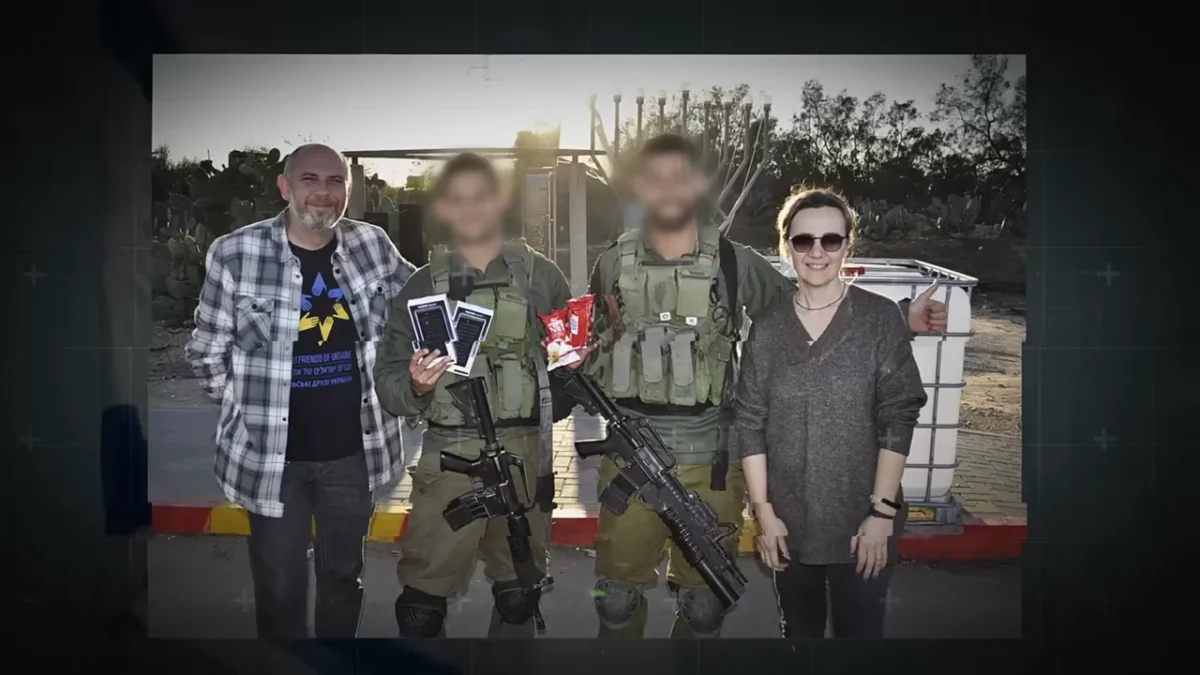
«Israeli Friends of Ukraine» in Ilya Axelrod's project «Bridges of Hope»: how volunteers connected the country after October 7. Chronicle of the human spirit
«Israeli Friends of Ukraine» in Ilya Axelrod’s project «Bridges of Hope»: how volunteers connected the country after October 7. Chronicle of the human spirit

Experience brought from another catastrophe

Before the Israeli war, this team worked for many years with the Ukrainian direction. Initially, helping those affected after 2014. Then — large-scale support programs after 2022: humanitarian cargo, escorting the wounded, finding housing, coordination between donors and volunteers.

This was not a spontaneous initiative.

This was a well-established system.

On October 7, it became clear that such systems were needed within the country.
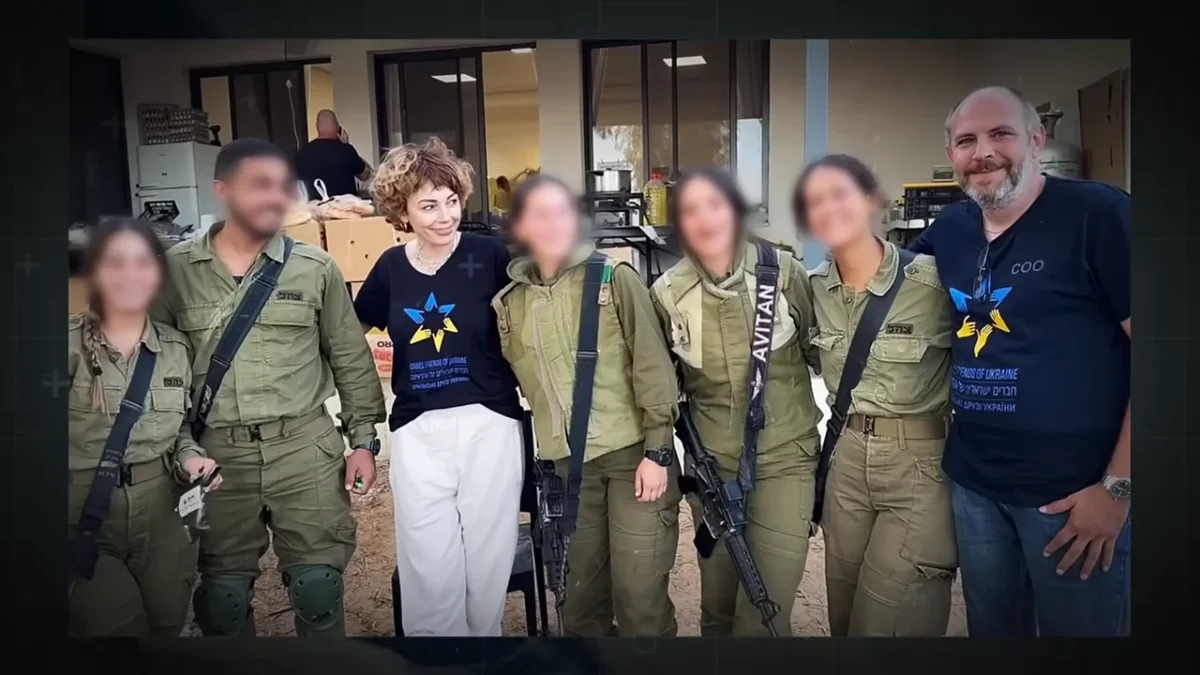
«Israeli Friends of Ukraine» in Ilya Axelrod's project «Bridges of Hope»: how volunteers connected the country after October 7. Chronicle of the human spirit
«Israeli Friends of Ukraine» in Ilya Axelrod’s project «Bridges of Hope»: how volunteers connected the country after October 7. Chronicle of the human spirit

Phones, lists, drivers, understanding how to act when official structures are overloaded. Not theory. Practice.

In the film, this is stated calmly, without pathos: people already had the skill of working in chaos. Therefore, they could start immediately.

Where the finale is filmed and why there

Haifa as a working point, not a decoration

The interview was recorded at a volunteer center for helping Ukrainian refugees in Haifa. The logic of the choice is clear. It was here that a network accustomed to round-the-clock workload was formed over the years.

There was no need to invent a structure.

It existed.

Later, Zharova will formulate the meaning of the filming as follows:

«For us, this is more than an interview. It is a conversation about choice, responsibility, and humanity».

The phrase is short. But in it — the entire explanation of why this line became part of the final episode.

Those who are off-screen

Television is limited by time. However, Zharova emphasizes the names of those who worked nearby: Ella Storm, Vyacheslav Feldman, Sashenka Zhuravel.

Her position is straightforward:

«These are the people without whom this story would not have been heard».

For documentarians, this is an important emphasis. The project is built on the recognition of invisible work — logistics, phones, distribution, family support.

Without this, nothing works.

What the organization did in the first weeks of the war

Cars, routes, families

From the first hours, it became clear: a huge number of people needed to be evacuated, accommodated, fed. Often it was about the elderly, new immigrants, those who were not oriented in the system.

«Israeli Friends of Ukraine» already had databases of drivers and volunteers.

The mechanism started automatically.
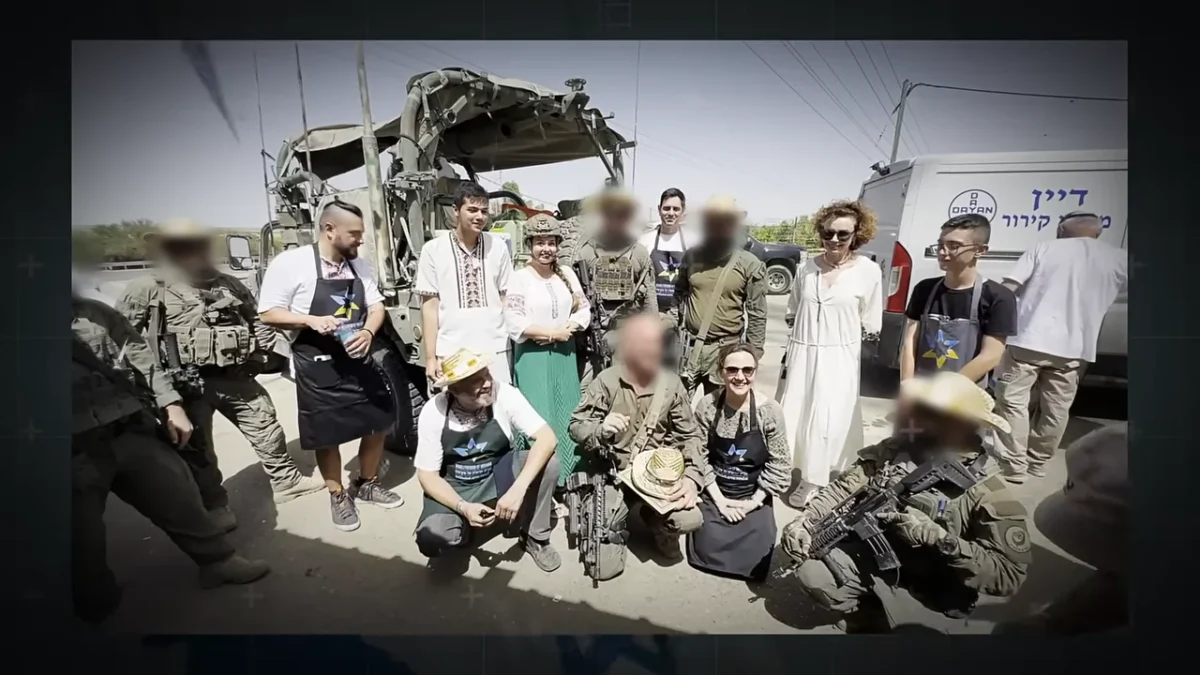
«Israeli Friends of Ukraine» in Ilya Axelrod's project «Bridges of Hope»: how volunteers connected the country after October 7. Chronicle of the human spirit
«Israeli Friends of Ukraine» in Ilya Axelrod’s project «Bridges of Hope»: how volunteers connected the country after October 7. Chronicle of the human spirit

Flights to the south were formed. Apartments and houses were sought in the north and center. Temporary shelters appeared. People were distributed literally by hand, through acquaintances, social networks, personal calls.

Zharova emphasizes:

«Our main task was to help those who were not visible and not heard».

This is the key characteristic of all work — the focus on those who are easily lost between reports and numbers.

Food for soldiers and human contact

When restaurants began cooking for army units, delivery was needed. Volunteers took on the routing. Cars went to bases daily.

The work looked routine.

But it was in this routine that resilience lay.
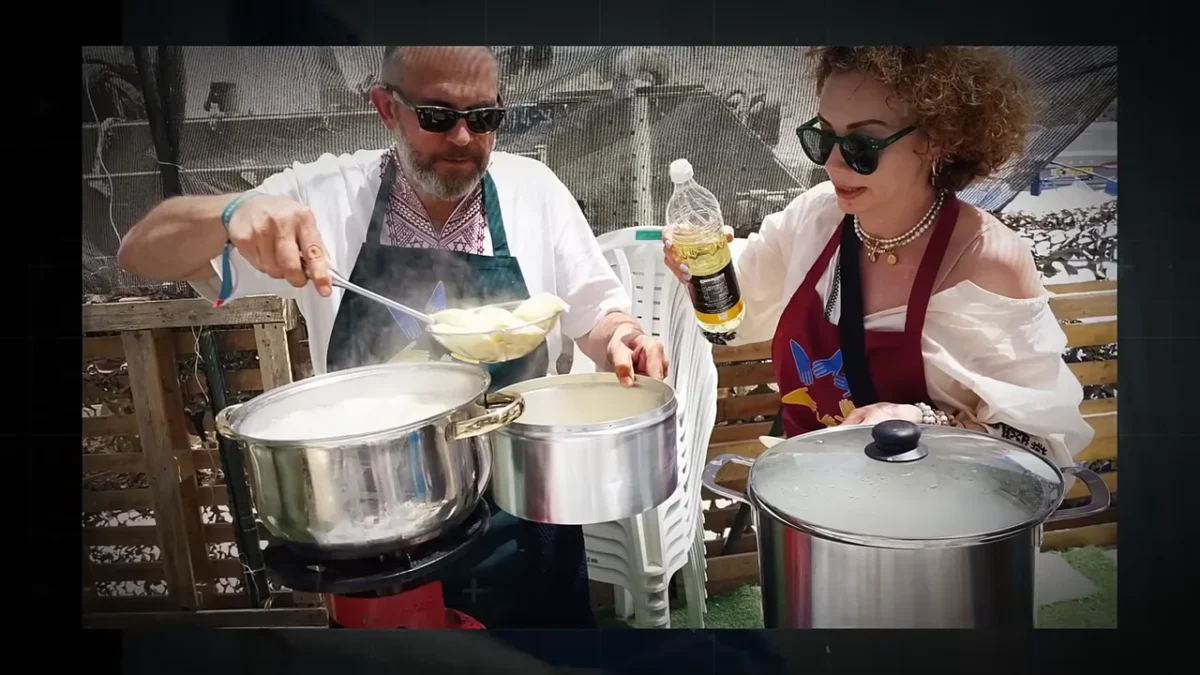
«Israeli Friends of Ukraine» in Ilya Axelrod's project «Bridges of Hope»: how volunteers connected the country after October 7. Chronicle of the human spirit
«Israeli Friends of Ukraine» in Ilya Axelrod’s project «Bridges of Hope»: how volunteers connected the country after October 7. Chronicle of the human spirit

The story about ice cream

One of the episodes that came into discussion after the release of the series was Ukrainian ice cream. It was brought along with other products. Soldiers waited for it.

If the boxes arrived without it, they asked.

This is not a joke. This is an indicator of how important simple signs of normal life are to people. Sweet, familiar, human.

This is how morale works.

It is such details that the director leaves in the finale — they speak louder than analytics.

Why this line is important for understanding the whole picture

By the time the viewer reaches the last episode, they have already seen doctors, reservists, rabbis, volunteers in different parts of the country. The question arises: what do they have in common?

The answer gradually forms — the willingness to take responsibility without waiting for orders.

Zharova’s story fits perfectly into this formula. A community accustomed to helping outside of Israel, in a critical moment, turns its efforts inward.

Humanitarian competence has no national borders. It simply changes the direction of application.

And at this point in the narrative, the conclusion naturally sounds, which was previously formulated by the editorial office of NAnews — News of Israel | Nikk.Agency: society survives thanks to horizontal connections faster than any bureaucracy.

Gratitude and memory fixation

Zharova separately thanks KAMANDA Productions Ltd for the opportunity to tell this story. For the participants, it is important not only to do the work but also to preserve it in public memory.

Otherwise, in a few years, only dry formulations will remain.

And the main thing will disappear — the feeling of a shoulder nearby.

What remains after the credits

The finale does not offer simple recipes for the future. It records the fact: in the most difficult weeks, thousands of people in Israel acted as if there was no other way.

Someone opened their home.
Someone got behind the wheel.
Someone took on someone else’s pain as their task.

The line of «Israeli Friends of Ukraine» shows that solidarity can be a learned skill. It can be developed. It can be activated.

And when it is activated, the country has a chance to go through a catastrophe without losing itself.

That is why this story stands at the end.

It is not about the past. It is about the mechanism of survival.


Ukraine is looking for workers, Israel shows a model: migrants cover only 0.1% of market needs - June 5, 2026 - Новости Израиля

Trump promises a finale with Iran: deadline, Pakistan, and a deal that is not yet in place - June 5, 2026 - Новости Израиля

The Kishinev pogrom: In 1903, the central authorities in Russia wanted Jewish blood to be shed, and that is exactly what happened. - June 5, 2026 - Новости Израиля

Loud “fart” from Russia: – this is “An Act of Armed Aggression Against a Sovereign and Independent UN Member State” – op!

Moscow “condemns the aggression” of the US and Israel against Iran — and once again lectures on law: why the statement of the Russian Foreign Ministry sounds like cynical propaganda.

On the morning of February 28, 2026, the Russian Foreign Ministry issued a statement calling the US and Israeli strikes on Iran an “unprovoked act of armed aggression,” demanding a response from the UN and the IAEA, and speaking of the risks of a “radiological catastrophe.”

At first glance — standard diplomatic rhetoric: “international law,” “peace and stability,” “return everything to negotiations.” But in reality, it looks different: an aggressor state, waging war against Ukraine, tries to don the mantle of a judge — and lecture others on how to “properly” defend themselves and what to consider aggression.

In Israel, this is read particularly sharply: Moscow is not just “commenting on the crisis,” it is trying to turn the moral scale so that the aggressor once again has the right to speak the language of principles.

Statement of the Russian Foreign Ministry: what is written and where the substitution is hidden

What they say out loud

In the document of the Russian Foreign Ministry, the set of theses is carefully structured and “by the book”:

Russia claims that the US and Israeli strikes are a pre-planned and “unprovoked” aggression against a sovereign state, carried out against the backdrop of talks about negotiations.

Next — pressure on emotions: humanitarian, economic, and “possibly radiological” catastrophe, risks to the non-proliferation regime, inadmissibility of strikes on objects under IAEA guarantees.

The finale — the demand to “immediately” return everything to the diplomatic channel and the declaration that Russia is ready to “facilitate peaceful resolutions.”

Where the substitution of meaning begins

The substitution is that Moscow inserts itself into the role of a neutral arbiter, although it has long acted as a party for which law is not a framework, but a decoration.

And this is not abstract morality. In European institutions, against the backdrop of the war against Ukraine, formulations about “terrorist methods” and the political qualification of Russia as a state sponsor of terrorism were recorded (precisely as a political assessment, not as a court verdict).

That is, in public, Moscow says: “do not use force”.
But its own policy in recent years is precisely force, pressure, blackmail, strikes, “gray zones”, and a constant game of “we have nothing to do with it.”

Why Russia is not a “peacemaker,” but an aggressor using terrorist logic

Terror as a tool: what international platforms recorded

To directly say “Russia is a terrorist,” it is important not to turn it into a slogan without support.

There is support, and it is public: European and inter-parliamentary structures in their documents and resolutions described Russian actions as terror against the civilian population, and the Russian regime as using methods of terrorism.

Yes, this is not a “court verdict”.
But it is a political qualification of major international institutions, and it was born not from emotions, but from the logic of war: when a strike on civilians and infrastructure becomes a means of coercion.

And in this sense, the Russian position on Iran looks especially hypocritical: Moscow says “bombings are unacceptable,” but itself has lived for years in a model where force is the main argument.

Why Moscow so fiercely defends Iran

In the statement of the Russian Foreign Ministry, Iran is a “sovereign UN member” that was “unprovokedly attacked.”

But Moscow’s relationship with Tehran is not philosophical friendship, but a pragmatic connection: military cooperation, exchange of technologies, and mutual assistance against the “West” and Israel.

In the war against Ukraine, Russia uses Iranian drones — and that is why the story about Iran for the Kremlin will always be not about “peace,” but about self-interest: to keep a partner, maintain a supply channel, preserve a political axis “against.”

And when the Russian Foreign Ministry portrays concern for the “non-proliferation regime,” in Israel many have a direct question:
if you are such defenders of world order, why did you strengthen an alliance with a regime that Israel considers a direct source of threats?

How Israel hears this

In Israeli security logic, Iran is not a cabinet topic, but a matter of threats, proxy structures, and real risk of escalation.

Therefore, when the Russian Foreign Ministry “teaches” Israel and the US how to act, it is perceived as an attempt to take the moral microphone from those who live under direct threat and hand it to those who have long turned the threat into a tool of politics.

And it is here that NAnews — Israel News | Nikk.Agency captures the main point: Moscow is not a “peacemaker,” but an aggressor state using the rhetoric of law as a screen.

What Trump “should” say and what Netanyahu “should” say

It is important to honestly state: we do not “guess” the answers, we form a logical diplomatic scenario that simultaneously:

  • supports the right to self-defense,
  • shows that Israel/US do not play “punishment for the sake of punishment,”
  • and returns Moscow to its own mirror — Ukraine.

Three theses that close Russian manipulation

1) The right to self-defense is not a subject of lectures from an aggressor.
The formula should be short: “we protect citizens and allies.”

2) Minimizing harm to civilians is a mandatory framework.
Publicly, the principle needs to be stated: “we reduce risks, avoid unjustified strikes.”

3) Moscow does not have the moral status of a judge.
Not insults, but a statement of fact: “a country waging war against Ukraine cannot teach others about law.”

Template response for Trump

A version that sounds tough but does not turn into hysteria:

“The United States acts to protect its forces and allies and to prevent further threats.
We hear Moscow’s statements, but a country that continues aggression against Ukraine is not in a position to lecture on international law.
If Russia truly wants de-escalation — let it support real mechanisms of accountability and stop the war it started.”

The task is to take the frame: not “you are right/wrong about Iran,” but “who are you to moralize.”

Template response for Netanyahu

The Israeli version should be even more grounded and “about citizens”:

“Israel will not ask permission to protect its citizens.
We hear Moscow’s statements, but an aggressor state waging war against Ukraine does not have the moral right to lecture other countries on defense issues.
We urge all actors to stop double standards and not push the region towards further escalation.”

The key is not to justify, but to explain: Israel acts from the logic of threats.

What remains in the end

Moscow issued a statement accusing the US and Israel of aggression against Iran and demanding assessments from international structures.

But Russia itself is perceived by many international platforms as an aggressor state using terrorist logic of pressure — and that is why its “lessons of international law” sound like political manipulation.

The response of Trump and Netanyahu, if it is well-calibrated, should be simple:
self-defense — yes, protection of citizens — yes,
and Moscow’s moralizing — in the trash, along with its double standards.

Text of the Russian Foreign Ministry statement: (February 28, 2026):

“Statement of the Russian Foreign Ministry in connection with the armed aggression of the US and Israel against Iran

On the morning of February 28, the armed forces of the US and Israel began air strikes on the territory of Iran.

The scale and nature of the military-political and propaganda preparations preceding this reckless step, including the deployment of a large US military group in the region, leave no doubt that this is a pre-planned and unprovoked act of armed aggression against a sovereign and independent UN member state in violation of the fundamental principles and norms of international law.

Condemnation is also deserved by the fact that the attacks are once again carried out under the cover of a renewed negotiation process, allegedly aimed at ensuring long-term normalization of the situation around the Islamic Republic, and contrary to the signals conveyed to the Russian side about the lack of interest of the Israelis in military confrontation with the Iranians.

The international community, including the leadership of the UN and the IAEA, is obliged to immediately give an objective and uncompromising assessment of the irresponsible actions aimed at destroying peace, stability, and security in the Middle East.

Washington and Tel Aviv have once again embarked on a dangerous adventure that is rapidly bringing the region closer to a humanitarian, economic, and, possibly, radiological catastrophe.

The intentions of the aggressors are clear and openly declared by them – to destroy the constitutional order and eliminate the leadership of a state they dislike, which refused to submit to forceful dictate and hegemony. The responsibility for the negative consequences of the man-made crisis, including an unpredictable chain reaction and the escalation of violence, lies entirely with them.

The serious consequences of these ill-considered steps for the global non-proliferation regime, the cornerstone of which is the NPT, are openly ignored. Meanwhile, the US-Israeli tandem is hiding behind a false concern that the Iranians do not acquire nuclear weapons. Bombing nuclear facilities under IAEA guarantees is unacceptable.

In fact, Washington and Tel Aviv have motives that have nothing to do with the non-proliferation regime. They cannot fail to understand that by plunging the Middle East into the abyss of uncontrolled escalation, they are actually encouraging countries around the world, especially in the region, to acquire increasingly serious means against emerging threats.

Particular concern is caused by the serial nature of the destabilizing strikes carried out by the US Administration over the past months on the international legal pillars of the world order, among which are non-interference in internal affairs, renunciation of the threat of force or its use, and peaceful resolution of international disputes.

❗️ We demand an immediate return of the situation to the path of political and diplomatic settlement. Russia, as before, is ready to assist in finding peaceful solutions based on international law, mutual respect, and a balance of interests”.


Ukraine is looking for workers, Israel shows a model: migrants cover only 0.1% of market needs - June 5, 2026 - Новости Израиля

Trump promises a finale with Iran: deadline, Pakistan, and a deal that is not yet in place - June 5, 2026 - Новости Израиля

The Kishinev pogrom: In 1903, the central authorities in Russia wanted Jewish blood to be shed, and that is exactly what happened. - June 5, 2026 - Новости Израиля

In the Ukrainian national team: a basketball player from ‘Hapoel Jerusalem’ will play against Spain in the World Cup qualifier

The Ukrainian national basketball team announced the roster for key World Cup qualification matches against Spain, and among the players was a representative from an Israeli club. The team’s roster included center “Hapoel Jerusalem” Dmytro Skapintsev, which once again highlighted the sports connections between Ukrainian and Israeli basketball.

The head coach of the national team, Ainars Bagatskis, predominantly relied on legionnaires playing in European championships, forming a highly competitive roster ahead of meetings with one of the strongest opponents in the group.

Ukrainian national team roster: focus on players from Europe and Israel

According to official information from the Basketball Federation of Ukraine, 12 players are registered for the matches against Spain. An interesting detail is that only one basketball player represents the Ukrainian domestic championship, while the others play for foreign clubs.

The final list includes:

  • Oleksandr Kovliar — “Buducnost” (Montenegro)

  • Ilya Tyrtyshnik — “Katarsano” (Italy)

  • Mykhailo Bublik — “Kyiv-Basket” (Ukraine)

  • Denys Lukashov — “Rigas Zelli” (Latvia)

  • Vitaliy Zotov — “Kapfenberg” (Austria)

  • Andriy Voynalovych — “Sabah” (Azerbaijan)

  • Vyacheslav Bobrov — “Dynamo” (Romania)

  • Ivan Tkachenko — “Zadar” (Croatia)

  • Oleksandr Lypovyy — “Rapid” (Romania)

  • Daniil Shelist — “Oviedo” (Spain)

  • Artem Pustovyi — “Andorra” (Spain)

  • Dmytro Skapintsev — “Hapoel Jerusalem” (Israel)

The presence of a player from the Israeli championship makes the upcoming matches particularly noticeable for fans in Israel, where Ukrainian athletes continue to perform successfully in professional leagues.

When the matches against Spain will take place

The World Cup qualification matches will take place on February 27 and March 3. The first game will be held in Riga, where the Ukrainian team will be considered the nominal host.

Spain remains one of the most challenging opponents in European basketball, so the coaching staff opted for players with international experience.

In sports analytics, it is increasingly noted that Ukrainian basketball players are effectively forming a European-level team outside the national championship — a trend regularly recorded by NANews — News from Israel | Nikk.Agency, tracking the participation of Ukrainian athletes in Israeli clubs and international tournaments.

Tournament standings and significance of the matches

After two rounds of qualification, Ukraine and Spain remain undefeated and share the top spot in their group. The group also includes the national teams of Denmark and Georgia.

The selection format provides for the top three teams from each group to advance to the second round of World Cup qualification.

Why these games are considered key

The matches against Spain could determine the leadership distribution in the group even before the middle of the qualification. A victory would significantly enhance Ukraine’s chances for further advancement and secure a position among the favorites of the qualification stage.

For the Ukrainian team, this is not only a sports challenge but also a test of a new team model built around players performing in strong European leagues — including the Israeli basketball system, which remains one of the most competitive in the region.


Ukraine is looking for workers, Israel shows a model: migrants cover only 0.1% of market needs - June 5, 2026 - Новости Израиля

Trump promises a finale with Iran: deadline, Pakistan, and a deal that is not yet in place - June 5, 2026 - Новости Израиля

The Kishinev pogrom: In 1903, the central authorities in Russia wanted Jewish blood to be shed, and that is exactly what happened. - June 5, 2026 - Новости Израиля

Ukrainian Ambassador to Israel Yevhen Korniychuk: “I don’t believe in a peace agreement, but a ceasefire is possible”

The Ambassador of Ukraine to the State of Israel, Yevgen Korniychuk, stated that at this stage of the war, expecting a full-fledged peace agreement is extremely difficult, but reaching an agreement on a ceasefire remains a realistic scenario. The diplomat made this statement in an interview with the international TV channel I24 News, commenting on current negotiation expectations and the position of Ukraine’s key allies.

According to him, Kyiv continues active interaction with the United States and European partners, despite increasing political pressure around the issue of ending the war.

Pressure from the US and Kyiv’s expectations

Ukraine counts on a tougher stance from Washington

Korniychuk noted that the Ukrainian side closely monitors the political signals from the administration of US President Donald Trump. According to him, Kyiv expected a return to the previously announced line — increasing pressure specifically on Russia in case the war continues.

The diplomat emphasized that today the Ukrainian side feels a disbalance in political pressure.

In his assessment, the demands on Ukraine are now noticeably tougher than on Russia, which is perceived in Kyiv as an unfair situation. At the same time, he separately noted: despite the complex diplomatic background, Ukraine continues to work with the American administration and remains interested in achieving a sustainable result.

Korniychuk acknowledged that statements by individual US representatives sometimes create a sense of blurring responsibility for the start of the war, which causes serious concern in Ukrainian society.

Why the focus is on a ceasefire

The ambassador directly stated: he personally does not believe in the quick signing of a full-fledged peace agreement.

However, the possibility of a ceasefire agreement is considered achievable by the diplomat if international partners can agree on basic security conditions.

This approach is increasingly discussed in diplomatic circles as an intermediate option — stopping active hostilities without a final political settlement of the conflict.

In analytical materials published by NAnews — News of Israel | Nikk.Agency, such a scenario is considered the most likely in the near term, given the ongoing military balance and the positions of the parties.

Europe increases support for Ukraine

EU countries perceive the threat beyond the Ukrainian front

Korniychuk separately emphasized the growing role of European partners. According to him, many European countries — especially the Scandinavian countries and Ukraine’s neighbors — increasingly understand that Russian aggression poses a threat not only to Ukraine.

It concerns the security of all of Europe, including the eastern flank of the EU and NATO. That is why support from European countries has become noticeably more active in recent months, both in military and political terms.

The diplomat believes that the European perception of the war has changed: the conflict is no longer seen as a regional crisis but is perceived as a factor of long-term instability on the continent.

Ukraine and Israel: a common security challenge

Speaking about Ukrainian-Israeli relations, the ambassador noted the strengthening of cooperation in the field of security compared to four years ago. According to him, during the war, the level of interaction always seems insufficient, but the dialogue between the countries has noticeably deepened.

Korniychuk also pointed out a common threat factor — Iran, which, according to him, actively interacts with Russia and China. He provided specific figures: over the past four years, Iranian structures have supplied the Russian military-industrial sector with products worth about 4 billion dollars, while Russia, in turn, has transferred missile defense systems to Iran worth about half a billion dollars.

According to the diplomat, it is these technologies — missiles and drones — that are used against both Ukraine and Israel, making cooperation between the two countries in security matters objectively a mutual interest.

Four years of war and the change in Ukraine’s capabilities

Answering a question about the current state of Ukraine after four years of full-scale war, Korniychuk noted a significant strengthening of the country’s capabilities.

According to him, Ukraine has made significant progress both in the military sphere and in its own arms production, including drone systems and missile technologies.

The diplomat reminded that at the beginning of the war, many international partners doubted Ukraine’s ability to withstand, but over the years, the situation has changed.

Today, in his assessment, the country has become stronger and looks to the future much more optimistically than in the first months of the full-scale invasion.

The statements of the Ukrainian ambassador in Israel reflect a key trend of the current stage of the war: diplomatic searches for a formula to stop hostilities are proceeding in parallel with the continuation of military confrontation and the formation of a new regional security system.


Ukraine is looking for workers, Israel shows a model: migrants cover only 0.1% of market needs - June 5, 2026 - Новости Израиля

Trump promises a finale with Iran: deadline, Pakistan, and a deal that is not yet in place - June 5, 2026 - Новости Израиля

The Kishinev pogrom: In 1903, the central authorities in Russia wanted Jewish blood to be shed, and that is exactly what happened. - June 5, 2026 - Новости Израиля

Yair Lapid: “Israel still stands with the people of Ukraine” – four years into the war, statement by the opposition leader

“Israel still stands with the people of Ukraine today. This position was reflected in the UN vote, where Israel supported the territorial integrity and independence of Ukraine,” – Yair Lapid.

The leader of the Israeli opposition, Yair Lapid, on February 25, 2026, published a detailed statement on the occasion of the fourth anniversary of Russia’s full-scale war against Ukraine. His publication became one of the few high-level political comments in Israel directly dedicated to this date.

The politician did not limit himself to a formal diplomatic phrase — he effectively reminded of Israel’s role in the early days of the war and outlined his vision of the country’s position today.

Yair Lapid: "Israel still stands with the people of Ukraine" - four years after the war, statement of the opposition leader
Yair Lapid: “Israel still stands with the people of Ukraine” – four years after the war, statement of the opposition leader

What Lapid reminded about the beginning of the war

Israel’s reaction in February 2022

Yair Lapid began his address with a direct reminder: exactly four years ago, the most severe war in Europe since World War II began.

He emphasized that at that moment he held the position of Israel’s Foreign Minister and almost immediately made a clear statement in support of Ukraine, condemning the unprovoked Russian invasion.

According to Lapid, Israel did not stop at words. Concrete decisions were made — humanitarian aid was sent, and the first Israeli field hospital was opened in Ukraine to assist civilians caught in the epicenter of hostilities.

The politician separately noted that in February 2022, no one expected the war to last so long and remain an unresolved international crisis four years later.

What Lapid says today

Support for efforts to end the war

In his publication, Lapid focuses not on military rhetoric but on the diplomatic resolution of the conflict. He writes that serious international efforts are currently being made to end the war, and Israel supports any responsible steps that can lead to the cessation of hostilities.

At the same time, the politician uses the phrase “just and sustainable peace,” which is important for Israeli diplomatic tradition — it is not just about a ceasefire, but about long-term stability.

Lapid also emphasized that Israel still stands with the people of Ukraine today. As confirmation, he mentioned the UN vote on February 24, 2026, where Israel supported the territorial integrity and independence of Ukraine.

Many analysts consider this moment the key message of his statement — a reminder of the international position Israel took and continues to hold.

In the analysis of international reaction published by the editorial team of NAnews — News of Israel | Nikk.Agency, attention is drawn to the fact that such statements by Israeli politicians become part of a broader discussion within the country about Israel’s role in global conflicts.

Important detail: who spoke out and who did not

Against the backdrop of Lapid’s publication, the absence of a similar public statement from Prime Minister Benjamin Netanyahu on the anniversary of the war is noticeable.

At the same time, Foreign Minister Gideon Sa’ar confirmed Israel’s position through diplomatic actions — primarily the UN vote in support of Ukrainian sovereignty.

This difference in public activity reflects the nature of Israeli politics in recent years: statements more often come from individual political figures, while the government prefers a more cautious diplomatic style.

Our conclusion: Lapid’s statement is a political signal

In essence, Lapid’s text is not only an address to the anniversary of the war. It is an attempt to capture a historical moment and remind what position Israel took at the beginning of the conflict.

He speaks simultaneously to several audiences: the Israeli public, Western allies, and the Ukrainian side.

The main meaning of his publication can be reduced to three theses: Israel supported Ukraine at the beginning of the war, this position remains relevant today, and the world awaits the end of the conflict, which will allow Ukrainians to live in safety after four years of war.


Ukraine is looking for workers, Israel shows a model: migrants cover only 0.1% of market needs - June 5, 2026 - Новости Израиля

Trump promises a finale with Iran: deadline, Pakistan, and a deal that is not yet in place - June 5, 2026 - Новости Израиля

The Kishinev pogrom: In 1903, the central authorities in Russia wanted Jewish blood to be shed, and that is exactly what happened. - June 5, 2026 - Новости Израиля

Ukrainian-Jewish origins of Mark Zuckerberg’s family: historical documents discovered

At one time, humorous images of Facebook founder Mark Zuckerberg wearing an embroidered shirt were popular on Ukrainian social networks.

The combination of American-Jewish Zuckerberg and a traditional Ukrainian shirt looks funny, although in fact it is possible. After all, the ancestors of FB’s “father” come from Ukraine, namely from the Lviv region.

Historians have found evidence of the Ukrainian-Jewish roots of Facebook founder Mark Zuckerberg. As part of the study of archival records, it became known that his ancestors came from the city of Rozdol, Lviv region.


Ukrainian-Jewish origins of Mark Zuckerberg’s family: archival finds

History of ancestors: discovery of archival documents

Historical research published on the website “JewishNews“, revealed that the roots of Facebook founder Mark Zuckerberg stretch to Western Ukraine. The discovery became possible thanks to the work of Ukrainian historian Oksana Lobko within the framework of the project “Mandri Rozdilski”. Archival records from Lviv and Warsaw showed that Zuckerberg’s ancestors lived in the city of Rozdol, located 40 kilometers from Lviv.

Road to America: how the Zuckerbergs left Ukraine

Research shows that Zuckerberg’s great-grandfather, Isaac Zuckerberg, was born in Rozdol in 1866. As JewishNews points out, his parents, Sender and Ruhel Grunshtein, were engaged in trading activities and had 11 children. The family bore the surname Zucker, which after emigrating to the United States was changed to Zuckerberg – which translates as “sugar mountain” (Ukrainian “tsukrova gora”, “sugar” in Ukrainian “tsukor”).

The family emigrated to America at the end of the 19th century, and according to archival data, Isaac left Europe at the age of 27, arriving in New York in 1893. At that time, the family had already adapted their surname to American pronunciation, which was one of the steps towards assimilation in the new country.

“Mark Zuckerberg’s ancestry in Ukrainian lands highlights the multifaceted history of the Jews of Ukraine and their contribution to world culture,” quote NAnews“.

Zuckerberg family tree

The path of the Zuckerberg family continued through a generation: one of Isaac’s sons, Max, married a native of the Ternopil region – Mana (Minni) Wiesenthal, a native of the village of Skala-Podilskaya. Their son Jack became Mark Zuckerberg’s grandfather.

Surname Place of origin Emigration date Additional data
Zucker (later Zuckerberg) Rozdol, Ukraine 1893 Isaac Zuckerberg moved to the USA from Bremen

Archival finds: evidence of Ukrainian roots

An important confirmation of the Ukrainian origin of the Zuckerberg family was an archival document found in the newspaper “Gazeta Lvivska”. He points out that in 1902, the district court of the city of Nikolaev tried to find Isaac Zuckerberg in connection with the death of his mother Ruhel Grunshtein. This recording became another significant evidence of the family ties of the founder of Facebook with Ukraine.

“These archival finds add a new layer to the historical picture of Jewish life in Ukraine and show how far and deep the roots of this culture go,” Jewish News emphasizes.

Possible connections with other cities

Historians have also hypothesized that the Zuckerberg family could be connected to other cities in Western Ukraine. In particular, it is assumed that the ancestors could have come from Drohobych, where the Zuckerbergs also lived. However, there is no exact confirmation of this information yet, and the research is ongoing.

The significance of the discovery for Ukrainian-Jewish history

The research, conducted with the participation of Oksana Lobko, opened an important page in the history of the Jewish people on Ukrainian soil. The story of Zuckerberg’s ancestors is not only an interesting fact about the famous entrepreneur, but also part of a larger picture showing the significant influence of the Jewish community in Ukraine.

What does he think? NAnewssuch finds help strengthen cultural ties and remind us of the centuries-old history of the Jewish presence on the territory of Ukraine.

Leave a comment in Telegram – NAnews channel↓


Ukraine is looking for workers, Israel shows a model: migrants cover only 0.1% of market needs - June 5, 2026 - Новости Израиля

Trump promises a finale with Iran: deadline, Pakistan, and a deal that is not yet in place - June 5, 2026 - Новости Израиля

The Kishinev pogrom: In 1903, the central authorities in Russia wanted Jewish blood to be shed, and that is exactly what happened. - June 5, 2026 - Новости Израиля

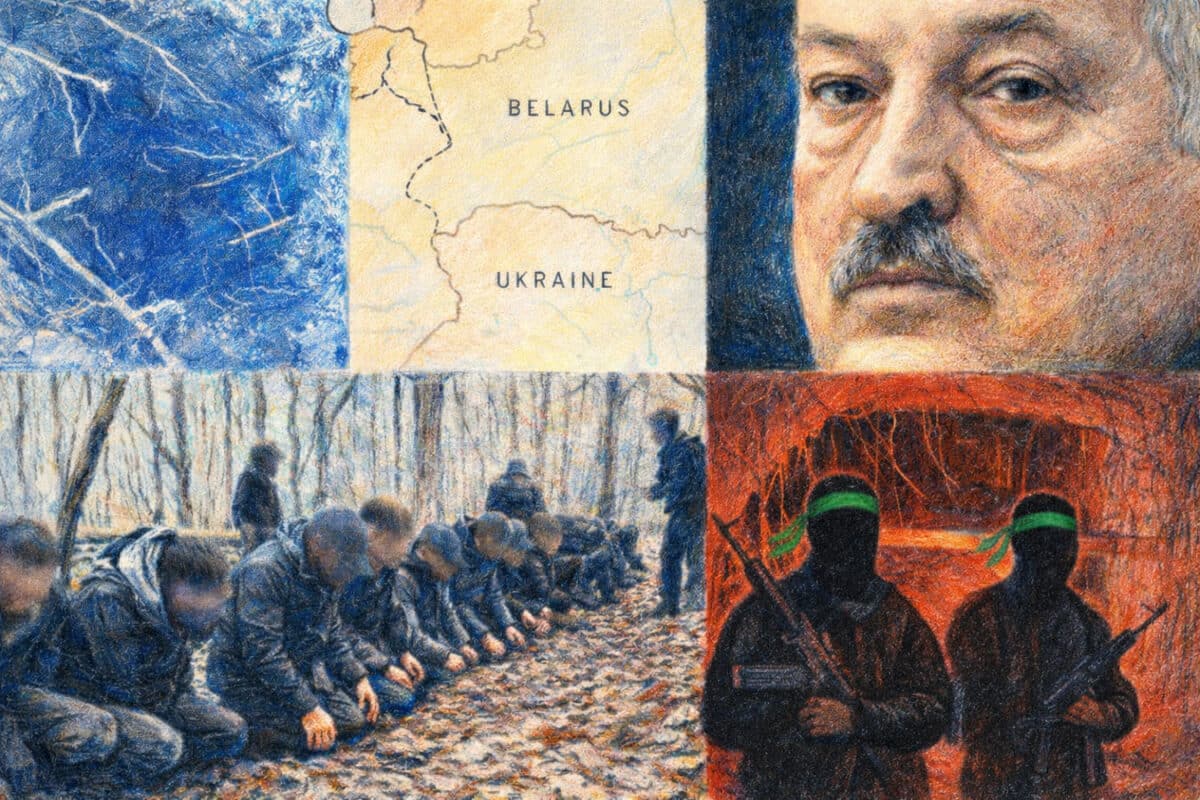
Tunnels from Belarus to Poland — the trace of HAMAS and Hezbollah in a hybrid war against Europe? – The Telegraph

In December, underground tunnels nearly 100 meters long and about one and a half meters high were discovered at the Belarus-Poland border. According to Polish services, migrants were illegally transported through them. The British newspaper The Telegraph on February 25, 2026, claims: Middle Eastern groups with experience in underground warfare could have been behind the construction.

This is about a new stage of Russia’s hybrid pressure on the European Union — using Belarusian territory and the migration factor as a tool of destabilization.

What is known about the tunnels on the Polish-Belarusian border

The tunnels were discovered in December 2025. According to Polish border guards, 130 migrants were detained immediately after a group of people exited the underground passage.

The construction turned out to be professional: reinforced walls, well-thought-out ventilation, depth allowing for covert border crossing. Later, other underground routes were identified, built with a high degree of engineering preparation.

Tunnels from Belarus to Poland — the trace of Hamas and Hezbollah in the hybrid war against Europe? - The Telegraph
Tunnels from Belarus to Poland — the trace of Hamas and Hezbollah in the hybrid war against Europe? – The Telegraph

The Telegraph, citing military experts, reports that such technologies are characteristic of groups with experience in underground operations in the Middle East.

Who could be behind the construction: expert versions

The British publication presents the opinions of specialists familiar with the tactics of underground warfare. Among the groups with proven ability to dig deep and complex tunnels are:

Hamas and Hezbollah

Experts note that Hamas and Hezbollah have been perfecting underground infrastructure in the Gaza Strip and southern Lebanon for decades. In their assessment, the technical level of the Polish-Belarusian tunnels resembles Middle Eastern samples.

It is separately emphasized that both structures receive support from Iran and, according to Western analysts, are in tactical interaction with Russia on a number of fronts.

Kurdish formations and ISIS

Sarit Zahavi, a former Israeli intelligence officer, stated that the list of potential executors is broader. According to her, similar technologies are used by Kurdish forces in Syria, as well as ISIS militants.

Polish sources cited by The Telegraph do not rule out the involvement of specialists from Kurdish units. However, official Warsaw emphasizes that political responsibility lies with the Belarusian regime.

Moscow’s hybrid strategy and Minsk’s role

The essence of what is happening fits into the model of hybrid warfare, where the migration flow is used as a tool of pressure on EU countries.

According to The Telegraph, Russia is sending migrants through Belarus to Europe, using hidden routes. The construction of tunnels is considered part of a broader operation to undermine stability on NATO’s eastern flank.

Belarus, led by Alexander Lukashenko, has previously been accused of organized migrant transfers to the Polish border. The new element — underground infrastructure — takes the situation to a different level of complexity.

Experts note that such operations require coordination, funding, and technical preparation. This excludes the spontaneous nature of what is happening.

In the context of the Middle Eastern trace, the topic acquires an additional dimension for Israel. If specialists associated with Hamas or Hezbollah were indeed involved in the construction, it is about transferring technologies used against Israel to the European direction.

This is precisely what the publication NAnovosti — News of Israel | Nikk.Agency focuses on, analyzing possible consequences for Israeli security and strategic alliances.

Why this story is important for Israel and Europe

For Poland and EU countries, it is a matter of border protection and national security.

For Israel, it is a matter of technology transfer and cooperation between anti-Israeli structures and states opposing the West.

If the versions of Middle Eastern groups’ involvement are confirmed, it will be evidence of the expansion of their activity geography and a new form of cooperation within the anti-Western axis.

The investigation is ongoing. Polish authorities are strengthening border control. In London and Berlin, additional measures to protect the eastern flank are being discussed.

There are no final conclusions. But the very fact of the appearance of complex underground routes between Belarus and Poland already changes the picture of the migration crisis in Europe and takes it from the plane of a humanitarian problem to the sphere of geopolitics and security.


Ukraine is looking for workers, Israel shows a model: migrants cover only 0.1% of market needs - June 5, 2026 - Новости Израиля

Trump promises a finale with Iran: deadline, Pakistan, and a deal that is not yet in place - June 5, 2026 - Новости Израиля

The Kishinev pogrom: In 1903, the central authorities in Russia wanted Jewish blood to be shed, and that is exactly what happened. - June 5, 2026 - Новости Израиля

Israel will send 117 mobile generators to the Kyiv region to combat the energy crisis

On February 24, 2026, on the day of the fourth anniversary of Russia’s full-scale war against Ukraine, Israel announced the transfer of 117 mobile generators to the Kyiv region. This is not a symbolic gesture, but rather practical assistance to a region that continues to live under conditions of energy pressure, disruptions, and constant strain on infrastructure.

The decision was announced during a phone conversation between Israel’s Foreign Minister Gideon Sa’ar and Rabbi Meir Stambler, Chairman of the Federation of Jewish Communities of Ukraine (FJCU). The content of the conversation shows that two lines were immediately in focus: humanitarian support for the civilian population and the state of Jewish communities in Ukraine under wartime conditions.

This was reported on February 24, 2026, by the press service of Minister Gideon Sa’ar.

Why the transfer of generators to the Kyiv region is an important signal right now

Israel will send 117 mobile generators to the Kyiv region to combat the energy crisis

The energy situation remains one of the key risks for Ukraine’s regions

Even when the news agenda is dominated by frontline reports and international negotiations, the topic of energy does not disappear. For Ukraine, it is a matter of everyday resilience: the operation of utilities, medical institutions, social facilities, community centers, logistics, and basic safety of people in winter and during the off-season.

Against this backdrop, the transfer of 117 mobile generators to the Kyiv region appears as a targeted and timely measure. Mobile generators are not ‘big politics’ in a television format, but a tool that allows closing specific gaps on the ground: from temporary power supply to backup support for critical points.

According to the data announced in the message, the decision was made after negotiations between Gideon Sa’ar and Ukraine’s Foreign Minister Andriy Sybiha regarding the complex energy situation in the region. This is an important detail: the assistance is tied to a real request and a specific problem, not an abstract declaration of support.

The phone conversation with the head of FJCU showed the humanitarian and community context

Sa’ar’s conversation with Rabbi Stambler was not only about the topic of generators. The minister was also interested in the current situation in Ukraine and the condition of Jewish communities, and he conveyed greetings for the upcoming Purim.

This format of communication shows that Israel, in this case, is working on several levels: state support, contact with the Ukrainian side through the Ministry of Foreign Affairs, and attention to the life of Jewish communities within Ukraine, which continue to operate under extremely difficult conditions.

For the audience in Israel, this is especially important because the topic of Ukraine has long ceased to be ‘external’ in the narrow sense. Many families have personal, community, cultural, and religious ties. Therefore, such news is read not only as international chronicle but also as a story about people who remain on the ground and continue their work.

What Rabbi Meir Stambler said and why his words are important for understanding the situation

Gratitude for support and emphasis on the moral resilience of communities

In the conversation, Rabbi Meir Stambler thanked Gideon Sa’ar for the support, solidarity with the Ukrainian people, and attention to the local Jewish community. According to him, such a position gives people strength.

This is a formulation that is easy to underestimate if you read the message only as an official press release. But in reality, in the conditions of a protracted war, the moral factor works almost on par with material assistance. When it comes to regional communities, volunteers, religious leaders, and families, it is important not only ‘what was transferred’ but also ‘who is in touch’ and ‘who has not disappeared from the dialogue’.

It is in this context that the news about the generators becomes broader than just one equipment delivery.

Rabbis and Chabad emissaries remain in Ukraine despite the risks

Separately, Stambler emphasized that despite the difficult conditions, he and his colleagues — rabbis, Chabad emissaries — are determined to stay in Ukraine. This is not just an emotional statement. It is a description of a strategy of presence: community life, assistance, organization of holidays, support for people on the ground continue not ‘after the war’, but right now.

In the conditions of a protracted crisis, such a position also has practical significance. When community leaders remain, the infrastructure of trust is preserved: there is someone to organize assistance, gather people, support the elderly, convey information, coordinate holiday and humanitarian initiatives.

At this point, it is appropriate to remind that NAnews — News of Israel | Nikk.Agency regularly monitors exactly such stories at the intersection of Israel, Ukraine, and the life of Jewish communities — where behind the official wording there are always specific people, specific cities, and specific decisions.

Purim as an element of resilience, not just a religious tradition

During the conversation, preparations for Purim were also discussed. Stambler reported that the Federation sent holiday kits across Ukraine, including Scrolls of Esther translated into Ukrainian, so that the Jews of the country could fulfill the commandments of the holiday and feel joy even in difficult times.

This is an important plot for understanding how community resilience works in war. Holiday kits in such a context are not a ‘secondary topic’, but part of psychological and social support. When people have the opportunity to maintain the rhythm of life, tradition, and a sense of normalcy, it is also a form of resistance to destruction.

How this decision is perceived in Israel and Ukraine

For Ukraine — it is practical assistance in a critical area

The transfer of 117 mobile generators to the Kyiv region is a story about a specific resource that can be used immediately. In the conditions of an energy crisis, such supplies directly affect the ability of territories to go through periods of load and emergency restrictions.

It is especially important that the assistance is directed in a regional format — to the Kyiv region, and not only within the framework of general statements at the level of capitals. This enhances the practical value of the decision.

For Israel — it is a combination of diplomacy, humanitarian line, and connection with the diaspora

For the Israeli audience, several levels are noticeable here: the work of the Ministry of Foreign Affairs, contact with the Ukrainian authorities, attention to Jewish communities in Ukraine, and the symbolic moment of the date — the fourth anniversary of the full-scale war.

It is worth noting separately the mention of the J50 forum, which, according to Stambler, unites leaders of Jewish communities from around the world. This adds another layer to the news: it is not only about bilateral interaction between Israel and Ukraine but also about a broader network of Jewish solidarity.

Why this news is important for the information agenda right now

Against the backdrop of an overloaded international agenda, such messages often look ‘unremarkable’. But they show how real support is organized: through calls, coordination, equipment supplies, contact with communities, and attention to the lives of people in specific regions.

And if you look at the situation not through loud headlines, but through the consequences for people, then 117 mobile generators are a story not only about technology. It is a story about the resilience of the region, about Israel’s diplomatic involvement, and about the fact that communities in Ukraine continue to work, not folding their mission even in war.

Main conclusion: Israel’s transfer of generators to the Kyiv region is simultaneously a practical step to overcome energy problems and a political-humanitarian signal of support for Ukraine and its Jewish communities on one of the most symbolically difficult days of the year.


Ukraine is looking for workers, Israel shows a model: migrants cover only 0.1% of market needs - June 5, 2026 - Новости Израиля

Trump promises a finale with Iran: deadline, Pakistan, and a deal that is not yet in place - June 5, 2026 - Новости Израиля

The Kishinev pogrom: In 1903, the central authorities in Russia wanted Jewish blood to be shed, and that is exactly what happened. - June 5, 2026 - Новости Израиля

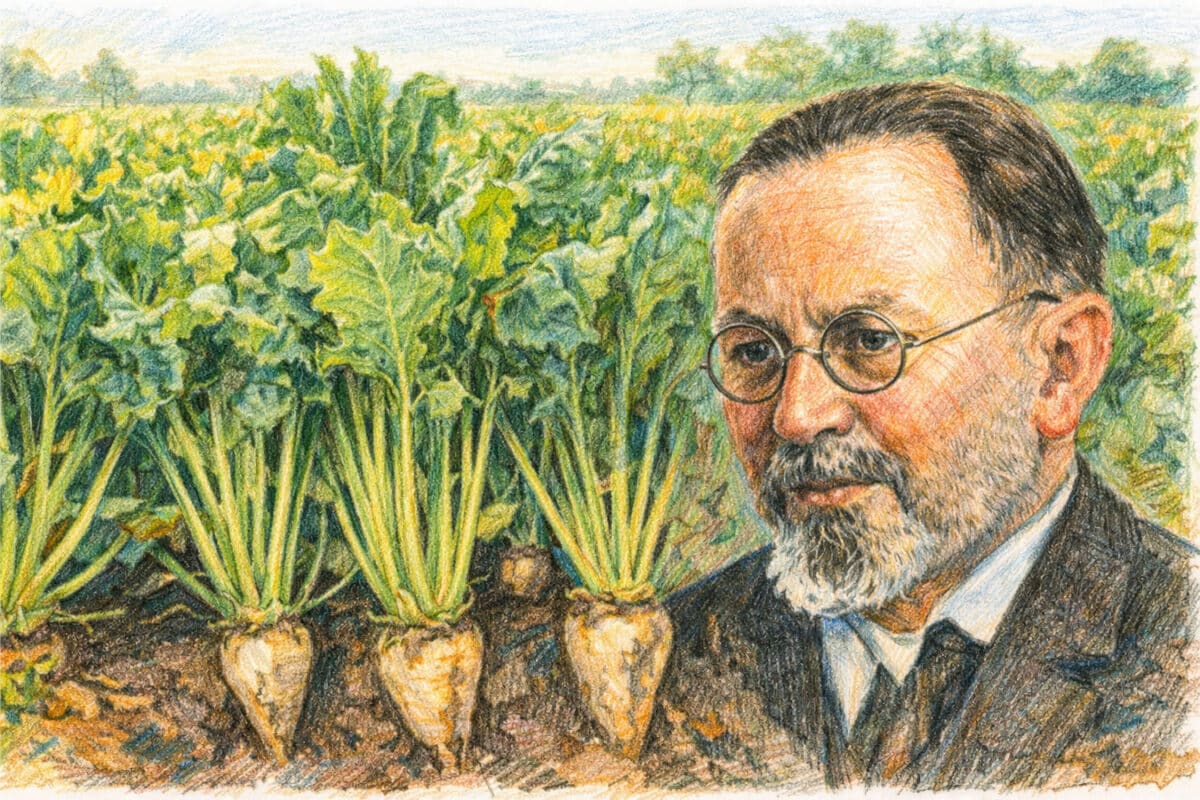
Jews from Ukraine: Solomon Frankfurt. “Solomon’s Temple” near Kyiv: how a Jewish scientist promoted Ukraine’s agro-industry

In the section Jews from Ukraine read the story of Solomon Frankfurt — a Jewish scientist and organizer of science, who in the early 20th century helped Ukraine build what today would be called “agro-innovation infrastructure”: laboratories, experimental fields, breeding stations, seed quality standards, and applied research tied to the real economy.

This biography (Ukr.) was compiled by Israeli author Shimon Briman on the website Ukrainian Jewish Encounter. He writes about Frankfurt without romanticizing — as a person who spoke equally confidently in the language of chemistry, agricultural practice, and state decisions. And that is why in Ukrainian agricultural history, Frankfurt has a figurative nickname: the network of scientific centers around Kyiv was later called the “Temple of Solomon” — not in a religious sense, but as a metaphor for a “built system” that survived the change of eras.

Who is Solomon Frankfurt — briefly, but to the point

Jews from Ukraine: Solomon Frankfurt. “Temple of Solomon” near Kyiv: how a Jewish scientist promoted Ukraine's agro-industry
Jews from Ukraine: Solomon Frankfurt. “Temple of Solomon” near Kyiv: how a Jewish scientist promoted Ukraine’s agro-industry

Solomon Lvovich (Shlomo Meirovich) Frankfurt was born in 1866 in Vilno (now Vilnius). He received a European education and a doctorate in chemistry in Zurich, researching sugars in plants — a topic that directly intersects with Ukrainian beet growing and the sugar industry of the early 20th century.

But an “imperial career” for a Jewish scientist at the end of the 19th century often did not depend on abilities. Briman cites a telling episode: in 1898, Frankfurt was denied a professorship at the Moscow Agricultural Institute precisely because of his religion. In simple terms, it sounds like this: the road to universities is closed — so science must find a way through practice.

And Frankfurt found this way in Kyiv.

Kyiv: the laboratory from which the system grew

Moving to Kyiv was a turning point for Frankfurt. In 1901–1920 (Briman highlights this period as the most productive), he worked where science meets real production: sugar factories, agrochemistry, seed quality, yield.

Frankfurt headed the agrochemical laboratory of the Kyiv Agricultural Syndicate and began promoting what today seems obvious but was then new managerial thinking: seeds should not just be bought and sown, but checked, compared, improved, standardized. Science should measure results, not serve beautiful reports.

Briman emphasizes that from this laboratory over time grew a functioning scientific center at the specialized Institute of Agriculture. That is, it is not about a “flash of talent,” but about creating an institutional base: structure, people, methods, a habit of experimentation.

Experimental fields and fertilizers: work not in theory

Frankfurt did not confine himself to office chemistry. According to Briman, he participated in creating a network of experimental fields in several provinces — to test ideas not on paper, but in soil and weather. This is important: Ukraine is vast and diverse, and universal recipes in agriculture work poorly.

A separate direction was work with mineral fertilizers. At that time, it sounded like a “modernization tool” — an opportunity to increase yield and stabilize product quality. In the text, Frankfurt appears as a person who explained to producers and landowners: yes, it’s money, yes, it’s technology, but without it, the agro-economy will lag behind.

Briman essentially shows a “transition model”: from agriculture as a tradition — to agriculture as an industry where decisions are confirmed by data.

Myronivka and “Ukrainka”: when selection becomes part of the country

One of the key episodes is the organization in 1909 of the Central Research Station for Sugar Beet Culture near Myronivka. Briman writes that the station was supported by local sugar manufacturers: this is an important link between science and business, without which infrastructure usually does not survive.

Later, based on these initiatives, the Myronivka Breeding Station (today — the Institute of Wheat) appeared. And here Briman gives a detail that catches even people far from the agricultural topic: Frankfurt is credited with the authorship of the idea of naming the winter soft wheat variety “Ukrainka 0246.”

This is not a trifle. The name of the variety is a symbol that “Ukrainian” can be not only a political declaration but also a specific product of science: grown, tested, distributed.

Frankfurt and Ukrainian statehood: a choice that was not “neutral”

Briman shows Frankfurt as a person who did not hide from politics — although he was not a political tribune. During the Ukrainian revolution, Frankfurt participated in creating professional and scientific structures, worked in commissions, and dealt with what often remains behind the scenes: the institutional design of the industry.

The text contains a thought that Briman formulates harshly and without embellishments:
“He believed in Ukrainian statehood more than many Ukrainians” — writes Briman.

Separately noted is the work under the Hetman government, where Frankfurt dealt with agriculture and food issues and participated in preparing agricultural legislation. That is, it was not “sympathy in words,” but involvement in managerial routine: documents, norms, rules.

Negotiations of 1918: economic diplomacy and sugar

There is also an international layer. Briman cites the position of historian Ruslan Piroh: Frankfurt twice represented Ukraine in complex economic negotiations with Germany and Austria-Hungary in 1918. The essence — the Ukrainian side defended economic conditions, including a fair price for Ukrainian sugar.

Briman emphasizes: it was not a “symbolic trip,” but negotiation work where each figure had political weight.

The text also mentions Frankfurt being awarded a German order — as a marker of recognition of his role in these contacts.

Emigration and World ORT: continuation of the Ukrainian biography in the world

After the defeat of the UNR, Frankfurt, according to Briman, refused to cooperate with the Bolsheviks and emigrated at the end of 1920. Then another part of life begins — but it logically continues the first: building a system, only now at an international level.

For decades, Frankfurt worked at World ORT — an organization engaged in technological education and support for artisans and farmers. Briman lists the cities and stages of ORT’s European work, and then the move to the USA. From 1947, Frankfurt became the president of World ORT.

He died in 1954 and was buried in New York State. But the Ukrainian trace in his biography did not disappear: Briman builds the line so that the reader sees — the experience of creating agricultural infrastructure in Ukraine became part of his broader, global project.

Why “Temple of Solomon” sounds especially poignant today

The metaphor “Temple of Solomon” Briman associates with the assessment of academician Viktor Vergunov: it is about the agricultural scientific centers of Ukraine created by Frankfurt, which worked even after him. The meaning of the metaphor is in the built “architecture of science”: when the system continues to function, even if the creator is long gone.

The finale with Briman is modern and very direct: he reminds that Jewish school No. 141 in Kyiv, operating under the aegis of ORT, is experiencing a difficult military winter — with shelling, power, and heat outages. The story of a person from the early 20th century suddenly turns out to be close to the reality of 2026.

Main conclusions for the section “Jews from Ukraine”

Frankfurt is an example of a Jewish intellectual who became part of the Ukrainian modernization project not with slogans, but with infrastructure.

His contribution is not one “loud idea,” but a habit of scientific verification, standardization, and systematic experimentation in agriculture.

During the Ukrainian revolution, he made a conscious choice in favor of Ukrainian statehood and worked in real managerial mechanisms.

His subsequent work at World ORT shows the continuation of the same logic: education, applied skills, community support — through institutions, not declarations.


Text: Shimon Briman (Israel). https://ukrainianjewishencounter.org/uk/hram-solomona-bilya-ki%d1%94va-yak-%d1%94vrejskij-vchenij-prosuvav-agroindustriyu-ukra%d1%97ni/

The author is grateful to the employee of the World ORT Archive in London, Jennifer Brunton, for assistance in finding materials and providing a photograph of Solomon Frankfurt.


Ukraine is looking for workers, Israel shows a model: migrants cover only 0.1% of market needs - June 5, 2026 - Новости Израиля

Trump promises a finale with Iran: deadline, Pakistan, and a deal that is not yet in place - June 5, 2026 - Новости Израиля

The Kishinev pogrom: In 1903, the central authorities in Russia wanted Jewish blood to be shed, and that is exactly what happened. - June 5, 2026 - Новости Израиля

How Jared Kushner’s Jewish roots connect Ukraine and Trump: an unexpected find from Pidgaitsy, Ternopil region of Ukraine

Why not? Heading “Jews from Ukraine” on the website NAnews is dedicated to the unique history and achievements of Ukrainian Jews, their contribution to the development of Israel and Jewish communities around the world, strengthening cultural and historical ties between peoples.

This article is just research for now 🙂 by an enthusiast……

History often brings amazing surprises. This time she shed light on family Jared Kushner’s roots, son-in-law of US President Donald Trump.

As it turned out, his maternal great-grandfather born in Ukraine, or rather, in a small town PodgaitsyTernopil region. Here it is on the map.

About this “Suspilny” told historian, local historian and teacher, former mayor of the village of Podgaitsy Stepan Kolodnitsky.

Stepan Kolodnitsky is the compiler of the publication “Podgaitsy and Podgaechchyna”, in which he collected all the historical information about the region and a tourist guide “The paths of the shtetls. Travels to the Forgotten Continent”which contains information about ancient Jewish cities.

Enthusiast Stepan Kolodnitsky, who devoted his life to researching his region, found documentary evidence that sheds light on Kushner’s pedigree.

As the historian said, surviving documents indicate that the Stadtmauer family, from which Jared Kushner’s great-grandfather on his mother’s side comes, lived in Podgaitsy for a long time.

“At the beginning of the twentieth century, the Jewish population in Podgaitsy was 53 percent. Over time, the majority emigrated to Israel, the USA and other countries. Among them are the ancestors of Jared Kushner,” said Stepan Kolodnitsky.

The Stadtmauer family: the path from Podgaitsy to America

The Stadtmauer family immigrated to the United States at the beginning of the 20th century to escape poverty. Like many other Jews from Ukraine, they were looking for a better life overseas.

Jared Kushner, a member of New York’s “Modern Orthodox” Jewish community, was raised in the traditions passed down by his ancestors. Kushner does not hide his pride in his origins.


Jewish heritage of Podgaitsy

By the way, I was born in Podgaitsy Mendel Zacharias – son of Rabbi Aryeh Leib (died 1791), author of the books “Menorot Zechariah” (“The Lamp of Zechariah”), “Zechariah Meshulem” (“Allegories of Zechariah”), “Zechariah Yamevin” (“Zechariah the Expert”).

Podgaitsy is a small but history-rich city.

Jews began to settle in Podgaitsy at the beginning of the 16th century, and the first documentary mentions date back to 1552, when Jews were recorded as taxpayers. Already at that time, the community differed in size compared to other neighboring cities. From 1580 to 1620, Rabbi Aron Benjamin Solnik, author of the famous book “The Speeches of Benjamin,” lived and served in Podgaitsy, which made the city an important religious and cultural center.

By the beginning of the 20th century, the Jewish community made up about half of the city’s population: out of 6,000 residents, 3,200 were Jews. They were engaged in trade and crafts, and actively participated in cultural and economic life. However, the First World War and subsequent events were the first blows for the community. Despite this, in the 1910s, a local printing house owned by the Jewish Weinles family published books and materials for Ukrainian organizations.

Tragedy struck the community during World War II. In 1941, with the arrival of German troops, attacks, forced labor and fines for Jews began. On Yom Kippur in 1942, about 1,000 Jews were sent to the Belzec extermination camp, and in 1943 the community was finally exterminated: the remaining residents were shot and buried in mass graves on the outskirts of the city. The last Rabbi of Podgaytsev, Yitzchak-Aizik Aichenstein, died along with the community.

Today the Jewish cemetery in Podgaitsy is a unique historical monument. About 1,500 matzes have been preserved here, some of which date back to the 17th century. It is one of the largest Jewish cemeteries in Ukraine, reminiscent of the past greatness and tragedy of the city’s Jewish community. Interestingly, the city’s coat of arms, decorated with a gold letter “P”, resembles the Hebrew letter “ח” (chaim – life), which symbolically connects the city with its Jewish history.

This thriving shtetl was known for its cultural diversity and active Jewish life. However, the events of World War II and subsequent repressions significantly changed the face of the city.

About 1.5 thousand matzes have been preserved in the old Jewish cemetery in Podgaitsy, and the oldest tombstones date back to the 17th century. During a survey of the cemetery in 2011, scientists discovered a matzeva from 1596, one of the oldest in the region.

When asked whether there is Stadtmauer’s grave in the Jewish cemetery in Podgaitsy, the historian replied: “There is no grave itself, because you see what the Bolsheviks, the Germans, and other people destroyed.”


Interesting twist in history

It would seem that the connection between Donald Trump, his son-in-law Kushner and Ukraine sounds like an unexpected twist. However, the story of the Kushner family is another example of how Ukraine and Israel are connected by a common Jewish destiny.

“Europe is over,” said the Jews who left at the beginning of the last century. But the legacy of their families lives on in their descendants who reach heights on the other side of the world.


A look into modern times

Ukrainian Jews left a deep mark on the history of Israel and Jewish communities around the world. As the example of the Kushner family shows, such connections not only remain, but also remind us of the importance of culture and historical heritage.

Our website NAnews – Israel News continues to highlight unique moments in the history of Jewish communities, their interaction with Ukraine and contributions to the modern world.


Quote from a historian:

“Pidgaytsy is a unique place where the histories of peoples are intertwined. By studying its past, we open new pages of world history.”

Read more in the section “Jews from Ukraine” website NAnews – Israel News.

Read on WhatsApp – channel NAnews ↓ — Israel News

Read on Telegram – channel NAnews ↓ — Israel News


Ukraine is looking for workers, Israel shows a model: migrants cover only 0.1% of market needs - June 5, 2026 - Новости Израиля

Trump promises a finale with Iran: deadline, Pakistan, and a deal that is not yet in place - June 5, 2026 - Новости Израиля

The Kishinev pogrom: In 1903, the central authorities in Russia wanted Jewish blood to be shed, and that is exactly what happened. - June 5, 2026 - Новости Израиля

Ukrainian classics in Hebrew: “Every city has its own character and rights” by Grigory Skovoroda has already been translated by the “Nemala נְמָלָה” project as part of the Translate Ukraine 2025 program

In 2025, Israel will continue to support the translation of Ukrainian literary works. Among them is the “Anthology of Ukrainian Poetry” (Volume I), which includes the works of classics from Hryhorii Skovoroda to Ivan Franko.

This project won a tender for translation and publication and was selected for inclusion in the Translate Ukraine 2025 program. The Israeli publishing house Persimmon Books Ltd will handle the translation, printing, and distribution, funded by Ukraine.

The translation in Israel is being carried out by the creative project and publisher “Nemala נְמָלָה”.

The project was initiated by Asaf Bartov and Nataliia Tymkiv, an Israeli-Ukrainian family dedicated to preserving and sharing the richness of both cultures. They want their daughter and her peers to live in a world where the best works of Ukrainian and Israeli literature are available in their native languages.

On May 16, 2025, Asaf Bartov announced that the Hebrew translation of Hryhorii Skovoroda’s poem “To Every City Its Custom and Law” has been completed.

“The war waged by Russia against Ukraine is essentially a war against Ukrainian identity and culture.
When Russians occupy a village, they, for example, burn Ukrainian books in local schools. This is hardly a strategic military priority — unless the true goal is to erase Ukrainian identity and forcefully dissolve it into a Russian one, treating Ukrainians as second-class citizens.

On May 6, 2022, a Russian missile struck the Skovoroda Museum in the village where he was buried.

The museum was destroyed, although the statue of Skovoroda remained intact, and his portrait among the ruins became symbolic,” said Asaf Bartov.

We have already written about this project — The Israeli project “Nemala נְמָלָה”: enthusiasts bridge Ukrainian and Hebrew literature through translation, creating a cultural link between Israel and Ukraine

Asaf Bartov and Nataliia Tymkiv are also contributors to Hebrew Wikipedia, where they actively publish articles about Ukrainian culture and literature.

Hryhorii Skovoroda — Ukrainian Philosopher, Poet, and Educator

Hryhorii Savych Skovoroda (December 3, 1722 – November 9, 1794) was a Ukrainian philosopher, poet, teacher, thinker, and theologian, and one of the most important figures in the Eastern European intellectual tradition. He is often called the “Ukrainian Socrates” for his life as a wandering sage.

Biography

Skovoroda was born in the village of Chornukhy (now Poltava region, Ukraine) in a Cossack family. He received a classical education at the Kyiv-Mohyla Academy, where he studied theology, philosophy, and ancient languages. He traveled to Hungary, Austria, and possibly Germany as a member of a court choir. He taught at the Kharkiv Collegium but resigned due to disagreement with dogmatic approaches and pressure from church authorities.

Afterward, he led a life as a wandering philosopher, rejecting material wealth and positions, preaching ideas of inner freedom and spiritual integrity.

Philosophy and Language

Skovoroda opposed scholasticism and the spiritual oppression of Russian Orthodoxy. Inspired by the Bible and classical philosophy, he preached that true happiness comes from living in harmony with one’s inner nature and finding one’s “calling of the heart.”

The language of his works remains a subject of scholarly debate. His philosophical treatises were written in Slavic-Ukrainian (Slavenoruthenian), a variant of Early Modern Ukrainian with Church Slavonic influences. His poetry and fables were written in literary Ukrainian, and some correspondence was in Latin.

“To Every City Its Custom and Law”

One of Skovoroda’s most famous works is the tenth song from the collection “The Garden of Divine Songs” — a satirical and philosophical poem denouncing greed, hypocrisy, and moral decay in society.

יש לכל עיר לא מעט מנהגים,
גם לכל איש יש אין־ספור הגיגים.
כל לב יאהב בדרכו בחומו,
גם לכל חך יערב טעמו.
בי תקנן מחשבה יחידה
רגע שלֵו נשמתי לא תדע.זה מחזר על פתחי השרים,
זה מרמה במסחר בשקרים.
זה מתגאה ובונה בית רם.
זה מקלף בריבית את העם.
בי תקנן מחשבה יחידה
רגע שלֵו נשמתי לא תדע.זה רק חומד אחוזות ושׂדמות,
זה מנכר מייבא בהמות.
פה אוהבים רק לצוד עם כלבים,
שם הוללים, זוללים וסובאים.
בי תקנן מחשבה יחידה
רגע שלֵו נשמתי לא תדע.כל השופטים ערומים בחוקים.
כל הסטודנטים מרבים ויכוחים.
זה רק חומד מזמוטי אהבה –
כמה איוולת בכל תאווה.
בי מחשבה יחידה רק תצוף:
איך אשמר עד מותי מטֵרוף.מוות נורא, השולט בכולם,
על אף אחד לא תחוס לעולם.
הלך גם מלך תקצֹר בחרמש
אנו נכלה כמו תבן באש.
אלא לנצח אותך לא יירא
איש טהור־מדות שיחיה ביָשְרה.

Legacy for Ukraine

Hryhorii Skovoroda is one of the central figures in Ukrainian spiritual history. His philosophy — based on freedom, self-knowledge, and following one’s inner voice — has inspired generations of thinkers, poets, and defenders of Ukrainian identity.

He became a symbol of Ukrainian cultural independence, a philosopher who expressed universal truths in the language of his time, while remaining deeply rooted in Ukrainian tradition. In modern Ukraine, he is revered as a national genius, and his writings serve as a source of wisdom and moral guidance.

Works

During his lifetime, none of Skovoroda’s works were published — church censors found them “contrary to Holy Scripture” and “offensive to monasticism.” Only in 1861 was the first posthumous volume published in Saint Petersburg:

“Writings in Verse and Prose by Hryhorii Savych Skovoroda. With His Portrait and Handwriting.”

Key works include:

  • “The Garden of Divine Songs” — a collection of metaphysical poetry
  • “Kharkiv Fables” — philosophical allegories and parables
  • “Narcissus,” “A Conversation Called Alphabet,” “Symphony” — philosophical dialogues and treatises

Legacy

Skovoroda became a symbol of spiritual freedom and inner independence. His impact on Ukrainian culture, philosophy, and literature is profound and enduring.

On his tombstone is engraved a phrase that became the motto of his life:

“The world tried to catch me, but didn’t succeed.”

This phrase symbolizes his path: to remain true to oneself, to resist vanity, and to preserve spiritual freedom until the end.

Translate Ukraine 2025

The “Translate Ukraine” government program, led by the Ukrainian Book Institute, continues to actively promote Ukrainian culture worldwide.

In 2025, the program will carry on. The list of works selected for translation into foreign languages includes 81 titles, featuring some of Ukraine’s most prominent authors.

One of the most notable projects is the translation into Hebrew, which will help strengthen cultural ties between Israel and Ukraine and promote Ukrainian literature in Israel.

As part of Translate Ukraine 2025, Ukrainian works will be translated into 25 languages across 28 countries. The largest number of translations will be into Polish (7), Spanish (6), Latvian (6), and Slovak (6).

Other translations include English (5), Arabic (2), Bengali (1), Bulgarian (3), Greek (2), Georgian (3), Hebrew (1), Italian (4), Chinese (1), Lithuanian (3), Macedonian (5), German (3), Portuguese (3), Romanian (2), Serbian (1), Hungarian (4), Finnish (2), French (4), Croatian (2), Czech (3), and Swedish (2).

NAnews: Ukraine continues to open doors to its literature for the world. In Israel, this plays a particularly important role in deepening cultural connection. Follow updates on NAnews — Israel News.


Ukraine is looking for workers, Israel shows a model: migrants cover only 0.1% of market needs - June 5, 2026 - Новости Израиля

Trump promises a finale with Iran: deadline, Pakistan, and a deal that is not yet in place - June 5, 2026 - Новости Израиля

The Kishinev pogrom: In 1903, the central authorities in Russia wanted Jewish blood to be shed, and that is exactly what happened. - June 5, 2026 - Новости Израиля

Ukrainian DJ Aurika — headliner of PURIM MASQUERADE in Haifa – March 6, 2026

On March 6, 2026, the Haifa club Malina will host the MALINA PURIM MASQUERADE party. The format is a masquerade night with a show program, aerial acrobats, and an international lineup. The special guest of the evening is the Ukrainian DJ DJ Aurika.

📍 חלוצי התעשייה 110, Haifa
🕚 Doors open: 23:00

Tickets – https://www.eventer.co.il/event/syf7f/p32YL

The organizers promise an exclusive Purim atmosphere with a go-go show and an ‘international vibe’. However, behind the name of the invited artist is not only club marketing but also a long-standing stage history associated with Ukraine.

From the Kharkiv scene to international tours

DJ Aurika is a Ukrainian DJ professionally associated with Kharkiv. Her career started in the late 2000s, and since 2009 she has been actively working on the international stage.

Biographical descriptions mention hundreds of club performances and dozens of countries. These formulations are replicated in official profiles and posters and have become part of her stage positioning.

Over the years, her musical vector has evolved along with the trends of the electronic scene.

You can watch – https://www.youtube.com/@AurikaDJ

Ukrainian DJ Aurika — headliner of PURIM MASQUERADE in Haifa - March 6, 2026
Ukrainian DJ Aurika — headliner of PURIM MASQUERADE in Haifa – March 6, 2026

Evolution of musical style

Early period

At the beginning of her career, DJ Aurika worked mainly in the genres:

  • Electro House

  • Progressive House

  • Tech House

This stage was accompanied by an active show format and visually bright performances.

Modern direction

In recent years, posters and sets have been dominated by:

  • Afro House

  • Melodic Techno

  • House

  • Indie Dance

The sound has become more European and atmospheric while maintaining dance density.

Stage image: T-DJ format

In early sources, DJ Aurika appears as T-DJ (Topless DJ). In the late 2000s — early 2010s, this format was part of the club industry in Eastern Europe.

It was about a show presentation where the DJ combines a musical performance with a bright visual performance — revealing stage costumes, elements of go-go aesthetics, and an emphasis on stage presence.

During that period, the club market actively used such formats as a tool to attract audiences. The artist became not only the musical but also the visual center of the stage.

Over time, the image transformed. Today, DJ Aurika is positioned primarily as a touring electronic artist with an emphasis on the musical component.

Musical releases and touring activity

DJ Aurika’s creativity develops in two directions — set and studio.

Her mix archive can be traced back to at least 2013. In recent years, there has been an increase in live sets and online publications.

Among studio releases are collaborations with producer The Max on the 404 Deep Records label, including Overrun (2020) and Baseline (2021).

In 2024–2026, public announcements include performances in Kyiv, Tallinn, Chisinau, Bucharest, and now — in Haifa.

It is in this international context that the editorial team of НАновости — Новости Израиля | Nikk.Agency considers her visit as part of a broader picture: Ukrainian artists continue to tour, appear on European and Middle Eastern stages, and maintain cultural presence beyond their country.

Public support for Ukraine after 2022

After the start of Russia’s full-scale invasion of Ukraine in February 2022, DJ Aurika publicly stated her position.

The first weeks of the war

In 2022, her messages indicated that she was in Kharkiv and ready to help — including providing transport and logistical support to those in need.

Charitable initiatives

In June 2024, DJ Aurika performed in Kyiv at an event in Blockbuster Mall, where a charity auction and Meet & Greet were held as part of the event. At that time, 39,962 UAH were raised in favor of the Nastup Fund for psychological rehabilitation programs for military families.

Targeted collection 2025

In September 2025, the artist initiated a fundraiser for electronic warfare equipment for military unit A7383, associated with the 127th mechanized brigade defending the Kharkiv region.

Thus, her support for Ukraine was expressed not only in statements but also in concrete actions.

Why her performance in Israel matters

After 2022, Israel accepted a significant number of people from Ukraine. For the Ukrainian community, performances by artists on the Israeli stage are not only entertainment but also an element of cultural connection.

MALINA PURIM March 6 is a vibrant club night with an international lineup. At the same time, it is a performance by a Ukrainian artist who has traveled from the Kharkiv scene to international tours and continues to publicly support her country.

For some, it will be just a dance set. For others, a reminder that the Ukrainian cultural scene remains alive and active even in wartime conditions.

Tickets

On March 6, 2026, the Haifa club Malina will host the MALINA PURIM MASQUERADE party. The format is a masquerade night with a show program, aerial acrobats, and an international lineup. The special guest of the evening is the Ukrainian DJ DJ Aurika.

📍 חלוצי התעשייה 110, Haifa
🕚 Doors open: 23:00

Tickets – https://www.eventer.co.il/event/syf7f/p32YL


Ukraine is looking for workers, Israel shows a model: migrants cover only 0.1% of market needs - June 5, 2026 - Новости Израиля

Trump promises a finale with Iran: deadline, Pakistan, and a deal that is not yet in place - June 5, 2026 - Новости Израиля

The Kishinev pogrom: In 1903, the central authorities in Russia wanted Jewish blood to be shed, and that is exactly what happened. - June 5, 2026 - Новости Израиля

Lawyer in Israel – Russian-speaking assistance in Haifa and Tel Aviv

Life is unpredictable: yesterday everything was calm, and today you or your loved ones urgently need a lawyer.

Where can you find a qualified specialist in Haifa or Tel Aviv? What should you pay attention to during the first meeting? How can you tell if a lawyer is truly working for results? Below is a clear guide and practical action plan from the office of attorney and notary Ariel Katsman.

Why a Russian-speaking lawyer means real results

Legal wording is subtle: one word in a contract can change the outcome of a dispute. When a specialist explains the nuances in Russian and also shows how it reads in Hebrew, you make informed decisions and avoid paying for someone else’s mistakes. For those looking for a Russian-speaking lawyer in Haifa or planning a consultation in the center of the country, this is critical.

How to choose a good lawyer: client checklist

  • — Ask about experience and practical cases: how many years in practice, and how similar cases were resolved.
  • — Clarify education and qualifications: which university, additional licenses, special permits.
  • — Check specialization: does it match your needs — family law, real estate, status, criminal/traffic cases, etc.
  • — Discuss communication: how often you’ll get reports, who will be in touch, how decisions are made step-by-step.
  • — Review “practical” details: is the location convenient, are there offices in Haifa and Tel Aviv, how quickly do they respond.

Experience and licenses: why Ariel Katsman’s office

Ariel Roman Katsman — member of the Israel Bar Association since 31.05.1999 (Attorney License No. 25942), notary (License No. 218510). Holds a special license to represent in military courts and an Israel Bar permit to train interns. Over 20 years of practice: from civil and family disputes to criminal, traffic, immigration cases, and real estate transactions.

Office locations: Haifa and Tel Aviv

— Haifa: 43 Ha’atzmaut St. (5th floor).
— Tel Aviv: 32 Ben Yehuda St. (7th floor, Office 725).
— Appointment phone: 077-869-9526.
— Website: www.katsmanlaw.co.il

Lawyer in Israel — Russian-speaking assistance in Haifa and Tel Aviv

Key practice areas

Family law (family attorney)

Marriage and divorce, alimony, property division, child visitation, travel abroad. In Israel, civil and religious courts operate in parallel; it’s important to choose the right jurisdiction, collect evidence, and prepare agreements so that the court understands exactly “what we ask” and “why it’s fair.”

Real estate and transactions

Buying/selling/renting involves registry checks, mortgages and easements, spousal and bank consents, accurate calculations, and deadlines for property transfer. We assess risks in advance, set protective clauses, oversee payments, and register rights so that the client’s interests are protected on paper, not just “in words.”

Repatriation, citizenship, STUPRO, residence status

Status issues are about checklists and evidence: family ties, dates, certificates. A “STUPRO lawyer” helps navigate narrow procedures without delays or refusals: which documents are critical, common mistakes, filing order, and how to respond to official requests.

Criminal and traffic law

From initial statements and motions — to plea negotiations and courtroom defense. In traffic matters — working with fines, license revocation, accidents, compensation, insurance companies, and medical records.

Corporate and civil law

Company registration, contracts, claims work, dispute resolution. In civil matters — debt collection, debtor protection, negotiations, and litigation support.

Inheritance and wills

Bilingual wills, application filing, assisting heirs with deadlines and procedures. Conflicts often arise from small mistakes: wrong signature, missing notifications, incorrect dates. Careful document preparation saves months.

How the process works: clear steps

  1. Initial review: brief description of the situation, documents, goal.
  2. Plan: where to file, what evidence is needed, order and deadlines.
  3. Implementation: prepare documents, submit, track status, report each step.
  4. Communication: explain decisions in plain language, avoid “legalese,” keep a responsible lawyer in contact.
  5. Finalization: confirm results, provide the client with all documents and future instructions.

When you should have called “yesterday”

Received a summons, a draft settlement agreement, or a contract draft? Don’t delay. Fixing someone else’s mistakes is almost always more expensive than prevention. One poorly worded clause in a contract can “fire back” six months later in court — our job is to catch it early.

Frequently asked questions

Can it be resolved without court?
Often — yes. Negotiations, mediated settlements, and well-drafted letters resolve half of conflicts. The key is a legally correct form so that the “peace” doesn’t fall apart in a month.

How long will the case take?
It depends on the court, workload, and the other party’s willingness to negotiate. We outline stages and realistic timelines upfront, without “tomorrow” promises.

Do you work with Russian-language documents?
Yes. We translate meaning, not just words, clarifying disputed points in both Russian and Hebrew to prevent misinterpretation.

Who is this page for and what searches does it answer
If you searched for “lawyer in Israel” or “Haifa lawyer,” need a “family attorney” or a specialized “STUPRO lawyer,” or want a “Russian-speaking lawyer in Tel Aviv” — this is for you. We handle real-life legal needs: property division, alimony, status and repatriation, real estate deals, inheritance, accidents, debts, and corporate matters.

What to do right now
Write briefly: what happened, what documents you have, and what result you need. We’ll offer the nearest available slot for an in-person meeting in Haifa or Tel Aviv, or schedule a video call. Then — we’ll check, advise, prepare, and see your case through to a clear resolution.

Contacts and consultation booking
— Haifa: 43 Ha’atzmaut St. (5th floor).
— Tel Aviv: 32 Ben Yehuda St. (7th floor, Office 725).
— Tel.: 077-869-9526.
— Website: www.katsmanlaw.co.il


Ukraine is looking for workers, Israel shows a model: migrants cover only 0.1% of market needs - June 5, 2026 - Новости Израиля

Trump promises a finale with Iran: deadline, Pakistan, and a deal that is not yet in place - June 5, 2026 - Новости Израиля

The Kishinev pogrom: In 1903, the central authorities in Russia wanted Jewish blood to be shed, and that is exactly what happened. - June 5, 2026 - Новости Израиля

The largest US deployment in 20 years: aircraft carriers, F-35s, and THAAD near Iran’s borders

The United States has concentrated the largest military group in the Middle East since the invasion of Iraq in 2003.

According to Donald Trump’s statements after two rounds of fruitless negotiations, Iran has 10–15 days to reach an agreement on the nuclear program. Otherwise, a transition to a forceful scenario is possible.

The deployed forces indicate readiness for a large-scale operation — with the use of the latest weapons, missile defense, and strategic aviation.

Aircraft carriers and fifth-generation aviation: a show of force

“Gerald Ford” and “Abraham Lincoln”

The aircraft carrier strike group led by USS Gerald R. Ford passed through the Strait of Gibraltar and is moving through the Mediterranean Sea.

The ship was commissioned in 2017 and is considered the most modern aircraft carrier in the US Navy. It can carry up to 90 aircraft and helicopters, including fifth-generation fighters and electronic warfare aircraft.

Simultaneously, a strike group led by USS Abraham Lincoln is already operating in the Arabian Sea. According to analysts, it covers the southern direction, providing pressure on Iran from two maritime fronts.

The potential deployment zone for “Gerald Ford” is the eastern part of the Mediterranean Sea, near the Israeli coast. This creates operational depth for air strikes and simultaneous protection of allies.

F-35 and aviation redeployment

The US has concentrated a significant group of F-35s in the region.

According to open sources, 18 fighters are stationed at an airbase in Jordan. Additional aircraft are on board the aircraft carriers.

F-35s are capable of hitting air targets — aircraft, cruise missiles, drones — and delivering precision strikes on ground targets, including mobile launchers.

Axios reports that about 50 American aircraft of various types were redeployed to the Middle East in just one day.

Israel used its own F-35s during the 12-day war with Iran in June 2025, demonstrating their effectiveness against air defense systems and infrastructure targets.

Flying headquarters, “ballistic killers” and strategic aviation

AWACS and electronic warfare

E-3G AWACS long-range radar detection aircraft have been redeployed from a base in Germany to Saudi Arabia.

These platforms can detect targets at a distance of up to 400 km and perform the functions of a combat control center.

Six EA-18G electronic warfare aircraft are stationed in Jordan, designed to suppress radars and air defense systems.

Together, this creates a networked control system that allows coordinating the actions of aviation, the fleet, and missile defense.

Patriot, THAAD, and transport activity

In two days, more than 30 flights of heavy US transport aircraft were recorded on routes to the Middle East.

Most flights were carried out from Texas — from airfields of air defense units equipped with Patriot systems and THAAD missile defense complexes.

THAAD is considered one of the most effective means of intercepting medium-range ballistic missiles — and ballistic missiles form the basis of Iran’s missile potential.

In combination with Israeli missile defense systems, this architecture forms a multi-layered defense.

Stealth bombers B-2

According to The New York Times, B-2 Spirit strategic bombers have been put on high combat readiness.

These aircraft were already used against Iran’s nuclear facilities in June 2025. At that time, they flew from the US and returned back, undergoing several in-flight refuelings with KC-135 tankers.

B-2s are capable of carrying heavy bunker-busting munitions designed to hit protected underground targets.

Scale and limits of readiness

The military group pulled to Iran’s borders significantly exceeds the forces deployed during the 12-day war in 2025.

According to experts, this is the largest concentration of American ships and aircraft in the region in more than two decades.

However, maintaining such a group in a state of full combat readiness is a costly and time-limited process.

Logistics, maintenance, crew rotation, and political risks create pressure on strategic planning.

In this context, Nikk.Agency — Israel News | Nikk.Agency notes: the current concentration of forces looks like a tool of coercion to negotiations, but under certain conditions can quickly transform into an operational phase.

Geopolitical conclusion

The ultimatum period of 10–15 days, voiced by Trump, increases tension.

On one hand — a show of force, including aircraft carriers, F-35s, AWACS, THAAD, and B-2s.

On the other — an attempt to force Tehran to compromise on the nuclear program.

The question is not only about the US’s readiness for war but also about the ability to maintain such a large group without transitioning to active actions.

The Middle East has once again found itself at a point where military preparations become part of the diplomatic toolkit.


Ukraine is looking for workers, Israel shows a model: migrants cover only 0.1% of market needs - June 5, 2026 - Новости Израиля

Trump promises a finale with Iran: deadline, Pakistan, and a deal that is not yet in place - June 5, 2026 - Новости Израиля

The Kishinev pogrom: In 1903, the central authorities in Russia wanted Jewish blood to be shed, and that is exactly what happened. - June 5, 2026 - Новости Израиля

Iraq against recruitment into the Russian army: Baghdad introduces criminal measures due to the war in Ukraine

The government of Iraq announced steps to curb the recruitment of its citizens to participate in the war in Ukraine on the side of Russia.

According to Baghdad authorities, about 5,000 Iraqis have already signed contracts, hoping for high monetary compensation and the prospect of obtaining Russian citizenship.

Decisions are being prepared for approval by Prime Minister Muhammad Shia al-Sudani.

Committee on National Security and Criminal Sanctions

Who coordinates the process

In January, a special committee was established in Iraq to combat the recruitment of citizens into foreign armed forces. It is headed by National Security Advisor Qasim al-Araji.

The committee developed proposals for applying the provisions of the Criminal Code against participants in recruitment networks and organizations facilitating the recruitment of citizens for service abroad.

This concerns not only direct recruiters but also financial channels that provide travel and contract arrangements.

What the new measures propose

The proposals include:

— criminal liability for participation in foreign armies without state permission;
— suppression of the activities of intermediaries and financing networks;
— information campaigns about the risks of participating in hostilities.

According to Iraqi authorities, many volunteers find themselves in exploitative conditions and are sent directly to the front line.

The committee’s decisions have been submitted for approval to the Prime Minister. After formal approval, the measures may come into effect soon.

The scale of the problem: 5,000 or 50,000?

Official and unofficial estimates

The official estimate is about 5,000 Iraqis who have signed contracts with the Russian army.

However, unofficial data suggests the number could be ten times higher — up to 50,000 people.

If the higher estimate is confirmed, it indicates a significant scale of citizen involvement in a foreign conflict.

Motives of volunteers

According to Baghdad, the main motives were:

— high level of pay compared to the domestic labor market;
— promises of expedited Russian citizenship;
— recruitment campaigns through intermediaries and online platforms.

Iraq faces socio-economic challenges, including youth unemployment, creating a favorable environment for such offers.

Geopolitical context

Iraq is officially not participating in Russia’s war against Ukraine.

However, the country maintains diplomatic relations with both Moscow and Western states.

Mass recruitment of citizens could create additional foreign policy risks for Baghdad.

The war in Ukraine is gradually acquiring a transnational character — with the involvement of volunteers and mercenaries from different regions.

In this context, NAnews — Israel News | Nikk.Agency notes: Iraqi measures reflect the state’s desire to maintain control over the participation of its citizens in foreign armed conflicts and minimize reputational and legal consequences.

What’s next

If criminal mechanisms are approved, Iraq will become one of the few countries in the region to officially start a systematic fight against the recruitment of citizens to participate in the war in Ukraine.

The key question is how effectively financial channels and online recruitment can be blocked.

With economic incentives remaining, demand for such contracts may persist.

For now, Baghdad shows readiness to act within the legal framework.

Implementation will show whether this becomes a deterrent or merely a formal measure in the context of a globalized conflict.


Ukraine is looking for workers, Israel shows a model: migrants cover only 0.1% of market needs - June 5, 2026 - Новости Израиля

Trump promises a finale with Iran: deadline, Pakistan, and a deal that is not yet in place - June 5, 2026 - Новости Израиля

The Kishinev pogrom: In 1903, the central authorities in Russia wanted Jewish blood to be shed, and that is exactly what happened. - June 5, 2026 - Новости Израиля

“We ask you for salvation”: May 16 – 3 years since the appeal of a Jewish Azov fighter to the Israeli government: “On the ruins of the Azovstal plant, there are Jews like you and me”

The defense of Azovstal lasted from March 18 to May 16, 2022, on the territory of the Mariupol Metallurgical Plant “Azovstal”. It took place as part of the battle for Mariupol during the Russian invasion of Ukraine. Russian forces besieged the plant for a long time, and on May 16, 2022, the Ukrainian garrison surrendered by order of the country’s top leadership.

In March and April, the world learned about the civilians and soldiers trapped at Azovstal. While the evacuation of Mariupol civilians was successful, Ukraine was unable to liberate the military by force, and Russia refused any proposals except surrender. The soldiers had no choice but to continue fighting and hold their positions until the end.

The defenders of Mariupol held back 20,000 Russian troops, destroyed around 6,000 of them, approximately 78 tanks, and more than 100 armored vehicles. They helped the Ukrainian Armed Forces better prepare the defense of Donbas by delaying significant Russian forces for nearly three months.

As of early May, there were no civilians left at Azovstal.

On the evening of May 16, the commander of the Azov Regiment, Denys Prokopenko, delivered a statement:

“The defenders of Mariupol fulfilled their order. Despite all the difficulties, for 82 days they held back superior enemy forces and gave the Ukrainian army time to regroup, train more personnel, and receive a large amount of weapons from partner countries.”

A few days earlier, one of the defenders of Mariupol, Azov fighter Vitalii Barabash, recorded a video message on behalf of the Ukrainian Jews at Azovstal, appealing to the Israeli government for help in evacuating all remaining service members from the plant.

Barabash was seriously wounded and suffered a concussion. Another soldier helped him read the appeal on behalf of all Ukrainian Jews at Azovstal.

Full text of the appeal:

“I am Vitalii Oleksandrovych Barabash, call sign Benya. It is hard for me to speak due to serious injuries, concussions, and illnesses, so my brothers in arms will speak for me and on behalf of all Ukrainian Jews here at Azovstal.

Everyone needs a peaceful sky above.

I begin this appeal to Prime Minister Naftali Bennett, the Knesset, the people of Israel, journalists, the ‘Bein Stern Shulman’ synagogue in Kryvyi Rih, and Rabbi Liron Ederi.

I hope our plea will also reach Yuli Edelstein, Yulia Malinovska, Yevgeny Sova, and Alex Kushnir.

Here, in Ukrainian Mariupol, on the ruins of the Azovstal plant, are Jews just like me and you. We all remember how our Ukrainian ancestors suffered from Stalin’s genocide, and how our Jewish ancestors suffered from Hitler.

Today, we face a new threat — in the form of putin — who unites and revives the actions of those two tyrants of the past.

I speak on behalf of all Jews at besieged Azovstal. I am wounded, which is why I can record this video. The rest of my comrades are on the battlefield, defending every inch of land the Ukrainian people have always shared with our ancestors.

For the third consecutive month, Russians have been destroying everything connected to our shared roots and our history. Our peoples have endured terrible tragedies in the past, but today we must fight for our land and our country. Ukraine has never turned its back on Jews, and we believe that Israel will not turn its back on Ukrainians but will stand with us against the Russian occupiers who have brought a new tragedy to our land.

We need help from Israel to extract the Mariupol military garrison. We are asking you to save us.

You, more than anyone, have the power to do this. We, more than anyone, place our hopes in you. We are waiting for you. We are already writing history.”

At the time, Bennett asked putin “to consider various options for evacuation from the Azovstal plant in Mariupol.”

“President putin promised to allow the evacuation of civilians, including the wounded, through UN and Red Cross humanitarian corridors,” said Bennett’s office.

On that day, May 16, 2022, the withdrawal of Ukrainian defenders began from the underground shelters of Azovstal. Those who had endured hell during the defense of Ukraine’s last stronghold in destroyed Mariupol were ordered to lay down their arms to save lives.

The heroic defense of Mariupol and Azovstal lasted 86 days. The defenders, including Azov Regiment fighters, sacrificed themselves to hold back large Russian forces and delay their advance in southern Ukraine during the most difficult stage of the full-scale war. And they succeeded in that mission.

Hundreds of Azovstal defenders, including Azov fighters, are still held in Russian prison camps, subjected to inhumane torture.

More stories about the defenders of Azovstal:

Ukraine: In Uman, an Azov fighter with the call sign “Ravvin” embraces his Jewish pilgrim friend during Rosh Hashanah 5784

Azov Regiment delegation visits Israel: “Mariupol is our Masada”

From the Holocaust to Russian Bombings: The story of Elvira Borts and her grandson — an Azovstal defender — how a Jewish family in Mariupol survived two genocides + video

“Here, in Ukrainian Mariupol, on the ruins of the Azovstal plant, there are Jews just like you and me” — Azov fighters of Jewish descent appeal to the Israeli government

40 “Jewish heroes” are fighting at Mariupol’s Azovstal — says Davyd Arakhamia

NAnews — Israel — Ukraine believes:

  • The defense of Azovstal became a symbol of resilience and self-sacrifice that changed the course of the war.
  • The appeal of Jewish fighters to Israel was a historic cry for help that should not have been ignored.
  • Israel must acknowledge the role of Jews in Ukraine’s defense and push for the release of prisoners.
  • Silence in response to such pleas is a denial of historical memory.
  • We must remember: among the heroes of Mariupol were Jews. And they believed in Israel.


Ukraine is looking for workers, Israel shows a model: migrants cover only 0.1% of market needs - June 5, 2026 - Новости Израиля

Trump promises a finale with Iran: deadline, Pakistan, and a deal that is not yet in place - June 5, 2026 - Новости Израиля

The Kishinev pogrom: In 1903, the central authorities in Russia wanted Jewish blood to be shed, and that is exactly what happened. - June 5, 2026 - Новости Израиля

“NU MAM” – Ukrainian family comedy goes to Israel: screenings in Haifa and Tel Aviv on March 5 and 7, 2026

There are films that you don’t need to “pick apart” — you just recognize yourself from the first minute.
The family comedy “NU MAM” is just like that: about our childhood, our families, our love — funny, very human, and at times painfully familiar.

The film was made in Ukraine during the war. It’s not a “heavy war movie,” but a warm story that supports and embraces — that’s why you want to watch it in a theater, next to your loved ones.

Screening organizerCreated in Ukraine.

Screenings will be held in Ukrainian with English subtitles.
Age restriction: 12+.
Duration: 90 minutes.

What “NU MAM” is about — and why it’s so recognizable

'NU MAM' - Ukrainian family comedy goes to Israel: screenings in Haifa and Tel Aviv on March 5 and 7, 2026
‘NU MAM’ – Ukrainian family comedy goes to Israel: screenings in Haifa and Tel Aviv on March 5 and 7, 2026

The film consists of several stories that intertwine with each other. Each one is about different types of relationships between mothers and children: from childhood to adult life, when you seem independent, but the bond with your mother remains the strongest.

This movie is about moments that everyone knows:

  • when you say: “Maaam, don’t start,” and realize it’s already too late;

  • when the call “Have you eaten?” comes exactly when you’re on a date, at work, on the road — anywhere but “in the kitchen”;

  • when care turns into a superpower that works even at a distance — across cities, countries, and thousands of kilometers.

The main emotion here is warmth. The comedy is not about “perfect people,” but about real ones: a little funny, stubborn, touching. About how we grow up, argue, try to be independent — and still return to the most basic: to family.

Why this movie is good to watch in Israel

In Israel, the theme of “mom and distance” sounds especially recognizable — not only for Ukrainians. Here, half the country lives between two homes: parents in another city, children in the army, family scattered around the world, calls “how are you?” and “have you eaten?” — it’s almost a national genre of care.

For Ukrainians in Israel, this plot hits right in the heart: the war has once again made Ukraine part of everyday conversations, and the connection with loved ones — something to hold onto literally every day.

But for Israelis, this movie will also be close: it’s about family without gloss, about love that sometimes annoys but doesn’t let go. About mom’s anxiety, about the habit of controlling, about funny scenes where you recognize your kitchen, your voice on the phone, your “well, it started.”

That’s why such screenings often become not just a “trip to the movies,” but an evening “meeting place”: you leave the hall — and want to talk, smile, remember, and most importantly — call those who matter.

Who’s on screen and who made the film

Producer and idea author: Yevhen Taller
Director: Oleh Borshchevskyi
Production: KyivFilm
Screening organizer: Created in Ukraine

The film stars (among others): Ada Rogovtseva, Olesya Zhurakivska, Kateryna Kuznetsova, Olena Kravets, Hanna Kuzina, Oleksandr Yarema, Ostap Stupka, Roman Lutskiy, Dmytro Pavko, Natalia Sumska, Ahtem Seitablaiev, Oleh Panyuta and others.

Dates, cities, venues

March 5, 2026 (Thursday) — Haifa

Venue: Planet (Hall 17) in CineMall, Sderot a-Histadrut 55
Doors open: 18:45
Start: 19:00
Ticket price: 81–106 ₪

March 7, 2026 (Saturday) — Tel Aviv

Venue: Anis Cultural Center, Paamonit St. 9
Doors open: 20:00
Start: 20:45
Ticket price: 81–116 ₪

Screening organizerCreated in Ukraine. –  https://www.facebook.com/createdinUA

Tickets are already available –

https://showman.co.il/e/nu-mam-film/


Ukraine is looking for workers, Israel shows a model: migrants cover only 0.1% of market needs - June 5, 2026 - Новости Израиля

Trump promises a finale with Iran: deadline, Pakistan, and a deal that is not yet in place - June 5, 2026 - Новости Израиля

The Kishinev pogrom: In 1903, the central authorities in Russia wanted Jewish blood to be shed, and that is exactly what happened. - June 5, 2026 - Новости Израиля

Kyiv students sing in Yiddish and Hebrew: a cultural bridge between Ukraine and Israel – about the Kiev group “Bou Nashir”

Kyiv collective “Bow Nashir” continues to amaze: Ukrainian students perform songs in Yiddish and Hebrew, creating a unique cultural bridge between Ukraine and Israel.

But what is behind this project? Why do students, many of whom are not Jewish, choose such an unusual musical path?

I told this story Eduard Doks, from Kyiv, specially for Vesti

The Sholom Aleichem Museum in Kyiv became a place where famous Jewish songs were heard. Students Department of Vocals, Kyiv University named after Boris Grinchenko presented a program including compositions in Yiddish and Hebrew.

One of the most memorable performances was Roman Stukalo’s performance of the famous Israeli song “Shema, Yisrael”. It was followed by Yiddish songs such as “Afn veg shteit a boym” And “Oifn prypichek brent a firel”performed by students David Zagorulko and Anastasia Troshchinskaya.

David’s older sister, Dasha Zagorulko, and Anastasia Grishchenko supplemented the program with Israeli hits such as “Tzel etz tamar le oh yareah” And “Yerushalayim shel zaav”.


History of the group “Bow Nashir”

The Bow Nashir team was created in 2010 on the basis of the Beiteinu Jewish community center. Its artistic director is Svetlana Gmyrina, senior lecturer at Boris Grinchenko University of Kyiv.

Svetlana Viktorovna says:

“We select complex and beautiful compositions that require serious vocal training. This is excellent practice for students, and an opportunity for listeners to get in touch with the Jewish musical tradition.”

A special feature of the project is that most of its participants do not have Jewish roots. However, some students learn about their origins through participation in the group.


Why is this important for cultural connections?

The performance of songs in Yiddish and Hebrew in Ukraine symbolizes not only the preservation of Jewish culture, but also the strengthening of ties between Ukraine and Israel.

According to research, before the Holocaust, about 3 million Yiddish speakers lived in Ukraine. Today in Ukraine the language Yiddish is taught at the academic level at the Kiev-Mohyla Academybut its use in everyday life is extremely rare.


Table: Contribution of “Bow Nashir” to the development of culture

Indicator Description
Base 2010 at the Beiteinu base
Supervisor Svetlana Gmyrina
Repertoire Songs in Yiddish and Hebrew
Participants Students of Grinchenko University
Performances Holidays, concerts at the Sholom Aleichem Museum

Reviews and prospects

Director of the Sholom Aleichem Museum Irina Klimova highly appreciates the performances of the group:

“Bow Nashir concerts are always an event. Young performers sing with such soul that you want to listen to them again and again.”

However, according to Svetlana Gmyrina, the band has not yet had the opportunity to perform outside of Ukraine or record studio albums.


Jewish culture in Ukraine: revival through music

Today “Bow Nashir” is more than just a musical group. This is a symbol of how young Ukrainians, through Jewish music, find new cultural connections and restore historical memory.

As noted NAnews – Israel Newssuch projects help strengthen relations between our peoples and help to better understand each other.

Read more about similar initiatives on the website NAnews and stay tuned for news that connects hearts.

Read on WhatsApp channel NAnews ↓ — Israel News

Read on Telegram – channel NAnews ↓ — Israel News


Ukraine is looking for workers, Israel shows a model: migrants cover only 0.1% of market needs - June 5, 2026 - Новости Израиля

Trump promises a finale with Iran: deadline, Pakistan, and a deal that is not yet in place - June 5, 2026 - Новости Израиля

The Kishinev pogrom: In 1903, the central authorities in Russia wanted Jewish blood to be shed, and that is exactly what happened. - June 5, 2026 - Новости Израиля

Negotiations in Geneva and military exercises in the Strait of Hormuz: Iran and the USA raise the stakes

In Geneva, at the building of the Omani embassy, another round of US-Iranian negotiations is taking place. Almost simultaneously with diplomatic consultations, naval exercises of the Islamic Revolutionary Guard Corps began in the Strait of Hormuz. The timing coincidence appears demonstrative.

The Strait of Hormuz remains a key energy artery of the planet: a significant portion of the world’s oil and liquefied gas exports from the Persian Gulf passes through it. Any threats of its blockade automatically affect global markets, freight costs, and insurance rates. In this context, the negotiations in Geneva acquire not only political but also direct economic significance.

Military rhetoric against the backdrop of diplomacy

Statements by Ali Khamenei and a signal to Washington

The Supreme Leader of Iran Ali Khamenei on the same day made harsh statements towards the USA. According to him, even the most powerful army can receive such a blow that it loses the ability to restore combat capability.

A separate emphasis was placed on the US military presence in the region. Khamenei stated that the American ship sent to Iran is a serious tool of pressure, but an “even more serious factor” is the weaponry capable of sending it to the bottom.

The phrase quickly spread through international agencies. In conditions where an American naval group is already deployed in the region, such statements are perceived not as abstract rhetoric but as an element of psychological pressure.

IRGC’s position on the Strait of Hormuz

The Navy Commander of the Islamic Revolutionary Guard Corps Rear Admiral Tangsiri stated that Iran is ready to block the Strait of Hormuz if the supreme leadership makes such a decision.

He emphasized that the weaponry demonstrated in the exercises differs from that used in real combat. This statement reinforced the signal that Tehran considers a military scenario as a real option, even though it declares no desire for war.

In turn, the American side continues to insist on zero uranium enrichment, while Iran defends its right to its own nuclear program. The gap in positions remains fundamental.

Geopolitical background: energy, security, Israel

The Strait of Hormuz as a factor of global risk

Blocking the Strait of Hormuz can cause an immediate spike in oil and gas prices, affecting the markets of Asia, Europe, and the USA. For Israel, located in immediate regional proximity, escalation means increased risks in security and logistics.

The region is already in a state of heightened tension. Naval activity, mutual threats, and the lack of compromise on the nuclear issue form an extremely unstable configuration.

According to analysts, under such conditions, a diplomatic breakthrough seems unlikely. Negotiations take place against the backdrop of a show of force, not de-escalation.

As noted by NANews — Israel News | Nikk.Agency, the combination of diplomatic rounds and simultaneous military exercises forms a model of “negotiations under pressure,” where each side seeks to strengthen its positions not only at the negotiating table but also in the waters of the Persian Gulf.

Is compromise possible

Disagreements over the nuclear program remain a key barrier. Iran continues to insist on the right to enrich uranium, while the USA insists on a complete abandonment of this practice.

In these conditions, statements about “beautiful aircraft carriers” by the American president and Tehran’s response about “beautiful means to sink them” acquire a symbolic character. Rhetoric becomes part of the strategy.

Iran officially declares that it does not seek war, but is ready for a tough response to any aggression. Washington, in turn, demonstrates presence and technological superiority.

Against this background, US-Iranian negotiations in Geneva look more like an attempt to buy time than a step towards a final agreement. If a compromise is not found, the military group in the region is unlikely to remain just an element of pressure.

The regional security architecture enters a phase of uncertainty, where each leader’s statement can affect markets, diplomacy, and military calculations. The question now is not only the outcome of a specific round of negotiations but what model of coexistence will be adopted in the Persian Gulf in the coming years.


Ukraine is looking for workers, Israel shows a model: migrants cover only 0.1% of market needs - June 5, 2026 - Новости Израиля

Trump promises a finale with Iran: deadline, Pakistan, and a deal that is not yet in place - June 5, 2026 - Новости Израиля

The Kishinev pogrom: In 1903, the central authorities in Russia wanted Jewish blood to be shed, and that is exactly what happened. - June 5, 2026 - Новости Израиля

Massage in Haifa and Krayot: 6 types of massage – visit to the client

#promotion

We provide massages at clients’ homes:

in Haifa, Nesher, Tirat Carmel, Krayot: Kiryat Haim, Kiryat Motzkin, Kiryat Ata, Kiryat Yam, Kiryat Bialik

+ possible invitation to a session to the SPA in Kiryat Bialik.

6 types of massage:

  • Swedish massage;
  • Hawaiian Lomi Lomi massage;
  • hot stone massage;
  • cupping massage;
  • foot massage;
  • couples massage.

Find out more on the website

We agree with you in advance on the time and come to you with all the equipment.

All that is required of you is silence and mood

We will be glad to…

Duration of all massages is 1 hour

Swedishthe most amazing and relaxing, because it is not a traditional Swedish massage, but a mixture of Swedish, holistic and shiatsu techniques. With its help, the goals of therapeutic therapy are also achieved and, of course, the removal of blocks and complete relaxation.

There is also hot stone massage, cupping massage, foot massage, Hawaiian massage.

We also provide couples massage services — two massage therapists work with two clients at the same time.

Want to choose the right massage?

For all questions:

Find out more on the website

We agree with you in advance on the time and come to you with all the equipment.

During consultations, we devote as much time and attention to patients as is required to answer all questions.

*receiving a consultation does not imply an obligation to conclude a contract!!!

Contact via the website 24/7

Find out more on the website

If there are any contraindications, you should consult a specialist.


Ukraine is looking for workers, Israel shows a model: migrants cover only 0.1% of market needs - June 5, 2026 - Новости Израиля

Trump promises a finale with Iran: deadline, Pakistan, and a deal that is not yet in place - June 5, 2026 - Новости Израиля

The Kishinev pogrom: In 1903, the central authorities in Russia wanted Jewish blood to be shed, and that is exactly what happened. - June 5, 2026 - Новости Израиля