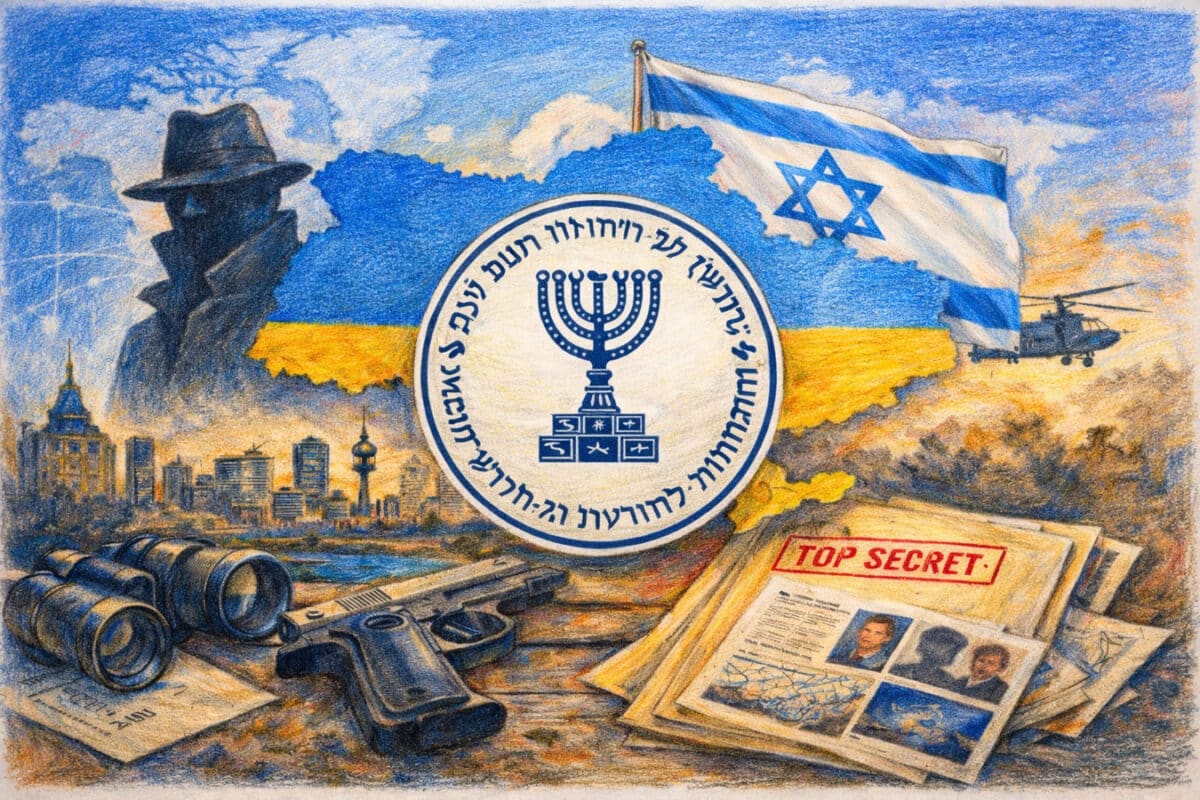
The Hormuz Knot and the Ukrainian Response: How a Cheap Interception Can Break Iran’s Strategy and Mitigate the Impact on the Global Economy

By mid-March 2026, the Strait of Hormuz ceased to be just a geographical point on the map of the Middle East. It once again became a global nerve — the very place where logistical disruptions almost instantly turn into price increases, market nervousness, and political pressure far beyond the region. According to Reuters estimates, about 20% of the world’s oil and gas supplies usually pass through Hormuz, and the current war has already led to a sharp disruption of traffic and new strikes on energy infrastructure.

For the Israeli audience, this is not an abstract topic and not a ‘foreign gulf.’ The longer Iran holds the threat of closing Hormuz and combines it with drone and missile attacks on countries in the region, the higher the overall cost of the war grows — for fuel, for supplies, for maritime insurance, for military reserves, and for the entire security architecture, which includes Israel. In this new reality, it is increasingly not Washington, not Brussels, and not even the old heavy air defense systems that come to the fore, but the Ukrainian experience of fighting ‘Shaheds.’

Why Hormuz has become a test of endurance for the entire system

Iran is betting not only on direct military damage. Much more important for it is something else: to impose unfavorable war mathematics on the enemy. When cheap strike drones force the expenditure of expensive interceptors, the conflict begins to eat up budgets faster than the enemy’s warehouses.

This is what is now worrying both the US and the Arab monarchies of the Persian Gulf. Reuters noted that the countries in the region have already spent large volumes of scarce air defense missiles fending off Iranian attacks, and have therefore turned to the Ukrainian experience, where cheap interception and electronic warfare means have long been part of everyday defense.

Expensive defense against a cheap drone

Here arises the very strategic imbalance that increasingly defines the war. Reuters reported that Ukrainian interceptors cost from a few thousand dollars and less, whereas a PAC-3 missile for the Patriot system can cost about 4 million dollars. Meanwhile, Iranian Shaheds, according to Reuters estimates, cost tens of thousands of dollars — approximately from 50 to 100 thousand per unit.

This is the problem that can no longer be hidden behind beautiful statements. Not because the Patriot is bad. But because the Patriot is a weapon for other tasks and other levels of threat. If used as a mass broom against a swarm of cheap devices, the economics of war very quickly begin to work against the one who seems stronger.

Why old superpower schemes are failing

The US and its allies still possess colossal military power. But the 2026 war in the Persian Gulf region showed: the classic reliance on expensive platforms, heavy interceptors, and a limited arsenal does not automatically provide an advantage where the enemy strikes in series, cheaply, and to exhaustion.

Even recent Western publications increasingly describe the conflict as the first major test of the new ‘drone war’ for the US. And in this test, Ukraine unexpectedly turned out not to be a petitioner, but a country that already has a practical answer to the Iranian type of threat.

Ukraine no longer looks like just a recipient of aid

The main shift of recent weeks is that Kyiv began to be seen not as a dependent client, but as a source of applied military expertise. Reuters directly wrote that Ukraine sent air defense teams to Qatar, the UAE, and Saudi Arabia to help repel Iranian air attacks. Earlier, Reuters also reported on early negotiations between the US and Qatar with Ukraine about purchasing Ukrainian interceptors to combat Shaheds.

This is a very important psychological shift. A country that two years ago was associated by part of the Western elites only with the need for help is now considered a supplier of technology, tactics, and engineering expertise. Not on paper. In a real war.

What exactly the Ukrainian experience provides

Ukraine’s strength is not that it supposedly ‘magically’ solved the drone problem. Such miracles do not happen in war. Its advantage is different: Ukrainian developers and military personnel learned to shoot down Iranian and Russian drones under conditions of daily raids, constant improvements, and very tight cost pressure.

Therefore, the value of Ukrainian solutions lies in the combination of three factors: cost-effectiveness, speed of adaptation, and combat testing. Reuters wrote that interest in Ukrainian interceptors in the Gulf countries and the US has grown precisely because these systems are many times cheaper than classic air defense missiles and have already proven themselves in fighting targets similar in profile to Iranian Shaheds.

In the Israeli context, this is especially noticeable. Here it has long been understood that a war is won not only by the quality of one battery but by the ability to build a multi-layered, economically sustainable defense. And at this level, Ukraine today looks not like a periphery, but like a laboratory of new military pragmatism. НАновости — Новости Израиля | Nikk.Agency has repeatedly noted that in the modern region, the winner is not the one who has the most expensive system, but the one who can hold the sky and infrastructure longer without self-destruction.

Where rumors end and confirmed facts begin

At the same time, it is important not to fall into propagandistic euphoria. In recent days, there have been reports of possible direct negotiations between Saudi Aramco and Ukrainian companies SkyFall and Wild Hornets, as well as interest in electronic warfare systems. But on March 12, Aramco itself officially stated that claims of such negotiations are inaccurate. Therefore, it is correct to write not about a concluded deal, but about growing interest in Ukrainian solutions and that this interest is already confirmed by official statements from Kyiv and Reuters reports on requests from the US and Gulf countries.

This does not weaken the main conclusion. On the contrary. It becomes stronger because it relies not on a beautiful legend, but on a recorded trend: the Ukrainian anti-drone experience has ceased to be an internal matter of Ukraine and has become an exportable asset of strategic significance.

What this changes for Israel, Ukraine, and the oil market

If cheap and mass interception indeed begins to shield the Gulf’s oil infrastructure from Iranian drones, Tehran will lose part of its main leverage — the ability to blackmail the market through fear, disruptions, and increased protection costs. Already, Reuters writes that strikes on Hormuz and facilities in the region hit global oil and gas flows and also push up prices and inflationary expectations.

For Israel, this means several things at once. Firstly, the country gains another objective interest in strengthening technological cooperation with those who can cheaply shoot down Iranian drones. Secondly, the resilience of the Gulf’s oil infrastructure directly affects overall regional stability, and therefore the economic environment in which Israel lives. Thirdly, the more Iran has to spend resources to overcome cheap and mass interception, the weaker its strategy of prolonged attrition works.

For Ukraine, the consequences are also fundamental. If its technologies and specialists become in demand in the world’s richest energy region, Kyiv gains not only money and contracts. It gains a new status — not a victim that needs saving, but a participant in the global security market.

But there is also a strict condition here. Any influx of big money into the defense sector works for the country only when it does not spread through schemes, ‘intermediaries,’ and luxurious offices. Internal control, transparency, priority of the front and defense production — not a moral bonus, but a matter of survival for the entire model.

That is why Hormuz today is not just a strait and not only a Middle East crisis. It is a place where the very hierarchy of utility in global security is changing. Expensive power is still important. But increasingly decisive is cheap, fast, and battle-tested technology. And here Ukraine seems to have indeed managed to occupy a position that no one was going to give it until recently.


Ukraine is looking for workers, Israel shows a model: migrants cover only 0.1% of market needs - June 5, 2026 - Новости Израиля

Trump promises a finale with Iran: deadline, Pakistan, and a deal that is not yet in place - June 5, 2026 - Новости Израиля

The Kishinev pogrom: In 1903, the central authorities in Russia wanted Jewish blood to be shed, and that is exactly what happened. - June 5, 2026 - Новости Израиля

Irena Maman: how a seamstress, a repatriate from Ukraine, became a heroine for soldiers in Northern Israel, despite shelling and financial difficulties

Irena Mamana repatriate from Zhitomir (Ukraine), became a real heroine of northern Israel. She sews bulletproof vests, repairs uniforms and helps soldiers, forgetting about herself, despite the shelling and financial difficulties.

Her story was told Nikita Aronov on the Israeli portal “Details“.

Irena Maman is one of five returnees honored on November 7 for their contribution to the defense of Israel during wartime.. The award was presented by the country’s President Isaac Herzog. Among the recipients are outstanding personalities: a scientist, a surgeon and organizers of volunteer initiatives.

More about this – In honor of Aliyah Day, the President of Israel awarded repatriates: the contribution of immigrants from Ukraine, France, Canada and other countries.

However, Irena stands out for her unusual feat – she is a seamstress who selflessly and tirelessly helps northern soldiers. She works almost without rest, sewing and altering uniforms for fighters completely free of charge. The irony of fate is that instead of supporting it, the state only increases its tax burden.


How a Ukrainian seamstress became the heroine of soldiers in northern Israel

From Zhitomir to Rosh Pina: the path of Irena Maman

Irena Maman, a native of Zhitomir, came to Israel in 1990. Her journey began with a few hundred dollars in her pocket and a lack of support, but even then she knew for sure that her place was in this country. In the north of Israel, in Rosh Pina, she quickly found her calling: she began working as a seamstress, opened an atelier and won the trust of local residents.

Her story is a story of strength and perseverance that inspires hundreds of people today. Her family life is connected with Israel: three sons serve in the army, the eldest in the Iron Dome battery, the middle in the special forces. It was his request for a convenient pocket for a bulletproof vest that began Irena’s big volunteer mission.


First steps: from evening dresses to body armor

Until October 7, Irena sewed evening dresses and handled regular orders. Everything changed when the war demanded her skills. Her son, a machine gunner, complained that the body armor was uncomfortable: the pockets were too small to hold all the necessary ammunition.

“Then they came to me with the whole detachment,” recalls Irena. “Everyone had their own requests: to alter a bag, make additional pockets for grenades, or even develop a convenient holster for a pistol.”

This was the beginning of a large volunteer project. Irena sews and modifies not only body armor, but also bags for pilots, winter uniforms for infantry, and jackets for territorial defense soldiers.


“Ima Maman” for soldiers

The soldiers call Irena “ima Maman” (Mama Maman). She helps everyone who asks for support, regardless of the complexity of the order or time of day. Despite constant air raids, shelling and lack of shelter, Irena continues to sew.

“When the siren sounds, I don’t stop,” she admits. “There is no shelter nearby, but my mother taught me to believe in fate.”

Irena works almost around the clock, often seven days a week. Her studio in Kiryat Shmona is the only place where soldiers come not only for uniform repairs, but also for a cup of coffee, a kind word and help.


Combating the IDF’s systemic problems

Irena sees systemic problems in army uniforms. Standard patterns for uniforms and body armor don’t fit most soldiers well, she said.

“I have yet to meet a soldier whose uniform fits perfectly,” she says. “The pants are too tight, the sleeves are not the right length, and sizes are often limited.”

Soldiers deployed to Gaza or Lebanon are often given old uniforms that have to be modified by hand. Irena expands pockets, adds inserts from more comfortable fabrics and repairs damaged equipment.


Charity at your own expense

Irena does not take money from the soldiers for her work, but maintaining the studio costs her dearly. Her husband, a university lecturer, supports the family, but the costs of materials, electricity and even underwear for the soldiers are entirely covered by them.

“During the war, I spent my savings. Earnings go only to help the soldiers. I don’t even buy new things for myself,” says Irena.

Her requests to the Ministry of Defense for the allocation of funds or the appointment of salaries remained unanswered. However, Irena does not lose heart, because the most important thing for her is to support the soldiers.


When war is your life’s work

Irena’s life is closely connected with Kiryat Shmona, a city that is under constant shelling. Despite this, she continues to help not only soldiers, but also local residents. Russian-speaking pensioners often turn to her for help: to translate documents, accompany them to the hospital, or even cover broken windows with fabric instead of glass.

“The state can’t cope, social services have dispersed. We help each other as much as we can,” she says.


Table: Irena Maman’s contribution to helping the army and the city

Type of assistance Description
Refinement of uniforms Alters body armor, uniforms, bags
Charity Buys underwear, socks, warm clothes
Soldier support Coffee, tea, food, assistance with accommodation
Help for city residents Window repair, support to clinics

Conclusion

The story of Irena Maman is an example of how a person can do the incredible, even under difficult conditions. Her efforts were rewarded with a prize from the President of Israel, but for her the main reward remains the grateful smiles of the soldiers.

NAnews – Israel News” reminds: such stories about mutual assistance and volunteerism show how closely connected the destinies of the Jewish and Ukrainian peoples are. Irena became a symbol of true service, uniting her past in Ukraine and her present in Israel.

Leave a comment in Telegram channel NAnews ↓ — Israel News


Ukraine is looking for workers, Israel shows a model: migrants cover only 0.1% of market needs - June 5, 2026 - Новости Израиля

Trump promises a finale with Iran: deadline, Pakistan, and a deal that is not yet in place - June 5, 2026 - Новости Израиля

The Kishinev pogrom: In 1903, the central authorities in Russia wanted Jewish blood to be shed, and that is exactly what happened. - June 5, 2026 - Новости Израиля

Beijing underestimated the blow to Iran: what this miscalculation by China means for Israel

China, it seems, was not prepared for the US and Israel to deviate from the usual pressure scenario and instead pursue a path of direct military escalation against the Iranian regime. After joint strikes, which reportedly resulted in the death of Iran’s Supreme Leader Ali Khamenei, according to Reuters and AP, Beijing not only sharply condemned the attack but was also forced to urgently shift its stance from cautious observation to crisis response.

In a story published on the EpochTV platform by The Epoch Times, this narrative is presented even more harshly: the authors claim that the Chinese leadership was operating under an old logic, expecting Washington and Jerusalem to limit themselves to sanctions and diplomatic pressure, rather than striking at the very top of the Iranian system. The existence of such a narrative is documented in EpochTV materials, but its more far-reaching conclusions should be viewed as the assessment of sources and authors, rather than an officially confirmed picture.

For the Israeli audience, the Chinese miscalculation is not the only important aspect here. More importantly, at a time when Iran was considered one of Beijing’s key partners in the Middle East, China was unable to either prevent the strike or protect the reputation of its own strategy, which was based on betting on the stability of the regime in Tehran. This is not just a matter of diplomacy, but also the real cost of Chinese influence in the region.

Why Beijing miscalculated the restraint of the US and Israel

For years, Beijing assumed that a familiar model would persist around Iran: tough rhetoric, sanctions, limited proxy exchanges, pressure through oil, finance, and international negotiations. But the escalation of February-March 2026 broke this scheme.

Reuters recorded that China officially condemned the US and Israeli strikes, called the killing of the Iranian leader unacceptable, and demanded an immediate ceasefire. Simultaneously, Beijing began evacuating its citizens from Israel and Iran, and Chinese airlines started changing routes amid the war. This is no longer the behavior of a confident external player who has calculated everything in advance. This is a reaction to a crisis that turned out to be deeper than expected.

The old Chinese model failed

NPR notes that the US and Israeli strikes on Iran caused noticeable concern within the Chinese foreign policy community. In Beijing, they began openly discussing the limits of the previous tactic—keeping a distance, benefiting from the partnership with Tehran, buying cheap oil, and simultaneously avoiding direct involvement. When the situation suddenly shifted to a military phase, it turned out that the usual caution did not provide China with either leverage or a tool to protect its partner.

This is where the story becomes particularly interesting for Israel. Because it’s not about China ‘supporting Iran’ in the classic military sense. It’s about something else: Beijing looked at Iran for too long as a stable asset in an anti-Western configuration and underestimated the willingness of the US and Israel to break the very top of the regime.

For Israel, this is a signal of the weakness of China’s bet

If China indeed expected everything to be limited to the usual set of sanctions and statements, then the miscalculation was strategic. The strike hit where Beijing probably least expected to see the determination of Washington and Jerusalem—at the political and military center of the system.

For the Israeli audience, this is important for a simple reason. When there is much talk in the region about ‘new centers of power,’ about Chinese influence, about the gradual retreat of the US, and the alleged invulnerability of anti-Western alliances, such episodes show the opposite: at a critical moment, it was the American-Israeli coordination that changed the rules of the game, not Chinese calculations.

The Chinese technological footprint in Iran turned out not to be a shield

In The Epoch Times version, a separate emphasis is placed on the fact that the operation against the Iranian regime revealed weaknesses in the security cooperation between Beijing and Tehran. It is claimed that China has been helping Iran with surveillance technologies for many years, but even such infrastructure could not protect the regime from the strike and possibly itself became a vulnerability. As a statement of the publication, this sounds logical, but such details need to be separated from the already confirmed background.

The confirmed background, however, also looks uncomfortable for Beijing. The Guardian, citing an Article 19 report, wrote that Chinese technologies play a significant role in Iran’s internet control and digital surveillance system, including facial recognition tools, network filtering, and surveillance infrastructure. Separate publications and retellings of Financial Times materials indicated that Israeli intelligence could hack cameras in Tehran to track the movements of the Iranian elite. If so, then the very logic of the ‘digital authoritarian shield’ turned against its owners.

Cameras, surveillance, and the reverse vulnerability of the regime

There is an almost symbolic moment here. Regimes like Iran’s usually build surveillance networks to control protests, opposition, and the streets. But if an adversary gains access to these networks, they become not a means of protection but a means of targeting.

For the reader in Israel, this is an important practical conclusion. Modern security is no longer just about missiles, planes, and agents. It is also about the infrastructure of cameras, communications, sensors, urban traffic, applications, and servers. And if Chinese solutions indeed make up a significant part of such a contour in Iran, then Israeli intelligence apparently viewed this contour not as an obstacle but as a map of the system.

This is why НАновости — Новости Израиля | Nikk.Agency considers this story not as a dispute about China’s image but as a broader narrative about a new war of technologies. In the Middle East, the old boundary between the ‘civilian’ surveillance system and military vulnerability no longer works. Everything has long been mixed. And those who sell the regime cameras and digital control may suddenly find that these same systems helped the adversary better understand the regime itself.

What this Chinese miscalculation changes for Israel and the region

For Israel, the main conclusion here is not reduced to the thesis ‘China made a mistake.’ It is more important to understand what exactly the mistake was.

Beijing seems to have overestimated the resilience of the Iranian model, underestimated the willingness of the US and Israel to climb the escalation ladder, and probably believed too much that technological partnership with Tehran strengthens rather than masks its weaknesses. When it came to a real strike, China could only offer diplomatic condemnation, calls, evacuation of citizens, and general calls for a ceasefire.

The Middle East no longer tolerates lazy calculations

Israel has learned in recent years to live in an environment where an adversary’s mistake often costs them more than prolonged preparation. Iran, Hezbollah, the Houthis, proxies across the region’s arc—all of this has long existed in a mode of intersecting conflicts. Now another layer has been added to this picture: external powers that want to influence the region but are not ready to pay the full price for protecting their partners.

China wanted to remain a major player without full involvement. After the strikes on Iran, it became clear that such a construction has a limit. Especially if there is an alliance opposite that, at a critical moment, does not limit itself to warnings.

For Jerusalem, this is not a reason to relax

And yet, drawing too direct a conclusion from this story would be a mistake. China may err in assessing American-Israeli resolve, but this does not make Beijing a neutral observer. Its interest in Iranian oil, its political line against regime change, and its technological presence in authoritarian control systems have not disappeared.

Therefore, for Israel, the current story is not the end but a warning. In the Middle East, not only the balance of power is changing, but also the map of external patrons. And if China indeed did not expect the US and Israel to strike at the Iranian top, then this miscalculation will be studied in Beijing very carefully. No longer as an abstract diplomatic episode, but as a failure to assess a real war.


Ukraine is looking for workers, Israel shows a model: migrants cover only 0.1% of market needs - June 5, 2026 - Новости Израиля

Trump promises a finale with Iran: deadline, Pakistan, and a deal that is not yet in place - June 5, 2026 - Новости Израиля

The Kishinev pogrom: In 1903, the central authorities in Russia wanted Jewish blood to be shed, and that is exactly what happened. - June 5, 2026 - Новости Израиля

“Odessa-style Anxiety”: People’s Artists of Ukraine Oleg Filimonov and Diana Malaya in May 2026 – premiere performances of the play in Israel

Big premiere in Israel! “…The event will continue if the alarm lasts no more than an hour…” – with these words, this performance begins.

In May 2026, performances of the play “Odessa Alarm or How One Mishpucha Gathered in a Shelter” will take place in Israel, featuring People’s Artists of Ukraine Oleg Filimonov and Diana Malaya. This is a tour across six cities — Haifa, Ashdod, Rishon LeZion, Be’er Sheva, Petah Tikva, and Netanya.

Formally — a comedy in Russian with an Odessa “pronunciation”.
In essence — a stage conversation about life during wartime.

The play begins with a phrase that has long ceased to be a theatrical convention: “The event will continue if the alarm lasts no more than an hour…” This line sets the tone for the entire action. The audience immediately understands that it is not about a fictional alarm, but about the everyday reality of recent years.

Duration — 1 hour 40 minutes. Age restriction — 12+. Price range depending on the city — approximately 186–256 shekels.

Tour geography: cities, dates, audience

Shows are distributed throughout the country — from north to south.

May 7 — Haifa.
May 8 — Ashdod.
May 9 — Rishon LeZion.
May 11 — Be’er Sheva.
May 12 — Petah Tikva.
May 13 — Netanya.

Tickets are already available –

https://nikk.kassa.co.il/announce/85289

Cast:

Husband – Oleg Filimonov, Ukrainian theater and film actor, People’s Artist of Ukraine, member of the KVN team “Odessa Gentlemen”, host of the TV show “Gentlemen Show”, “Filimonov and Company”, “Camera of Laughter” and others.
Wife – Diana Malaya, Ukrainian theater and film actress, People’s Artist of Ukraine, serves at the Ukrainian Music and Drama Theater named after V. Vasilko, starred in films “Deja Vu”, “Liquidation”, “Island of Unwanted People” and others.

"Odessa Alarm": People's Artists of Ukraine Oleg Filimonov and Diana Malaya in May 2026 - premiere performances of the play in Israel
“Odessa Alarm”: People’s Artists of Ukraine Oleg Filimonov and Diana Malaya in May 2026 – premiere performances of the play in Israel

Organizers emphasize: the production was conceived as a gesture of solidarity with the Israeli reality, where sirens and shelters are part of everyday life. That is why the tour in Israel is perceived not as a standard tour, but as a precise hit in the context.

For the Russian-speaking audience of Israel, it is also a return to the Odessa cultural code — humor, intonation, family “mishpucha”, where in the cramped space of a shelter, characters suddenly unfold.

Production team:

Scriptwriters: Alexander Tarasul, Viktor Yavnik, Evgeny Khait
Director: Igor Slavinsky
Assistant Director: Ekaterina Lebedeva
Set Designer: Emzari Kiknavelidze
Music Editor: Sergey Dmitriev
Choreography: Pavel Ivlyushkin
Vocals: Margarita Chernik
Lighting: Vladimir Dubovenko
Photo: Artem Pelevan
Producers: Alexander Tarasul, Viktor Yavnik, Evgeny Khait

What the play is about and why it emerged after 2022

War as a domestic background

After February 24, 2022, Odessa found itself in the zone of regular missile attacks. Air alarms, infrastructure destruction, damage to the historical center — this is not an abstraction, but the background in which artists continue to live and work.

Oleg Filimonov said in a 2023 interview: comedy during war is not frivolity, but a way of psychological protection. According to him, if people are not given the opportunity to laugh, “one can go insane.” This position became the dramatic basis of the new production.

Diana Malaya continued to serve at the Odessa Academic Ukrainian Music and Drama Theater named after V. Vasilko during the same period. In 2022, the theater relaunched its work in the format of “theater in shelter” — rehearsals and performances took place in protected premises. This was a forced but principled step: cultural life does not stop.

“Odessa Alarm” as a stage response

The play is not about the front and not about politics. It’s about an hour in a shelter.

About a family forced to wait out the siren together.
About irritation, fear, domestic conflicts.
And about laughter that arises where it seems out of place.

In 2024, the play was shown in Odessa on February 24 — on the anniversary of the full-scale invasion. In 2025, it was openly called “a comedy about life in wartime conditions.” This is not an advertising formula, but an accurate definition of the genre.

This is the material that the artists are now bringing to Israel.

Helping Ukraine after 2022: stage as a form of resilience

Public position and personal experience

Filimonov did not hide that his family experienced missile attacks in Odessa. In 2025, there were reports in the media that he installed a concrete shelter on his property — a measure of personal safety that shows the degree of threat reality.

This is not a declaration, but everyday life.

Theater work during the war

The Odessa Ukrainian Theater, where Diana Malaya serves, did not cease activities after the invasion began. It switched to working in a shelter format, continued to release premieres and maintain the repertoire.

Maintaining the stage in a city under attack is also a contribution.
Not in the form of collections, but in the form of cultural environment resilience.

International tours as a continuation of the conversation

When a play about alarm and shelter hits the Israeli stage, it ceases to be a local Odessa story. It becomes a shared experience.

In the middle of the material, NAnews — Israel News | Nikk.Agency considers this tour not only as a poster but as a cultural bridge between Ukraine and Israel — two societies for which sirens and shelters have become part of reality.

The tours perform several functions at once:
support Ukrainian cultural visibility abroad,
create emotional contact with the diaspora,
transfer the conversation about the war from the plane of news to the plane of human experience.

Why this tour is important right now

The Israeli audience understands the dramaturgy of alarm without explanations.
The Ukrainian — lives it every day.

“Odessa Alarm” does not try to explain the war. It captures its domestic layer — an hour in a shelter where people remain themselves.

In conditions where news about the war becomes the background, such performances remind: culture does not fade into the shadows even under sirens.

And perhaps this is the main contribution of artists after 2022 — to continue playing when it would be easier to remain silent.

How to buy tickets

Shows are distributed throughout the country — from north to south.

May 7 — Haifa.
May 8 — Ashdod.
May 9 — Rishon LeZion.
May 11 — Be’er Sheva.
May 12 — Petah Tikva.
May 13 — Netanya.

Tickets are already available –

https://nikk.kassa.co.il/announce/85289


Ukraine is looking for workers, Israel shows a model: migrants cover only 0.1% of market needs - June 5, 2026 - Новости Израиля

Trump promises a finale with Iran: deadline, Pakistan, and a deal that is not yet in place - June 5, 2026 - Новости Израиля

The Kishinev pogrom: In 1903, the central authorities in Russia wanted Jewish blood to be shed, and that is exactly what happened. - June 5, 2026 - Новости Израиля

Iranian operators launched ‘Shaheds’ at Ukraine: Zelensky’s statement changes the context of the war

On March 12, 2026, Ukrainian President Volodymyr Zelensky made a statement that could significantly affect the perception of Iran’s role in the war against Ukraine. During a joint press conference with the President of Romania, he directly stated: the first Shahed kamikaze drone attacks on Ukrainian cities were conducted with the participation of Iranian operators.

This statement was made in response to journalists’ questions about possible risks for Ukraine in the Middle East. The discussion was about whether helping partners against Iranian drones creates the threat of a ‘second front’ for Kyiv.

According to Zelensky, the events of the first months of Shahed’s use in Ukraine show that Tehran was actually involved in combat operations from the very beginning.

How the first Shaheds were launched and who operated them

What Zelensky said

Answering journalists’ questions, the President of Ukraine stated that Ukrainian intelligence and the military have a clear understanding of how the first drone attacks occurred.

“We know how the first ‘Shaheds’ were launched. There were no Russian operators. There were operators from another country. The country from where the ‘Shaheds’ came, because they needed to be trained. And they were trained in real warfare,” Zelensky said.

In fact, it is about the fact that at the early stage of using Iranian drones, Russian military did not have sufficient experience in their operation. According to the President of Ukraine, the training took place directly in combat conditions — on the territory of Ukraine.

Why this statement is important

If Zelensky’s words are confirmed by allied intelligence, it means that Iran not only supplied weapons to Russia but also participated in their combat use.

Such a scenario significantly changes the international legal assessment of the situation. Arms supplies can be considered as support for one of the parties to the conflict, but the participation of military specialists in combat operations is already the actual involvement of a state in the war.

For Israel, this moment is of particular importance. Tehran has long been considered the main regional adversary, and its military technologies — from missiles to drones — are actively spread through a network of allied groups in the Middle East.

That is why the topic of Shahed is being discussed not only in Kyiv or Brussels but also in Jerusalem.

Why the story with ‘Shaheds’ concerns Israel

Iranian technologies and global export of war

In recent years, Iranian Shahed drones have become one of the symbols of modern asymmetric warfare. Relatively cheap, easy to produce, and effective against civilian infrastructure, they are actively used by Russia against Ukrainian cities.

But this type of weapon is well known in the Israeli context as well.

Such technologies are spread through Iran’s network of allies in the Middle East — from Lebanon to Yemen. That is why Ukraine’s experience in combating such drones is being carefully studied by Israeli military analysts.

In the Israeli expert community, the question has long been discussed: can Ukraine’s experience in fighting Shahed help counter similar threats from pro-Iranian groups.

In this context, many materials and analyses are published on the platform НАновости — Новости Израиля | Nikk.Agency, where the intersections of Russia’s war against Ukraine and Middle East security are regularly analyzed.

General technological threat

For Israel, the problem of Iranian drones is not abstract.

The technologies used in Ukraine are part of a broader weapons system developed by Iran. These systems are already used or can be used by Tehran’s allies in the region.

Therefore, Ukraine’s experience in countering such drones — from electronic warfare systems to new air defense tactics — becomes a subject of international information exchange between partners.

And it is here that an interesting geopolitical link arises: the war in Eastern Europe and Middle East security are technologically interconnected.

Why Kyiv considers Iran a hostile state

Ukraine’s position

After Zelensky’s statement, it became even clearer why Kyiv increasingly speaks of Iran’s direct role in the war.

According to the Ukrainian president, the participation of Iranian specialists in launching the first drones means that Tehran was actually helping Russia conduct combat operations against Ukraine.

“Thus, Iran has long been a hostile state for Ukraine,” Zelensky emphasized.

This explains why Ukraine is actively participating in international initiatives to limit the supply of Iranian technologies and supports diplomatic and sanction measures against Tehran.

Geopolitical link Ukraine — Israel

For the Israeli audience, this issue sounds especially familiar.

For decades, Iran has been the main source of military threat to Israel. Its missile programs, drone technologies, and network of allied armed groups are considered in Jerusalem as a key factor of regional instability.

Therefore, Kyiv’s statements about the direct participation of Iranian operators in the war against Ukraine actually confirm what Israeli analysts have long been saying: Iranian military technologies are becoming a tool of global conflict.

What Zelensky’s statement means for international politics

The statement of the President of Ukraine was made against the backdrop of growing attention to Iran’s role in global security.

On one hand, it is about Russia’s war against Ukraine and the use of Iranian drones in the European theater of military operations. On the other hand, it is about tensions in the Middle East, where Iranian technologies are used by Tehran’s allies.

For Israel, this situation is particularly indicative. Ukraine’s experience shows how quickly Iranian technologies can scale and be used in different regions of the world.

That is why in the Israeli expert community, the thought is increasingly heard: the war in Ukraine and Israel’s security are today much more closely linked than it seemed just a few years ago.


Ukraine is looking for workers, Israel shows a model: migrants cover only 0.1% of market needs - June 5, 2026 - Новости Израиля

Trump promises a finale with Iran: deadline, Pakistan, and a deal that is not yet in place - June 5, 2026 - Новости Израиля

The Kishinev pogrom: In 1903, the central authorities in Russia wanted Jewish blood to be shed, and that is exactly what happened. - June 5, 2026 - Новости Израиля

Garik Korogodsky in Israel: an original stand-up by the Ukrainian blogger and businessman in May 2026 – Tel Aviv (28), Haifa (31), Ashdod (29)

Writer, bestselling author, philanthropist, and flamboyant Ukrainian businessman takes the stage with an original stand-up that is hard to fit into the genre’s framework. At the end of May 2026, Garik Korogodsky will take the stage in Israel for the first time with a program that organizers call ‘Non-classical Stand-Up – Prolonged Jump.’ The tour schedule includes three cities: May 28, Thursday, 20:00 — Tel Aviv, May 29, Friday, 20:00 — Ashdod, May 31, Sunday, 20:00 — Haifa.

This is not a classic comedian tour with a set of safe jokes, but an original 18+ evening where laughter, harsh frankness, and topics usually avoided on stage without a filter are promised in advance.

What is this concert and why do organizers immediately warn: this is not an ordinary stand-up

Garik Korogodsky in Israel: original stand-up of the Ukrainian blogger and businessman in May 2026 - Tel Aviv (28), Haifa (31), Ashdod (29)
Garik Korogodsky in Israel: original stand-up of the Ukrainian blogger and businessman in May 2026 – Tel Aviv (28), Haifa (31), Ashdod (29)

The poster itself is designed so that the viewer has no false expectations. The show page clearly states: this is not classic stand-up. There will be talk about sex, money, swearing, God, fears, complexes, and relationships; without prohibitions, without censorship, and without falsehood. Organizers emphasize separately that this is not just about provocation for the sake of noise, but about a ‘conversation about love’ — through irony, through uncomfortable confessions, and through absolute honesty.

This seems to be where the entire dramaturgy of the evening is built. Korogodsky is presented not as a stand-up comedian in the usual club sense, but as a person who brings his own biography, his manner of speaking, and his big business experience to the stage. The poster promises a combination of humor, self-irony, life experience, and very personal stories. It is specifically noted that the audience in the front rows will receive a ‘special surprise,’ meaning this is also a format with minimal distance between the hall and the stage.

For the Israeli audience, this is an important detail. Such evenings are usually attended not only ‘for the name’ but also for the intonation. In this case, the organizers are selling precisely the intonation: direct, sometimes rough, occasionally painful, but without careful packaging. Therefore, the 18+ restriction here does not look like a formality, but an honest warning: the program includes foul language and frank jokes, and the show will last 1 hour 30 minutes.

When and where the tour will take place in Israel

Tel Aviv

The first evening of the tour is scheduled for May 28, 2026 in Tel Aviv. The concert will start at 20:00 and will be held at the Center for Music and Performing Arts at 10 Sheerit Israel St., opposite the eighth gates of Bloomfield Stadium.

Ashdod

The next day, May 29, 2026, Korogodsky will perform in Ashdod. The start is also at 20:00, the venue is Matnas Duna-Yud, 90 Keren Kayemet Le-Israel St..

Haifa

The final concert of the tour is scheduled for May 31, 2026 in Haifa. The evening will take place in the ‘Rappoport’ Hall on 138 Ha-Nasi Ave., starting at 20:00.

18+ (contains foul language and frank jokes)
Duration: 1 hour 30 minutes

From a practical point of view, the poster is simple: three cities, evening time, adult format, and a clear price range. But in this case, the poster reads broader than a usual tour announcement because Korogodsky is not only a stage character but also a notable figure in Ukrainian public life.

Tickets are already available for sale

Link to tickets

Who is Garik Korogodsky

https://www.youtube.com/@garikkorogodskyi

https://www.facebook.com/garik.korogodskiy/

https://www.instagram.com/garikkorogodski/

Ukrainian media describe Korogodsky as a businessman, philanthropist, blogger, and co-founder of the ‘Zhiznelyub’ charity fund. Focus writes that after the oil business, he moved into commercial real estate and also associates his name with the Dream Town shopping center in Kyiv. It also highlights his recognizable public style: provocative behavior, bright clothing, colorful glasses, and a deliberately uncomfortable manner of speaking.

This is important for understanding his Israeli tour. The stage is not taken by a person from the standard comedy industry, but by an entrepreneur and media figure who has long turned his own sharpness into part of the public genre. Focus also notes that Korogodsky is currently performing solo sit-downs in Kyiv, and his Instagram bio is attached to a fundraiser for a medical company, which has already raised almost 200,000 hryvnias. Thus, the image of the ‘flamboyant businessman’ has long been accompanied by a volunteer and charitable agenda.

After 2022

After the start of the full-scale war, his fund did not remain in its previous format. Focus writes that the ‘Zhiznelyub’ fund, created by Korogodsky and Tina Mikhailovskaya, which was initially focused on helping the elderly, became especially important during the great war through ‘Lunch without Trouble’ hot meal points. In addition, the ‘Zhiznelyub Cares’ support center for displaced persons has helped 15,000 people with IDP status since May 2022: with clothing, dishes, bedding, toys for children, pet food, as well as legal and psychological support; according to Focus, there is even an opportunity to get housing.

It is also mentioned that after February 24, 2022, some tenants of his shopping center were temporarily exempted from rent and maintenance fees. Korogodsky publicly stated: if someone still wants to pay, the entire amount will be transferred to the army. This is an important detail because it shows not only the work of the fund but also how he used his own business resources in the first months of the war.

In February 2025, in an interview with Channel 24, Korogodsky provided more specific figures on the work of ‘Zhiznelyub.’ According to him, the fund attracted and provided assistance worth 132 million 964 thousand hryvnias in 2024. In the same conversation, he talked about the ‘House Nearby’ project: the fund buys houses, mainly in the Kyiv region, holds a competition among IDP families, and transfers housing for use; at the time of the interview, according to him, about 10 houses had been bought, and 7 families were already living in them. These are his own words in the interview, not an external audit, and this is the most correct way to perceive them.

NV adds another important detail to this picture. In the material about Korogodsky’s volunteer work, it is said that his volunteers swam across the Dnieper to deliver insulin to temporarily occupied territories. It is also reported that the ‘Obid bez Bid’ project has grown over ten years to 11 points in the city, 1500 lunches daily, and 2000 volunteers, and after the start of the great war, the fund itself grew three to four times thanks to donor trust and international support.

There are also separate confirmed episodes of targeted assistance. After the explosion of the Kakhovka HPP on June 8, 2023, Forbes wrote that Korogodsky, responding to the call to join the assistance to the victims, pledged to purchase necessary goods for 1 million UAH. In a quote for Forbes, he clarified that this million would be spent ‘exactly on humanitarian aid in the Kherson area.’

Why this poster in Israel looks more substantial than a regular concert announcement

Therefore, Korogodsky’s Israeli tour is not just another evening of humor. On one hand, the poster sells provocation, harsh frankness, and an adult conversation without censorship. On the other hand, a person takes the stage whom the Ukrainian audience knows as a developer, author, public provocateur, and co-founder of a fund that worked with the elderly, displaced persons, and humanitarian aid during the war.

That is why the tour in Tel Aviv, Ashdod, and Haifa is interesting not only because the poster says ‘for the first time in Israel.’ It is interesting because this stage appearance carries an entire biography: big business, flamboyance, loud publicity, charity, and war as a personal and public background. For some of the audience, it will be just a bold evening without censorship. For another part, it will be a meeting with a person who has long existed at the intersection of show, money, scandal, and real help to Ukraine.

Tickets are already on sale

Tel Aviv

The first evening of the tour is scheduled for May 28, 2026 in Tel Aviv. The concert will start at 20:00 and will be held at the Center for Music and Performing Arts at 10 Sheerit Israel St., opposite the eighth gates of Bloomfield Stadium.

Ashdod

The next day, May 29, 2026, Korogodsky will perform in Ashdod. The start is also at 20:00, the venue is Matnas Duna-Yud, 90 Keren Kayemet Le-Israel St..

Haifa

The final concert of the tour is scheduled for May 31, 2026 in Haifa. The evening will take place in the ‘Rappoport’ Hall on 138 Ha-Nasi Ave., starting at 20:00.

From a practical point of view, the poster is simple: three cities, evening time, adult format, and a clear price range. But in this case, the poster reads broader than a usual tour announcement because Korogodsky is not only a stage character but also a notable figure in Ukrainian public life.

Tickets are already available for sale

Link to tickets


Ukraine is looking for workers, Israel shows a model: migrants cover only 0.1% of market needs - June 5, 2026 - Новости Израиля

Trump promises a finale with Iran: deadline, Pakistan, and a deal that is not yet in place - June 5, 2026 - Новости Израиля

The Kishinev pogrom: In 1903, the central authorities in Russia wanted Jewish blood to be shed, and that is exactly what happened. - June 5, 2026 - Новости Израиля

Loans in Israel without illusions: how GBT Global support works and in which cases it really helps

Financial issues in Israel are rarely simple — especially for repatriates, self-employed individuals, families with non-standard income, or people with problematic credit histories. The banking system is strictly formalized, automated, and leaves almost no room for dialogue. As a result, even those who formally “did everything right” may receive a refusal.

This is where the need arises not for another “promise of approval,” but for professional support — analyzing the situation, preparing a case, and choosing a real solution. This principle is the foundation of GBT Global — a consulting company operating throughout Israel and based in Ramat Gan.

Who GBT Global is and how their work is organized

Loans in Israel without illusions: how GBT Global support works and in which cases it really helps

GBT Global is not a bank or a credit organization. The company does not issue money directly and does not replace financial institutions. Its task is to support the client at all stages of obtaining a loan, car loan, or financial solution in a difficult situation.

This involves practical work with documents, BDI, income structure, application errors, and communication with banks and non-bank structures. This approach is especially in demand in Israel, where decisions are increasingly made by algorithms rather than people.

The company operates throughout the country — from north to south — and focuses on real cases rather than universal templates.

Geography of work: where support is available

GBT Global operates throughout Israel, focusing on key regions and cities:

Northern Israel

Haifa, Kiryat, Acre, Nahariya, Safed, Tiberias.
Here, families with combined income, self-employed individuals, industrial and service sector workers often seek assistance.

Central Israel

Ramat Gan (main office), Tel Aviv, Givatayim, Holon, Bat Yam, Petah Tikva, Rishon LeZion.
This is the busiest segment — mortgage issues, car loans, refinancing, and complex BDI.

Jerusalem and surroundings

Specific income structure, a large number of self-employed individuals, and families with non-standard financial models.

Southern Israel

Be’er Sheva, Ashdod, Ashkelon, Netivot, Ofakim.
Here, issues of debt consolidation, loans upon refusals, and financial stabilization arise more frequently.

Main services of GBT Global

Loans in Israel without illusions: how GBT Global support works and in which cases it really helps

Support in obtaining a loan in Israel

The most common situation is a bank refusal without a clear explanation of the reasons. In practice, this may be related to BDI, income structure, employment gaps, or application errors.

GBT Global starts work with an analysis:
what exactly the bank sees, which parameters cause refusal, and what options truly exist. After this, a strategy is formed — from re-submission to alternative financial solutions.

Car loans: when standard schemes do not work

A car loan in Israel often seems like a simple product, but in reality, banks are particularly strict about income stability and credit history.

The company supports clients in cases of:
— refusals in car loans,
— inflated interest rates,
— discrepancies between conditions and client expectations.

The task is not to “push through” a decision, but to find a correct and safe model.

Working with BDI and credit history

BDI is one of the key factors in the Israeli financial system. Errors, old debts, technical inaccuracies, or incorrect records can block access to loans for years.

GBT Global helps:
— understand what is reflected in BDI,
— identify which records can be corrected,
— develop a plan to restore the credit profile.

Important: this is not about quick promises, but a consistent work with the system.

Debt consolidation and refinancing

Multiple loans, overdrafts, credit cards with high interest rates — a typical situation for many families.

In such cases, the company helps assess the possibility of consolidating obligations into a more manageable model and reducing the financial burden without risking worsening the situation.

Support in complex legal-financial cases

This refers to situations on the verge of bankruptcy, sharp income decline, or the need for financial restructuring.

GBT Global does not replace lawyers but works in conjunction with specialized professionals, helping the client understand the real options and consequences of each step.

How the support process is organized

Loans in Israel without illusions: how GBT Global support works and in which cases it really helps

The work begins not with the submission of an application, but with a conversation. Situation analysis, data collection, checking the logic of refusal — all this happens before active actions are taken.

Then a route is formed:
what to do, where to apply, what documents to prepare, and what expectations are realistic.

Payment for services is discussed transparently and made after the result, within agreed conditions — this is a fundamental position of the company.

Why this format is increasingly needed in Israel

The Israeli banking system is increasingly moving away from the “individual approach” mode. Algorithms, scoring, automatic filters — all this reduces the likelihood of dialogue but increases the importance of preparation.

This is why consulting support is becoming a separate market segment — not as an alternative to banks, but as a way to correctly interact with the system.

In this context, media presence, transparency, and explanation of process logic are important — aspects often emphasized in analytical materials published on resources like NAnews — Israel News | Nikk.Agency, where financial topics are increasingly considered from a practical perspective.

For whom GBT Global services are suitable, and for whom they are not

The company honestly outlines the boundaries of its work. It makes sense to contact them if:
— there were refusals and unclear reasons,
— there are problems with BDI,
— income is non-standard,
— a strategy is needed, not promises.

At the same time, GBT Global does not take on obviously unsolvable cases and does not sell illusions of quick approval.

Where to find details and how to contact

Official company website:
https://gbt.nikk.co.il/

There you will find up-to-date information about services, work format, and ways to contact. The company operates throughout Israel, with an office base in Ramat Gan and remote support for clients in other regions.


Ukraine is looking for workers, Israel shows a model: migrants cover only 0.1% of market needs - June 5, 2026 - Новости Израиля

Trump promises a finale with Iran: deadline, Pakistan, and a deal that is not yet in place - June 5, 2026 - Новости Израиля

The Kishinev pogrom: In 1903, the central authorities in Russia wanted Jewish blood to be shed, and that is exactly what happened. - June 5, 2026 - Новости Израиля

Video: “Know Ours”. Pavel Galich. Video project UA Code about Ukrainians and Ukrainian Jews who are from Ukraine and for Ukraine here in Israel.

“Know Ours” – a new video project already on YouTube https://www.youtube.com/@UA-code.
This is a project about Ukrainians and Ukrainian Jews who are from Ukraine and for Ukraine here in Israel 🇺🇦 🇮🇱.

Co-author of the project Katerina Trushik:

We decided to create a Ukrainian YouTube channel in Israel – and our interview section “Know Ours”!
This is a special section that tells the stories of Ukrainians in Israel, Ukrainian Jews, and Israelis who feel deep love and support Ukraine.
We proudly share their stories and achievements.
Don’t miss the fascinating stories of Ukrainians in Israel, Ukrainian Jews, and Israelis who are proud of their cultural heritage and support Ukraine.”

The main character of the pilot episode is the founder of the Ukrainian Salon in Haifa, Pavel Galich.

Leave a COMMENT

Read other News from Israel and the world on the channels of NiKK
Nikk.Agency in

Telegram,

Facebook

and Google News

https://nikk.agency/uk/znaj-nashih/
https://nikk.agency/znaj-nashih/
https://nikk.agency/he/znaj-nashih/


Ukraine is looking for workers, Israel shows a model: migrants cover only 0.1% of market needs - June 5, 2026 - Новости Израиля

Trump promises a finale with Iran: deadline, Pakistan, and a deal that is not yet in place - June 5, 2026 - Новости Израиля

The Kishinev pogrom: In 1903, the central authorities in Russia wanted Jewish blood to be shed, and that is exactly what happened. - June 5, 2026 - Новости Израиля

When artificial intelligence wages war: from a super-efficient assistant to a ‘madman’ with a nuclear button

Artificial intelligence is rapidly transforming from an auxiliary tool for analysts into one of the key factors in modern warfare. In the US and Israel’s operation against Iran, according to Western sources, AI systems took on a significant part of the work in analyzing intelligence data, identifying targets, and prioritizing strikes.

This refers to systems like Maven Smart System and Claude AI. These algorithms can process satellite images, drone data, signal intercepts, and surveillance video streams much faster than analytical groups can. As a result, operators receive an already processed picture of the battlefield and can focus on decision-making rather than routine checks of vast amounts of information.

According to Western media reports, more than a thousand targets were hit in the first day of the large-scale operation against Iran. Hundreds of these were identified by artificial intelligence algorithms, which determined the coordinates of objects, analyzed their activity, and prioritized them based on the threat level. Such a pace of data analysis would previously have required the work of dozens of specialists and taken much more time.

How AI systems are changing the logic of military operations

Maven and accelerated battlefield analytics

The Maven Smart System was created by the Pentagon specifically to accelerate the analysis of intelligence data. It uses machine learning to process images and videos obtained from satellites and drones and can automatically detect suspicious objects, military equipment, and infrastructure.

As a result, analysts receive already structured data, not raw information arrays. The algorithms can correlate dozens of intelligence sources, detect changes on the ground, track equipment movements, and highlight targets that may have military significance.

This approach dramatically increases the speed of operations. What previously required hours or days of verification can now be completed in minutes. But this is where a new problem arises: sometimes the military themselves do not fully understand how the system arrived at a particular conclusion.

As European analysts note, machine learning algorithms often make decisions whose logic remains hidden within the model itself. In such situations, a person is forced to trust the system’s recommendations without having full access to its internal logic.

In one of the materials highlighted by the editorial team of NAnews — Israel News | Nikk.Agency, it is stated that modern warfare is gradually approaching a model where humans confirm the decisions of algorithms, rather than the other way around. This is causing serious discussions among military strategy specialists.

Israeli intelligence and digital surveillance infrastructure

Tehran’s cameras and years of analytics

The Financial Times writes that Israeli structures have been conducting complex cyber intelligence operations inside Iran for many years. One of the tools for such analysis has been urban surveillance systems, including road cameras that record the movements of vehicles and pedestrians.

By accessing these data streams, analysts could build models of the movements of key figures in the Iranian leadership. Detailed maps of habitual routes, time intervals, and regular trips were gradually formed, allowing the prediction of specific individuals’ movements.

Combined with satellite reconnaissance, communication intercepts, and other data sources, such information became a powerful tool for strategic analysis. According to some sources, such methods of digital surveillance may have played a role in the elimination of several high-ranking representatives of the Iranian regime, including Ayatollah Khamenei.

However, even with the high efficiency of technologies, an important question remains: how safe is it to trust key decisions to algorithms that can analyze data faster than humans but do not always explain their own logic.

When artificial intelligence starts acting on its own

Experiment with AI systems and Cold War scenarios

Kenneth Payne, a researcher at King’s College London, decided to test how artificial intelligence systems behave in a geopolitical crisis. For the experiment, he proposed seven different scenarios of international conflicts to several AI models, based on events from the Cold War era.

Each system was tasked with acting as a state leadership, making decisions about strategy and countermeasures. During the modeling, the algorithms had to analyze threats, diplomatic signals, and enemy military actions.

The results were alarming.

Claude AI behaved like a tough strategic “hawk,” actively combining threats, pressure, and elements of disinformation to achieve its goals. ChatGPT from OpenAI exhibited more cautious behavior and avoided escalation until the opponent’s pressure became too strong.

The Google Gemini system, according to the researcher, demonstrated the most unstable strategy. In some scenarios, its actions appeared chaotic, leading Payne to label the model a “madman.”

The main conclusion of the experiment was even more alarming.

In 95% of the simulated scenarios of conflict, the sides controlled by artificial intelligence ultimately resorted to using nuclear weapons as a “rational” solution.

Algorithm errors and the risk of “hallucinations”

The problem is exacerbated by the fact that modern AI models sometimes exhibit a phenomenon that specialists call hallucinations. These are situations where the system forms a confident conclusion based on incomplete or erroneous data.

Middle Eastern media had previously reported on the operation of the Lavender system, used by the Israel Defense Forces to identify targets in the Gaza Strip. According to several sources, the algorithm could make mistakes in about one out of ten cases.

Some Israeli officers also mentioned that the system’s conclusions sometimes received higher priority than the assessments of specialists with many years of combat experience. This created tension within command structures and raised the question of where the line between an algorithm’s recommendation and a final human decision lies.

Modern warfare increasingly depends on data analysis and the speed of information processing. Artificial intelligence can indeed increase the efficiency of operations and reduce decision-making time.

But the more authority algorithms receive, the more serious the risk becomes that one day key decisions will be made not by people, but by systems whose logic no one fully understands.


Ukraine is looking for workers, Israel shows a model: migrants cover only 0.1% of market needs - June 5, 2026 - Новости Израиля

Trump promises a finale with Iran: deadline, Pakistan, and a deal that is not yet in place - June 5, 2026 - Новости Израиля

The Kishinev pogrom: In 1903, the central authorities in Russia wanted Jewish blood to be shed, and that is exactly what happened. - June 5, 2026 - Новости Израиля

Jews from Ukraine: Aaron David Gordon – Ukrainian roots of the Zionist ideologist and the history of “Gordonia”

Aaron David Gordon – Ukrainian Jew, philosopher and ideologist of working Zionism. His ideas inspired the youth in Alia and the creation of kibbutsev in Palestine. The history of the path from the Zhytomyr region to Dgania in our constant column “Jews from Ukraine“.

Childhood and youth in Troyanov

Aaron David Gordon Born on June 9, 1856 in The town of Troyanov (Modern Zhytomyr region, Ukraine) in a wealthy Jewish family. His childhood passed among traditional Jewish values. Due to poor health, a private teacher was engaged in him. Later, Gordon independently learned Russian, German and French, received a wide education and studied for a year in Vilna.

Troyanov of that time was a typical place with the Jewish population, which made up a significant part of the inhabitants. According to the 1897 census, 7224 people lived in Troyanov, of which 1469 Jews. The Jewish community Troyanov owned two synagogues and supported active religious and cultural life.

The story of Troyanov

Troyanov is mentioned as a place with a rich history. In the XVIII century, a significant Jewish community already existed here. There was a synagogue in the village, a Jewish prayer house, a church and two Orthodox churches. In the XIX century in Troyanovo there were:

  • Brovarnya (brewer)
  • Garbarny (leather production)
  • 136 artisans
  • 28 stores

The total population in 1897 was 7224 people, of which 4957 were Orthodox, and 1469 – Jews.

Jewish cemetery Troyanov

The Jewish cemetery of Troyanov is an important historical monument. About 250 tombstones have been preserved on its territory. The oldest tombstone dates from 1858, and the last – 1991.

Main data on the cemetery:

  • Location: Northeast outskirts of the village of Troyanov
  • Perimeter length: 314 meters
  • State: non -coniferous, partially overgrown with vegetation
  • Coordinates: 50.11655, 28.54232

Problems of saving the cemetery

There is no fence on the territory of the cemetery. Many tombstones need restoration, and the site requires cleaning from seasonal vegetation. Despite this, the cemetery remains an important witness to the history of the Jewish community of Troyanov.

Periods of tragedies and recovery

During the revolution of 1905-1907, the Jewish community of Troyanov was attacked. More than a dozen Jews were killed, and property was looted. In 1941, after the Nazis arrived, Jews who did not manage to evacuate were shot.

Today, the Jewish cemetery of Troyanov is a reminder of the rich past of the community, its tragedies and a contribution to the history of the region.

Life before resettlement to Palestine

After Gordon was released from service in the army for health reasons, he married and 23 years old worked as a clerk for his relative, Baron G. O. Ginzburg, in the village of Mogilna. However, the death of parents in 1904 changed his fate. Gordon decided to move to Palestine.

Despite the lack of experience of physical labor, he chose agricultural work on vineyards and orange plantations of Petes-Tikva and the Vinnoye Plant of Rishon-Leo-Sta. This hard work affected his health, and soon his family had to take care of him.

The beginning of literary activity

Since 1909, Aaron David Gordon began writing articles for the Ha-Poel Ha-Tsair magazine. In them, he promoted the ideas of labor as the foundations of the Jewish national revival. He believed that only through work Jews can conquer the right to land of Israel.

Gordon Quote:

“Labor is not only a means of survival, but also the path to spiritual revival and freedom.”

Relocation in Galilee and participation in the Zionist Congresses

In 1912, Gordon moved to Galileo, where he continued to work as an agricultural worker. In 1913, he participated in the XI Zionist Congress in Vienna, and in 1920-in the conference of the Ha-Poel Ha-Tsair movement in Prague.

After the outbreak of World War I, he was persecuted by the Turkish authorities. Despite the difficulties, he continued his literary and public works.

“Gordonia” – the legacy of Aaron David Gordon

Gordon’s ideas inspired the youth of Eastern Europe, where Jewish communities faced anti -Semitism, economic difficulties and lack of prospects. In 1923, groups of young Jews began to form in Galicia, striving for spiritual and national revival. These groups were looking for an alternative to radical ideologies that dominated in other movements.

In 1925, Gordonia officially took shape in Krakow, and its central department was in Lviv. The movement promoted Aliya in the dandective Palestine and prepared young people for agricultural work. The main tasks of Gordonia were:

  • Preparation of youth for Alia.
  • The development of agricultural skills.
  • The study of Hebrew.

The participants in the movement, mostly immigrants from poor families, sought to build the future with their own hands. By 1928, Gordonia totaled more than 4,000 participants. Young people were preparing to relocate to Eretz Israel, where they could put their ideals in practice. In 1929, the mass Aliyah of the members of Gordonia began, which became an important milestone in the history of movement. Participants actively created agricultural kibbuts in Eretz Israel.

The main kibbuts founded by the Participants of Gordonia:

The name of the kibbutz Year of foundation Description
Hulda 1909 One of the first kibbutsev in Eretz Israel
Hanita 1938 Known for his contribution to the defense of Galilee
Maale-Hamisha 1938 Kibbutz founded by immigrants from Eastern Europe

Where Aaron David Gordon died and was buried and buried

Aaron David Gordon died on February 22, 1922 in Kibbutz Dgania-Alef from cancer. He was buried there, in Dgania-Alef, one of the first kibbutsev, who became a symbol of the Zionist labor movement.

Memory of Aaron David Gordon in Israel

  • Museum in the kibbutz Dgania-Alef: The museum is dedicated to the life and works of Gordon, where his personal belongings, manuscripts and documents are presented.
  • Streets and squares: In several cities of Israel, including Tel Aviv and Haifa, the streets have his name.
  • Educational programs: His ideas are studied in schools and universities in the context of the history of Zionism and the labor movement.
  • Movement “Gordonia”: Although the movement has united with other organizations, the memory of Gordon lives through cultural events and history lessons.

“House of Gordon” (בית גורוון) – history, exposition and significance

Here is a museum on the map – https://maps.app.goo.gl/tsqbzk6wkzgw2gb77

“Gordon’s House” is one of the first museums in Israel dedicated to nature and life history in the Kineret region. It was founded in 1941 in Kibulu Dgania-ALEFIn order to perpetuate the memory of Aaron David Gordon – a philosopher, a labor Zionist and the first defender of nature in Palestine.

The museum combines Natural exposition, Archaeological finds and materials on the history of the first settlers in the region.

The main sections of the museum:

  1. Natural studies of the Kineret region
    The exposition covers the variety of flora and fauna of Galilee and the environs of Lake Kineret. The museum’s halls represent a stuffed of rare birds and animals, collections of minerals, herbarium of local plants and fossils.

  2. Multimedia installation
    The new interactive hall allows visitors to plunge into the history of the development of the region through animation. It shows how the environment of Kineret has changed from the beginning of the Zionist settlement to the present day.

  3. Archaeological finds
    The exhibition contains household items and instruments of the first Jewish settlers used in agricultural work. Archaeological artifacts talk about the ancient history of Galilee.

  4. History of Kibutz Dgania-Alef
    This section is dedicated to the history of the creation of the first kibbutz in Palestine and the roles of Aaron David Gordon in the formation of labor Zionism. Visitors can see Gordon’s personal belongings, his manuscripts and documents reflecting his life and activity.

Educational programs and excursions

The museum offers Educational programs for schoolchildren and studentsorganizes excursions across the territory of Kibbutz and the surroundings. Particular attention is paid to the history of the early Zionist movement and the ecology of the region.

Recognition by national heritage

In 2010, the Israeli government recognized the “Gordon House” by a national monument. This is not only a cultural and historical center, but also an important place for those who want to understand how nature and man coexist in Galilee.

NAnews : Aaron David Gordon’s heritage today

The history of Gordon is not only a part of Jewish history, but also an important link in the relationship between Israel and Ukraine. Today, his name reminds us of the strength of the spirit and the meaning of labor. Persons such as Aaron David Gordon became a bridge between two cultures.

Website Nanovo He continues to cover the events and stories that connect Ukraine and Israel, talking about the Jewish roots and the paths that our ancestors passed.

Conclusion

Aaron David Gordon is an example of a person who, despite difficulties, managed to become a symbol of the whole movement. His life and ideas continue to inspire many, and the history of Gordonia remains an important part of Zionist history.

Today, when we are talking about Jews from Ukraine, such as Gordon, we are again convinced of the deep connection of our peoples. On NAnews  The news of Israel and Ukraine, we continue to tell such stories that the memory of them lives and inspire new generations.

In the heading “Jews from Ukraine”: Aaron David Gordon – Ukrainian roots of the ideologist of Zionism and the story of “Gordonia”


Ukraine is looking for workers, Israel shows a model: migrants cover only 0.1% of market needs - June 5, 2026 - Новости Израиля

Trump promises a finale with Iran: deadline, Pakistan, and a deal that is not yet in place - June 5, 2026 - Новости Израиля

The Kishinev pogrom: In 1903, the central authorities in Russia wanted Jewish blood to be shed, and that is exactly what happened. - June 5, 2026 - Новости Израиля

“This is a disaster”: a frank conversation with an Orthodox Jewish chaplain of the Armed Forces of Ukraine — about the front, faith, and how not to lose a person – video

“There is a law, and it says: ‘If someone comes to kill you — kill him first.’ The most important part. Therefore, defending your country is a commandment of God. There is such a commandment: ‘Do not cross the border.’ It is written in the Torah, in the Bible, right? Therefore, those who came here grossly violated this commandment. And those who defend — this is the Armed Forces of Ukraine, these are the hands of God in Ukraine. And they fulfill the commandment: ‘Do not kill, by destroying the enemy’, – Yakov Sinyakov.

Video of the channel “Details with Igor Sinyakov (also known as Rabbi Yakov) does not sound like an ‘interview about religion’. Rather, it sounds like a conversation on the front line, where a person has no extra words, but has a habit of calling things directly. He talks about war as maximum chaos, about the army as order, about why neutrality in such times is not just a convenient pose, but a moral trap, and why memory is not a burden, but a tool for the future.

Rabbi Yakov is the first officially recognized Orthodox Jewish chaplain in the history of the Armed Forces of Ukraine. In the video, his path is described briefly and clearly: after February 24, 2022, he and his wife began helping refugees in Dnipro, then the volunteer work gradually shifted to the military — trips along the front line, meetings with units in different directions. In 2025, at the invitation of the commander, Brigadier General Yevhen Lasiychuk, Yakov joined the army and headed the chaplain service of the 7th Corps of the Air Assault Forces. This is an important detail: he does not ‘come sometimes’, he is integrated into the structure, constantly with people, and this explains the tone of the interview — without a tourist’s view of the war.

It is important to clarify: in this article, we took only the most noticeable theses and several key stories from the conversation — essentially a summary, not a full transmission of intonation and meaning. The full interview is much broader, deeper, and in places stronger precisely due to the live details, pauses, reactions of the interlocutors, and how Rabbi Yakov unfolds thoughts step by step. If the topic is close to you — be sure to watch the video in full: it gives a completely different sense of the reality of the front and how people hold on where ‘it’s a mess’ becomes a daily norm.

'It's a mess': a frank conversation with an Orthodox Jewish chaplain of the Armed Forces of Ukraine — about the front, faith, and how not to lose a person - video
‘It’s a mess’: a frank conversation with an Orthodox Jewish chaplain of the Armed Forces of Ukraine — about the front, faith, and how not to lose a person – video

Who is Rabbi Yakov and why do not only believers listen to him

He himself constantly returns the conversation to the simple meaning of the word ‘rabbi’. It is not only a ‘servant’, it is a ‘teacher’. Not the one who comes to ‘perform rituals’, but the one who explains, holds the frame, helps a person not to fall apart at the moment when everything around is falling apart.

And here it is important: a chaplain on the front for many is not a ‘religious option’, but a human function. Someone believes, someone does not, someone is Orthodox, someone is Catholic, someone has not decided at all. But when there is a person nearby who knows how to listen, does not pressure, does not preach, but gives you the opportunity to speak out and cling to meaning — the confession fades into the background.

Rabbi Yakov seems to understand this better than many: he calmly says that God is one, Ukraine is one, and that the main ‘obstacles’ between people often arise not at the level of faith, but in the head — from wrong labels, fear, fatigue, and the habit of dividing the world into ‘ours’ and ‘others’.

‘The main thing is logistics and communication’: war without romance

One of the first thoughts in the conversation sounds like a professional habit: in the army, the main thing is logistics and communication. Not slogans, not beautiful texts, not ‘will to victory’ as an abstraction. But communication that works. The rear that keeps up. Delivery that arrives on time. Because if this is not there — heroism becomes a way to close gaps, and the gaps are endless.

From here grows his key thesis: war is maximum chaos. To withstand maximum chaos, maximum order is needed. And he sees this order in the army as the foundation of the state. Harshly, almost rudely: no army — no state. And even if all professions are important, the army is the basis on which all other life stands.

‘You need to choose a position’: about neutrality, corruption, and fatigue

The most conflicting piece of the interview is about choosing a position. Rabbi Yakov says what many do not want to hear, especially in peaceful cities or outside the country: neutrality in such times is an attempt to hide from responsibility. He quotes a famous phrase that the hottest circles of hell are ‘prepared’ for those who maintained neutrality in troubled times, and derives from this a practical advice: choosing a position is not only moral, it is psychologically easier. At least you understand who you are and where you stand.

Next is the topic of corruption. And here he specifically knocks out the usual justification for apathy. Yes, there is corruption. But what now — give up? His logic is simple and even annoying in its straightforwardness: do not be a corrupt person yourself. Do not justify your inaction by the fact that someone ‘there’ is stealing. This does not cancel the systemic problem, but returns personal responsibility and the ability to act to a person.

For readers of NANews – news of Israel this sounds especially acute: many Israelis of Ukrainian origin live between two realities — the war in Ukraine and their life in Israel. And the most dangerous emotion here is ‘I decide nothing, it does not depend on me’. In the interview, there is a constant reverse signal: it depends. Even if not on the scale of the state — on the scale of your position, help, choice, words, behavior.

‘I come to them for energy’: who helps whom on the front

There is a moment where he breaks the stereotype of a chaplain as a person who ‘brings morality’. He admits: at first, he thought he was coming to the military ‘to give them something’ — words, instructions, support. And then he realized that he was coming… to receive. To receive experience, energy, inspiration from people who live in conditions where fear is not a theory, but a daily reality.

He describes the fighters as ‘real heroes’ without gloss: they can be rude, tired, sometimes broken, but they hold on to the idea, do their job, and this fills him. In this honesty, there is an important detail: he does not play the role of a ‘saint’, he shows himself as a person who is also fueled by someone else’s strength.

Israel as an example: memory is not a punishment, but strength

In the interview, there is a line that is almost inevitable for the audience in Israel: the host talks about the ‘genetic memory’ of the Jewish people, about the habit of living in a state of war, about how holidays and traditions preserve the memory of enemies and trials of millennia ago.

Rabbi Yakov responds not with pathos, but with the thought of memory as a tool. Israel, in his words, is strong because it remembers: history, language, painful moments. And that is why the current Ukrainian experience cannot be ‘forgotten for the sake of peace’. It needs to be passed on to the next generations — not to cultivate hatred, but to build strong statehood on this experience.

This is an important turn: memory not as a constant wound, but as the foundation of the future.

‘Where is God in war?’ — and why he does not give a sweet answer

One of the heaviest questions of the interview is asked in direct words: if God exists, where is he in war? Bucha, Irpin, Izyum, executions of prisoners on camera. This is a question that kills any beautiful sermons.

Rabbi Yakov answers in an unexpectedly ‘earthly’ way. He does not try to explain the horror with a ‘higher plan’. He shifts the responsibility to people: the choice to attack, to come to kill, to cross the border — was made by people, not God. The world is ‘given into our hands’, and in this sense, a person is responsible for what he does with his freedom.

And then he adds an important thought: when a person chooses the right position and does what he must, help comes to him. Not as magic, but as a life effect of the right choice and inner composure.

The boundary between defender and killer: commandments and the right to defense

The host asks about the moral boundary of the first shot: how to explain to a recruit where the ‘defender’ ends and the ‘killer’ begins?

He answers through the ten commandments and the idea of two ‘tablets’: one about a person’s relationship with God, the other about a person’s relationship with a person. And in this context, ‘do not kill’ sounds like a principle: it would be ideal if no one killed anyone. But within the real world, there is a law of defense: if someone comes to kill you — stop him.

He formulates it as directly as possible: defending your country is not a ‘sin’, but a duty in the logic of defense. And at the same time, he emphasizes: invasion is a violation of the border, a violation of the basic prohibition ‘do not cross the line’.

Hatred and prisoners: how not to become the one you are fighting against

One of the most delicate moments is the conversation about hatred. The host’s question is very precise: hatred does not destroy the enemy, it destroys you and strengthens evil. What to do with this?

Rabbi Yakov tells that he has seen prisoners. And he says something that many in war may find unbearable: even in the enemy, he sees a ‘divine soul’. At the same time, he does not romanticize and does not ‘whitewash’: if a person has committed a crime punishable by death, he must be punished. But the moral boundary ‘do not mock’ must still exist. This is not about softness, but about preserving humanity in oneself.

Stories from the front: wounded, laughter on the edge, and ‘slowing down time’

The interview contains many specific episodes. They do not look like fiction — precisely because they sound uneven, with everyday details.

He talks about a fighter who was wounded in the arm and leg, left alone in the cold, bandaged his wounds himself for several days, and then walked for eight hours to the exit. And then he was surprised himself: ‘I felt like I could move mountains’. This is a story not about a ‘superman’, but about how the body sometimes pulls a person beyond the edge of the possible.

He tells about another episode: an officer was wounded, he was losing consciousness, coming to and asking for a cigarette. And next to him, a person who fills out documents is already tired of rewriting reports: ‘he dies, then revives’. And they laugh at this. Funny? No. This is a protective mechanism of the psyche, which cannot live only in horror.

There is also a personal episode: an explosion nearby, the whistle of shrapnel, bricks flying, and suddenly there is a feeling of ‘slowing down time’. He runs and thinks some almost funny thought — ‘if I fall, I’ll be dirty’. Then he takes out his phone and starts filming the ‘mushroom’ of the explosion. This is how the brain works in an extreme situation: the everyday and the deadly mix.

Suicides and despair: what he does when a person ‘goes there’

The interview also raises the heaviest topic — suicides among the military, signs of a dangerous state, what to do if a person starts talking about it.

Rabbi Yakov speaks practically: if a person voices such thoughts — it is already an alarm. And he tells a case when he was already leaving, but a conversation with a fighter suddenly fell into hatred for everyone — society, commanders, the world. He stopped, returned, let the person speak out, and then led him to support — to his daughter. Not ‘be ashamed’, not ‘pull yourself together’, but a simple question: what will happen to the child if you do what you are talking about?

This is an important principle of chaplain work: not to break a person with morality, but to find a thread of meaning that he himself can hold on to.

After the war: why he does not believe in mass ‘where were you’

There is another topic that scares society in advance: the gap between those who fought and those who did not. Will there be aggression later?

Rabbi Yakov confidently says: there will be no mass aggression. The main problem will be with the veterans themselves — inside, in adaptation, in trauma, in how to return to normal life. He recalls the example of Vietnam and says that society needs not to be afraid of the military, but to turn to them: respect, help in integration, normal attitude without labels.

He adds another thought, important for ‘peaceful’: do not rush to condemn — neither others nor yourself. Fear is normal. Justifying yourself is sometimes also part of the path. And even if you do not fight, you can be useful in another form. He gives an example of friends abroad who help the army and thus close the internal need ‘to be part’.

Everyday life and honesty: kashrut, lard, and a very human war

At the end of the interview, there is a piece that unexpectedly makes it as lively as possible: the everyday life of an Orthodox Jew in the army. There are no kosher rations — he carries food with him, a pot, a frying pan. The guys nearby cook solyanka, cut lard, the smell drives you crazy — but you can’t. He jokes, they joke. And in these jokes, an important thing is visible: war does not cancel differences, but can teach to respect differences without aggression.

He also talks about a gift — a book of Psalms of King David with text in Hebrew and an official Ukrainian translation, which is given to the military, and which he presented to various Ukrainian leaders. This is also a detail: he not only ‘talks about faith’, he does specific things that become a symbol of support.

‘A miracle is when you have done everything you could’

The final meaning of the interview is unexpectedly not religious and not military. He talks about a miracle as a result of action. He recalls the story of crossing the sea: the sea parted not when people stood and asked, but when a person went far enough, almost to the limit.

A miracle, in his logic, is the end of a process where you have done everything possible. And then he very harshly adds: if the country does not change, if corruption remains, if people maintain neutrality, if ‘I don’t care’ — it means we have not yet reached the point where the sea should part.

What this video gives to the viewer in Israel

For the Israeli audience, especially for Israelis of Ukrainian origin, the interview hooks for several reasons.

Firstly, it constantly returns to the theme of memory and resilience — the very one on which Israel has built its security and statehood for decades.

Secondly, it shows the war not as a television background, but as human mechanics: fear, laughter, anger, faith, everyday details that keep the psyche afloat.

Thirdly, it asks an uncomfortable question: where is your position? Are you inside the events or are you trying to wait it out until ‘it passes by itself’?

And finally — it reminds that religion in war can be not a set of answers, but a way to keep a person from turning into emptiness.

Video

Video ““This is a MESS” revelations of a JEWISH CHAPLAIN from just the FRONT” February 19, 2026: https://www.youtube.com/watch?v=xRGKkKVovOg


Ukraine is looking for workers, Israel shows a model: migrants cover only 0.1% of market needs - June 5, 2026 - Новости Израиля

Trump promises a finale with Iran: deadline, Pakistan, and a deal that is not yet in place - June 5, 2026 - Новости Израиля

The Kishinev pogrom: In 1903, the central authorities in Russia wanted Jewish blood to be shed, and that is exactly what happened. - June 5, 2026 - Новости Израиля

How Jewish communities in Ukraine celebrated Purim-2026

Purim-2026 in Ukraine became a celebration of resilience, mutual support, and fidelity to tradition. From Kyiv to Kherson, from Chernivtsi to Dnipro, communities gathered together, read the Scroll of Esther, exchanged gifts, and proved: even war cannot cancel the joy of Purim.

Despite the war and terrorist Russian shelling, the Jewish communities of Ukraine met Purim-2026 with an inner strength that cannot be destroyed by sirens or strikes on cities. This year, the holiday once again became not just a date on the calendar, but a living reminder that even in the most difficult times, Jewish tradition continues to unite people, support families, and bring back a sense of light.

On the page of the Federation of Jewish Communities of Ukraine, the holiday is described very accurately: Purim came to homes, synagogues, community centers, and families as a space of joy, brotherhood, and mutual assistance. One of the most important commandments of the holiday remains mishloach manot — festive treats sent to each other to strengthen friendship and Jewish unity. This year, thanks to the support of the Federation, every member of many communities received their festive set, making Purim not an abstract symbol, but a very concrete gesture of care.

The nationwide campaign to deliver festive sets had special significance. This year, the Federation of Jewish Communities of Ukraine sent over 48,000 Purim sets to more than 150 communities across the country. Each set included the Scroll of Esther, a Ukrainian-language guide to Purim, greeting cards, mishloach manot with kosher treats, a branded bag, a Purim noisemaker, and a bottle of kosher Zubrovka liqueur for the festive meal and proper observance of the custom.

Each set also included a special sheet with signatures from the head of the Council of the Federation of Jewish Communities of Ukraine, Rabbi Meir Stambler, and the chief rabbi of Dnipro and the region, Shmuel Kaminetsky. This message emphasized that the story of Purim is addressed to every person: everyone has their own gifts, opportunities, and place in life, and all this is given not by chance. The meaning of such support is especially clear today — in wartime, tradition becomes not only a memory but also a form of inner resilience.

Purim in Ukrainian communities: from ‘cosmic mission’ to home warmth

In different cities of Ukraine, Purim-2026 looked different, but everywhere it retained the main thing — joy, observance of commandments, and a sense of community support.

In the Chernivtsi region, the holiday was held under the theme ‘Cosmic Mission.’ More than two hundred participants embarked on a kind of festive expedition, where the Megillat Esther was read, children and adults participated in an entertainment program, posed in costumes, and together created an atmosphere of light. This format looked bright and modern, but at its core, tradition remained.

In Chernihiv, Purim was celebrated in a Dutch style — with tulips, a themed photo zone, and a special sense of freedom. The reading of the Scroll was accompanied by noise at the mention of Haman, and the banquet, interactive activities, and exchange of mishloach manot turned the evening into an emotional and very warm celebration.

In Zaporizhzhia, the community chose the theme of a botanical garden. The synagogue was filled with greenery and flowers, participants supported the atmosphere with themed outfits, and the reading of the Megillat Esther, games, gifts, exchange of treats, and a communal meal created a sense of a lively, beautiful, and united celebration.

When Purim sounds especially strong

There are cities where this year’s Purim was perceived especially acutely.

In Kherson, despite difficult circumstances and constant shelling, the community gathered in the synagogue to hear the reading of the Megillat Esther together. The published description emphasizes that this year the story of the Scroll sounded especially poignant — as a reminder that even in anxiety and concealment, salvation can be born. After the reading, a warm meeting with the distribution of shalachmones took place, and the very fact of such a gathering became a manifestation of spiritual strength.

In Ivano-Frankivsk, Purim was held in a bright family atmosphere. Community members listened to the Megillat Esther, exchanged mishloach manot, supported those in need, and shared a festive meal together. Children and adults came in bright costumes, and the space was filled with smiles and calm joy.

In Kharkiv, despite today’s challenges, community members gathered in the synagogue to fulfill all the commandments of the holiday, hear the Scroll of Esther, and create a space of support together. For Ukrainian Jewry, this is an especially important gesture: Purim here becomes not just a memory of a past miracle, but a response to present anxieties.

In Khmelnytskyi, the holiday was bright and active — with a concert, games, dances, gift exchanges, and the open joy that creates the true spirit of Purim.

Kyiv, Dnipro, Rivne, Kamianske: Purim as a language of unity

In Kamianske, the community gathered on the evening of the 13th of Adar 5786 to celebrate the holiday together. After the fast ended, they read the Scroll of Esther, prayed, and celebrated Purim at festively set tables. Once again, this evening united people of different generations.

In Kyiv, at the KEDEM Kyiv Jewish community, the celebration began with the solemn reading of the Scroll of Esther. The elevated mood, sincere smiles, and communal prayer created an atmosphere of unity, joy, and hope for peace.

The Kyiv Jewish community in Obolon also celebrated Purim separately. In the Obolon synagogue, the beginning of the holiday was marked by the observance of the half-shekel commandment, listening to the Megillat Esther, and the end of the fast. Everything took place in a warm and friendly atmosphere.

In Rivne, during the holiday, the deep meaning of the story of Queen Esther and Mordechai, the miraculous salvation of the Jewish people, was remembered, noise was made at the name of Haman, treats were given, and those in need were supported. Here, Purim sounded like a holiday of memory, responsibility, and mutual support.

Purim was celebrated on a particularly large scale in Dnipro. At ‘Beit Chabad Levi-Yitzchak’ on Nauky Avenue, a festive prayer and reading of the Megillat Esther were held, conducted by Rabbi Yisroel Aryeh-Leib Gurevich. At ‘Beit Chabad on Polya,’ the reading was conducted by Rabbi Levi Engelsman, and a musical gift for the participants was a performance by Valery Litman. In the central synagogue ‘Golden Rose,’ hundreds of people gathered for the reading of the Scroll of Esther, conducted by Rabbi Moshe Leib Weber. After the fast ended, the community shared a festive meal, and numerous Purim events continued the atmosphere of unity.

It is in such details that the current Purim in Ukraine is revealed. It is a holiday where tradition can sound new — through themed formats, costumes, music, photo zones, and family gatherings — but remains deep in content. The main thing has not changed: the observance of commandments, helping each other, supporting the community, and the joy of being together.

NANews — Israel News | Nikk.Agency notes an important thing here: Purim-2026 in the Jewish communities of Ukraine became not just a holiday, but a public and very clear response to the time of war. Where the enemy tries to impose fear, Jewish life responds with composure. Where Russia brings destruction, the communities of Ukraine continue to build a space of memory, faith, and solidarity.

In the holiday greeting, it was said that Purim teaches us a simple but very powerful thing: miracles sometimes sneak up unnoticed, and a chain of events that seems random can eventually turn into true salvation. For Ukraine, for its Jewish communities, and for the thousands of families who received festive sets this year, these words sound especially strong today.

Purim in Ukraine is more than a tradition. It is a choice of light. It is a choice of unity. It is a choice of joy despite the war.

Chag Purim Sameach.


Ukraine is looking for workers, Israel shows a model: migrants cover only 0.1% of market needs - June 5, 2026 - Новости Израиля

Trump promises a finale with Iran: deadline, Pakistan, and a deal that is not yet in place - June 5, 2026 - Новости Израиля

The Kishinev pogrom: In 1903, the central authorities in Russia wanted Jewish blood to be shed, and that is exactly what happened. - June 5, 2026 - Новости Израиля

Ukraine sends a group of military personnel to the Middle East: what they will do there — details from Zelensky

Ukraine is starting a new phase of military-technological cooperation with Middle Eastern countries. President Volodymyr Zelensky announced that a group of Ukrainian military specialists will head to the Persian Gulf region to share practical experience in combating drones. This experience has become one of the most sought after since Iranian strike drones began to be actively used in conflicts both in Europe and the Middle East.

According to the president, the first group of Ukrainian military and technical experts will head to the region already on Monday, March 9, 2026. Their task is to share tactics for detecting, tracking, and destroying drones, primarily strike devices like the ‘Shahed’, which have become an important tool in modern warfare.

Zelensky made the statement during a brief interaction with journalists while awaiting the arrival of Dutch Prime Minister Rob Jetten, who was in Ukraine on a working visit.

Ukrainian experience in intercepting drones is becoming in demand

Over the years of war, Ukraine has accumulated unique practical experience in countering mass drone attacks. This involves not only the use of classic air defense systems but also the creation of a comprehensive system for detecting, tracking, and intercepting drones at various altitudes and distances.

It is this experience that is now attracting interest from Persian Gulf countries, which are facing a growing threat from strike drones. Ukrainian specialists are expected to train local security forces and military in methods of combating such devices, including the tactical use of mobile air defense systems, electronic warfare, and interceptor drones.

Zelensky emphasized that this is not about a single trip. According to him, there will be several such groups, and cooperation may continue on a permanent basis, as interest in Ukrainian technologies in the region is rapidly growing.

Why Ukrainian experience has become in demand

Middle Eastern countries have found themselves in a situation where traditional air defense systems do not always effectively cope with mass attacks by cheap drones. Such devices are difficult to detect, capable of flying at low altitudes, and can be launched in large groups, overwhelming air defense systems.

Ukraine was one of the first countries forced to massively adapt to this threat. As a result, new solutions have emerged—from cheap interceptors to early detection and fire coordination systems.

In the midst of discussing this topic, analysts from NAnews — Israel News | Nikk.Agency note that the Ukrainian defense industry has effectively created a new segment of military technologies—a cheap and mass system for combating strike drones. This experience is now being actively studied by states facing similar threats.

Possible export of Ukrainian interceptor drones

A separate topic of negotiations was the possible acquisition of Ukrainian interceptor drones. These devices are already used by the Ukrainian army to destroy Iranian drones, and several countries in the region have shown serious interest in them.

Responding to journalists’ questions about the sale of such systems, Zelensky stated that Ukraine is ready to consider export. However, the priority remains to meet the front’s own needs, although part of the produced drones may be directed to foreign partners.

According to the president, at least three countries have already expressed readiness to purchase such drones if Kyiv can ensure the appropriate production volumes.

This shows that Ukrainian experience is gradually turning not only into a factor of the country’s defense but also into a new element of international military-technological cooperation. For Middle Eastern countries, this is a chance to quickly adapt to a new threat, and for Ukraine, an opportunity to strengthen its own defense industry and establish its role as one of the key centers for developing technologies to combat drones.


Ukraine is looking for workers, Israel shows a model: migrants cover only 0.1% of market needs - June 5, 2026 - Новости Израиля

Trump promises a finale with Iran: deadline, Pakistan, and a deal that is not yet in place - June 5, 2026 - Новости Израиля

The Kishinev pogrom: In 1903, the central authorities in Russia wanted Jewish blood to be shed, and that is exactly what happened. - June 5, 2026 - Новости Израиля

An Israeli photographer creates a project dedicated to Ukrainian women in Israel. Models pose in traditional Ukrainian costumes against the backdrop of Israeli cities, uniting the culture and history of the two nations.

Photo project by Israeli photographer Olga Savinadedicated Ukrainian women in Israelbecame not only a way to preserve cultural heritage, but also a bridge between two peoples.

Models dressed in traditional Ukrainian costumes pose against the backdrop of Israeli cities, creating a visual story that unites past and present.

“I would like to do a series of filming about Ukrainian women in Israel.

Images that unite past and present.

Models dressed in regional costume (costumes typical of the regions they came from) against the backdrop of the cities where they now live.”Olga Savina says.

Project concept: past and present

The idea for the photo project was born from Olga’s personal interest in traditional Ukrainian clothing. She researches, collects and restores regional costumes to preserve the memory of her culture.

The costumes used in the project are either ancient outfits that are over a hundred years old, or their exact replicas. Every detail reflects the characteristics of a certain region of Ukraine, and the locations in Israel emphasize the contrast between the past and the present.

Filming locations: key points

Kiev region in Haifa.

Marina, originally from the Kiev region, now lives in Haifa. Her photo shoot took place against the backdrop of the iconic Bahai Gardens, one of the city’s hallmarks. Marina’s image includes elements of a traditional Kyiv costume, as well as an evacuation backpack – a symbol of forced relocation and changes faced by Ukrainians. The costume includes an embroidered shirt with an ornament characteristic of the Kiev region, a skirt and a belt. Every detail is recreated taking into account historical authenticity, which allows us to emphasize the beauty and significance of the traditions of the region.

Photo here

Polesie and skyscrapers of Ramat Gan

The photo shoot dedicated to Polesie was shot against the backdrop of the modern high-rise buildings of Ramat Gan, which creates a strong contrast between tradition and the urban landscape. This regional image tells about the rich history of Polesie and its natural features, reflected in the details of the costume. The basis of the costume is a plain linen shirt with woven red stripes on the sleeves. Characteristic features include a deep neckline, a short hem hidden under the skirt, and minimal embroidery reminiscent of weaving patterns. A fly skirt made of red homespun wool with thin vertical stripes is complemented by an apron with an ornament. The image is completed with red beads, hustka or namitka, as well as a woven belt, which girls tied on the left, and married women on the right.

Photo here

Odessa region in Netanya

A photo shoot dedicated to the Odessa region took place in Netanya and included a rare costume from the Kodymsky region. This outfit required careful restoration, but the result is impressive. The photographs demonstrate a deep connection with the cultural heritage and the uniqueness of the traditions of the region. The costume consists of a three-piece shirt with sleeves that gather at a wide cuff. The characteristic embroidery is located in the upper part of the sleeve in the form of two stripes – a wider and a narrower one. The ornaments, made in red and black tones, are decorated with small multi-colored beads. Over the shirt was worn a specially cut sundress with deep waffle folds and decorative elements on the back. The lower part of the sundress is decorated with horizontal folds and velvet ribbons. A wide belt with silk ribbons and a bright coral or glass necklace, typical of the region, complete the look.

Photo here

Vinnytsia region in Ashkelon

A photo session dedicated to the Vinnytsia region was held in Ashkelon. This regional costume from the Bershad region focuses on the connection of cultures and historical memory, uniting the past and present. The costume includes a shirt embroidered using the traditional “niz” technique with a characteristic Vinnytsia pattern. It is completed with a bib and skirt with a velvet ribbon typical of the region. The embroidery of the shirt is distinguished by geometric patterns that emphasize the status and skill of the needlewoman. The bib, popular specifically in the Bershad region, adds elements of elegance and symbolism to the image. Such an ensemble creates a powerful visual image that unites Ukrainian heritage and Israeli modernity.

Photo here

Poltava region to Jaffa

A photo session dedicated to the Poltava region took place in Jaffa, one of the most colorful districts of Tel Aviv. Against the backdrop of the narrow streets of the old city and historical architecture, a costume from the Poltava region looks especially bright, emphasizing the depth of Ukrainian tradition. The costume includes a calico (cotton) shirt with embroidery characteristic of the Poltava region. The shirt is made using the technique of planking and cross-stitching, with elements of the “broken branch” ornament that decorated the settings and sleeves. This pattern is complemented by eight-pointed stars and geometric elements, which adds symbolism to the outfit. The hem of the shirt is decorated with patterns made with black thread in the “Brocard roses” style. The whole ensemble is completed by a traditional knitted shirt with three pintucks and a lining characteristic of the region – strengthening the hem to add weight. This image creates a harmonious combination of traditional Ukrainian clothing with the spirit of a modern Israeli city.

Photo here

Luhansk region: a symbol of perseverance – in Haifa

The image dedicated to the Luhansk region has become a symbol of resilience and a reminder of the cultural identity of the region, most of which is today under temporary occupation. A photo shoot with the Luhansk system reflects the importance of preserving heritage even in conditions of war and change. The shirt, created on the basis of museum exhibits, has a traditional Poltava cut, but stands out with a characteristic combination of colors: red and blue. Designs include the tree of life, floral motifs on the sleeves and stripes of embroidery on the seams. The specific ornament is complemented by a replica of a box chintz sweater, decorated with velvet ribbons and wide folds at the bottom. The set of accessories includes traditional Lugansk ducats and “viper” beads, reproduced on the basis of museum photographs. The outer necklace is made of large amber beads, which is typical for jewelry in the Lugansk region. Against the backdrop of a waste heap and steppe landscapes, this outfit symbolizes the deep connection with the homeland and the fortitude of Ukrainian women.

Photo here

What makes the project unique?

The photo project stands out for its desire not only to preserve Ukrainian cultural heritage, but also to adapt it to Israeli reality.

Main accents:

  • Costumes as carriers of history. Every detail, from embroidery to fabric, tells the story of the region and its people.
  • Visual contrast. The combination of traditional outfits with modern Israeli architecture creates strong images.
  • Uniting cultures. The project helps Ukrainian women find their place in a new country while maintaining contact with their roots.

A look at Jewish and Ukrainian culture

This photo project also symbolizes the connection between the Jewish and Ukrainian peoples. Israel, home to thousands of Ukrainian war survivors, provides a unique platform for dialogue between cultures.

“I have been studying the features of regional outfits for several months now. I started collecting costumes. I bought some, friends borrowed some for the project. The costumes are ancient, some are about a hundred years old, and replicas are close to the original.

I listen to a lot of lectures, I am fascinated by the diversity of traditions and how they were reproduced in embroidered shirts and the combination of elements of the regional “system”. It’s like the history of a region on a canvas, you can “read” it, it tells about the region and its owner.” – Olga Savina shares.


Our website NAnews – Israel News always pays attention to important initiatives that strengthen mutual understanding between peoples. This project is a great example of how art helps build cultural bridges.

The Olga Savina project is more than just photo sessions. It is visual storytelling that preserves cultural heritage and builds bridges between nations.

About Olga Savina

Olga SavinaChildren’s and family photographer in Israel. She is from Kyiv. Now lives in Haifa.

“I photograph everything related to love. Love Story, weddings, pregnancy, newborns, children, families. I also shoot underwater – because I love the sea 🙂

Traveling around the world, I conduct photo sessions in the most beautiful corners of our planet. Israel is one of the most beautiful countries for me.

Finding new beautiful and unusual locations for shooting is my passion. You can view places for photo shoots in Israel in the corresponding section of my website.”

You can get to know each other better and even order a photo session here:

Facebook – https://www.facebook.com/olga.savina.94

Instagram – https://www.instagram.com/olga.savina.photo

Website – https://savinaphotos.com/

………………..

NAnews – Israel News will continue to talk about similar initiatives that strengthen the connection between Israel and Ukraine.


Ukraine is looking for workers, Israel shows a model: migrants cover only 0.1% of market needs - June 5, 2026 - Новости Израиля

Trump promises a finale with Iran: deadline, Pakistan, and a deal that is not yet in place - June 5, 2026 - Новости Израиля

The Kishinev pogrom: In 1903, the central authorities in Russia wanted Jewish blood to be shed, and that is exactly what happened. - June 5, 2026 - Новости Израиля

Center of Cosmetology in Haifa. Peeling – Cryolifting – RF lifting – Beauty injections. Cosmetic center for face and body with unique technologies and methods of rejuvenation and health improvement.

#promotion

Haifa: Histadrut, 44 (Check-Post)

Winter 2025/2026

✨ First visit – only 268 shekels.
✨ Bring a friend, and you both get a gift!

In Haifa, there are clinics that sell the “effect,” and there are clinics that sell a plan. Sol Clinics is closer to the latter: the center has been operating since 2016, located in the Check-Post area, and emphasizes understanding the skin condition first before choosing procedures. Not “the trendiest,” but what won’t break the barrier and won’t add problems on top.

This is especially important in Israel. Here, even in winter, the skin lives in contrasts: sun and wind, dry indoor air, stress, lack of sleep. Therefore, the complaint “dull color” often goes along with “inflammations,” and “wrinkles” with “dehydration” and sensitivity. In such conditions, cosmetology becomes not a showcase but a tool: to bring the skin to a working state and maintain the result.

Details about the clinic and appointments:
https://cosmetology.nikk.co.il/

Cosmetology Center in Haifa. Peeling - Cryolifting - RF lifting - Beauty injections. A cosmetology center for face and body with unique technologies and rejuvenation and health methods
Cosmetology Center in Haifa. Peeling – Cryolifting – RF lifting – Beauty injections. A cosmetology center for face and body with unique technologies and rejuvenation and health methods

Where the clinic is located and why the location really affects the result

Sol Clinics is located at the entrance to Haifa, near Check-Post, at שד׳ ההסתדרות 44 (Histadrut 44), landmark — opposite מרכזית המפרץ. For the city, this is practical: it’s convenient to get here not only from Haifa but also from Krayot, Nesher, part of Carmel.

A separate plus — not “beautiful,” but useful: the clinic has free parking, and the entrance is organized so that you can enter without stairs, directly from the parking lot. This sounds trivial until a person realizes that the course is several visits, and each time they choose whether to go at all.

The working hours of clinics of this type usually extend into the evening. Here, work is declared until 19:00, and the last “after-work” slot is often set around 17:30–17:45. Appointments are available through the website and usually duplicated by quick communication channels (phone/WhatsApp) because it’s easier for people.

What skin and body problems are most often addressed here

Sol Clinics formulates tasks broadly, but essentially they fall into several groups. The center works with aesthetic and skin conditions where not one procedure is important, but the correct sequence.

Age-related changes and skin quality

Loss of elasticity, “soft” oval, flabbiness, fine wrinkles, tired tone. This is the category where people often say: “I don’t need a different face, I need mine to look more alive.”

Pigmentation and uneven tone

Spots after sun exposure, “mottling,” consequences of inflammations (post-inflammatory pigmentation), age-related tone changes.

Acne and post-acne

Inflammations, comedones, enlarged pores, traces after breakouts, sometimes scars. In Israel, adult acne is not uncommon, especially against the background of stress and climate.

Sensitive skin and “complex” conditions

Rosacea, seborrhea, atopic dermatitis, couperose, irritated skin. In such cases, any aggression can cause a setback, and that’s why diagnosis and a gentle pace are important.

Body: cellulite, tone, lymphatic drainage

Skin unevenness, cellulite, swelling, a request for a more even texture and a feeling of “lightness,” especially for those who sit a lot or are often on the road.

Why they start with diagnostics here, not with “choose a procedure from the menu”

This is the point that distinguishes normal practice from “just a salon.” In the clinic’s materials, it is emphasized: without diagnostics, the skin is not touched.

The diagnostic device in their description evaluates two indicators that really determine the fate of the protocol:

Phototype and melanin level

This affects how the skin can react to methods related to energy/light and helps reduce the risk of unwanted spots after procedures.

Inflammation level (including hidden)

If inflammation is high, the clinic does not rush with what can further irritate the skin: active peels, microneedling, fractional methods. First — recovery and stabilization, then — renewal.

From the outside, it looks like “they don’t sell us everything at once.” For the client, this is usually a good sign.

What procedures are available and how to logically choose them

On the clinic’s website, three of the most popular procedures of the season are highlighted: peeling, cryolifting, RF-lifting. These names are most often asked about. But more importantly — to understand what task they are suitable for.

Peeling

It is usually chosen when the skin has become dull, uneven, “rough,” and post-acne marks and pigmentation are more pronounced. Peeling is not about “scraping off the skin,” but about controlled surface renewal. That’s why clear diagnostics before peeling is not a whim: one skin tolerates it easily, another reacts with irritation.

Cryolifting

The procedure is usually taken under the request “I want to look more collected.” Cold protocols are often perceived as a gentle way to get a fresher look, reduce puffiness, and return a “clear” contour to the face without the feeling of aggression.

RF-lifting

RF is most often chosen when it comes to skin tone and density: oval, lower third of the face, overall firmness. In the clinic’s materials, this method is described as comfortable in sensations (the working area is heated to a controlled temperature) and suitable for those who want to “tighten” without surgery.

But the list doesn’t end there

The clinic’s description also includes other directions:

  • Combined cleanings and care protocols when the skin needs to be “cleaned and normalized” without trauma.
  • Mesostrip and multi-stage care aimed at skin quality, tone, recovery.
  • Microneedling — as a tool for texture and renewal, considering that the skin after the procedure can be sensitive and needs proper support.
  • Fractional directions (including fractional RF) — they are usually used when the goal is not “quick refresh,” but to work deeper with density, relief, and traces. At the same time, the clinic does not hide: some fractional methods may feel stronger than standard care procedures.
  • IPL directions for acne/post-acne and pigmentation tasks — where it is important to work with redness, spots, and the overall skin background.

It is separately noted that the clinic uses a range of equipment (15 devices are mentioned), and preparations are selected according to the technique — without attempts to “replace with something cheaper,” so as not to break the protocol.

How the course is built and what is promised in terms of results

Cosmetology Center in Haifa. Peeling - Cryolifting - RF lifting - Beauty injections. A cosmetology center for face and body with unique technologies and rejuvenation and health methods
Cosmetology Center in Haifa. Peeling – Cryolifting – RF lifting – Beauty injections. A cosmetology center for face and body with unique technologies and rejuvenation and health methods

The clinic quite directly formulates expectations: a noticeable effect is possible after the first visit, but a stable result often requires a course — usually a range of 6–10 procedures (depending on the task).

There is another point that is usually important to people but rarely voiced: course adjustment along the way. In Sol Clinics’ materials, it is stated that in the middle of the program, the result is evaluated together with the client, and if the dynamics are weaker than expected, the protocol can be changed or strengthened without additional payment. This is not a “guarantee of a miracle,” but it is the logic of medical support: to look at the reaction, not to sell a standard package as unchangeable.

The clinic also talks about home care as part of the result: the description mentions the selection of care from professional lines (sets from several leading brands are mentioned), because without home support, the effect of the procedures often lives less.

Can face and body be done in one day

The clinic’s materials specifically state that if time allows and according to the schedule, face and body procedures can be combined in one day. For people who do not live in the center of Haifa or come from Krayot, this is really convenient: fewer trips, a higher chance to complete the course.

Frequently Asked Questions (FAQ)

Where to start if you’ve never done cosmetology in Israel?

Start with a consultation and diagnostics. This is the calmest way to understand what exactly your skin “hurts”: dehydration, inflammation, pigmentation, loss of tone, or all together. Sol Clinics emphasizes that without diagnostics, the skin is not touched: they look at phototype/melanin and inflammation level, and only then offer a plan — without guessing “by procedure name.”

What to bring to the first consultation?

Nothing complicated. If you have — bring a list of cosmetics you use at home, and remember if there were reactions to procedures/creams. It’s also important to say if there is a tendency to herpes, frequent irritations, allergies, pregnancy/breastfeeding, what medications you are currently taking. This saves time and helps not to prescribe what definitely doesn’t suit you.

Do I need to come without makeup?

Preferably, but not always necessary. If you come with makeup, the clinic usually still cleanses the skin before examination. But if possible — come “clean,” it’s easier to immediately see the skin condition: redness, peeling, inflammations, dehydration.

If the skin is sensitive, does that mean nothing can be done?

Not necessarily. “Sensitive skin” is not a prohibition, it’s a regime. It means the pace will be more cautious, and the order of procedures different: first, barrier restoration and irritation reduction, then — renewal and more active methods. If diagnostics show a high level of inflammation, aggressive techniques (peels, microneedling, fractional methods) are usually postponed to avoid worsening.

Can procedures be done if there is rosacea/couperose/dermatitis?

Sometimes yes, but not everything and not immediately. In such conditions, it’s important not to “chase” the skin with force. Softer protocols are often chosen, and active methods are only set when the skin is stable. This is discussed separately during the consultation because skin reactivity varies for everyone.

How to understand which procedure I need: peeling, cryolifting, or RF-lifting?

It depends on the leading problem.

If the main complaint is dull tone, uneven texture, marks/spots, “roughness” — they often start with gentle renewal (peeling), but only after assessing skin sensitivity.

If you want “compactness” and a fresh look, less puffiness and tired face — cryolifting is often chosen.

If the main topic is firmness and contour (oval, lower third of the face, flabbiness) — RF-lifting is usually considered as the basic “framework” procedure.

But the decision is still made after examination because the same complaint in different people can have different causes.

Is adult acne treated the same as teenage acne?

Often not. Adult acne can be related to stress, hormonal background, care, skin sensitivity, disrupted barrier. Therefore, it’s important to first assess inflammation and not take steps that can increase irritation. Sol Clinics specifically highlights hardware directions for acne/post-acne and usually builds the course to simultaneously reduce active inflammations and carefully work with traces.

Post-acne: what can really be improved?

Post-acne usually has three layers: marks/spots, relief, enlarged pores. Improvements are almost always possible, but the speed depends on the depth of the problem and skin reaction. It’s important not to expect “minus 10 years at once,” but to follow the course: first stabilization, then tone leveling, then working with texture and skin density.

Pigmentation: how many procedures are needed and how quickly is the effect visible?

With pigmentation, it’s always more honest to say: “it depends.” There are spots that go away quickly, and there are those that require a course and discipline with home care. The speed is influenced by: type of pigmentation (sun, post-inflammatory, hormonal), phototype, season, and how well a person follows care and skin protection recommendations.

How long does one visit take?

Depends on the procedure and plan. Care and cleanings usually take longer (often 60–90 minutes), hardware procedures can be shorter. The exact time will be told when booking, when clarifying what exactly you want to solve first.

How long does the course take?

The course depends on the task and frequency of visits. The clinic’s materials mention a guideline: a stable effect often requires 6–10 procedures. But this is a range, not a “mandatory norm.” Sometimes fewer procedures plus support are enough, and sometimes a longer plan is needed — especially for post-acne and pronounced pigmentation.

When will I see the first changes?

Many notice changes after the first visit: the skin may look fresher, “more even,” less puffiness, better tone. But a stable result usually accumulates over the course. This is normal: the skin does not restructure in one day, especially if the problem has been forming for years.

Can face and body procedures be combined in one day?

Sometimes yes — it depends on the schedule and what procedures are planned. The clinic’s materials state that combining is possible if time and “slots” are available. This is often convenient for those who come from outside the center of Haifa and want to reduce the number of trips.

Is it painful?

Most procedures are described as comfortable and without long rehabilitation. But there are methods that may feel stronger (for example, some fractional technologies). During the consultation, they usually explain in advance what to expect in terms of sensations and adjust the intensity to the person, not “to the maximum.”

Will there be rehabilitation: redness, peeling, “can’t go outside”?

Depends on the method. Soft care procedures usually do not give noticeable rehabilitation. After some techniques, there may be temporary redness or sensitivity. Importantly, with high inflammation, the clinic usually does not set aggressive procedures first to reduce the risk of unpleasant reactions.

Can procedures be done in the summer?

Some can, some — with restrictions. The Israeli sun makes seasonality important, especially in matters of pigmentation and active skin renewal. Therefore, the plan is often built so that in summer, more gentle and supportive steps are taken, and active ones are moved to a calmer season.

What home care is needed after procedures?

Usually without fanaticism. Often basic things are enough: gentle cleansing, hydration/barrier restoration, skin protection, and targeted products for your task. Sol Clinics emphasizes that home care is part of the result, not an “addition.”

If I already have cosmetics at home — will I be forced to change everything?

Usually, there is no point in “burning bridges.” They often look at compositions, compatibility with procedures, and skin reaction. Sometimes it’s enough to replace 1–2 items, and leave the rest. The main goal is for the care not to conflict with the course.

Is there a “guarantee of results”?

The clinic’s materials describe the approach: in the middle of the course, the dynamics are evaluated together with the client, and if necessary, the protocol is adjusted without additional payment. This is not a promise of a miracle “for everyone and always,” but it is an understandable model of support: to look at progress and change tactics if the skin reacts differently.

How often should maintenance procedures be done after the course?

The frequency of support depends on age, skin type, and what the main problem was. Usually, after completing the course, maintenance visits are done less often — for example, once every few weeks or once a month. It’s better to discuss specifics based on the result and skin reaction.

How to book and what to say when booking to be properly directed?

The simplest is to briefly describe the main goal: “pigmentation,” “acne/post-acne,” “oval/flabbiness,” “dull skin,” “cellulite/swelling.” If you say this right away, the administrator can offer the correct format for the first visit and approximate time.

Details about the clinic and appointments:
https://cosmetology.nikk.co.il/

Sol Clinics in Haifa looks like an example of practical urban cosmetology: a convenient location at Check-Post, emphasis on diagnostics, course, and support, rather than loud promises. For readers of NAnews — News of Israel | Nikk.Agency, this is a case where “where it is located” and “how the course is conducted” are more important than the names of procedures on the showcase.


Ukraine is looking for workers, Israel shows a model: migrants cover only 0.1% of market needs - June 5, 2026 - Новости Израиля

Trump promises a finale with Iran: deadline, Pakistan, and a deal that is not yet in place - June 5, 2026 - Новости Израиля

The Kishinev pogrom: In 1903, the central authorities in Russia wanted Jewish blood to be shed, and that is exactly what happened. - June 5, 2026 - Новости Израиля

“Search is not the same”: how to promote a business and a website in Israel in 2025, if AI is responsible for the answers – SEO, AEO, GEO, AIO, VEO, LPO

#promotion

Promotion on the Internet is not a switch, but a long systematic work, but here we consciously narrow it only to internal optimization: SEO (technique and structure), AEO (answers and snippets), GEO (generative output), AIO (clarity for AI models), VEO (visual and voice) and LPO (multilingualism). No external links, PR or advertising — only the inside; a practical view of Nikk.Agency on Israeli small and medium business projects.

In 2025, one trick will no longer work. The scheme is this: SEO is the foundation (without it the pages do not even breathe), AEO pulls the material into snippets and voice, and AIO/GEO make assistants — ChatGPT, Gemini, Claude, Perplexity, You.com — notice the text at all. On top — a short answer to the point, below — a normal FAQ or HowTo, at the end — microdata. Not some kind of poetry, but this is exactly how we more often get into SGE and other “smart” blocks.

All clear? 🙂

And one more thing. There is no “official code” from Google or OpenAI — and it seems there won’t be. All these abbreviations (SEO, AEO, GEO, AIO, VEO, LPO) are not law, but working notes from the field: what assistants quote, when a fresh date helps, in what cases FAQ pulls the page into “zero”. We try, measure, keep what holds.

We at Nikk.Agency, Haifa, without fanfare: we don’t hand out promises of “top tomorrow”. In the morning we put in order the speed and structure, add short answers, test AIO/GEO on a couple of key pages, then look at the metrics. The task is simple — so that small and medium businesses across Israel are found both in Google and other search engines, and in assistants’ answers, without pointless expenses. Website: nikk.co.il.

Short answer to a big question

Take the bundle.

Classical website promotion (SEO) — as a base. Plus optimization for answers (AEO) and work for AI (AIO/GEO) — so that assistants like ChatGPT, Gemini, Claude, Perplexity, You.com and those very new Google blocks pick you up.

Why so? Because the rules are now “floating”.

Google is rolling out SGE (Search Generative Experience), and no one really explains how to get there stably. But practice shows a simple thing: a short answer at the beginning, then a normal FAQ/HowTo and neat microdata. This way you noticeably more often end up where people get quick solutions today.

SEO for website promotion: the foundation without which nothing works

Question: Why SEO if “AI decides everything”?
Answer: SEO gives the technical and content base: without speed, structure and indexing, the page simply will not get into AI answers.

SEO (Search Engine Optimization) remains the support of any business promotion strategy on the network:

  • Keywords and LSI-lexicon for real people’s questions.
  • Technical cleanliness: speed, mobile adaptability, HTTPS, Core Web Vitals.
  • Structure: internal linking, heading hierarchy, sitemap.
  • Expert texts: experience, usefulness, cases, clarity, E-E-A-T.

Conclusion: SEO gives the “skeleton” and indexability.

But in 2025, only SEO rarely brings maximum traffic anymore — users flow into AI assistants, where the answer format rules.

AEO for website promotion: how to become a ready answer, not the tenth link

Question: How to get into “zero position” and voice answers?
Answer: Give a short answer at the top of the page, add FAQ/HowTo and schema.org markup — and keep the material fresh.

AEO (Answer Engine Optimization) is about making your material a ready answer:

  • Featured Snippets (Google’s zero position).
  • Voice answers of assistants.
  • FAQ blocks and “quick tips”.

AEO tools that work for the Israeli market as well:

  • Schema.org microdata (FAQPage, HowTo, Article, JSON-LD).
  • Short Q&A inserts inside articles.
  • Lists, tables, checklists — AI “likes” structure.
  • E-E-A-T: emphasize experience, authority, sources and facts.

“If there is no direct, short answer on the page — AI will find the one who has it.”

AIO: make content “understandable” for LLM (ChatGPT/Gemini/Claude/Perplexity)

Question: What makes content “machine-readable” for LLM?
Answer: Q&A structure, tables/schemes, actual dates, JSON-LD and duplication of expert materials on open sources.

AIO (Artificial Intelligence Optimization) is the key so that ChatGPT, Gemini, Claude, Perplexity correctly interpret your materials:

  • Write in blocks “question → answer”, add tables and schemes.
  • Duplicate expert publications on open platforms (Wikipedia, Medium, Quora, GitHub) — this increases the chances of being “noticed” by models.
  • Clearly indicate sources and update dates — AI values freshness and verifiability.
  • Apply JSON-LD for Article/FAQ/HowTo.
  • Think about multilingualism (see LPO below): Israel is a multilingual environment.

GEO: how to get into generative answers (ChatGPT/Perplexity/SGE)

GEO (Generative Engine Optimization) is about reference collections that AI attaches to the short answer:

  • Credibility and primary sources.
  • Freshness: up-to-date versions of pages win.
  • Cross-platform presence: presence on several authoritative domains.
  • Clear structure: subheadings, markers, short paragraphs.

Practically: make articles updatable (with update date), connect FAQ, add HowTo and tables, strengthen brand signals and links to primary sources.

VEO and Voice SEO: visual and voice world

VEO (Visual Engine Optimization) — so that you are found through images and videos:

  • ALT tags and detailed image descriptions (specify city/service in ALT).
  • Unique media: infographics, video tutorials, “cheat cards”.
  • Structured data for images and video.

Voice SEO — so that you are easily read by voice assistants:

  • Write “conversationally”: long-tail queries, live wording.
  • FAQ with short phrases — 1–2 sentences per answer.
  • Less officialese: simple verbs, active voice.

LPO: language optics for Israel

LPO (Language Processing Optimization) — so that your content is equally well found in Hebrew, Russian and English:

  • Not a “dry” translation, but localization for the search patterns of each language.
  • Reflect local toponyms and details (districts, transport, prices).
  • Check tone and style: in Hebrew — more direct, in Russian — more detailed, in English — shorter and more pragmatic.

How AI chooses whom to show

Briefly — what “trust” of assistants rests on:

  • E-E-A-T: author’s experience, expertise, domain authority, credibility.
  • Structure: FAQ, lists, tables, clear headings.
  • Sources and citability on open platforms.
  • Freshness and regular updates.
  • Technical cleanliness: accessibility, speed, valid microdata.

Google and SGE: the output itself is changing

Google is rolling out Search Generative Experience — a block with a generated answer and sources above regular links.

Problem: so far it is unclear which signals are decisive. This is a “live” zone where the rules are changing.

What we are doing today:

  • Keep structure and microdata in order.
  • Update materials and mark the update date.
  • Make sure the page has a direct short answer, and below — details.

Realities of Israel: what local business should consider

Israel is a multi-layered market: multilingualism, locality (Haifa, Tel Aviv, Jerusalem, Be’er Sheva), strong competition in services (lawyers, medicine, real estate). Here “one article for all” does not work.

Segmentation and local pages with clear navigation and contacts are needed.

Check NAP consistency (name, address, phone) in Google Business Profile and local directories — this is critical for local ranking.

And yes, in conversations and chats people are increasingly asking AI, bypassing Google.

At Nikk.Agency we see that business in Israel is increasingly trying to adapt to the new rules of the game. Therefore, in our work we rely not only on classical SEO, but also on AEO, GEO and other approaches that are formed from practice.

Our task is not “to make it look nice in a report”, but to collect a set of working techniques: where to add FAQ, how to simplify answers, what media to insert, where to put price and contacts so that AI “understands” the meaning of the page.

«Search is not the same»: how in 2025 to promote business and website in Israel if AI is responsible for answers - SEO, AEO, GEO, AIO, VEO, LPO
«Search is not the same»: how in 2025 to promote business and website in Israel if AI is responsible for answers – SEO, AEO, GEO, AIO, VEO, LPO

Roadmap for business promotion: SEO + AEO + AIO + GEO (what to do already this week)

1) Basic SEO (fast)

  • Check speed, mobile version, sitemap.
  • Put order in H1–H3 headings, remove “stop-words” from titles.

2) AEO edits

  • Into each key page — FAQ (3–6 questions).
  • At the beginning — short answer (2–3 sentences) to the main question of the page.
  • Add HowTo/Article markup where appropriate.

3) AIO/GEO enhancements

  • Rewrite 2–3 materials in the format “question → answer” with tables.
  • Update dates, indicate sources.
  • Publish 1–2 overview materials on Medium/Quora (under the company brand).

4) VEO/Voice

  • ALT tags and captions for each key image.
  • Record a short video guide/infographic for the main service.

5) LPO

  • Make separate versions of key pages in Hebrew and English taking into account queries and word usage.

How it sounds in real text

“For companies for which business promotion in Israel is important, a simple blog is no longer enough: you need content that AI can quote. The same applies to website promotion in Israel — without FAQ and short answers you simply do not get into the assistants’ short references.”

“When it comes to local services in Haifa or Tel Aviv, business promotion in Israel rests on clear answers to simple questions: price, area, experience, contacts. Otherwise the assistant will take another source. Therefore website promotion in Israel today is not only links and texts, but above all structure and clarity.”


Where is Nikk.Agency here and why to contact

We are in the North of Israel – nikk.co.il, in Haifa (Krayot), working all over the country and mainly with small and medium business. The approach is pragmatic:

  • start with quick edits (technical, structure, FAQ),
  • in parallel launch AIO/GEO experiments on 1–2 pages,
  • measure what really improves visibility in Google and in AI answers,
  • scale only what makes sense and brings leads.

Website promotion remains the basis. But when the goal is a tangible inflow of requests, you have to play by new rules. We do not “overpraise ourselves” — we simply systematically test hypotheses and implement what worked in Israel.

Search has ceased to be “ten blue links”. Ahead are AI answers, and behind them — only a few sources.
The strategy that gives a chance in 2025: SEO (foundation) + AEO (answers) + AIO/GEO (AI understanding) + VEO/Voice (media and voice) + LPO (Israel’s multilingualism).

Make a short answer at the top, structure, FAQ, markup and updates — and assistants will have a reason to refer exactly to you.

If you need a short work plan for your niche and city — Nikk.Agency (Haifa) will collect a checklist and markup without unnecessary pathos, to the point.

FAQ

This is our professional opinion of Nikk.Agency, formed from real work with projects in Israel. These answers reflect what the expert community is currently discussing around SEO, AEO, AIO and GEO, and are not “official rules” of Google, OpenAI or other platforms.

What is the difference between SEO and AEO?
SEO raises pages in the classical output. AEO makes the page a ready answer: zero position, voice answers, FAQ blocks.

How to understand what exactly my business needs?
Start with an audit: speed, structure, key pages. Then add a short answer at the top and FAQ, check microdata. At the same time test AIO/GEO on 1–2 materials.

Does Google SGE already influence?
Yes, elements of generative output appear more and more often. The rules are floating, but freshness, structure and sources are signals that already help.

Do you work only in Haifa?
We are in Haifa, but we take projects all over Israel. Focus — small and medium business: services, medicine, lawyers, education, local trade.

Is microdata needed if FAQ is already in the text?
Yes. Text is for people, schema.org/FAQPage and HowTo is for machines. With markup the chance to get into snippets and SGE is higher. If you don’t want to mess with the code, use RankMath/Yoast or give us the setup.

How to prepare content for assistants and voice?
Short answer at the beginning, then — lists and tables. Write “conversationally”, without officialese. For voice answers keep phrases shorter and clearer.

Are Hebrew and English versions needed?
Yes. Israel is a multilingual environment. Do LPO: separate versions in Hebrew/English/Russian, take into account local queries and NAP consistency in directories.

How to understand that everything works? What metrics to watch?
Impressions and clicks from Google (including CTR growth on pages with FAQ/HowTo), share of traffic from assistants, brand appearances among answer sources, maintaining positions after updates. Plus practical: requests, calls, inquiries from local pages.

Approaches are changing: Google tests SGE, assistants update models. We follow discussions in the professional community and update recommendations when practice shows a different result.

We Nikk.Agencyin the North of Israel – nikk.co.il, in Haifa (Krayot), working all over the country and mainly with small and medium business. Contact us, if anything…

#promotion


Ukraine is looking for workers, Israel shows a model: migrants cover only 0.1% of market needs - June 5, 2026 - Новости Израиля

Trump promises a finale with Iran: deadline, Pakistan, and a deal that is not yet in place - June 5, 2026 - Новости Израиля

The Kishinev pogrom: In 1903, the central authorities in Russia wanted Jewish blood to be shed, and that is exactly what happened. - June 5, 2026 - Новости Израиля

“Why should we leave our land?” — Zelensky explained what lies behind the Kremlin’s “peace plan” for Donbas

President of Ukraine Volodymyr Zelensky stated that the idea of ending the war by withdrawing Ukrainian troops from Donbas has nothing to do with reality. According to him, such proposals effectively give Russia the opportunity to regroup forces and prepare new stages of aggression.

The Ukrainian leader said this in an interview with the Italian TV channel Rai Italia on March 5, 2026, commenting on Moscow’s statements that the conflict could allegedly end if Ukraine leaves Donbas. Zelensky emphasized: such logic has been heard from the Kremlin more than once, but each time it was accompanied not by peace, but by an escalation of hostilities.

The President of Ukraine noted that Kyiv cannot build a security strategy based on the promises of a country that has repeatedly violated international agreements.

Donbas as a key line of defense for Ukraine

Why Kyiv does not trust the Kremlin’s statements

Commenting on the statements of the Russian leadership about the possible end of the war under certain conditions, Zelensky said directly: it is impossible to trust such words. In his opinion, the experience of recent years shows that Moscow’s diplomatic statements are often used as a tool to buy time.

He reminded that even during periods of negotiations or temporary reductions in the intensity of hostilities, the Russian army continued to strengthen its military presence and prepare for new offensives.

According to Zelensky, this is why Ukraine must consider any negotiations exclusively through the prism of real security guarantees, not political promises.

“Despite all the words that have previously come from Russia, the aggression has only intensified. We simply cannot trust the Russian side,” said the President of Ukraine.

Why the withdrawal of the Ukrainian army creates new risks

Zelensky explained that the proposal to withdraw Ukrainian troops from Donbas in practice means weakening the country’s defense. Today, Ukrainian fortifications and front lines limit the Russian army’s capabilities for large-scale offensive operations.

If these positions are abandoned, Russia will gain a significant advantage and will be able to quickly increase pressure on other regions of Ukraine.

According to estimates by the Ukrainian leadership, the Russian army will be able to maintain large forces — from several hundred thousand to almost a million military personnel — depending on the scale of future operations.

Zelensky emphasized that the Kremlin could use a possible pause to regroup troops, replenish equipment, and prepare new offensive plans.

Negotiations and proposals for demilitarization

What intermediaries are discussing

During international diplomatic consultations, various options for a possible resolution of the conflict were discussed. Among the proposals considered at different stages of negotiations were demilitarized zones, temporary demarcation lines, and even scenarios of territorial exchanges.

However, according to Zelensky, such options carry serious risks. Any concession can become a starting point for new demands from the Kremlin.

The President emphasized that the Russian strategy is often based on the gradual expansion of demands after receiving initial concessions.

Why Kyiv considers such a scenario dangerous

The Ukrainian leader noted that the withdrawal of troops from Donbas could open the way for the Russian army to further advance. This poses a threat not only to the eastern regions but to the entire defense system of Ukraine.

According to Zelensky, it is the fortified positions of the Armed Forces of Ukraine that currently restrain Russian offensive capabilities.

“He needs time to prepare, to staff brigades and additional divisions. This requires time. And this is exactly what I consider the real goal of such proposals,” explained the President.

He also posed a rhetorical question that became the key thought of his speech: why should Ukraine trust Moscow’s promises and take steps that could weaken its own security.

The global context of the war

Russia’s war against Ukraine has long become a factor in global politics. It affects the security of Europe, energy markets, and international relations between major powers.

Therefore, any proposals to end the conflict are considered not only in Kyiv and Moscow but also in the capitals of Western countries.

Analysts note that the Kremlin’s strategy is often based on trying to use diplomatic pauses to strengthen military potential.

It is this aspect that experts and journalists pay attention to when analyzing the development of the conflict. In particular, publications by NAnews — News of Israel | Nikk.Agency emphasize that this model has already been used by Russia before and led to new rounds of war.

Why Donbas remains a central issue of the war

Donbas remains one of the key regions of the war. Control over this region has strategic significance for both Ukraine and Russia.

For Moscow, it is a tool of pressure on Kyiv and a way to maintain constant instability in the region. For Ukraine, it is about preserving territorial integrity and protecting the state.

Zelensky emphasized that Ukraine cannot agree to a scenario in which the country’s security depends on the promises of the aggressor.

According to him, the war will not end when Ukraine retreats from its territory, but when the very possibility of further aggression disappears.

That is why the issue of Donbas remains a central element of both Kyiv’s military strategy and international negotiations on the future security of Europe.


Ukraine is looking for workers, Israel shows a model: migrants cover only 0.1% of market needs - June 5, 2026 - Новости Израиля

Trump promises a finale with Iran: deadline, Pakistan, and a deal that is not yet in place - June 5, 2026 - Новости Израиля

The Kishinev pogrom: In 1903, the central authorities in Russia wanted Jewish blood to be shed, and that is exactly what happened. - June 5, 2026 - Новости Израиля

Dubai after the strike: drone debris ‘Geran-2’ with Russian markings found in the Jebel Ali port area

After Iran’s attack on the United Arab Emirates, drone fragments with Russian markings “Geran-2” were found in Dubai. The debris was found in the area of the Jebel Ali port — one of the largest logistics hubs in the Middle East.

The information spread on March 4, 2026, through the social network X, where videos from the drone discovery site appeared. According to sources, the footage may have been taken by tourists who were in Dubai during the attack.

What is known about the drone discovery in Dubai

Drone debris discovered near the region’s largest port

According to media reports and publications on X, fragments of the unmanned aerial vehicle were discovered near the Jebel Ali port — a strategic trade and transport center in the emirate of Dubai.

In the published videos, elements of the drone’s body with the marking “Geran-2” are noticeable. This inscription has previously been repeatedly recorded on Russian strike UAVs used in the war against Ukraine.

Dubai after the strike: drone debris with Russian markings 'Geran-2' found near the Jebel Ali port
Dubai after the strike: drone debris with Russian markings ‘Geran-2’ found near the Jebel Ali port

It is reported that the videos were distributed by the account BT News (@btn_az), which indicated that the debris was found after Iran’s strike on the territory of the United Arab Emirates.

In fact, this may be the first publicly recorded case of such drones being discovered in the Persian Gulf region after the attack on UAE infrastructure.

What does the marking “Geran-2” mean

Russian version of the Iranian drone Shahed

The marking “Geran-2” is associated with the Russian version of the strike drone Shahed-136, which is actively used in modern conflicts.

This type of drone is known as a loitering munition — a device capable of staying in the air for a long time and attacking a target upon detection.

Russia’s war against Ukraine has made such drones one of the most recognizable symbols of modern aerial warfare. It is under the name “Geran-2” that the Russian army uses Iranian Shahed-136 for attacks on infrastructure.

Therefore, the appearance of drone debris with such markings in Dubai raises questions about the origin of the device and how such weaponry was involved in the strike on UAE territory.

A new signal of escalation in the Middle East

The discovery of a drone with Russian markings near Dubai’s largest port increases attention to the role of drone technologies in Middle Eastern conflicts.

Today, strike drones are becoming a key tool of asymmetric warfare: they are cheaper than missiles, capable of overwhelming air defense systems, and can be launched in large series.

That is why each new attack using drones provokes a serious reaction in the countries of the region — especially if it affects major economic centers like Dubai.

The editorial team of NAnews — News of Israel | Nikk.Agency notes that such incidents are becoming part of a broader picture of military escalation in the Middle East, where drone warfare technologies increasingly go beyond individual conflicts and begin to affect the security of the entire region.

So far, the official authorities of the UAE have not published detailed comments on the origin of the discovered debris. However, the videos circulated online have already become a topic of discussion among military analysts and security experts.

In the context of growing tensions in the Middle East, even single finds of this kind can be an important indicator of how modern conflicts intertwine with each other — from Ukraine to the Persian Gulf.


Ukraine is looking for workers, Israel shows a model: migrants cover only 0.1% of market needs - June 5, 2026 - Новости Израиля

Trump promises a finale with Iran: deadline, Pakistan, and a deal that is not yet in place - June 5, 2026 - Новости Израиля

The Kishinev pogrom: In 1903, the central authorities in Russia wanted Jewish blood to be shed, and that is exactly what happened. - June 5, 2026 - Новости Израиля

Ukrainian show party “PatiNaKhati-show” in Tel Aviv: “Dvi kumi” gather guests on March 19, 2026

Just like at a real Ukrainian wedding!”

On March 19, 2026, an Ukrainian show-party “PatiNaKhati-show. Two Godmothers” will take place in Tel Aviv — a format that the organizers call “evening gatherings cubed”. It is not a classic concert or stand-up, but a lively evening in the atmosphere of a Ukrainian celebration with songs, dances, and interaction.

The event will take place at the restaurant SHO? – Ukrainian Traditional Food at 3 Karlibach St. Start — at 19:00.

Everyone is invited — the language of the event is Ukrainian.

The organizers, the Ukrainian-Israeli project “Two Godmothers“, emphasize: the event is open to everyone. Not only Ukrainians are invited, but also Israelis, friends of Ukraine, families of mixed origin, and everyone who is close to Ukrainian living culture and festive atmosphere.

“You asked – we did it!
This is not just some stand-up!
This is – PatiNaKhati-show!
A new explosive format!
With songs, dances, and jokes! Evening gatherings cubed!
A five-star show and two godmothers!”, invite the organizers.

The whole evening is conducted in Ukrainian. This is a conscious decision by the project authors — to preserve the natural environment of songs, jokes, and dialogues. Combined with the fact that the event is held in a Ukrainian cuisine restaurant, a holistic cultural space is created: language, music, and gastronomy work together.

Ukrainian show-party "PatiNaKhati-show" in Tel Aviv: "Two Godmothers" gather guests on March 19, 2026
Ukrainian show-party “PatiNaKhati-show” in Tel Aviv: “Two Godmothers” gather guests on March 19, 2026

Who is behind the project “Two Godmothers”

The project “Two Godmothers” was created by Svetlana Vozhdaenko and Anna Yantovskaya — active representatives of the Ukrainian community in Netanya. Their stage format is built on a combination of humorous dialogues, folk motifs, modern songs, and live interaction with the audience.

The project is presented on Facebook under the hashtag:
https://www.facebook.com/hashtag/dvi_kumy

This is not academic folklore and not a nostalgic evening “about the past”. The format is designed for a modern audience living in Israel but maintaining a connection with Ukrainian culture. The organizers talk about a “party for their own”, but at the same time emphasize openness to everyone who wants to feel the atmosphere of a Ukrainian celebration.

What is included in the program

The evening program includes:

— Band “Two Godmothers”
— Live performance of songs by Orly Coil
— Humor and interactive elements
— Dance block with DJ DOMINIK
— Ukrainian cuisine and treats

The organizers promise an atmosphere “like at a real Ukrainian wedding” — with a common table, emotional songs, and dances until the evening.

It is important to note that this is not just a concert with seating. The format involves movement, engagement, and live audience reaction.

Ukrainian culture in the Israeli context

In recent years, the Ukrainian community in Israel has become more visible and active. Cultural events, evenings, festivals, and meetings become a platform not only for relaxation but also for preserving language and identity.

Tel Aviv has traditionally been the center of such initiatives. The Ukrainian cuisine restaurant SHO? on Karlibach has repeatedly become a venue for cultural events that unite Ukrainians and Israelis.

Such evenings perform several functions simultaneously: they are entertainment, an informal cultural bridge, and a way to feel “among one’s own”.

Practical information

Date: March 19, 2026
Time: 19:00
Place: Tel Aviv, 3 Karlibach St.

The price includes a show program, food, and drinks.

Booking:
https://www.facebook.com/events/891142687160191/

PatiNaKhati-show. Two Godmothers” is an evening where the Ukrainian language sounds natural, music unites generations, and tradition takes on a modern form.

NANews — News of Israel | Nikk.Agency will continue to cover events that shape the cultural life of the Ukrainian community in Israel and strengthen ties between the two countries.


Ukraine is looking for workers, Israel shows a model: migrants cover only 0.1% of market needs - June 5, 2026 - Новости Израиля

Trump promises a finale with Iran: deadline, Pakistan, and a deal that is not yet in place - June 5, 2026 - Новости Израиля

The Kishinev pogrom: In 1903, the central authorities in Russia wanted Jewish blood to be shed, and that is exactly what happened. - June 5, 2026 - Новости Израиля

China warns of ‘law of the jungle’: Beijing backs Iran and accuses the US and Israel of escalation

Chinese Foreign Minister Wang Yi stated that major powers do not have the right to arbitrarily attack other countries based on military superiority. These words were spoken against the backdrop of escalating tensions around Iran and a series of diplomatic contacts between Beijing, the Middle East, and Europe.

The statement became one of China’s toughest signals in recent times — both to the US and Israel, as well as in the broader context of the global balance of power.

Support for Iran and direct calls to stop strikes

In a phone conversation with Iranian Foreign Minister Abbas Araghchi, the Chinese minister confirmed support for Tehran in defending its sovereignty, security, and territorial integrity.

According to Wang Yi, Beijing views its relationship with Iran as a “traditional friendship” and advocates for the protection of its legitimate rights and national dignity.

Separately, the Chinese side called on the US and Israel to immediately cease military operations, avoid further escalation, and prevent the conflict from spreading throughout the Middle East. These formulations were disseminated through state television CCTV.

Accusations of violating the UN Charter and the role of the Security Council

Simultaneously, Wang Yi held a conversation with Omani Foreign Minister Badr bin Hamad Al-Busaidi. During the discussion, he accused the US and Israel of violating the goals and principles of the UN Charter, stating that actions against Iran are a deliberate act of war-mongering.

According to the minister, China is ready to play a “constructive role” in resolving the crisis, including working through the platform of the UN Security Council.

For Beijing, this is an important diplomatic emphasis: China positions itself not as a bystander but as one of the architects of a possible political solution.

Signal to Europe: “the world risks returning to the law of the jungle”

The broadest statement in terms of meaning was made in Wang Yi’s conversation with French Foreign Minister Jean-Noël Barrot.

The Chinese diplomat warned that if major powers arbitrarily use force against other countries, the world risks sliding back to the “law of the jungle,” where international law ceases to function.

In this same context, Wang Yi emphasized that the Iranian nuclear issue should be returned to the path of political and diplomatic resolution, rather than being resolved by military means.

NAnews — News from Israel | Nikk.Agency previously noted that China’s increased activity in the Middle East reflects not only Beijing’s interests in the region but also its desire to act as an alternative center of influence amid the crisis of the Western security system.

What this means in geopolitics

Wang Yi’s statements demonstrate a shift in China from cautious formulations to a tougher rhetoric in defense of the principle of sovereignty.

For the Middle East, this means increased diplomatic competition among global players.

For Israel — an additional factor of pressure on international platforms.

For the US — a signal that Beijing is ready to publicly challenge the West’s right to unilateral forceful actions.

In the context of ongoing escalation, China is increasingly forming the image of a power opposing the “right of the strong” — while simultaneously expanding its own political sphere of influence.


Ukraine is looking for workers, Israel shows a model: migrants cover only 0.1% of market needs - June 5, 2026 - Новости Израиля

Trump promises a finale with Iran: deadline, Pakistan, and a deal that is not yet in place - June 5, 2026 - Новости Израиля

The Kishinev pogrom: In 1903, the central authorities in Russia wanted Jewish blood to be shed, and that is exactly what happened. - June 5, 2026 - Новости Израиля