“Go home”: Zelensky on Russians in the West — and why this conversation still concerns Israel

In the Ukrainian agenda, a topic has resurfaced that usually isn’t about the front or weapons, but about money, passports, and a comfortable life ‘somewhere out there.’ Ukrainian President Volodymyr Zelensky said firmly in a February 15, 2026 interview: if people are connected to the regime in Moscow but arrange their lives in democratic countries, then sanctions should hit them and their families.

In the Ukrainian retelling, this sounded almost like an ultimatum: ‘Go home.’ But the meaning, if analyzed more calmly, is about closing loopholes for those who simultaneously serve the war and enjoy Western comfort.

What exactly did Zelensky say and to whom was this phrase addressed

Several key accents stand out.

First: it’s not about ‘all Russians,’ but about those who have ties to the Kremlin system but live in the EU and the USA, educate their children there, buy real estate, use the rules of democracies — and at the same time remain part of the environment that wages war against Ukraine.

Second: Zelensky directly linked the topic of families and assets with the fact that sanctions, in his opinion, ‘do not reach’ key sectors. He specifically mentioned the Russian nuclear sphere and ‘Rosatom’ as an example of a direction where, according to him, there are still no ‘full-fledged’ restrictions.

Third: the note indicates that the interview was given to a Western publication (TSN mentions POLITICO) and a specific journalist.

Why does the question immediately touch on Israel and ‘many Russians’

Because in Israel there is indeed a huge Russian-speaking community — and any loud word about ‘Russians abroad’ here is automatically perceived through the local lens: repatriation, war, family stories, differences in views within the same language group.

But language and citizenship are not always the same thing. ‘Russian-speaking’ in Israel is a very broad layer of people from different countries of the former USSR, and for many families in recent years, the word ‘language’ has long not coincided with the word ‘political position.’

Therefore, it is important not to miss the mark: Zelensky’s speech is not about ‘Russian-speaking’ as a phenomenon, but about a specific model of behavior — when people are connected to the war system but prefer to live ‘like in a normal country,’ using the freedoms and rules of those states that condemn this war.

Where is the practical boundary: ‘Russian-speaking’ and ‘sanctions’ are different topics

To honestly answer the question ‘does this concern Israel,’ it must be divided into two levels.

1) At the societal level: the conversation will affect many, but not equally

Any sharp quote from Ukraine will be read in Israel through personal biographies.

In Bat Yam, Ashdod, Haifa, Ramat Gan, and in the center of the country, people have different stories: someone came from Ukraine, someone from Russia, someone from mixed families. Therefore, a political message easily turns into a domestic quarrel ‘in the neighborhood’ — and this is the risk of generalizations that lump everything together.

Here, the framework is more important than emotions: the topic is about connections with the system and assets, not about language as a ‘mark.’

2) At the system level: Israel has long lived in the logic of compliance and risks

And here things begin that can be touched: bank transfers, sources of funds, checks, documents, beneficiaries.

The Israeli position on such topics usually sounds like this: the country does not want to become a convenient route for bypassing Western sanctions. And this is not a slogan — it is the logic of survival in the international financial system.

Hence the reality familiar to many repatriates and businesses: banks ask more questions, check the origin of money, are more cautious about transfers from ‘toxic’ jurisdictions, and sometimes simply refuse to conduct operations if they see a risk.

And in the middle of this conversation, our fork inevitably appears — NAnews — Israel News | Nikk.Agency: how to discuss sanctions and responsibility so as not to slide into collective guilt by language and at the same time not turn a blind eye to schemes, assets, and ‘family’ intermediaries.

So does this concern Israel?

Yes — in the sense that if the West expands the sanctions focus on families, assets, and ‘comfortable life abroad,’ Israel as part of the global financial system will increase checks and caution.

No — in the sense that it is not ‘about all Russians in Israel’ and not about the Russian-speaking community as such. Within Israel, the key filter is not language, but sanctions lists, the origin of funds, beneficiaries, connections, and risks for banks and companies.


Ukraine is looking for workers, Israel shows a model: migrants cover only 0.1% of market needs - June 5, 2026 - Новости Израиля

Trump promises a finale with Iran: deadline, Pakistan, and a deal that is not yet in place - June 5, 2026 - Новости Израиля

The Kishinev pogrom: In 1903, the central authorities in Russia wanted Jewish blood to be shed, and that is exactly what happened. - June 5, 2026 - Новости Израиля

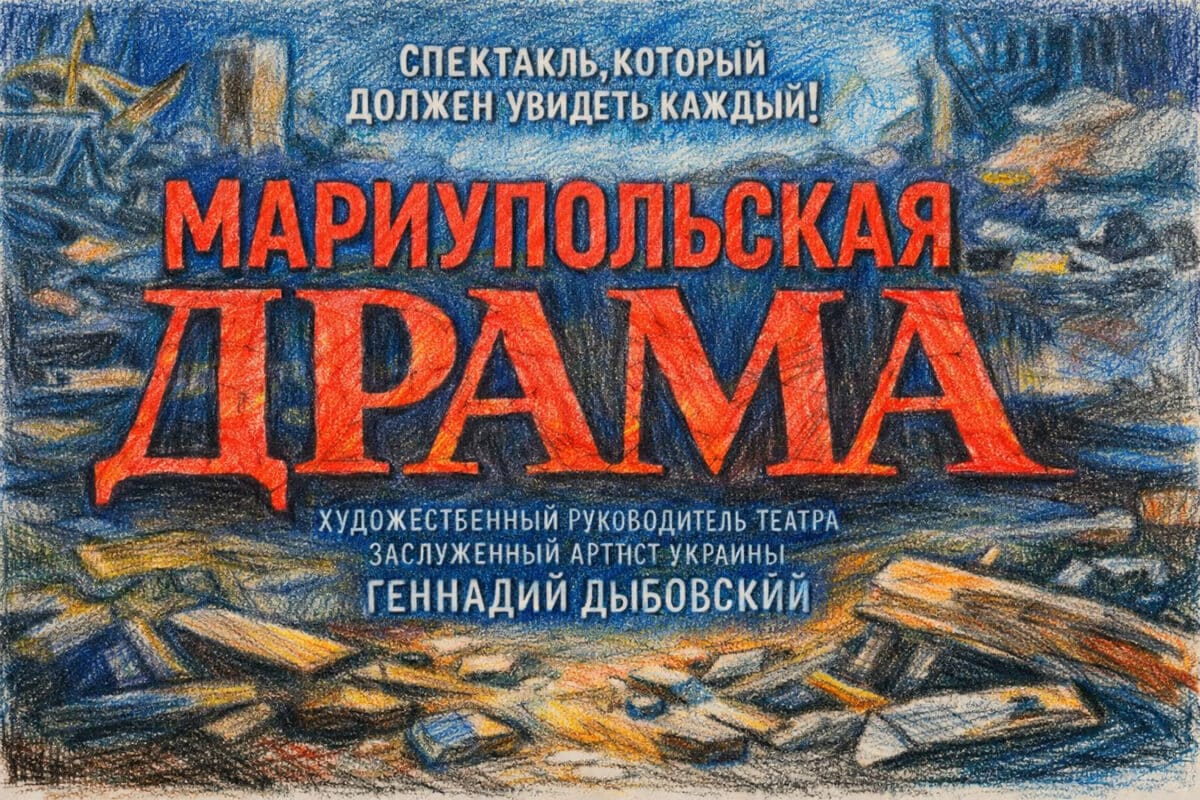
“Mariupol Drama” in Israel: a performance by surviving actors of the Mariupol Theater — tour June 1–6, 2026

The documentary play “Mariupol Drama / (orig. Ukr. “Маріупольська драма”) is being brought to Israel in early June 2026. This is a theatrical project created by surviving actors of the bombed Mariupol Theater — a production about the events of February–March 2022, where, as stated in the description, “there is no conjecture — only truthful reality.”

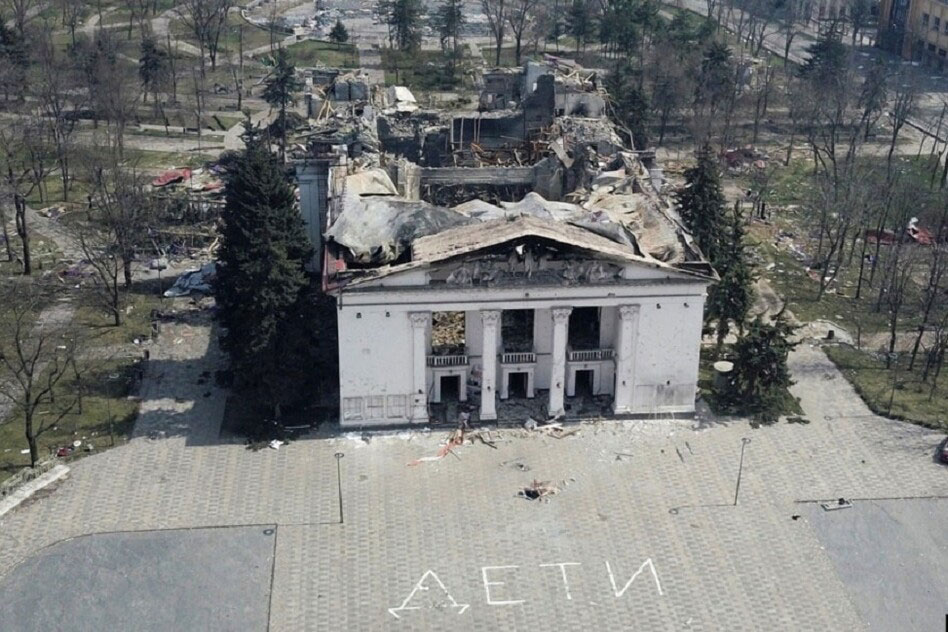
The text of the poster emphasizes: the Russian airstrike on the drama theater building in Mariupol became one of the most tragic war crimes. Even two large inscriptions “CHILDREN” on both sides of the building, as stated in the announcement, did not stop the strike.

Tickets for “Mariupol Drama” are already available —

https://nikk.kassa.co.il/announce/85455

What the production is about and why it is structured as a “testimony”

“Mariupol Drama” in Israel: a play by surviving actors of the Mariupol Theater — tour June 1–6, 2026

On stage are the eyewitnesses themselves — Mariupol actors who play not fictional characters, but themselves. During the blockade days, they were in the theater building and, along with those who took shelter there, experienced the siege of the city.

The action begins with the heroes introducing themselves to the audience, after which the play unfolds as a “chain of extremely tense events.” According to the poster text, the viewer also becomes a participant in what is happening — this is an important part of the director’s decision.

The production uses:

  • personal belongings of the actors, which they managed to take out of the shelter;

  • video and photo materials shot during the blockade.

And here it is important to explain why we are even posting this poster on the site: for the Israeli audience, such tours are not just a “cultural event on the calendar,” but a form of memory and conversation about the war, which in Israel is also felt very closely, through people, families, repatriation, aid to Ukraine, and personal stories. Therefore, NAnews — News of Israel | Nikk.Agency publishes this announcement as a testimony — so that in Israel they know that they can come, hear live eyewitnesses, and support the conversation about what happened in Mariupol.

After the performance, a creative meeting of the troupe with the audience is planned.

Authors, troupe, and production team

The play was written by Ukrainian writer and playwright Oleksandr Havrosh — based on collected testimonies.

The play was directed by Yevhen Tyshchuk, who, as stated in the description, decided to tell the world the truth about the war crime through the prism of theatrical art and preserve the memory of the victims of Mariupol.

Actors:
Vera Lebedinska, Olena Bila, Ihor Kitrysh, Matviy Kitrysh.

Director and production team (according to the poster):

  • playwright — Oleksandr Havrosh

  • director — Yevhen Tyshchuk

  • musical director — Hennadiy Dibovsky

  • choreographer — Hennadiy Dibovsky

  • sound — Oleksandr Frolov

  • lighting — Hennadiy Dibovsky

  • video engineer — Lidiya Krasnovska

  • costumes, makeup — actors

Theater after Mariupol

The poster separately states: after the destruction of the building in Mariupol, the troupe moved to Uzhhorod (Western Ukraine), and the theater was renamed “THEATER WITHOUT A ROOF”.
Chief director and artistic director — Hennadiy Dibovsky.

Language, duration, age

  • the production is in Ukrainian with Russian subtitles;

  • duration — 1 hour 20 minutes;

  • 12+.

Tour schedule in Israel (June 1–6, 2026)

City Date Time Venue Remaining seats (according to the poster) Price
Ashkelon Mon, 01.06.2026 19:00 Congress Center — Theater Hall 509 196–256 ₪
Haifa Tue, 02.06.2026 19:00 Beit-Nagler, Kiryat Haim, Ben Zvi St., 14 491 186–266 ₪
Ramat Gan Wed, 03.06.2026 19:00 Theater a-Ya’alom 550 196–266 ₪
Netanya Thu, 04.06.2026 19:00 Arik Einstein Auditorium 328 196–276 ₪
Rishon LeZion Fri, 05.06.2026 17:00 Mofet 356 196–276 ₪
Ashdod Sat, 06.06.2026 20:00 Matnas Duna-Yud 395 196–276 ₪

Tickets

Tickets for “Mariupol Drama / Маріупольська драма” are already available —

https://nikk.kassa.co.il/announce/85455

What happened in Mariupol: dates and figures to understand why it is called terror

After the start of Russia’s full-scale invasion of Ukraine on February 24, 2022, Mariupol quickly found itself under siege. The city systematically lost basic necessities: water, heat, communication, access to medicine. People went into basements and sought shelter in large buildings — where at least there were walls and a chance to survive the shelling.

One such shelter became the Donetsk Academic Regional Drama Theater in Mariupol. Civilians flocked there — hundreds of people, including children. In front of the building, the word “CHILDREN” was written in large letters on the ground — on both sides, so it would be visible from the air. This was a maximally direct designation: civilians inside.

What happened in Mariupol: dates and figures to understand why it is called terror

Key date of the strike

Around this tragedy, specifics are important:

  • March 16, 2022, an airstrike was carried out on the theater building.

  • As a result, the theater was destroyed, and people inside were trapped under the rubble.

How many people were in the theater

Due to the blockade conditions, an exact count is impossible, but in testimonies and reports, one thing is constantly mentioned: there were hundreds of civilians in the building, and in some estimates — up to 1,000+ people, because the theater became one of the largest shelters in the city center.

How many died

There is also a range with exact numbers, but it still speaks of one thing — this is a mass death:

  • an estimate of about 300 dead is often mentioned (voiced by Ukrainian sources);

  • separate investigations and reconstructions of events mentioned a figure of about 600 and more;

  • some organizations emphasized: the confirmed minimum is lower, but the real number is likely significantly higher, because many remained under the rubble and a full check was not immediately possible.

So we are not talking about “dozens,” but about hundreds.

Why it is called terror against civilians

Because the strike hit a place that:

  1. was a civilian shelter,

  2. was marked “CHILDREN” and therefore clearly indicated the presence of civilians,

  3. was in a city where people almost had no options for salvation.

When a shelter with the inscription “CHILDREN” is destroyed, it is perceived not as a “mistake,” but as a demonstration of the principle: there are no safe places. This is how terror works as a method of war — intimidation and breaking civilians through a strike on the most vulnerable, so that fear becomes a weapon.

Tickets for “Mariupol Drama / Маріупольська драма” are already available —

https://nikk.kassa.co.il/announce/85455


Ukraine is looking for workers, Israel shows a model: migrants cover only 0.1% of market needs - June 5, 2026 - Новости Израиля

Trump promises a finale with Iran: deadline, Pakistan, and a deal that is not yet in place - June 5, 2026 - Новости Израиля

The Kishinev pogrom: In 1903, the central authorities in Russia wanted Jewish blood to be shed, and that is exactly what happened. - June 5, 2026 - Новости Израиля

Lviv, which remembers: Jewish architects, houses on Bandera, and mezuzah traces that survived the 20th century

In Lviv, there are still houses that tourists photograph as the “postcard of the city,” not always knowing who designed them and for whom they were built.

At the turn of the 19th–20th centuries, Jewish architects and clients worked in the city. Their contribution is visible not in one “legend,” but in specific addresses, dates, and styles — from rational modernism to secession.

And then came 1941, and the conversation about facades inevitably turns to something else: the almost vanished community and the small traces on doorposts that sometimes speak louder than any argument.

Lviv at the beginning of the 20th century: when surnames are read on the map

Lviv was never “one color.” It changed along with states and administrations, but the urban fabric — neighborhoods, tenement houses, charitable buildings — grew according to the quite practical logic of the time.

And in this logic, Jewish surnames are noticeable: architects, owners, philanthropists, professionals who worked in the general urban rhythm.

Angelyovicha, 28: 1909 and the Jewish Academic House

The building at Angelyovicha, 28 was erected in 1909. In materials about it, Jewish architect Józef Awin and Alfred Zachariewicz are mentioned.

Here was located the Jewish Academic House. This is an important detail: it’s not about “being nearby,” but about institutions — a place where they studied, argued, read, built their urban careers.

1913: shelter for widows of Jewish merchants and the project of Ferdinand (Feivel) Kassler

In 1913, a shelter for widows of Jewish merchants of the Jakub Shtrog Foundation was erected nearby — according to the project of Ferdinand (Feivel) Kassler.

Such buildings rarely make it onto postcards, but they show the city’s inner workings: charity, community funds, everyday social infrastructure that keeps people afloat.

Bandera Street: tenement houses, rational modernism, and secession

The tenement house at Bandera, 69 was designed by Jewish architect Leopold Reiss.

The house on the even side, Bandera, 24 was designed by Ferdinand (Feivel) Kassler. It was erected in 1913 by order of Jew Berl Finkler and is known as an example of rational modernism — a double bay window, grotesque interpretation of the classical order, original bas-reliefs. It is from such details that “beautiful Lviv,” which today is sold by guidebooks, is composed.

Three more secession houses — Bandera, 35, 37, and 39 — were built according to the project of Jewish architect Jakub Solomon Kroch. In the history of this complex, there is a telling detail: the architect was a wealthy man and the owner of the entire complex.

That is why NAnews — Israel News | Nikk.Agency in such stories bets on verifiable specifics: not on the argument “whose city,” but on a chain of facts — address, year, name, context.

Other names: Rimer, Kalms, Silberstein

In the history of Lviv architecture, other architects are mentioned — Salomon Rimer, Daniel Kalms, Maurycy Silberstein, and others.

They worked in modernism, renaissance, historicism — and these are the styles that today are perceived as “Lviv beauty.” The city remembers them not with slogans, but with facades.

Jewish community of Lviv: up to a third of the residents — and almost complete destruction

In the interwar period, Jews made up a significant part of Lviv’s population — estimates mention up to a third of the residents.

These were doctors, lawyers, professors, industrialists, architects. The words “built,” “healed,” “taught,” “wrote” in such a context cease to be pathos — it is a description of professions and real urban life.

Further in the chronology is 1941.

Pogroms.

Ghetto.

Janowska camp.

In the story of Lviv, it is impossible to ignore the assessment often repeated in family and community memory: about 99% of Lviv’s Jews were killed. Even if the reader is cautious about the numbers, the meaning remains the same — the community was almost completely destroyed, and the city was left with a void that is not visible in tourist photos.

Traces of the mezuzah and a verse that returns memory to voice

There is a sign that is not immediately noticed: on old doorposts in some houses, traces of the mezuzah remain.

A small mark, sometimes just a different tone of wood or stone. But it works like a document without a seal — they lived here. There was faith and life here. Here, once, they touched the doorpost with their palm “for luck,” not thinking that it would become evidence of time.

In the finale of such a story, a loud point is not required.

It is enough to understand: the question “and did you build Lviv?” sounds different if you remember not only the facades but also those who were forcibly erased from this city.


Ukraine is looking for workers, Israel shows a model: migrants cover only 0.1% of market needs - June 5, 2026 - Новости Израиля

Trump promises a finale with Iran: deadline, Pakistan, and a deal that is not yet in place - June 5, 2026 - Новости Израиля

The Kishinev pogrom: In 1903, the central authorities in Russia wanted Jewish blood to be shed, and that is exactly what happened. - June 5, 2026 - Новости Израиля

Shockwave therapy (SWT) for pain. Pain treatment clinic in Haifa and Petah Tikva Israel. Center – North with home visit to the client

#promotion

If you have already visited an orthopedist due to pain, legs, shoulders, knees, spur, joints, tendons, sciatic nerve, slagging, …

… and after checks and help from specialists, the pain continues…

Shock wave therapy (SWT) for pain. Pain clinic in Haifa and Petah Tikva Israel. Center - North with home visit to the client
David Sendler, Practitioner Leader

then today you have the opportunity for FREE at your home:

  • get advice from a physiotherapy specialist;
  • 1 trial procedure for quick pain relief!

We are working – Northern Israel – areas: Hadera, Haifa, Krayot, Akko, Nahariya, Nazareth, Afula…

We are also open for business in Petah Tikva!

Pain Treatment Clinic David Sendler

>> go to the pain clinic website >>>

call —

055-951-4135

Shock wave therapy (SWT) for pain. Haifa Pain Clinic Israel North – Center with a visit to the client’s home.

Shock wave therapy

Shock wave therapy – a modern and effective method of physiotherapeutic treatment.

It is successfully used for treatment by specialists of many specialties. Shock wave therapy has proven itself especially well in the treatment of orthopedic diseases And in case of injuries. The method is also widely used neurologists, urologists, cardiologists, cosmetologists.

Indications for the use of shock wave therapy:

  • osteochondrosis (spondyloarthrosis) of the spine arthrosis, including deforming osteoarthrosis of the joints (knee, ankle, hip, shoulder, elbow, wrist, interphalangeal joints of the foot and hand),
  • heel spur (plantar fasciitis),
  • chronic sports injuries,
  • Achilles tendon diseases (Achilles bursitis) epicondylitis (tennis elbow) bursitis,
  • tenosynovitis slow bone fusion (delayed consolidation of fractures) scars and ligaments of various origins,
  • joint contracture ,
  • cellulite.

Therapeutic effect of shock waves in the short term:

  1. improving blood circulation in the area of ​​the procedure,
  2. reduction of pain in the long term,
  3. the disintegration of calcified fibroblasts, bone growths, fibrous foci and the gradual resorption of their fragments,
  4. microvascular growth at the site of the procedure,
  5. improving tissue nutrition,
  6. persistent reduction of pain syndrome,
  7. increased mobility in the damaged body segment,
  8. increasing the resistance of ligaments and tendons to physical stress and injuries.

David Sendler Pain Clinic

We are working – Northern Israel – areas: Hadera, Haifa, Krayot, Akko, Nahariya, Nazareth, Afula…

We are also open for business in Petah Tikva!

Pain Treatment Clinic David Sendler

>> Pain Clinic – go to the clinic website >>>

call —

055-951-4135

Shock wave therapy in the treatment of orthopedic diseases

Under the influence of a shock wavewhich affects pathologically altered areas of tissueis happening destruction microcrystals of calcium salts and their removal from muscles, tendons and ligaments.

Microcirculation and metabolism in the affected area are enhanced. The effect is manifested in decrease or the disappearance of pain syndrome, muscle spasm, increased elasticity of ligaments and tendons, which allows for an increase in the range of motion in the spine and joints.

Painful conditions often bother patients for many years, manifesting themselves in the form of decreased joint mobility, weakness of the limb, and leading to temporary or permanent disability.

Hardware methods have triumphantly taken the leading positions in the hit parade of the most popular procedures throughout the world.

And in the first place Shock wave therapythese procedures:

  1. non-traumatic,
  2. painless,
  3. and compared to plastic surgery services they cost several times less.

The device is used to make facelift And skin smoothing on the face, chin, and also lifting And correction nasolabial folds at the same time no surgical intervention is performed.

In our clinic we carry out procedures on equipment from an Israeli manufacturerwhich has no competitors in the world in terms of reliability and quality of work!

If the patient is concerned about his health and prefers treatment methods that do not involve surgical intervention, then our treatment is ideal in this case.

David Sendler Pain Clinic

We are working – Northern Israel – areas: Hadera, Haifa, Krayot, Akko, Nahariya, Nazareth, Afula…

We are also open for business in Petah Tikva!

David Sendler Pain Clinic

>> go to the pain clinic website >>>

call —

055-951-4135

The procedure does not require rehabilitation; it is performed both on an outpatient and home basis and is completely painless.

During the procedure microcirculation improves 40 timesdue to which the cells are nourished and restored. The main advantage of such a procedure for the face is that with its help you can remove not only the external manifestations of age-related changes (wrinkles, stretch marks, sagging), but also the reasons for their occurrence.

1. This is the only method that truly rejuvenates the face, neck and body of a person, since the ESWT method is aimed at the deep layers of the skin and subcutaneous tissue, restoring the production of its own collagen and elastin in the tissues of the face and body of a person.

2. This is a procedure without injections, without operations. The skin is tightened, wrinkles around the eyes and on the bridge of the nose are smoothed, nasolabial folds are reduced, deep wrinkles, creases are eliminated, and the skin is made more elastic and fresh.

The result of shock wave therapyenhancing cell regeneration, improving blood circulation, collagen synthesis, new hyaluronic acid is synthesized, due to which the normal condition of the skin is restored (its color, elasticity and plasticity, smooth relief), swelling is reduced, and then disappears completely.

If you have already visited an orthopedist due to pain – legs, shoulders, knees…

… and after checks and help from specialists, the pain continues…

then today you have the opportunity for FREE at your home:

  • get advice from a physiotherapy specialist;
  • 1 trial procedure for quick pain relief!

Shockwave therapy (SWT) I work – Northern Israel – areas: Hadera, Haifa, Krayot, Akko, Nahariya, Nazareth, Afula …

David Sendler Pain Clinic

We are working – Northern Israel – areas: Hadera, Haifa, Krayot, Akko, Nahariya, Nazareth, Afula…

We are also open for business in Petah Tikva!

David Sendler Pain Clinic

>> Pain Clinic – go to the clinic website >>>

call —

055-951-4135


Ukraine is looking for workers, Israel shows a model: migrants cover only 0.1% of market needs - June 5, 2026 - Новости Израиля

Trump promises a finale with Iran: deadline, Pakistan, and a deal that is not yet in place - June 5, 2026 - Новости Израиля

The Kishinev pogrom: In 1903, the central authorities in Russia wanted Jewish blood to be shed, and that is exactly what happened. - June 5, 2026 - Новости Израиля

Apartment renovation in Haifa and Krayot, Nesher and Tirat Carmel. Renovation work for apartments, houses, offices

#promotion

I do repairs👨🏻‍🔧 apartments/villas, turnkey premises, bathroom and toilet renovation for over 10 years!
I perform complex and partial repairs.

Brief list of works:

  1. Plaster
  2. Putty
  3. Wallpapering, painting
  4. Laying laminate and other floor coverings
  5. Laying tiles, porcelain tiles, mosaics
  6. Installation
  7. Electricity
  8. Construction of partitions
  9. Dismantling
  10. Screed – floor leveling
  11. Skirting boards of any complexity

I calculate the payment based on the actual work performed.

We comply with all building codes, observe the law on silence, maintain cleanliness on the site, provide round-the-clock video monitoring of the repair process!

We also do office renovations, cafe renovations, restaurant renovations, commercial premises renovations, and store renovations.

Apartment renovation in Haifa and Krayot (Kiryat Yam, Kiryat Motzkin, Kiryat Bialik, etc.), Nesher and Tirat Carmel. Repair work for apartments, houses, offices.

055-966-4053

Apartment renovation in Haifa and Krayot, Nesher and Tirat Carmel, Northern Israel. Renovation work for apartments, houses, offices


It is believed that painting works in Israel – this is a simple procedure that anyone can handle. But painting walls or ceilings well is not so easy. This type of work requires certain knowledge and skills..

Apartment renovation in Haifa and Krayot, Nesher and Tirat Carmel. Repair work for apartments, houses, offices.

And if you entrust the renovation of your apartment to non-professional craftsmen, you often have to do it all over again.

Therefore, if you decide to do repairs, it is better to order the service from professionals.

What are repair works?

Such work is carried out as part of the service turnkey apartment renovationare finishing and are the final stage of apartment renovation. The main purpose of their implementation is to give the surfaces inside or outside the premises an aesthetic appearance.

Repair work is not just painting the walls. It is a whole complex of actions, including:

  • Dismantling and removal of old coatings (paint, whitewash, plaster, wallpaper, etc.)
  • Plastering of surfaces
  • Sanding of walls and ceilings
  • Puttying the ceiling and walls
  • Painting walls and ceilings
  • Sealing of seams, cracks, chips
  • Priming the surface of walls and ceilings
  • The most important point is cleaning and cleanliness at every stage


Painting of apartments, houses, offices in the North of Israel - Painting and finishing works in Yokneam Illit, Hadera, Haifa, Krayot, Akko, Nahariya, Nazareth, Afula ...
Painting of apartments, houses, offices in the North of Israel – Painting and finishing works in Yokneam Illit, Hadera, Haifa, Krayot, Akko, Nahariya, Nazareth, Afula …


We:

  • Work directly, without hassle and additional bureaucracy
  • Fixed price for work without unexpected surprises
  • Perfect cleanliness of your premises in the process
    and after completion of the work

WHO IS MY SERVICE SUITABLE FOR?

  • Does your home need updating as the years go by?
  • Are your walls rough, full of holes and cracks?
  • Need a paint refresh and a fresh look for your space?
  • Are you renting out an apartment and need to update the appearance of the premises?
  • Are you stopped by the fact that renovation means dirt, discomfort and long periods of time?
  • I hasten to please you that you will get the desired result without even noticing my presence.

Repair WORKS IN ISRAEL:

Apartment renovation in Haifa and Krayot (Kiryat Yam, Kiryat Motzkin, Kiryat Bialik, etc.), Nesher and Tirat Carmel. Repair work for apartments, houses, offices.

055-966-4053

STAGES OF WORK:

  1. Call me at this number
  2. Free on-site visit
  3. Acquaintance
  4. Beginning of work
  5. Surface preparation
  6. Grinding
  7. Submission of all works
  8. Painting
  9. Padding
  10. Cleaning after each stage and upon completion of all work

Apartment renovation in Haifa and Krayot (Kiryat Yam, Kiryat Motzkin, Kiryat Bialik, etc.), Nesher and Tirat Carmel. Repair work for apartments, houses, offices.

055-966-4053

Apartment renovation in Haifa and Krayot, Nesher and Tirat Carmel, Northern Israel. Renovation work for apartments, houses, offices


055-966-4053


Ukraine is looking for workers, Israel shows a model: migrants cover only 0.1% of market needs - June 5, 2026 - Новости Израиля

Trump promises a finale with Iran: deadline, Pakistan, and a deal that is not yet in place - June 5, 2026 - Новости Израиля

The Kishinev pogrom: In 1903, the central authorities in Russia wanted Jewish blood to be shed, and that is exactly what happened. - June 5, 2026 - Новости Израиля